
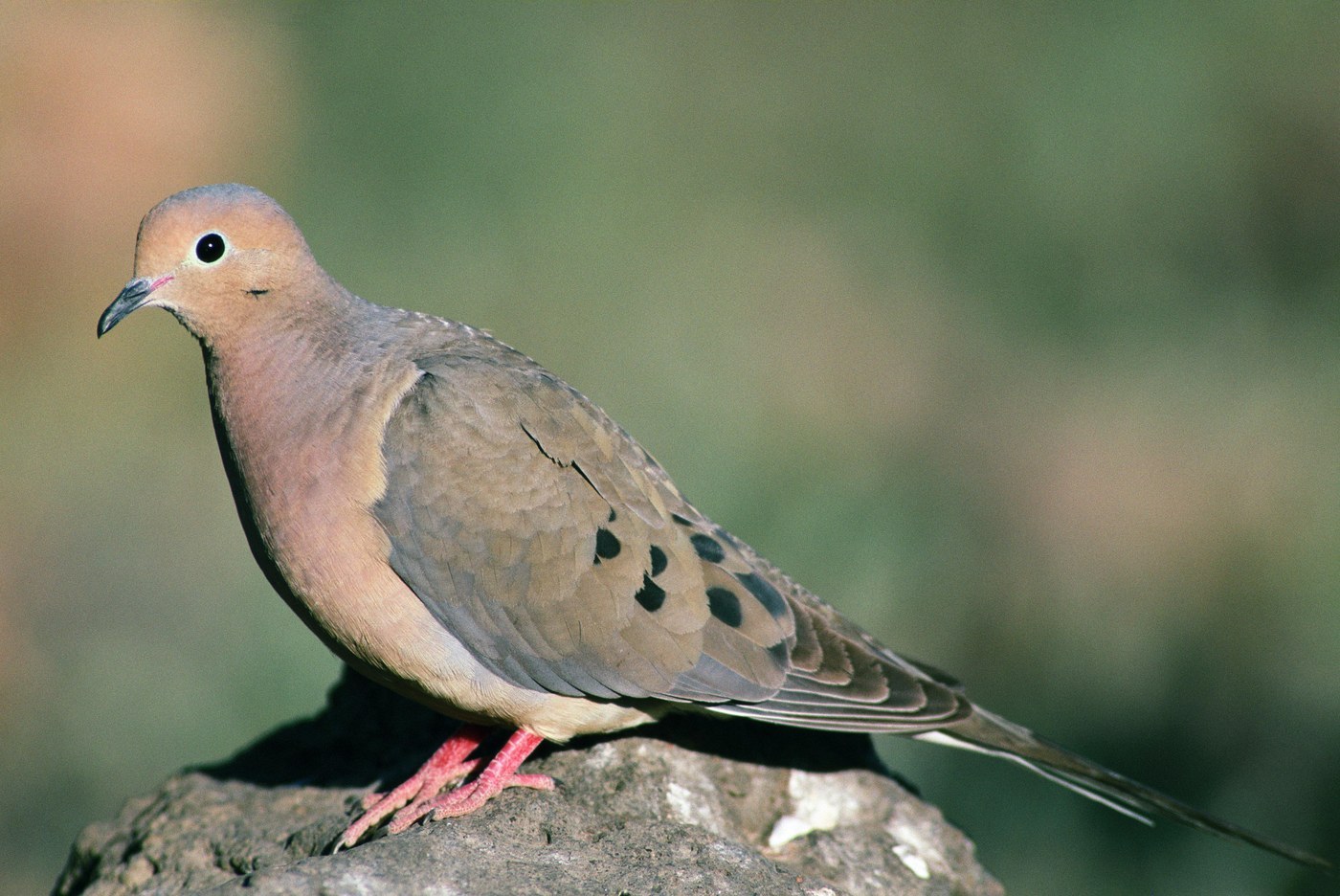
Mourning Dove
Zenaida macroura
A slender, soft grayish-brown dove with a long pointed tail, one of the most widespread and familiar birds in North America, named for its low, mournful cooing call.
- Size
- 23-34 cm (9-13.4 in) long including a long tail, 37-45 cm (14.6-17.7 in) wingspan
- Habitat
- open woodlands, farmland, grasslands, and urban and suburban areas
- Type
- other
Spotted a bird like this?
Identify any bird from a photo, free.
Overview
The Mourning Dove is one of the most abundant and widely distributed birds in North America, equally at home in farmland, deserts, woodland edges, and suburban backyards. It is a slender, elegant bird with soft grayish-brown plumage, a small head, a black spot on the lower cheek, and a long, tapering, pointed tail edged in white that is conspicuous in flight. Its gentle, mournful cooing call, often mistaken for an owl by newcomers, gives the species its common name.
How to identify it
Key field marks
- Slim body with soft grayish-brown plumage and a pinkish wash on the breast
- Small, rounded head with a single black spot below the eye
- Long, pointed, tapering tail with white-edged outer feathers, visible as a fan when landing or flushing
- Whistling wingbeats audible on takeoff
Similar species
Eurasian Collared-Dove is larger, paler, and shows a black half-collar on the nape and a squared-off (not pointed) tail. Rock Pigeon is bulkier with a shorter tail and a much more variable, often iridescent plumage pattern.
Habitat & range
Habitat and Range
Mourning Doves occupy an extremely wide range of open and semi-open habitats, including farmland, grasslands, desert scrub, woodland edges, and urban and suburban yards with bird feeders and scattered trees.
Range
The species is found virtually throughout the continental United States, southern Canada, and Mexico year-round in much of its range, making it one of the most widespread native birds on the continent.
Migration
Northern populations are migratory, moving south for the winter, while populations in the southern and western United States are largely resident year-round.
Behavior & voice
Behavior
Mourning Doves are strong, fast fliers, capable of rapid, direct flight with distinctive whistling wingbeats produced by air passing through the wingtips on takeoff.
Voice
The song is a soft, low, mournful "coo-OO-oo-oo-oo," often mistaken for an owl, given primarily by males to attract mates and defend territory.
Feeding
Mourning Doves feed almost entirely on seeds and waste grain, foraging on bare ground and swallowing seeds whole to be processed later in the crop.
Nesting and breeding
They build a flimsy, loosely constructed stick platform nest in a tree or shrub (occasionally on the ground or in gutters), typically laying just two white eggs, and may raise several broods in a single season.
Frequently asked questions
Why is it called a Mourning Dove?
Its soft, low cooing call has a mournful, sorrowful quality, which gives the species its common name.
What is the whistling sound Mourning Doves make when they fly?
It is produced mechanically by air rushing through modified outer wing feathers as the bird takes off rapidly, not a vocal sound.
How many eggs do Mourning Doves lay?
Typically just two white eggs per clutch, but pairs can raise several broods in a single breeding season, helping compensate for the small clutch size.
What do Mourning Doves eat?
Their diet is almost entirely seeds and waste grain, which they forage for on open, bare ground.
Mourning Dove guides
In-depth guides for identifying, finding, and understanding Mourning Dove.
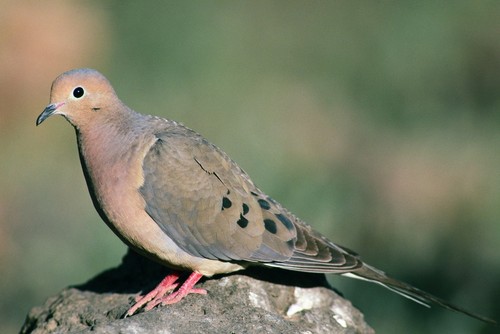
Mourning Dove identified by the community
Real birds identified with Bird Identifier.


Other birds you may enjoy
Kiwi
35-55 cm (14-22 in) long; roughly chicken-sized
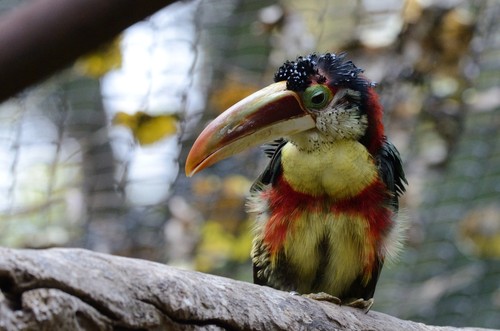
Curl-crested Aracari
41-46 cm (16-18 in) long, including a long bill and tail
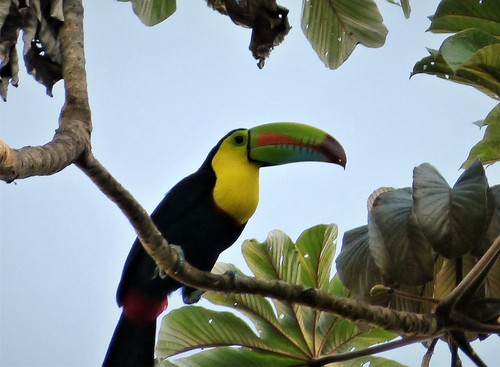
Keel-billed Toucan
42-55 cm (17-22 in) long including bill
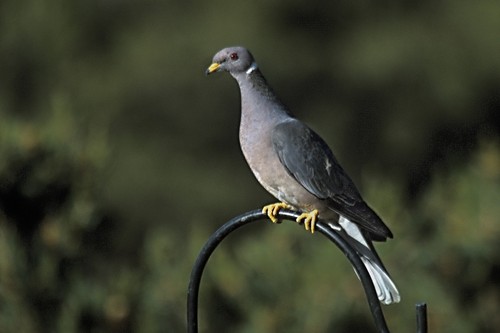
Band-tailed Pigeon
33-38 cm (13-15 in) long, wingspan about 66 cm (26 in)
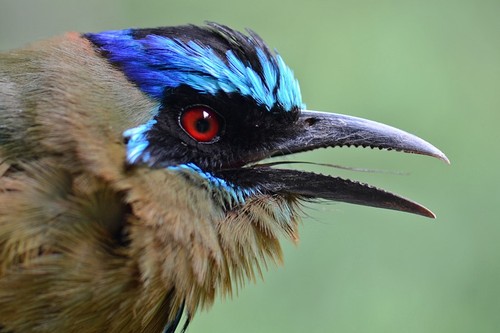
Blue-crowned Motmot
38-43 cm (15-17 in) long including tail
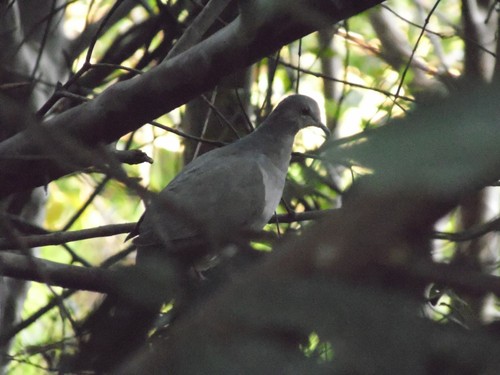
White-tipped Dove
27-30 cm (10.5-12 in) long, 38-43 cm wingspan
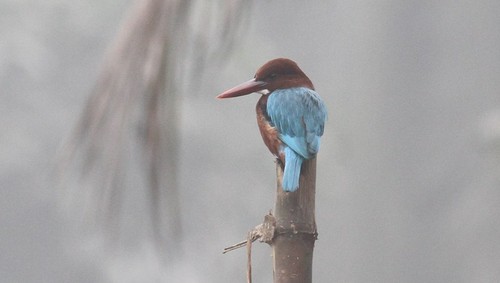
White-throated Kingfisher
27-28 cm (10.5-11 in) long
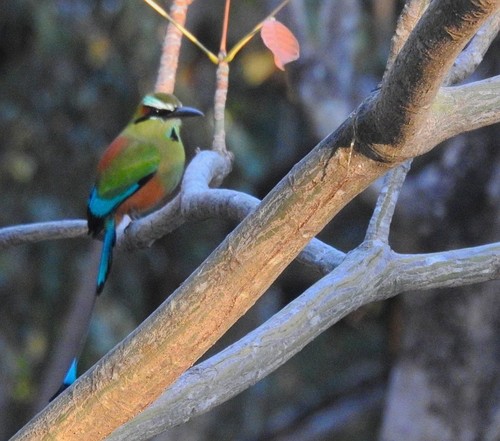
Turquoise-browed Motmot
34 cm (13 in) long including tail
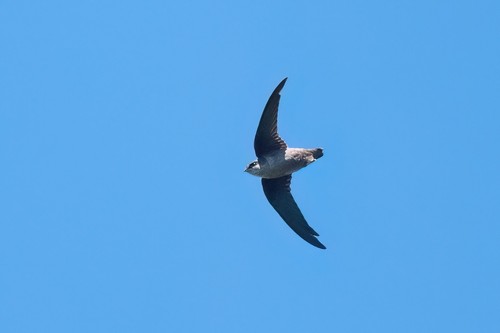
Vaux's Swift
10-12 cm (4-4.5 in) long, 27-30 cm wingspan
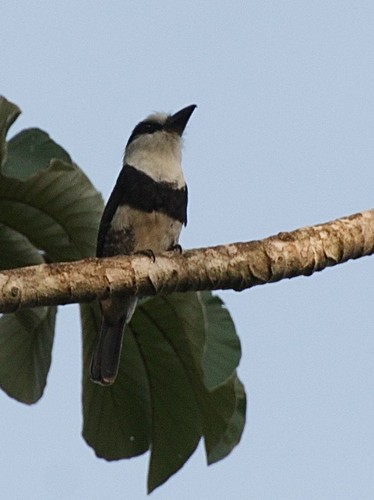
White-necked Puffbird
22-24 cm (8.5-9.5 in) long
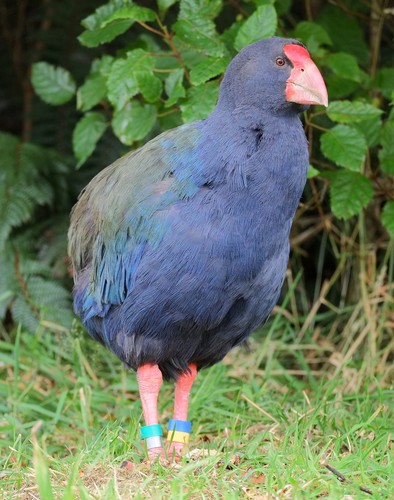
Takahe
50 cm (20 in) long, up to 3.5 kg; flightless
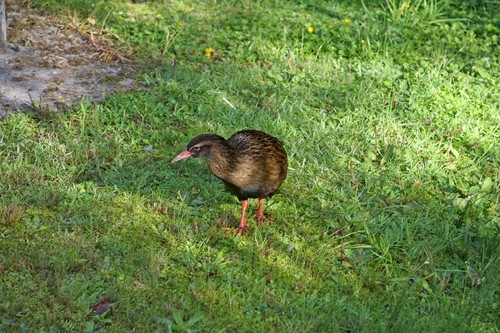
Weka
50-60 cm (20-24 in) long; flightless