
Meyer's Parrot
Poicephalus meyeri
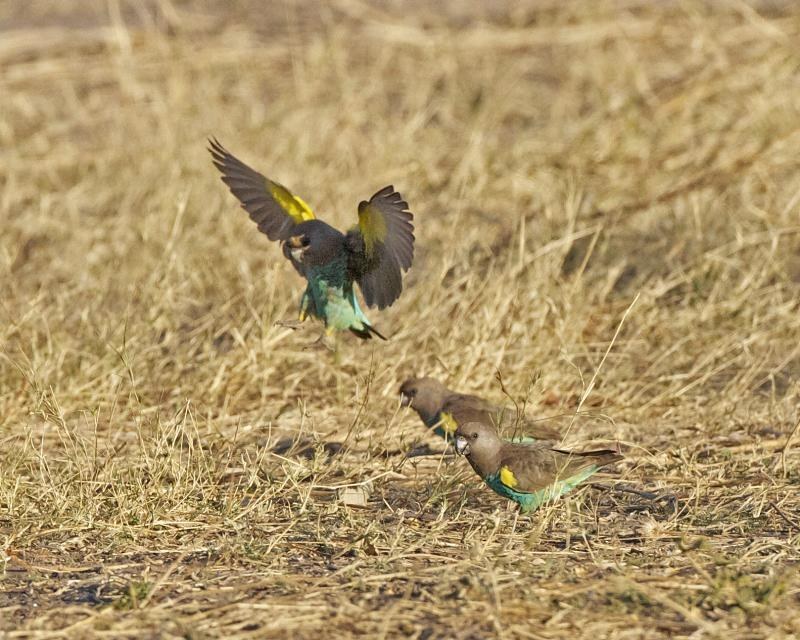
A widespread African savanna parrot with mostly brown-grey plumage set off by turquoise underparts and yellow shoulder patches.
- Size
- About 21–23 cm long
- Habitat
- Woodland savanna, especially miombo and acacia woodland, across sub-Saharan Africa
- Type
- parrot
Spotted a bird like this?
Identify any bird from a photo, free.
Overview
Meyer's Parrot, sometimes called the Brown Parrot, is a stocky, short-tailed member of the Poicephalus group widely distributed across sub-Saharan Africa's woodland savannas. Its plumage is understated compared to many parrots: the head and body are largely brown to greyish-brown, offset by turquoise-blue underparts and rump, and variable yellow markings on the shoulders and crown depending on subspecies.
Appearance
- Brown to grey-brown head, back, and wings
- Turquoise-blue belly, thighs, and rump
- Yellow patches on the bend of the wing (carpal edge) and sometimes on the crown
- Stocky build with a short square tail typical of the genus
How to identify it
Key field marks
- Brownish-grey body plumage contrasting with bright turquoise underparts, visible in flight and at rest
- Small yellow patch at the shoulder/carpal edge of the wing
- Some subspecies show a yellow forehead or crown patch
Similar species
The Senegal Parrot has a clean grey head, green back, and a yellow-orange V on the belly, quite different from Meyer's Parrot's overall brown coloring and turquoise underside. Other Poicephalus species such as the Red-fronted Parrot show more extensive red on the face and shoulders.
Habitat & range
Range
One of the most widely distributed African parrots, occurring from Angola, Zambia, and the Democratic Republic of the Congo east to Ethiopia, Kenya, Tanzania, and south to Botswana and northern South Africa.
Habitat
Favors dry, open woodland including miombo and acacia savanna, often near rivers and in areas with baobab trees, and is generally non-migratory, though it may move locally in response to food and water availability.
Behavior & voice
Behavior
Typically seen alone, in pairs, or in small flocks; birds gather in larger numbers at fruiting trees and waterholes, and fly with quick, direct wingbeats.
Voice
Gives sharp, high-pitched whistles and screeching contact calls, often given in flight.
Feeding
Feeds on seeds, fruit, nuts, and flowers gathered in the canopy, and will also take cultivated grain when available near farmland.
Nesting and breeding
Nests in tree hollows, frequently reusing cavities in baobabs or other large trees; the female incubates the eggs while the male feeds her at the nest.
Frequently asked questions
What color is a Meyer's Parrot?
It is mostly brown to grey-brown with turquoise-blue underparts and rump, plus yellow patches on the shoulder and sometimes the crown.
Where is Meyer's Parrot found?
It has a broad range across sub-Saharan Africa's woodland savannas, from Angola and the Congo Basin east to Ethiopia and Tanzania and south to South Africa.
Why is it also called the Brown Parrot?
Its overall body plumage is a muted brown-grey, quite different from the vivid greens of many other parrots, giving rise to the alternate name.
What habitat does Meyer's Parrot prefer?
It favors dry open woodland such as miombo and acacia savanna, often near water and large trees suitable for nesting.
Meyer's Parrot guides
In-depth guides for identifying, finding, and understanding Meyer's Parrot.
Other birds you may enjoy
Eclectus Parrot
35-42 cm (14-16.5 in) long
Western Rosella
25-30 cm (10-12 in) long
Superb Parrot
About 40 cm (16 in) long including a long tail
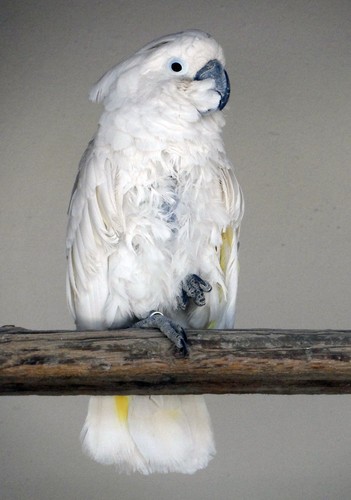
Umbrella Cockatoo
About 46 cm (18 in) long
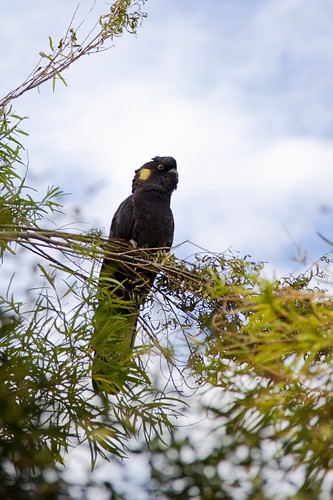
Yellow-tailed Black Cockatoo
55-65 cm long; wingspan up to about 130 cm
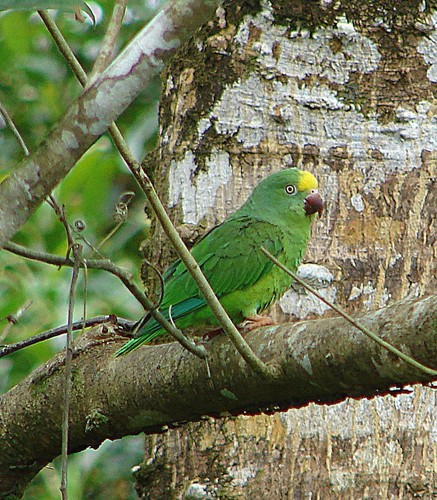
Yellow-crowned Amazon
About 35-38 cm (14-15 in) long
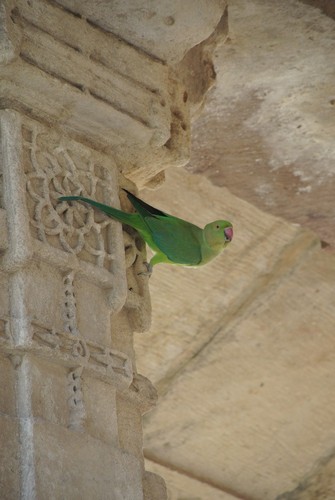
Rose-ringed Parakeet
40 cm (16 in) long including long tail
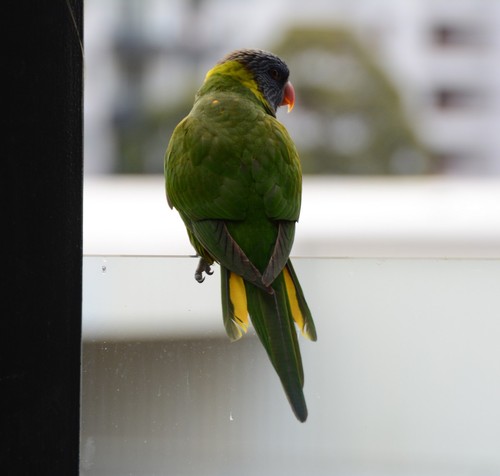
Rainbow Lorikeet
25-30 cm (10-12 in) long
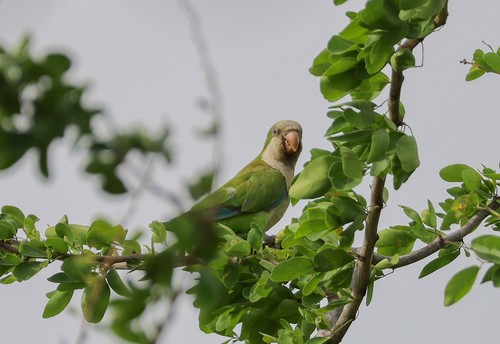
Quaker Parrot
28-31 cm (11-12 in) long
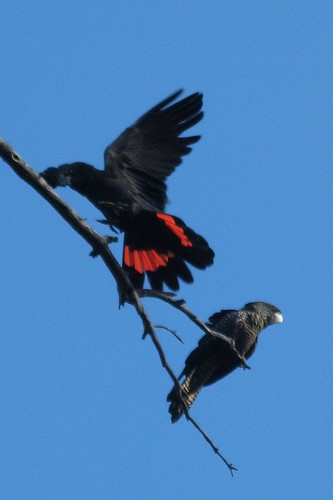
Red-tailed Black Cockatoo
55-65 cm long
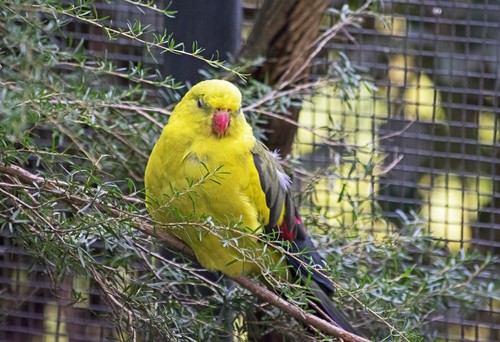
Regent Parrot
37-42 cm (15-17 in) long, including a long tail
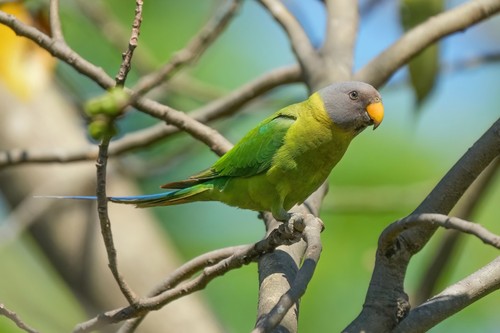
Plum-headed Parakeet
33 cm (13 in) long including tail