
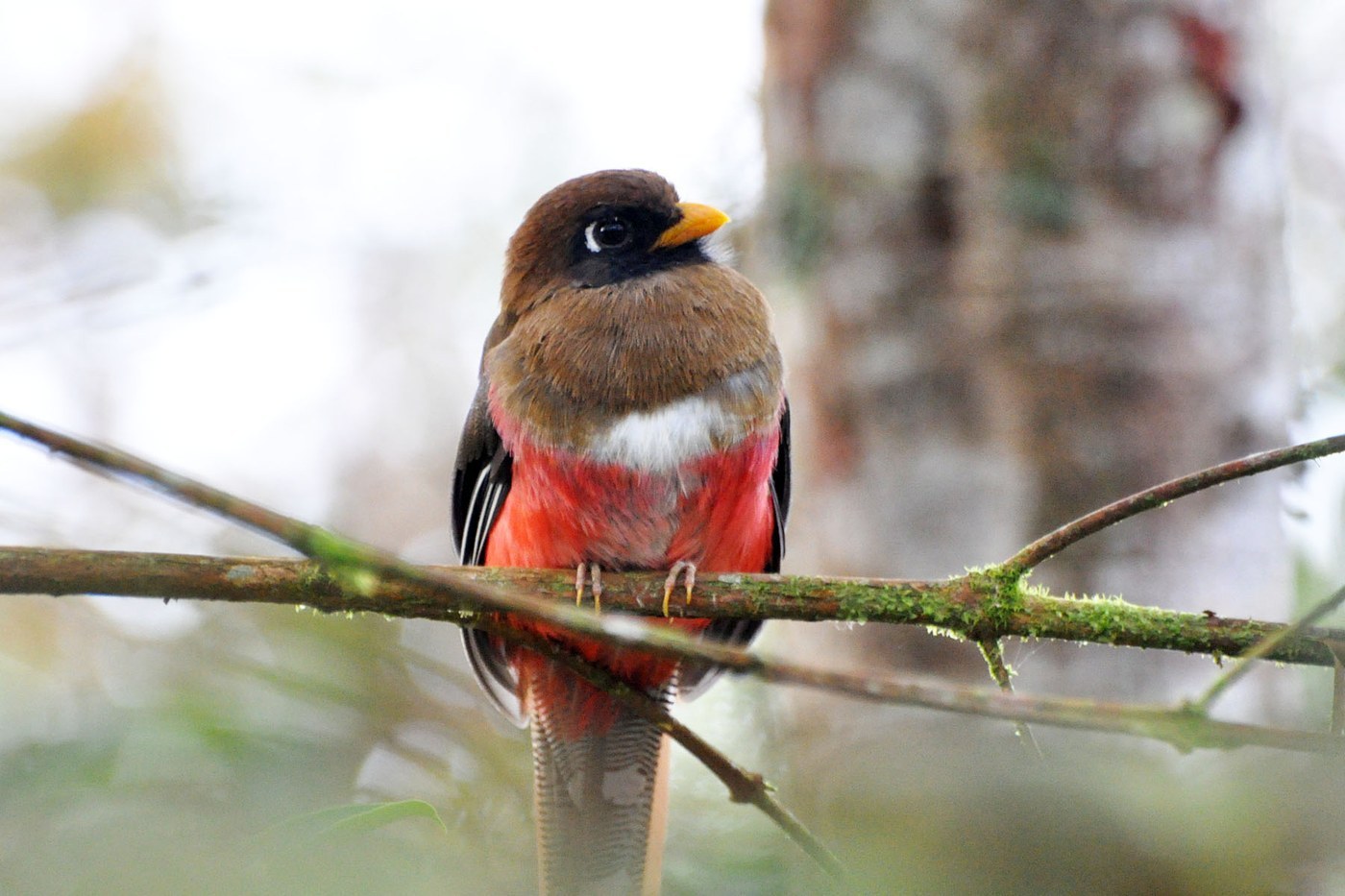
Masked Trogon
Trogon personatus
A brilliantly colored Andean trogon with a glossy green back, black face mask, and a bright red belly.
- Size
- 24-26 cm (9.5-10 in) long
- Habitat
- humid montane forest and forest edge in the Andes, roughly 1,500-3,000 m elevation
- Type
- other
Spotted a bird like this?
Identify any bird from a photo, free.
Overview
The Masked Trogon is a jewel-toned inhabitant of Andean montane forests, sharing the trogon family's characteristic upright posture, soft plumage, and quiet, sit-and-wait habits. Males have an iridescent green head, throat, and back that can flash coppery or bluish depending on the light, a bold black mask around the eye, and a vivid scarlet-red lower breast and belly separated from the green chest by a thin white band.
Females are more subdued, with grayish-brown replacing the male's iridescent green on the head and back, though they retain the diagnostic red belly and white breast band. Both sexes have a barred black-and-white pattern visible on the underside of the long, squared-off tail.
Like other trogons, this species sits remarkably still on a mid-story perch for long stretches, often overlooked until its soft, repetitive call gives it away.
How to identify it
Key field marks
- Male: iridescent green head, throat, and back; black facial mask; red lower breast and belly
- Thin white band separating the chest from the red belly
- Female: gray-brown head and back replacing the male's green, but same red belly pattern
- Underside of tail finely barred black and white
- Upright, motionless perching posture typical of trogons
Similar species
Collared Trogon is very similar and overlaps at lower elevations, but the Masked Trogon typically occurs higher in the Andes and shows a narrower, cleaner white breast band and slightly different tail barring; voice is often the most reliable way to separate the two where ranges meet.
Habitat & range
Habitat
The Masked Trogon favors humid montane forest interior and edge, including cloud forest with abundant epiphytes, typically in the understory to mid-story.
Range
It is distributed along the length of the Andes from Venezuela and Colombia south through Ecuador, Peru, and Bolivia to northwestern Argentina, generally between about 1,500 and 3,000 meters elevation.
Migration
It is a non-migratory, sedentary resident of its montane forest habitat, though some local elevational shifts may occur seasonally.
Behavior & voice
Behavior
Masked Trogons perch quietly and upright for extended periods, moving little except to turn the head, and rely on camouflage and stillness rather than flight to avoid detection, revealing themselves mainly by voice or a sudden short sally.
Voice
The song is a soft, mellow, evenly spaced series of hollow notes, often rendered as a repeated 'cow, cow, cow' or 'cu-cu-cu,' typically given from a hidden perch within the forest canopy or mid-story.
Feeding
It feeds by sallying from a perch to snatch fruit or insects, including caterpillars and other invertebrates, from foliage or the air, then returning to the same or a nearby perch.
Nesting and breeding
Like other trogons, it nests in a cavity, often excavating or using a hole in a rotten tree trunk, stump, or arboreal termite nest, where both sexes share incubation and chick-rearing duties.
Frequently asked questions
How do you identify a Masked Trogon?
Look for a red belly, black facial mask, and, in males, an iridescent green head and back separated from the red underparts by a thin white band.
Where does the Masked Trogon live?
It inhabits humid montane forest along the Andes from Venezuela to northwestern Argentina, mostly between 1,500 and 3,000 meters.
What sound does a Masked Trogon make?
It gives a soft, evenly paced series of hollow, cooing notes from a concealed perch.
What does the Masked Trogon eat?
It eats a mix of fruit and insects, caught by sallying from a perch.
How is the Masked Trogon different from the Collared Trogon?
The two are very similar; Masked Trogon typically occurs at higher elevation and differs subtly in breast band width and voice.
Masked Trogon guides
In-depth guides for identifying, finding, and understanding Masked Trogon.
Other birds you may enjoy
Kiwi
35-55 cm (14-22 in) long; roughly chicken-sized
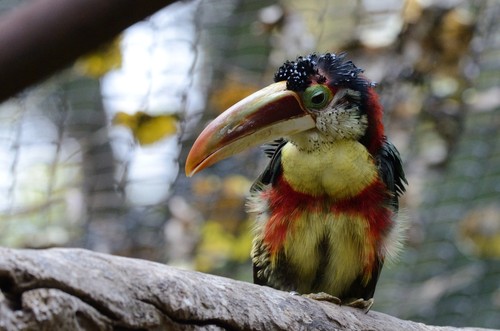
Curl-crested Aracari
41-46 cm (16-18 in) long, including a long bill and tail
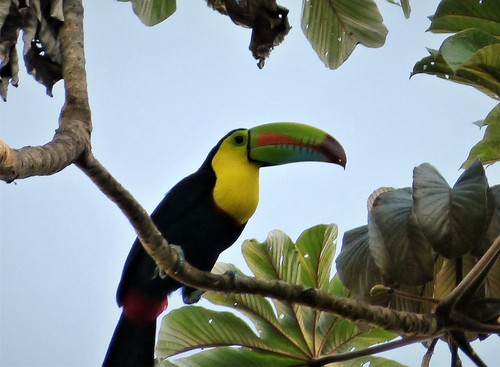
Keel-billed Toucan
42-55 cm (17-22 in) long including bill
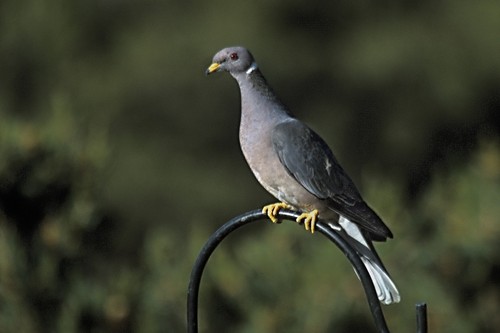
Band-tailed Pigeon
33-38 cm (13-15 in) long, wingspan about 66 cm (26 in)
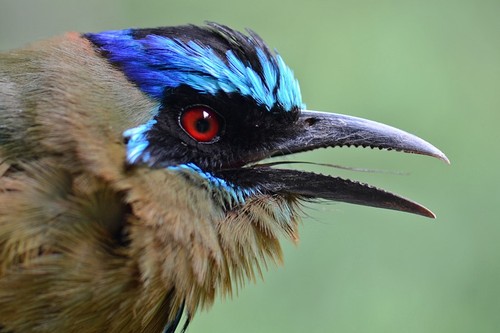
Blue-crowned Motmot
38-43 cm (15-17 in) long including tail
White-tipped Dove
27-30 cm (10.5-12 in) long, 38-43 cm wingspan
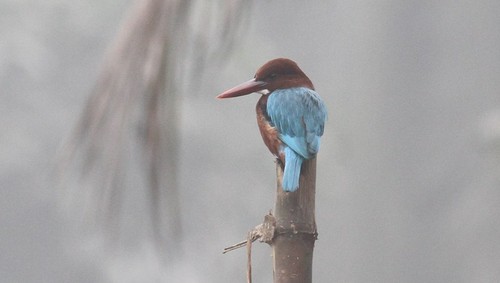
White-throated Kingfisher
27-28 cm (10.5-11 in) long
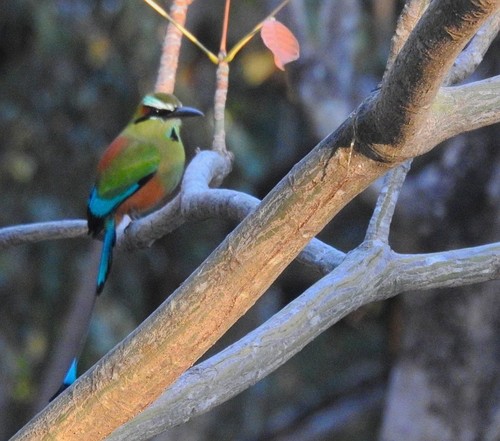
Turquoise-browed Motmot
34 cm (13 in) long including tail
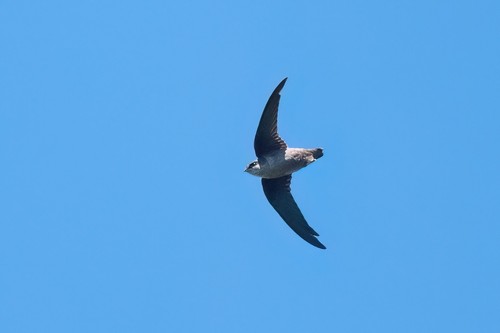
Vaux's Swift
10-12 cm (4-4.5 in) long, 27-30 cm wingspan
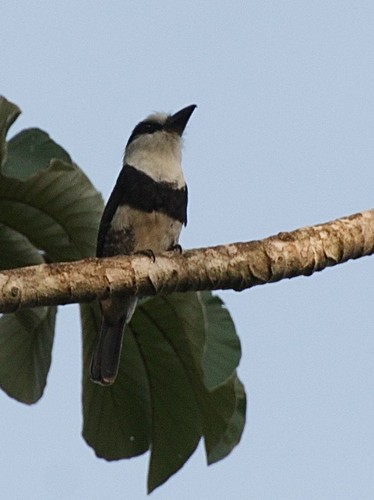
White-necked Puffbird
22-24 cm (8.5-9.5 in) long
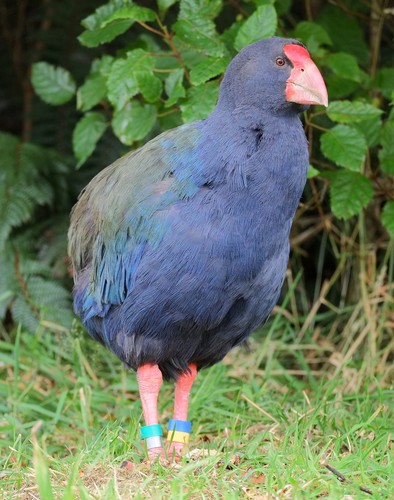
Takahe
50 cm (20 in) long, up to 3.5 kg; flightless
Weka
50-60 cm (20-24 in) long; flightless