
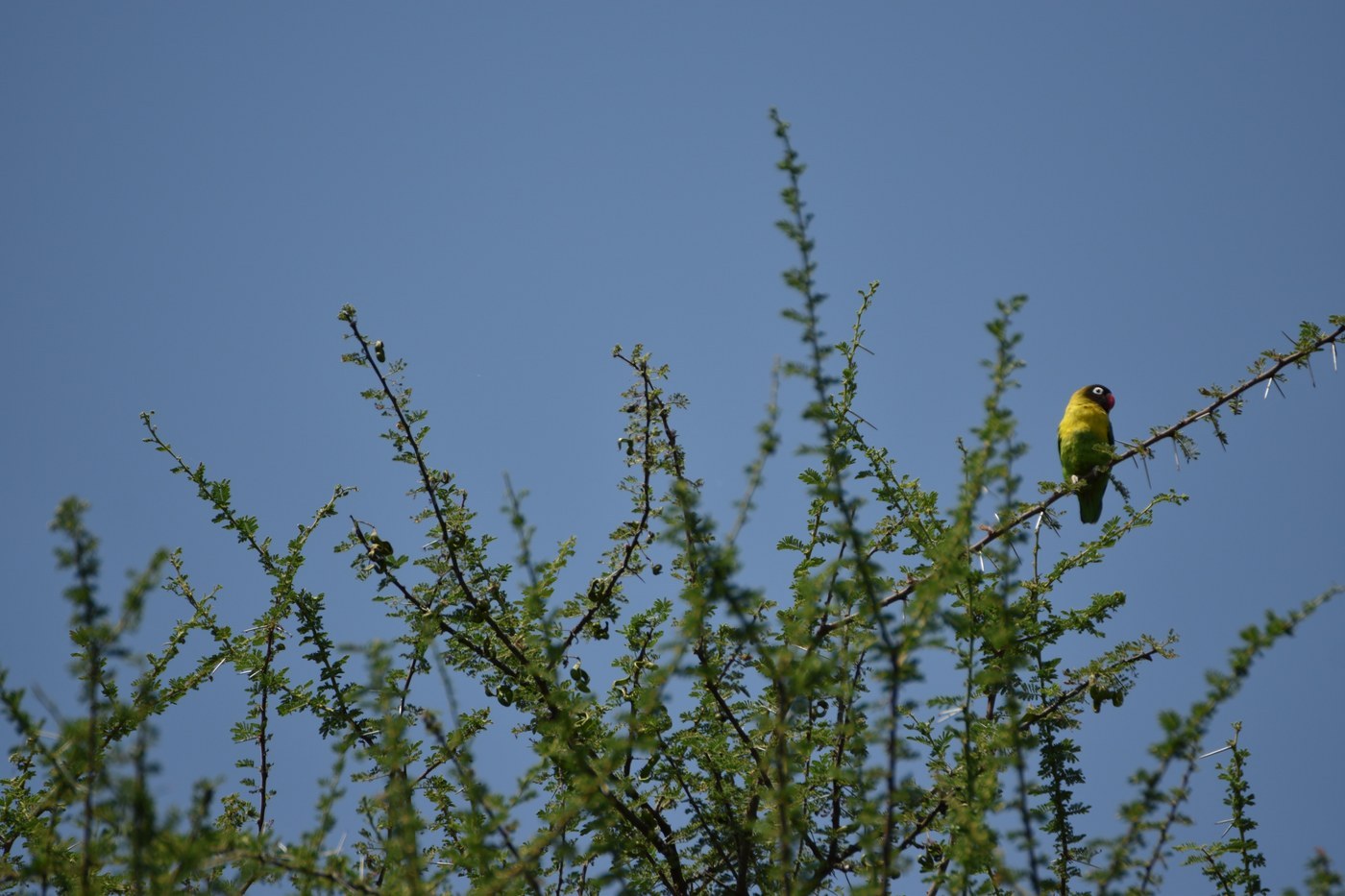
Masked Lovebird
Agapornis personatus
A small East African parrot with a dark blackish-brown head, yellow collar, and a bold white eye-ring.
- Size
- About 14-15 cm (5.5-6 in) long
- Habitat
- Dry acacia savanna, woodland, and grassland near water in East Africa
- Type
- parrot
Spotted a bird like this?
Identify any bird from a photo, free.
Overview
The Masked Lovebird, also called the Yellow-collared Lovebird, is a small parrot native to north-central Tanzania. It is easily recognized by its dark head contrasting sharply with a bright yellow collar and green body.
Appearance
The head, chin, and throat are dark blackish-brown, giving the bird its 'masked' appearance. A vivid yellow band wraps around the neck and upper breast, transitioning into bright green on the rest of the body. A bold white eye-ring surrounds each eye, and the bill is red. Sexes look alike.
General Impression
Masked Lovebirds are compact, energetic parrots usually encountered in small, active, vocal flocks.
How to identify it
Key Field Marks
- Dark blackish-brown head and throat
- Bright yellow collar across the neck and upper breast
- Bold white bare-skin eye-ring
- Red bill
- Green body with blue rump
Similar Species
- Fischer's Lovebird shows an olive-green head and orange-red face rather than a dark mask and yellow collar.
- Peach-faced Lovebird has no white eye-ring and a soft peach face rather than a sharply defined dark head.
- Hybrids with Fischer's Lovebird occur in captivity and show intermediate head color between dark brown and olive-orange.
The stark contrast between a near-black head, yellow collar, and green body is diagnostic for this species.
Habitat & range
Range
Native to a small area of north-central Tanzania, largely around Arusha and Lake Manyara. Escaped or introduced populations occur locally in Kenya, including near Nairobi.
Habitat
Occupies dry acacia savanna, open woodland, and grassland, generally staying close to permanent water sources. Also uses cultivated areas for feeding.
Movements
Mostly sedentary, with local movements tied to rainfall and food or water availability.
Behavior & voice
Social Behavior
Highly social, usually seen in small flocks that forage, fly, and roost together; pairs maintain close contact within the flock.
Voice
Produces sharp, shrill chirps and screeching calls, frequently given in flight and when flocks are disturbed.
Feeding
Forages on the ground and in low shrubs for grass seeds, and also feeds on fruit and cultivated grain when available.
Nesting and Breeding
Nests in tree cavities, building a lined nest chamber; the female carries nesting material tucked into her rump feathers. Typical clutches contain four to six eggs, incubated for about 23 days, with chicks fledging roughly six weeks after hatching.
Frequently asked questions
Why is it called the Masked Lovebird?
Its dark blackish-brown head and throat resemble a mask, contrasting with the bright yellow collar below.
Where does the Masked Lovebird live in the wild?
It is native to a small region of north-central Tanzania, primarily around Arusha and Lake Manyara.
How do you tell a Masked Lovebird from a Fischer's Lovebird?
The Masked Lovebird has a dark blackish-brown head and yellow collar, while Fischer's Lovebird has an olive-green head and orange-red face; both share a white eye-ring.
What color is a Masked Lovebird's bill?
It has a bright red bill.
Are Masked Lovebirds social birds?
Yes, they live in small, active flocks and pairs stay in close contact with one another.
Masked Lovebird guides
In-depth guides for identifying, finding, and understanding Masked Lovebird.
Other birds you may enjoy
Eclectus Parrot
35-42 cm (14-16.5 in) long
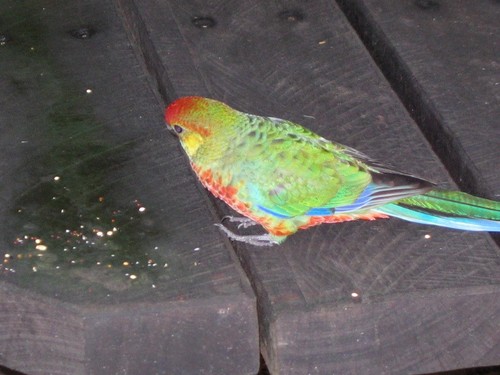
Western Rosella
25-30 cm (10-12 in) long
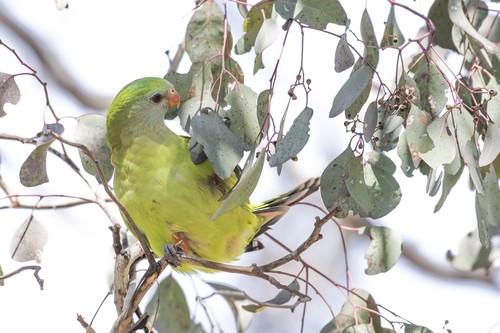
Superb Parrot
About 40 cm (16 in) long including a long tail
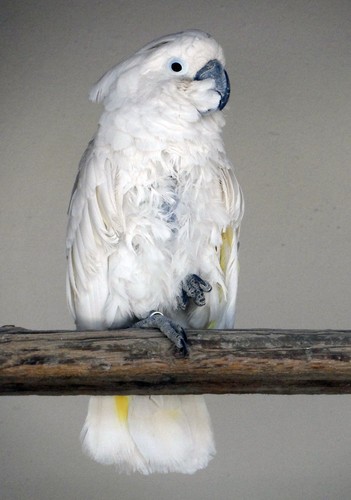
Umbrella Cockatoo
About 46 cm (18 in) long
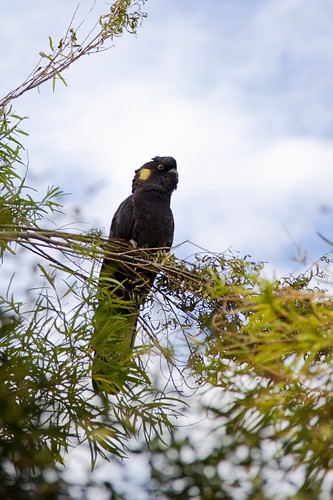
Yellow-tailed Black Cockatoo
55-65 cm long; wingspan up to about 130 cm
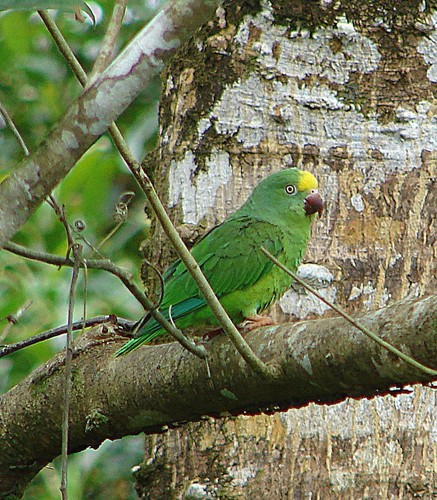
Yellow-crowned Amazon
About 35-38 cm (14-15 in) long
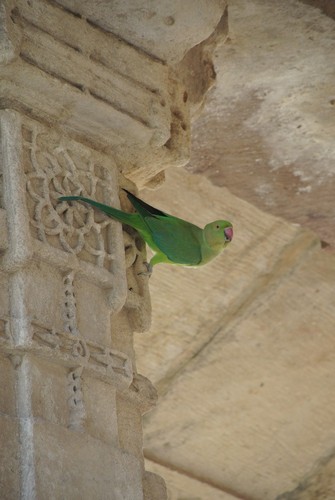
Rose-ringed Parakeet
40 cm (16 in) long including long tail
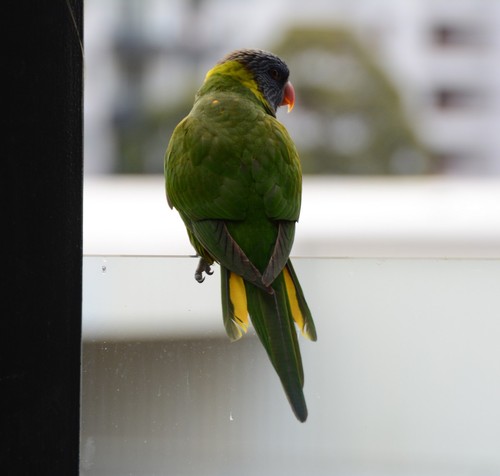
Rainbow Lorikeet
25-30 cm (10-12 in) long
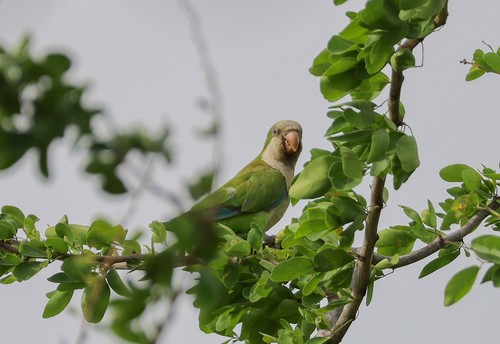
Quaker Parrot
28-31 cm (11-12 in) long
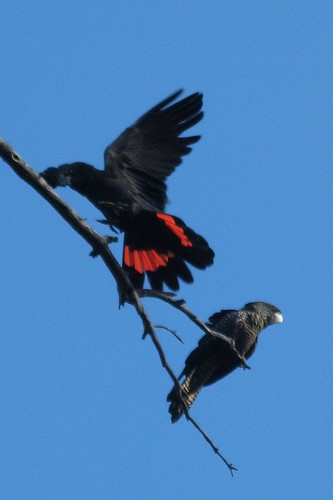
Red-tailed Black Cockatoo
55-65 cm long
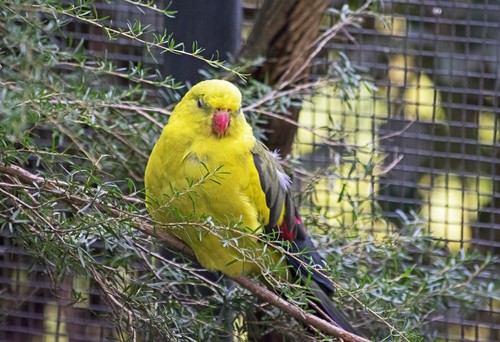
Regent Parrot
37-42 cm (15-17 in) long, including a long tail
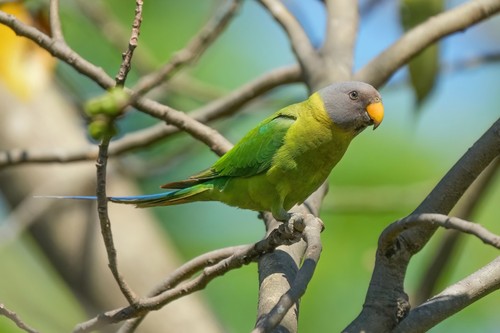
Plum-headed Parakeet
33 cm (13 in) long including tail