
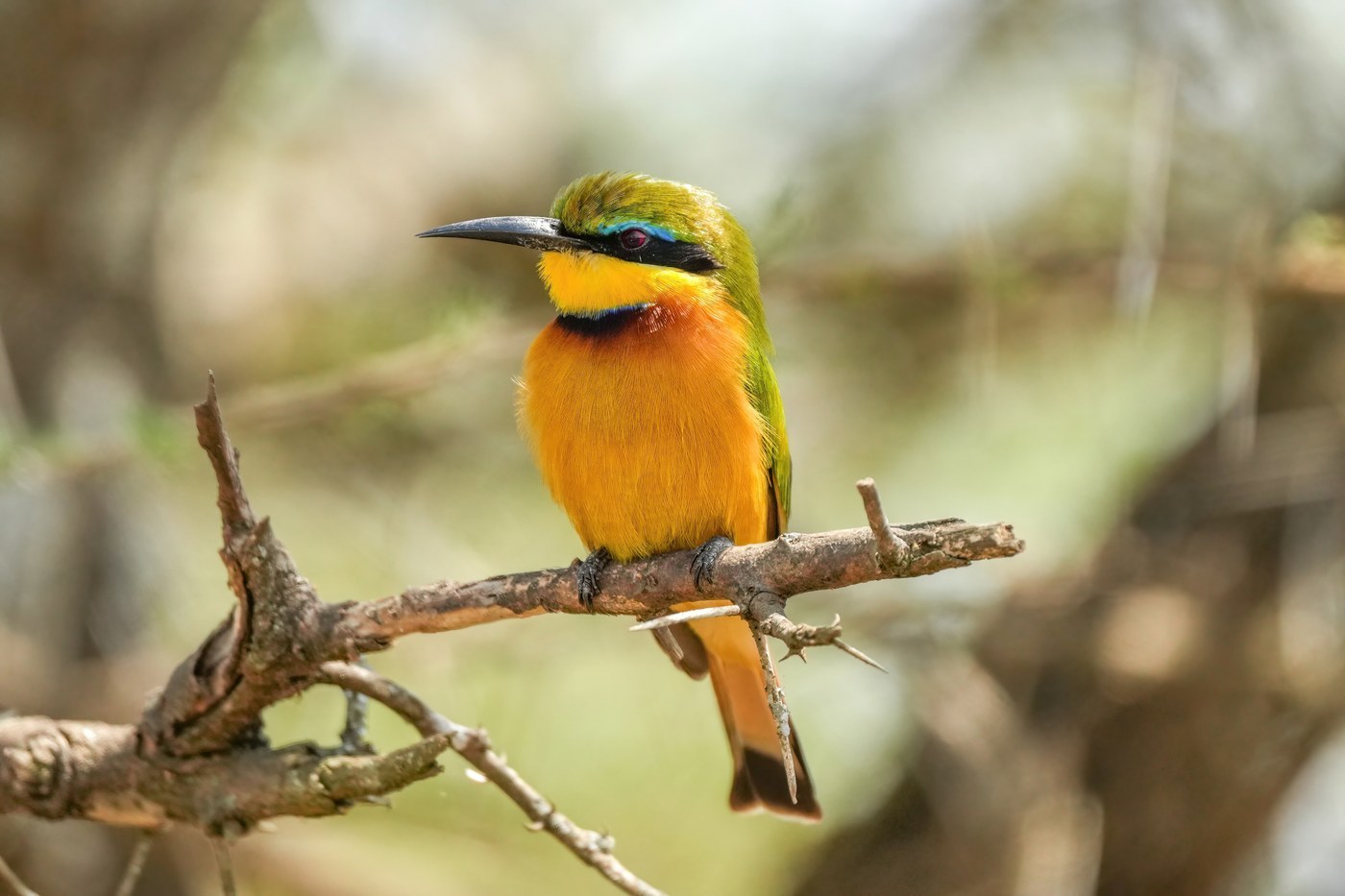
Little Bee-eater
Merops pusillus
A tiny, brilliantly colored African bee-eater with a green back, yellow throat, and black gorget, often seen perched low over grassland.
- Size
- 15–17 cm long, wingspan about 24–29 cm
- Habitat
- Open savanna, grassland, and woodland edges near water across sub-Saharan Africa
- Type
- other
Spotted a bird like this?
Identify any bird from a photo, free.
Overview
The Little Bee-eater is the smallest bee-eater in Africa, a compact, brightly plumaged bird often seen perched on low twigs, fences, or reed stems over open ground.
Appearance
- Bright green crown, back, and wings
- Golden-yellow throat bordered below by a narrow black gorget (breast band)
- Warm cinnamon-brown crown wash and rufous-tinged underparts
- Black eye-stripe bordered above and below by pale blue lines
- Short, squared-off tail with a thin black terminal band — unlike the elongated tail streamers of larger bee-eaters
Sexes look alike, and juveniles are a duller, more washed-out version of the adult pattern.
How to identify it
Key field marks
- Very small size (about sparrow-sized or smaller)
- Short tail without streamers, unlike Carmine or European Bee-eaters
- Yellow throat sharply demarcated by a black breast band
- Green upperparts with a rufous wash on the crown and underparts
Similar species
- Larger bee-eaters (Carmine, White-fronted, European) are noticeably bigger and show longer, often streamered tails.
- Swallow-tailed Bee-eater is similar in size but has a forked, blue-black tail and lacks the rufous underparts.
- Overall, the combination of tiny size, short square tail, and black gorget on a yellow throat is diagnostic.
Habitat & range
Range
Widespread across sub-Saharan Africa, from Senegal and The Gambia east to Ethiopia and Somalia, and south through East Africa to South Africa.
Habitat
Favors open country: savanna, grassland, cultivated land, and marsh or riverine edges, usually near water. It perches conspicuously on low bushes, fence wires, or reed tips rather than high in trees.
Movements
Largely resident, though some populations make local or seasonal movements linked to rainfall and insect abundance.
Behavior & voice
Behavior
Hunts by sallying from a low perch to snatch flying insects in the air, then returns to the same or a nearby perch to beat and rub the prey against the perch before swallowing it — a technique that removes stingers from bees and wasps.
Voice
Gives soft, high-pitched contact notes and a light trilling twitter, quieter and less far-carrying than the calls of larger bee-eaters.
Feeding
Diet is almost entirely flying insects, especially bees, wasps, and flying ants, taken in short aerial sallies.
Nesting
Excavates a narrow tunnel nest in flat or sloping sandy ground, low earth banks, or road cuttings, rather than tall river cliffs. Pairs may nest solitarily or in loose, small colonies, and lay 4–6 white eggs.
Frequently asked questions
How can I tell a Little Bee-eater from other African bee-eaters?
Its small size, short square tail without streamers, and yellow throat set off by a black breast band are the quickest clues; larger bee-eaters are bigger-bodied with longer tails.
Where does the Little Bee-eater live?
It is found across sub-Saharan Africa in open savanna, grassland, and cultivated areas, usually near water, and is mostly a resident, non-migratory species.
What does the Little Bee-eater eat?
It feeds on flying insects, especially bees and wasps, caught in short aerial sallies from a low perch.
Does the Little Bee-eater nest in colonies?
It usually nests solitarily or in small, loose groups, digging a tunnel into flat ground or a low bank, unlike the large cliff colonies formed by carmine bee-eaters.
Little Bee-eater guides
In-depth guides for identifying, finding, and understanding Little Bee-eater.
Other birds you may enjoy
Kiwi
35-55 cm (14-22 in) long; roughly chicken-sized
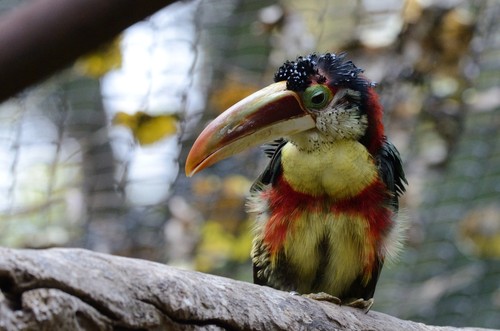
Curl-crested Aracari
41-46 cm (16-18 in) long, including a long bill and tail
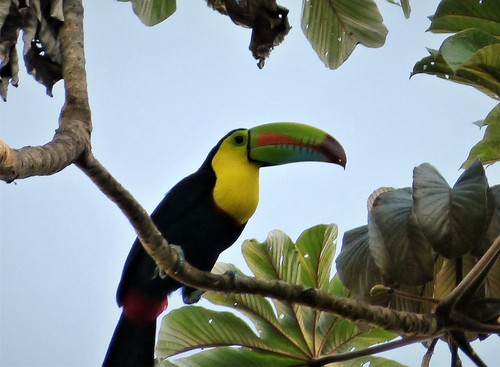
Keel-billed Toucan
42-55 cm (17-22 in) long including bill
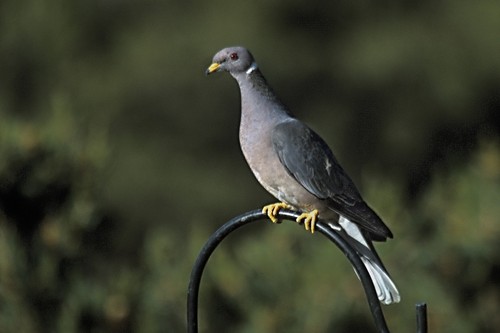
Band-tailed Pigeon
33-38 cm (13-15 in) long, wingspan about 66 cm (26 in)
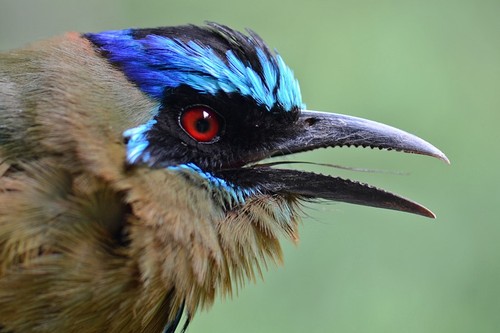
Blue-crowned Motmot
38-43 cm (15-17 in) long including tail
White-tipped Dove
27-30 cm (10.5-12 in) long, 38-43 cm wingspan
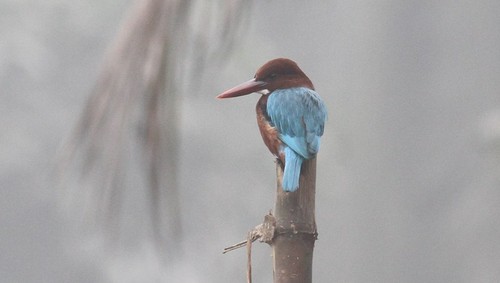
White-throated Kingfisher
27-28 cm (10.5-11 in) long
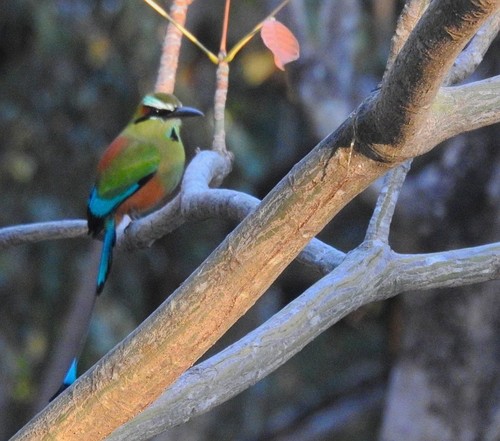
Turquoise-browed Motmot
34 cm (13 in) long including tail
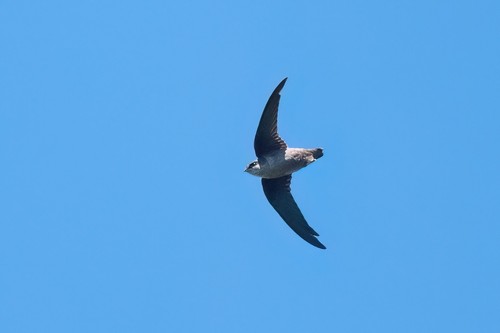
Vaux's Swift
10-12 cm (4-4.5 in) long, 27-30 cm wingspan
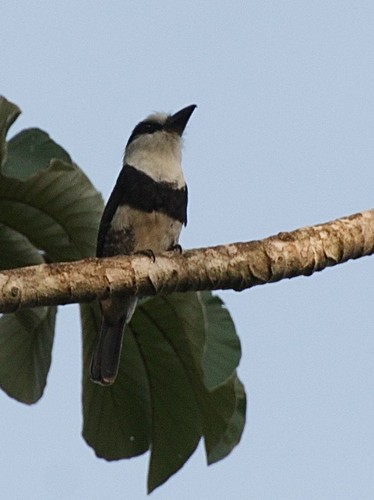
White-necked Puffbird
22-24 cm (8.5-9.5 in) long
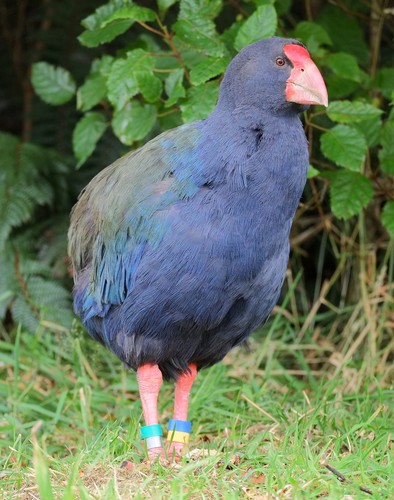
Takahe
50 cm (20 in) long, up to 3.5 kg; flightless
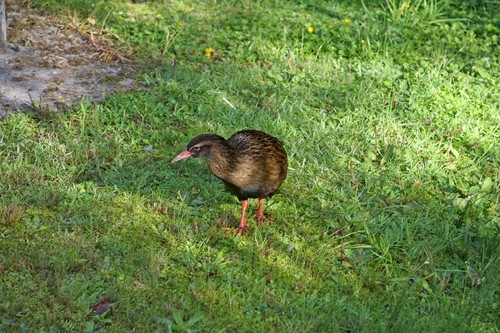
Weka
50-60 cm (20-24 in) long; flightless