
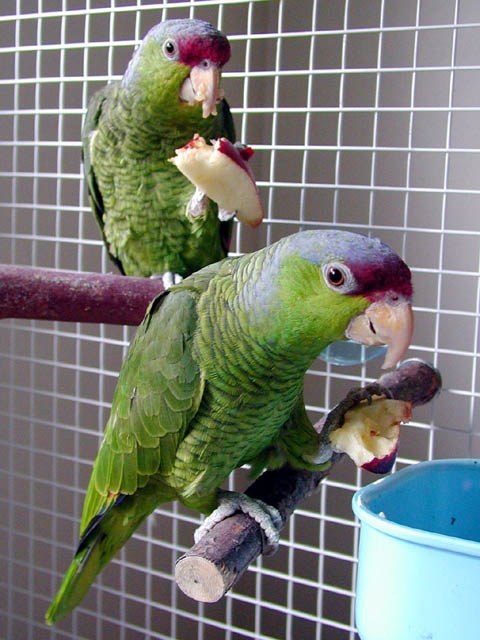
Lilac-crowned Amazon
Amazona finschi
A green Mexican Amazon parrot with a maroon forehead and a lilac-blue crown, restricted to the Pacific slope.
- Size
- About 33 cm (13 in) long
- Habitat
- Tropical deciduous forest and pine-oak foothill forest on the Pacific slope of Mexico
- Type
- parrot
Spotted a bird like this?
Identify any bird from a photo, free.
Overview
The Lilac-crowned Amazon, also called the Lilac-crowned Parrot or Finsch's Amazon, is a medium-sized parrot endemic to the Pacific slope of Mexico. It is named for the soft lilac-blue wash across its crown and nape, set off by a maroon-red forehead.
Appearance
- Body: green overall with darker scalloped feather edges
- Forehead: deep maroon-red patch
- Crown and nape: pale lilac-blue wash
- Wing: typically lacks a bold red or orange patch seen in some related Amazon species, though some blue may show in the flight feathers
- Bill: pale horn-colored, distinctive for being lighter than in many other Amazon parrots
- Eyes: orange iris with a whitish bare eye-ring
Juveniles show duller head coloring, with the maroon and lilac tones becoming more defined as they mature.
How to identify it
Key field marks
- Maroon-red forehead patch paired with a lilac-blue crown and nape
- Pale, light-colored bill
- Green body typical of Amazon parrots, with a stocky shape and short square tail
- Restricted to Pacific Mexico, aiding identification by range
Similar species
- Red-crowned Amazon (Amazona viridigenalis) has a solidly red crown without the lilac-blue wash and a darker bill, and occurs mainly in northeastern Mexico rather than the Pacific slope.
- Blue-fronted Amazon shows a bright turquoise forehead and yellow face, a different pattern and a different (South American) range.
The pale bill combined with the maroon-and-lilac head pattern, within its Pacific Mexico range, distinguishes this species from other Amazon parrots.
Habitat & range
Range
The Lilac-crowned Amazon is endemic to the Pacific slope of Mexico, ranging from southern Sinaloa south through Nayarit, Jalisco, and Michoacán to Guerrero and Oaxaca.
Habitat
It occupies tropical deciduous and semi-deciduous forest, foothill pine-oak forest, and adjacent woodland, typically at low to moderate elevations along the Pacific versant.
Movements
The species is largely resident, though some local or elevational movement may occur in response to seasonal food availability. Its range has become increasingly fragmented due to land conversion for agriculture and development.
Behavior & voice
Social behavior
Lilac-crowned Amazons are usually observed in pairs or small flocks, gathering in larger, noisy groups at good feeding trees or communal roosts outside the breeding season.
Voice
Calls include loud screeches and a range of harsher notes typical of Amazon parrots, used to keep flocks in contact as they move through the forest.
Feeding
They forage in the forest canopy for fruits, seeds, nuts, and flowers, moving between fruiting trees as availability changes through the year.
Nesting and breeding
Pairs nest in natural tree cavities, often in large trees within deciduous or pine-oak forest, laying a clutch of typically two to three eggs. Loss of large nesting trees due to logging has been identified as a significant threat to breeding success.
Frequently asked questions
What does a Lilac-crowned Amazon look like?
It has a green body, a maroon-red forehead, and a soft lilac-blue wash over the crown and nape, along with a notably pale bill.
Where is the Lilac-crowned Amazon found?
It is endemic to the Pacific slope of Mexico, from Sinaloa south to Oaxaca, in tropical deciduous and foothill pine-oak forest.
Is the Lilac-crowned Amazon endangered?
Yes, it is classified as Endangered due to habitat loss and historical trapping pressure within its limited Pacific Mexico range.
How can I tell a Lilac-crowned Amazon from a Red-crowned Amazon?
The Lilac-crowned Amazon has a maroon forehead with a lilac-blue crown and a pale bill, while the Red-crowned Amazon has a solidly red crown and a darker bill, and the two species occupy different regions of Mexico.
What does a Lilac-crowned Amazon eat?
It feeds on fruits, seeds, nuts, and flowers gathered in forest canopy habitats along Mexico's Pacific slope.
Lilac-crowned Amazon guides
In-depth guides for identifying, finding, and understanding Lilac-crowned Amazon.
Other birds you may enjoy
Eclectus Parrot
35-42 cm (14-16.5 in) long
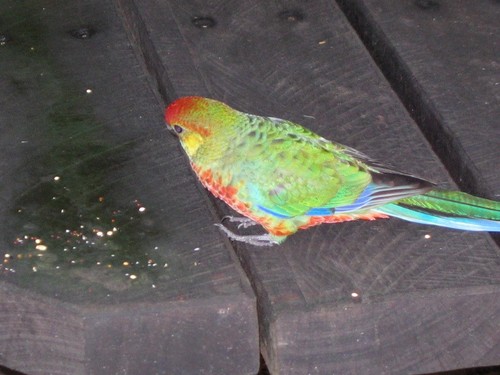
Western Rosella
25-30 cm (10-12 in) long
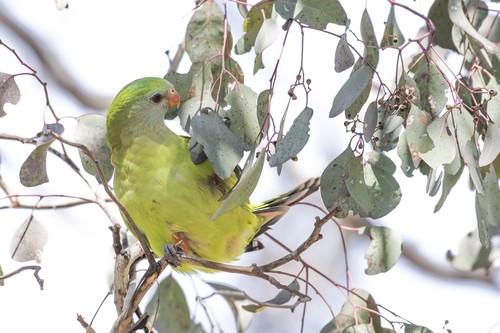
Superb Parrot
About 40 cm (16 in) long including a long tail
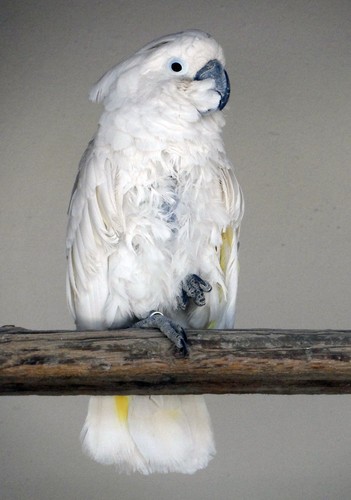
Umbrella Cockatoo
About 46 cm (18 in) long
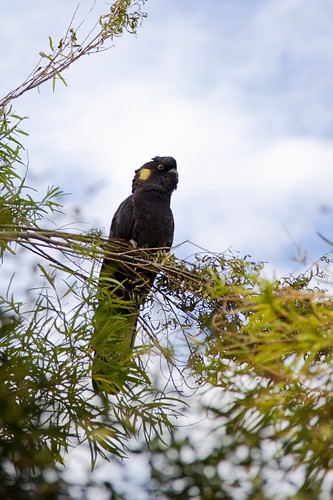
Yellow-tailed Black Cockatoo
55-65 cm long; wingspan up to about 130 cm
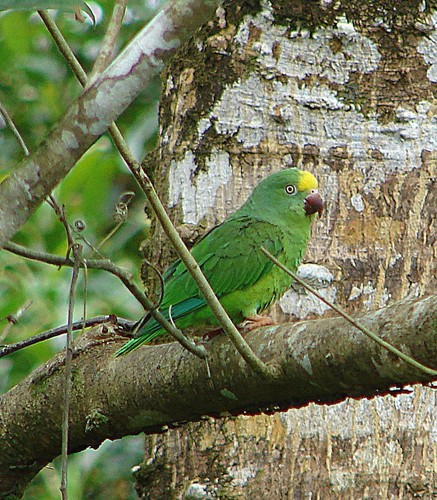
Yellow-crowned Amazon
About 35-38 cm (14-15 in) long
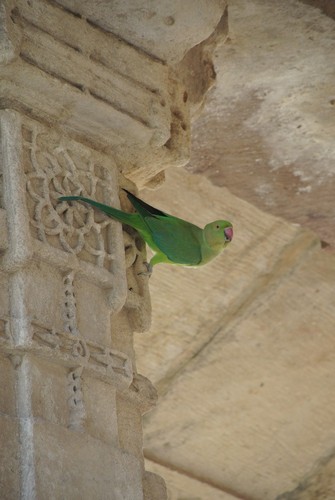
Rose-ringed Parakeet
40 cm (16 in) long including long tail
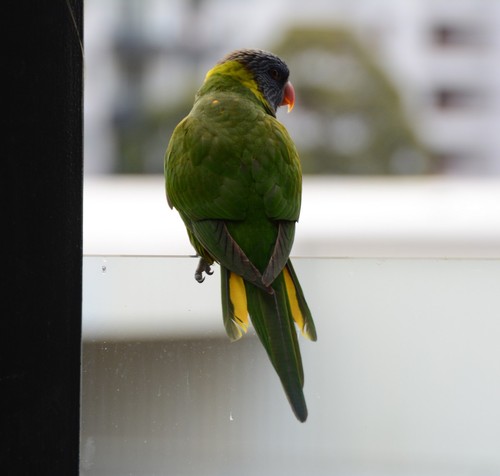
Rainbow Lorikeet
25-30 cm (10-12 in) long
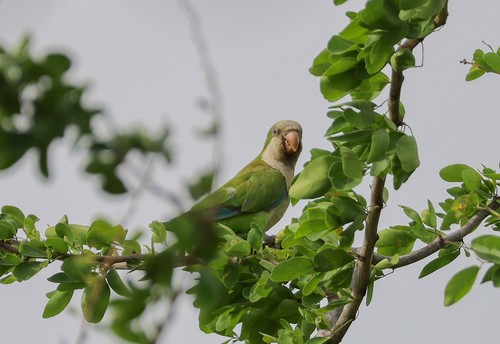
Quaker Parrot
28-31 cm (11-12 in) long
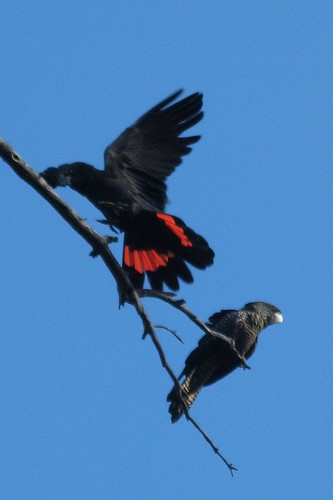
Red-tailed Black Cockatoo
55-65 cm long
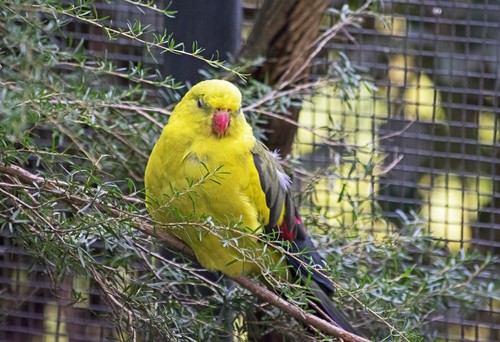
Regent Parrot
37-42 cm (15-17 in) long, including a long tail
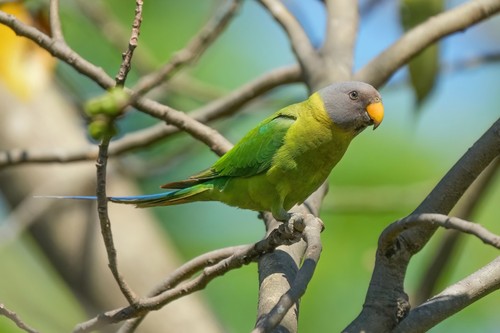
Plum-headed Parakeet
33 cm (13 in) long including tail