
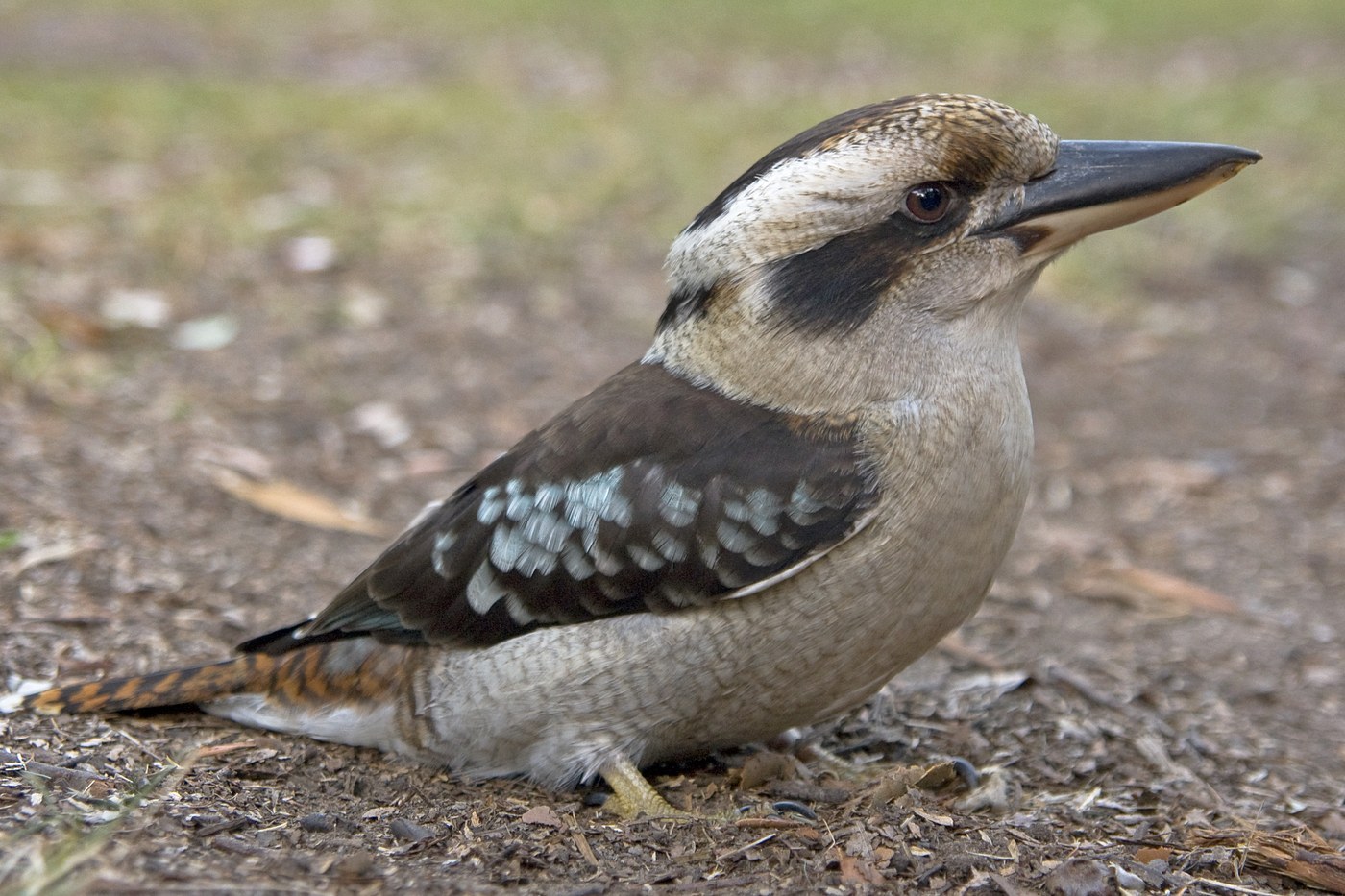
Laughing Kookaburra
Dacelo novaeguineae
A large, stocky Australian kingfisher famous for its raucous, human-like laughing call.
- Size
- Body 40-47 cm (16-18.5 in), one of the largest kingfishers
- Habitat
- Eucalypt woodland, forest edge, and suburban parks and gardens
- Type
- other
Spotted a bird like this?
Identify any bird from a photo, free.
Overview
The Laughing Kookaburra is a large, heavy-bodied kingfisher native to eastern Australia, instantly recognizable both by its size and its loud, cackling call that sounds like human laughter.
It has a large head, a broad dark brown eye-stripe, whitish-cream underparts and head, and brown, mottled upperparts with dull blue patches on the wings. The thick, dagger-like bill is dark above and pale below. Unlike many kingfishers, it is not brightly colored and rarely hunts near water, instead favoring dry woodland.
How to identify it
Key field marks
- Large, stocky build with an oversized head and heavy black bill
- Cream-white head and underparts with a broad dark brown eye-stripe
- Brown, barred upperparts with patches of dull blue on the wing coverts
- Loud, cackling "laughing" call, often given in chorus at dawn and dusk
Similar species
- Blue-winged Kookaburra is very similar but has more extensive pale blue on the wings and tail, paler eyes, and a different, harsher call; ranges overlap only in parts of northern Australia
- No other Australian bird combines this size, shape, and laughing call, making adults straightforward to identify by voice alone
Habitat & range
Habitat
Open eucalypt woodland, forest edges, farmland with scattered trees, and well-vegetated urban and suburban areas including parks and gardens.
Range
Native to eastern Australia from Cape York Peninsula south to Victoria and South Australia; introduced populations exist in southwestern Australia and Tasmania.
Migration
Non-migratory and highly sedentary; family groups defend permanent territories year-round.
Behavior & voice
Behavior
Lives in cooperative family groups that defend a territory together, with older offspring often helping parents raise later broods.
Voice
The famous "laughing" call is a loud, cackling series used to advertise and defend territory, often performed as a chorus by multiple family members at dawn and dusk.
Feeding
An opportunistic predator that watches from an exposed perch and drops onto prey on the ground, taking large insects, worms, small snakes and lizards, frogs, and small mammals; prey is often beaten against a branch before being swallowed.
Nesting and breeding
Nests in a tree hollow or an excavated tunnel in an arboreal termite mound; breeding pairs are often assisted by non-breeding helpers from previous broods in feeding and defending the young.
Frequently asked questions
Why does the Laughing Kookaburra 'laugh'?
Its call is a territorial advertisement, often performed as a chorus by family groups to declare ownership of their territory.
What does a Laughing Kookaburra eat?
Large insects, worms, small snakes, lizards, frogs, and small mammals, caught by dropping onto prey from a perch.
Where do Laughing Kookaburras nest?
In tree hollows or tunnels excavated into arboreal termite mounds.
Do Laughing Kookaburras live near water?
Despite being kingfishers, they mainly inhabit dry woodland and rarely hunt near water.
Laughing Kookaburra guides
In-depth guides for identifying, finding, and understanding Laughing Kookaburra.
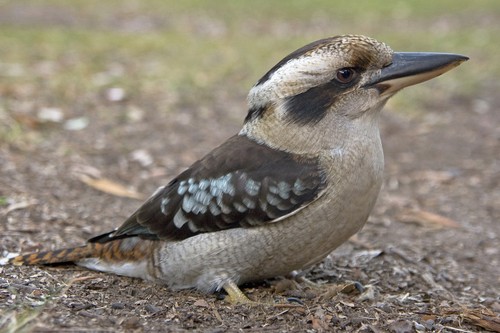
Laughing Kookaburra identified by the community
Real birds identified with Bird Identifier.
Other birds you may enjoy
Kiwi
35-55 cm (14-22 in) long; roughly chicken-sized
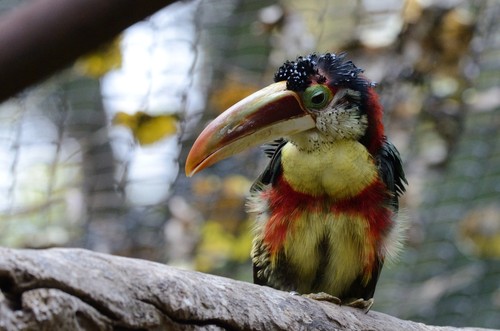
Curl-crested Aracari
41-46 cm (16-18 in) long, including a long bill and tail
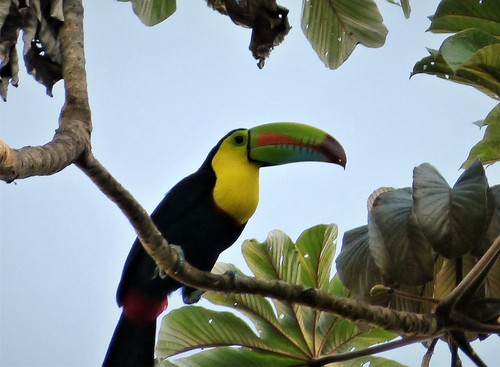
Keel-billed Toucan
42-55 cm (17-22 in) long including bill
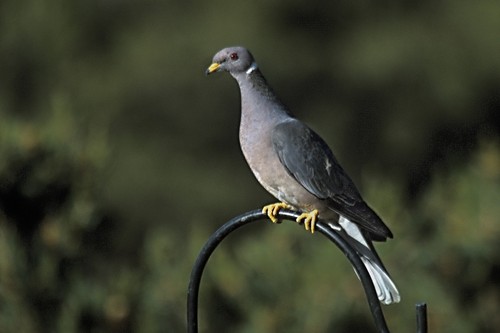
Band-tailed Pigeon
33-38 cm (13-15 in) long, wingspan about 66 cm (26 in)
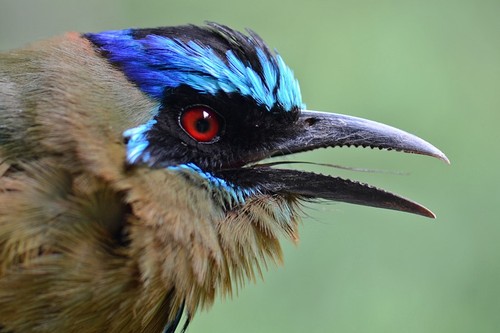
Blue-crowned Motmot
38-43 cm (15-17 in) long including tail
White-tipped Dove
27-30 cm (10.5-12 in) long, 38-43 cm wingspan
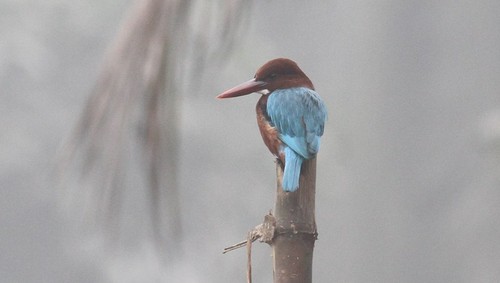
White-throated Kingfisher
27-28 cm (10.5-11 in) long
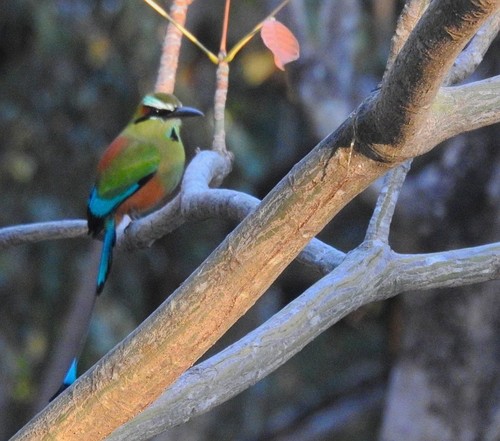
Turquoise-browed Motmot
34 cm (13 in) long including tail
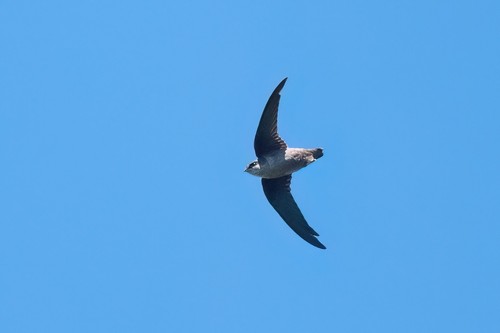
Vaux's Swift
10-12 cm (4-4.5 in) long, 27-30 cm wingspan
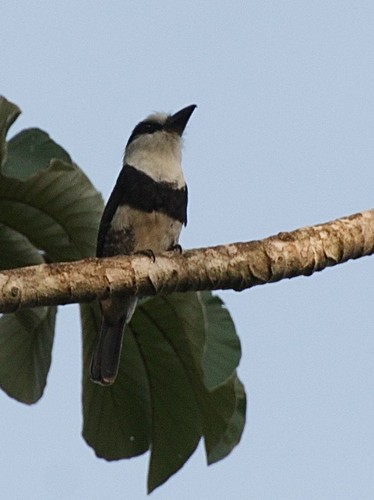
White-necked Puffbird
22-24 cm (8.5-9.5 in) long
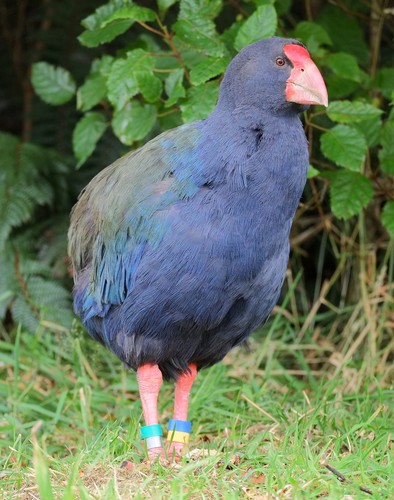
Takahe
50 cm (20 in) long, up to 3.5 kg; flightless
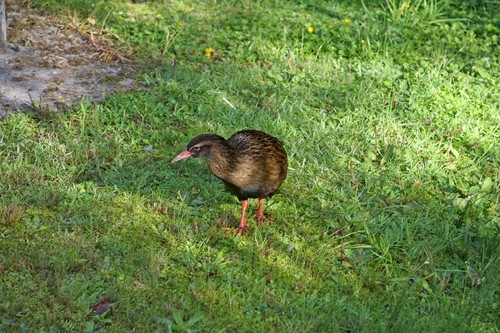
Weka
50-60 cm (20-24 in) long; flightless