
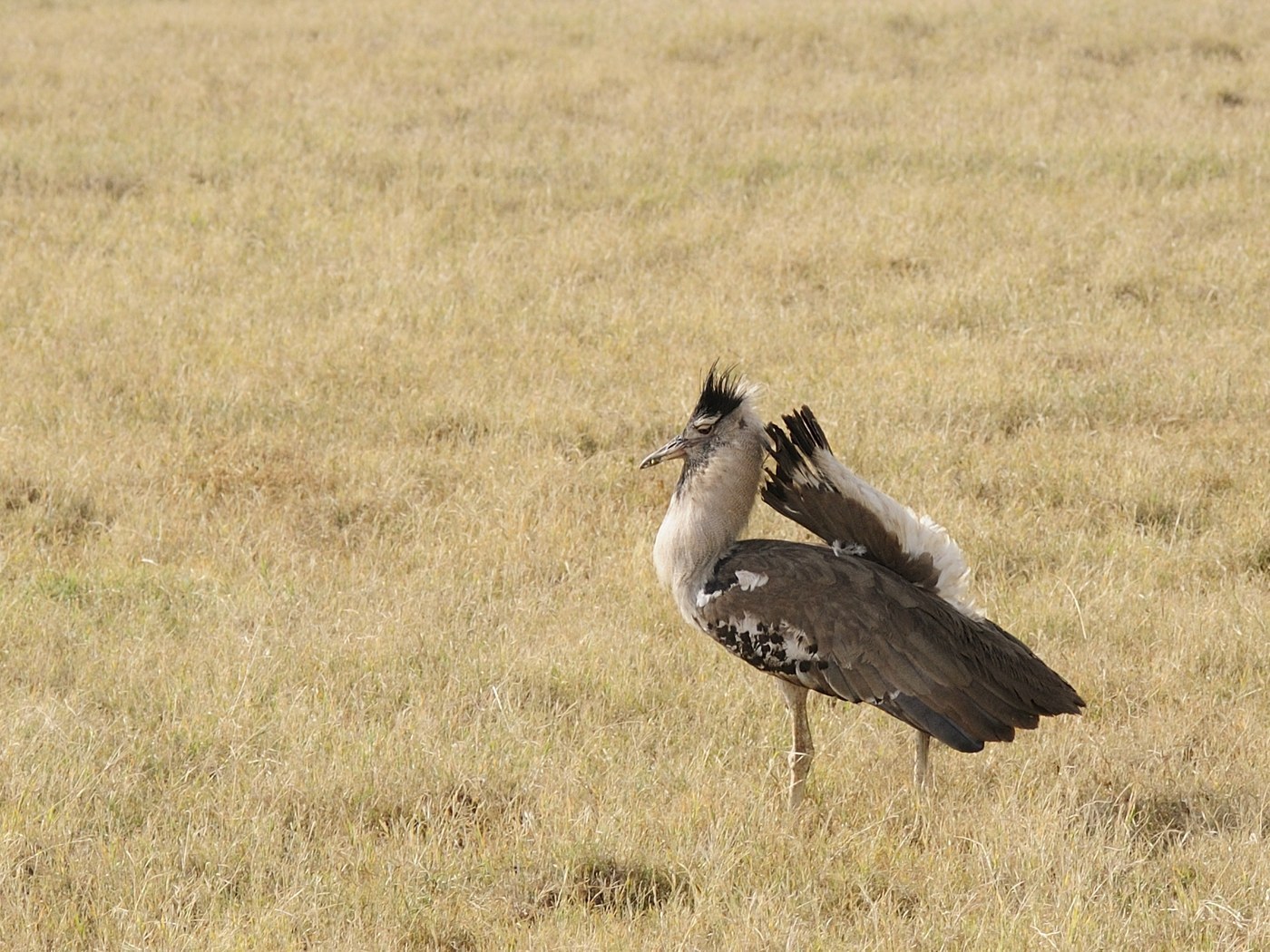
Kori Bustard
Ardeotis kori
The Kori Bustard is Africa's heaviest flying bird, a stately grassland giant known for its intricate grey plumage and elaborate male courtship display.
- Size
- Males up to 120-150 cm long and about 18 kg with a wingspan near 2.7 m; females notably smaller
- Habitat
- Open grassland, savanna, and semi-arid plains of eastern and southern Africa
- Type
- other
Spotted a bird like this?
Identify any bird from a photo, free.
Overview
The Kori Bustard is a huge, ground-dwelling bird of African grasslands and one of the heaviest birds in the world capable of flight. It walks with a slow, stately gait and is often mistaken at a distance for a mammal grazing in the grass.
Appearance
- Long neck and legs with a heavy, barrel-shaped body
- Grey neck and breast finely marked with fine dark vermiculations
- Blackish crest on the crown, raised during display
- Brown-and-black patterned back and wings with bold barring
How to identify it
Key field marks
- Very large size and long pale legs
- Finely vermiculated grey neck and breast
- Black crest atop the head
- Typically seen walking slowly through grassland rather than in flight
Similar species
Other African bustards, such as Denham's Bustard and Stanley's Bustard, are smaller and have different plumage patterns and ranges; the Kori Bustard is distinguished chiefly by its exceptional bulk.
Habitat & range
Range
Occurs in eastern Africa (Kenya, Tanzania) and southern Africa (Botswana, Namibia, South Africa, Zimbabwe), with a gap between the two population groups.
Habitat
Prefers open grassland and savanna, avoiding dense woodland and tall vegetation that would hinder its ground-based lifestyle.
Movement
Generally resident and sedentary, though it may move locally in response to rainfall and food availability.
Behavior & voice
Behavior
Spends most of its time walking on the ground and only takes flight when necessary, as flying is energetically costly for such a heavy bird.
Voice
Generally silent, but males give deep, booming calls during courtship display.
Feeding
An opportunistic omnivore, walking slowly through grassland to take insects, small reptiles, seeds, and other plant material.
Nesting and breeding
Males perform an elaborate courtship display, inflating the throat, raising the crest, and fanning the tail while strutting; the species is polygynous, and the female alone incubates the eggs and raises the precocial chicks on the ground.
Frequently asked questions
Can the Kori Bustard fly?
Yes, though it is one of the heaviest birds capable of flight and prefers walking, only flying when necessary.
What is the world's heaviest flying bird?
The Kori Bustard is often cited alongside the Great Bustard as one of the heaviest living birds capable of flight.
Where do Kori Bustards live?
They inhabit open grassland and savanna in eastern and southern Africa.
What does the Kori Bustard eat?
It is an omnivore, eating insects, small vertebrates, seeds, and other plant matter.
How do male Kori Bustards attract mates?
Males perform an elaborate display, inflating the throat sac, raising the crest, and fanning the tail while strutting on open ground.
Kori Bustard guides
In-depth guides for identifying, finding, and understanding Kori Bustard.
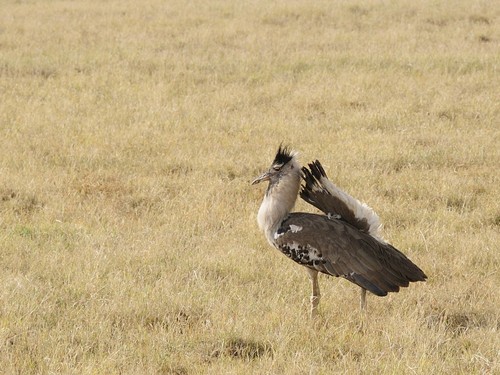
Other birds you may enjoy
Kiwi
35-55 cm (14-22 in) long; roughly chicken-sized
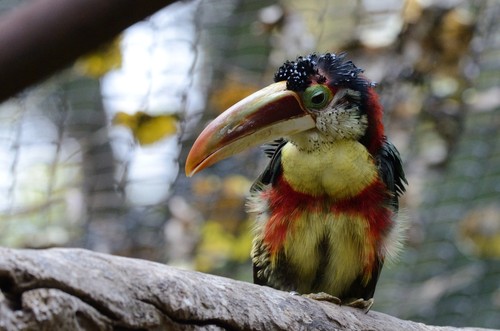
Curl-crested Aracari
41-46 cm (16-18 in) long, including a long bill and tail
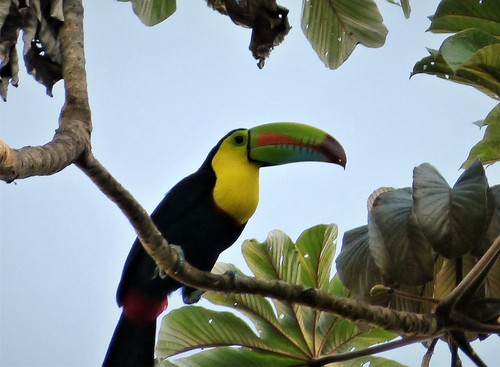
Keel-billed Toucan
42-55 cm (17-22 in) long including bill
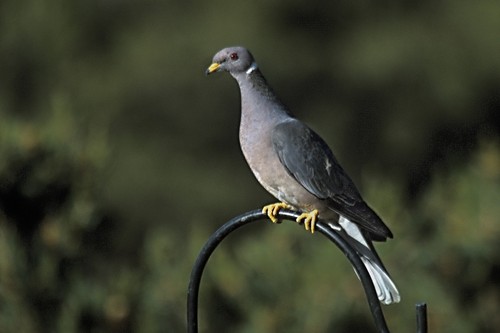
Band-tailed Pigeon
33-38 cm (13-15 in) long, wingspan about 66 cm (26 in)
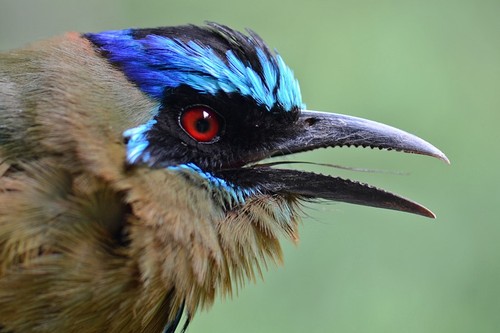
Blue-crowned Motmot
38-43 cm (15-17 in) long including tail
White-tipped Dove
27-30 cm (10.5-12 in) long, 38-43 cm wingspan
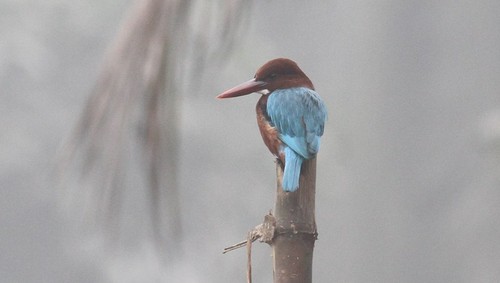
White-throated Kingfisher
27-28 cm (10.5-11 in) long
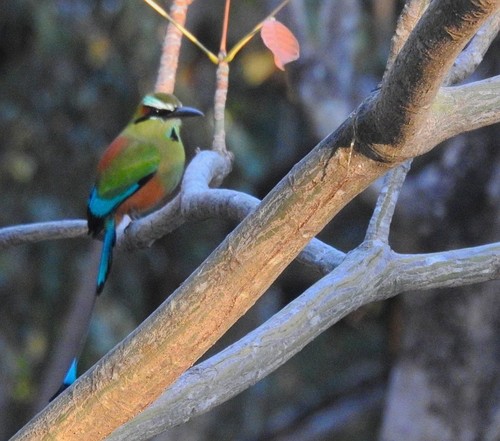
Turquoise-browed Motmot
34 cm (13 in) long including tail
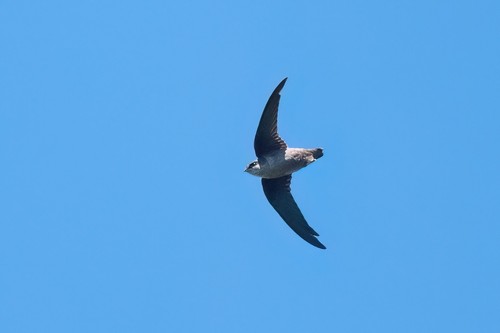
Vaux's Swift
10-12 cm (4-4.5 in) long, 27-30 cm wingspan
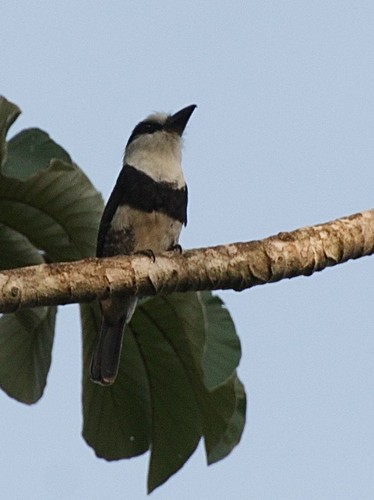
White-necked Puffbird
22-24 cm (8.5-9.5 in) long
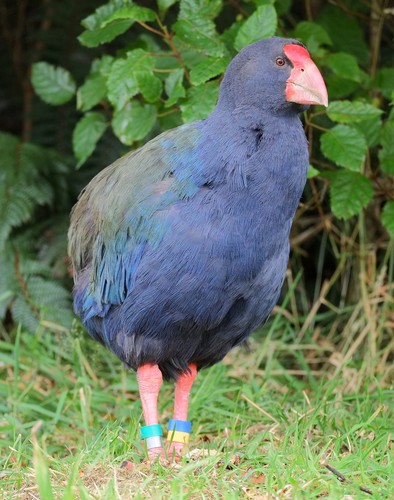
Takahe
50 cm (20 in) long, up to 3.5 kg; flightless
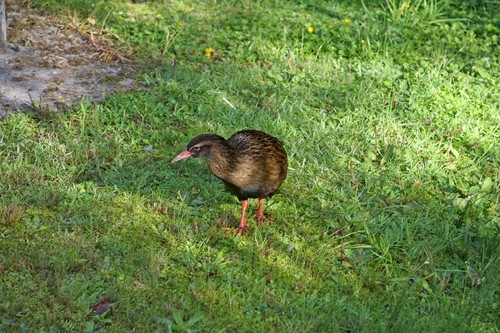
Weka
50-60 cm (20-24 in) long; flightless