
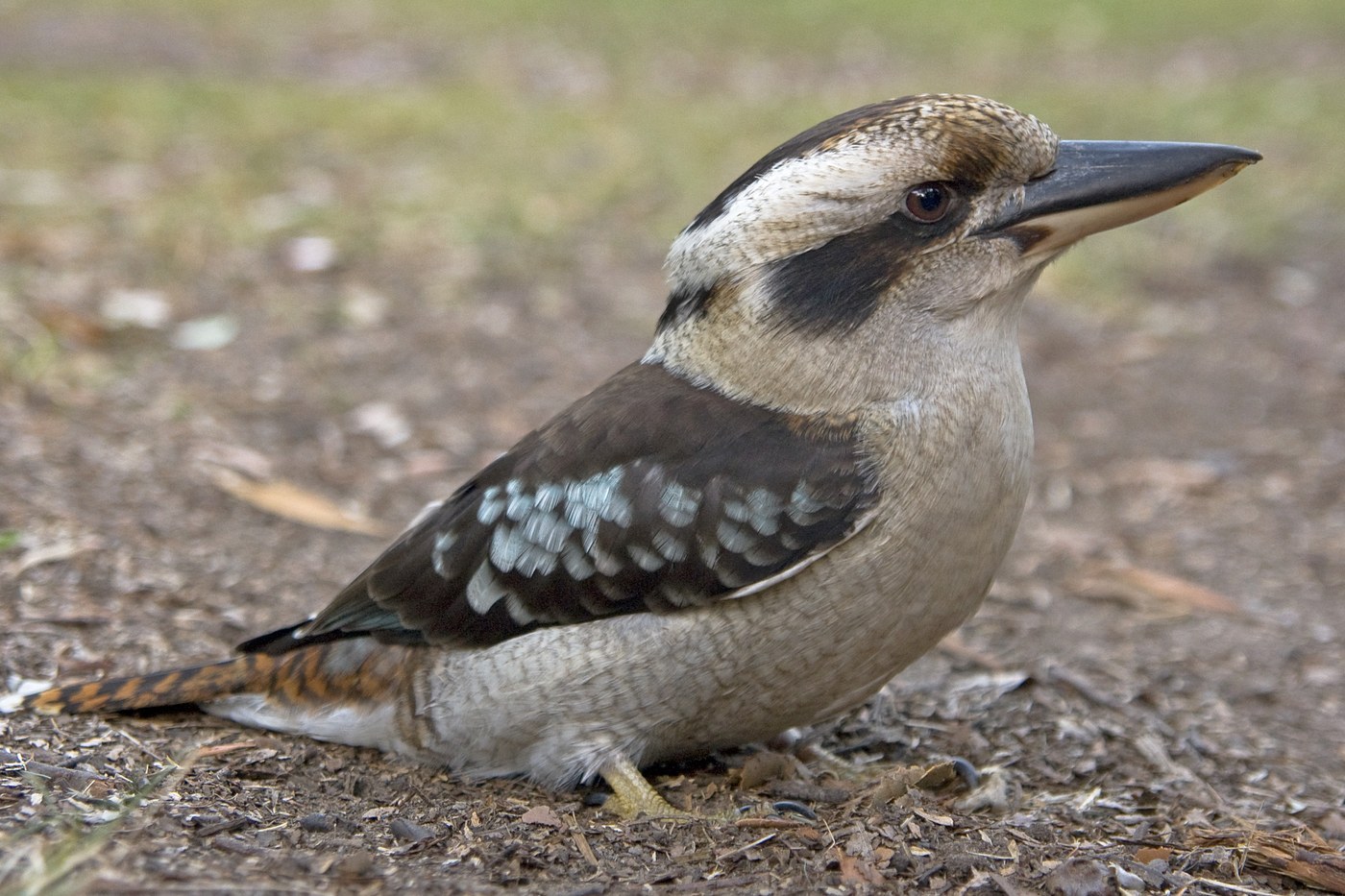
Kookaburra
Dacelo novaeguineae
A group of large, terrestrial-hunting kingfishers native to Australia and New Guinea, best known for their loud, laugh-like calls.
- Size
- Body 28-47 cm (11-18.5 in) depending on species, large-bodied kingfishers
- Habitat
- Woodland, forest, savanna, and suburban areas across Australia and New Guinea
- Type
- other
Spotted a bird like this?
Identify any bird from a photo, free.
Overview
"Kookaburra" is the common name for four large kingfisher species in the genus Dacelo (plus the related Rufous-bellied Kookaburra in genus Dacelo): the widespread Laughing Kookaburra, the Blue-winged Kookaburra of northern Australia and New Guinea, and the Spangled Kookaburra and Rufous-bellied Kookaburra of New Guinea.
All kookaburras share a heavy build, an oversized head, and a thick, powerful bill adapted for grabbing and subduing prey on the ground rather than fishing. Plumage varies by species from the cream-and-brown Laughing Kookaburra to the more blue-toned Blue-winged Kookaburra, but all retain the family's characteristic stocky, big-headed silhouette.
How to identify it
Key field marks
- Large, thickset kingfishers with an oversized head and heavy dagger-like bill
- Perch upright and motionless on exposed branches while scanning the ground for prey
- Loud, raucous, laugh-like or cackling calls, often given communally
Similar species
- The Laughing Kookaburra and Blue-winged Kookaburra overlap in parts of northern Australia and are separated chiefly by wing color (dull blue patches versus extensive pale blue) and call quality
- New Guinea's Spangled and Rufous-bellied Kookaburras are geographically separated from the Australian species and have distinctive barred or rufous underparts
Habitat & range
Habitat
Open woodland, forest edge, savanna, farmland, and urban parks and gardens, generally avoiding dense unbroken rainforest.
Range
Collectively found across mainland Australia, New Guinea, and nearby islands, with each species occupying a distinct portion of this range.
Migration
All kookaburra species are non-migratory and sedentary, holding permanent group territories.
Behavior & voice
Behavior
Most kookaburra species live in cooperative family groups that defend a shared territory, with helpers from previous broods assisting in raising young.
Voice
Each species has a distinctive loud call; the Laughing Kookaburra's cackling "laugh" is the best known, often performed as a dawn and dusk chorus.
Feeding
Sit-and-wait hunters that drop from an exposed perch onto prey on the ground below, taking insects, worms, small reptiles, frogs, and small mammals.
Nesting and breeding
Nest in tree hollows or tunnels dug into arboreal termite mounds; breeding is often cooperative, with non-breeding relatives helping to feed and guard the young.
Frequently asked questions
How many kookaburra species are there?
Four species make up the group: Laughing, Blue-winged, Spangled, and Rufous-bellied Kookaburra.
Are kookaburras a type of kingfisher?
Yes, kookaburras belong to the kingfisher family but specialize in hunting terrestrial prey rather than fish.
Where are kookaburras found?
Across Australia and New Guinea, with each species occupying a different part of that range.
What is the most well-known kookaburra sound?
The Laughing Kookaburra's loud, cackling call that resembles human laughter.
Kookaburra guides
In-depth guides for identifying, finding, and understanding Kookaburra.
Other birds you may enjoy
Kiwi
35-55 cm (14-22 in) long; roughly chicken-sized
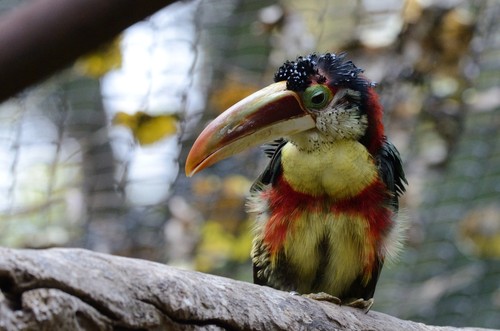
Curl-crested Aracari
41-46 cm (16-18 in) long, including a long bill and tail
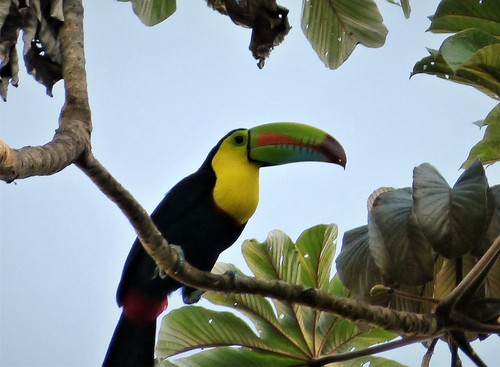
Keel-billed Toucan
42-55 cm (17-22 in) long including bill
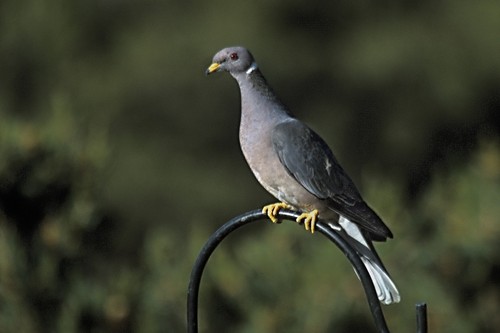
Band-tailed Pigeon
33-38 cm (13-15 in) long, wingspan about 66 cm (26 in)
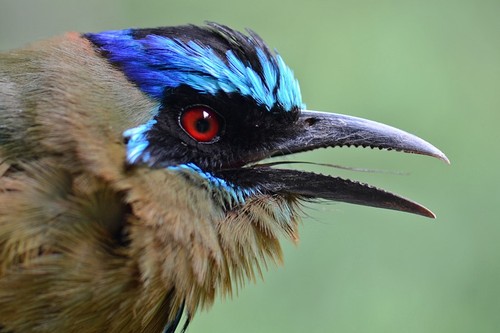
Blue-crowned Motmot
38-43 cm (15-17 in) long including tail
White-tipped Dove
27-30 cm (10.5-12 in) long, 38-43 cm wingspan
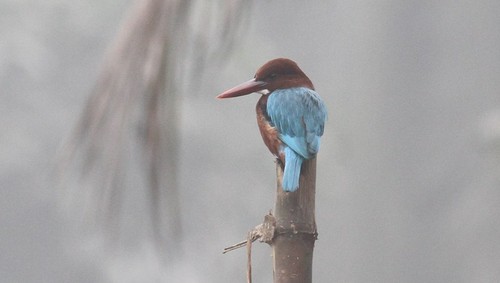
White-throated Kingfisher
27-28 cm (10.5-11 in) long
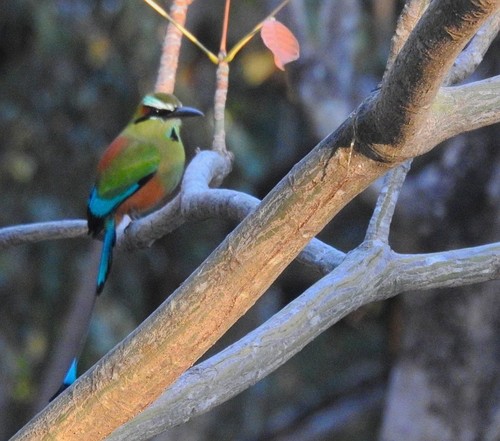
Turquoise-browed Motmot
34 cm (13 in) long including tail
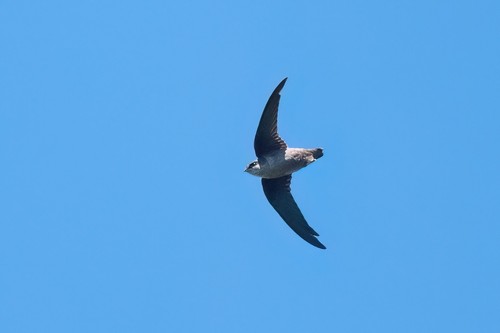
Vaux's Swift
10-12 cm (4-4.5 in) long, 27-30 cm wingspan
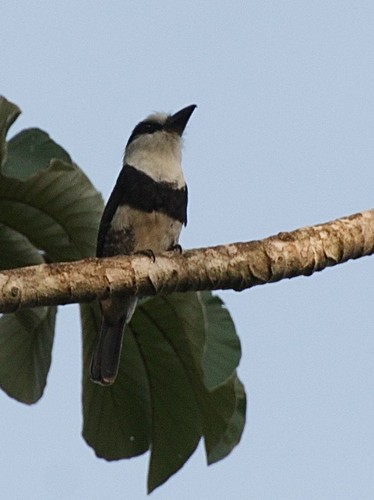
White-necked Puffbird
22-24 cm (8.5-9.5 in) long
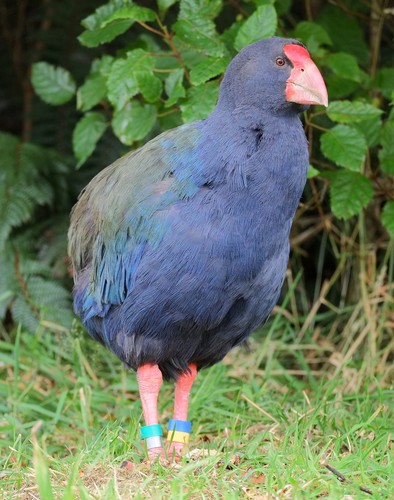
Takahe
50 cm (20 in) long, up to 3.5 kg; flightless
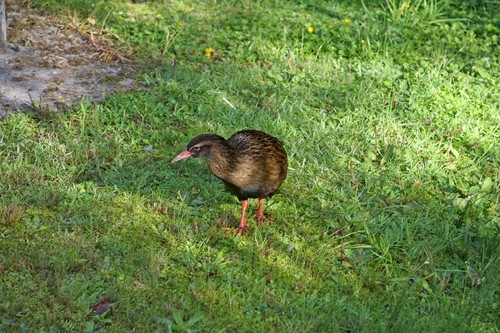
Weka
50-60 cm (20-24 in) long; flightless