
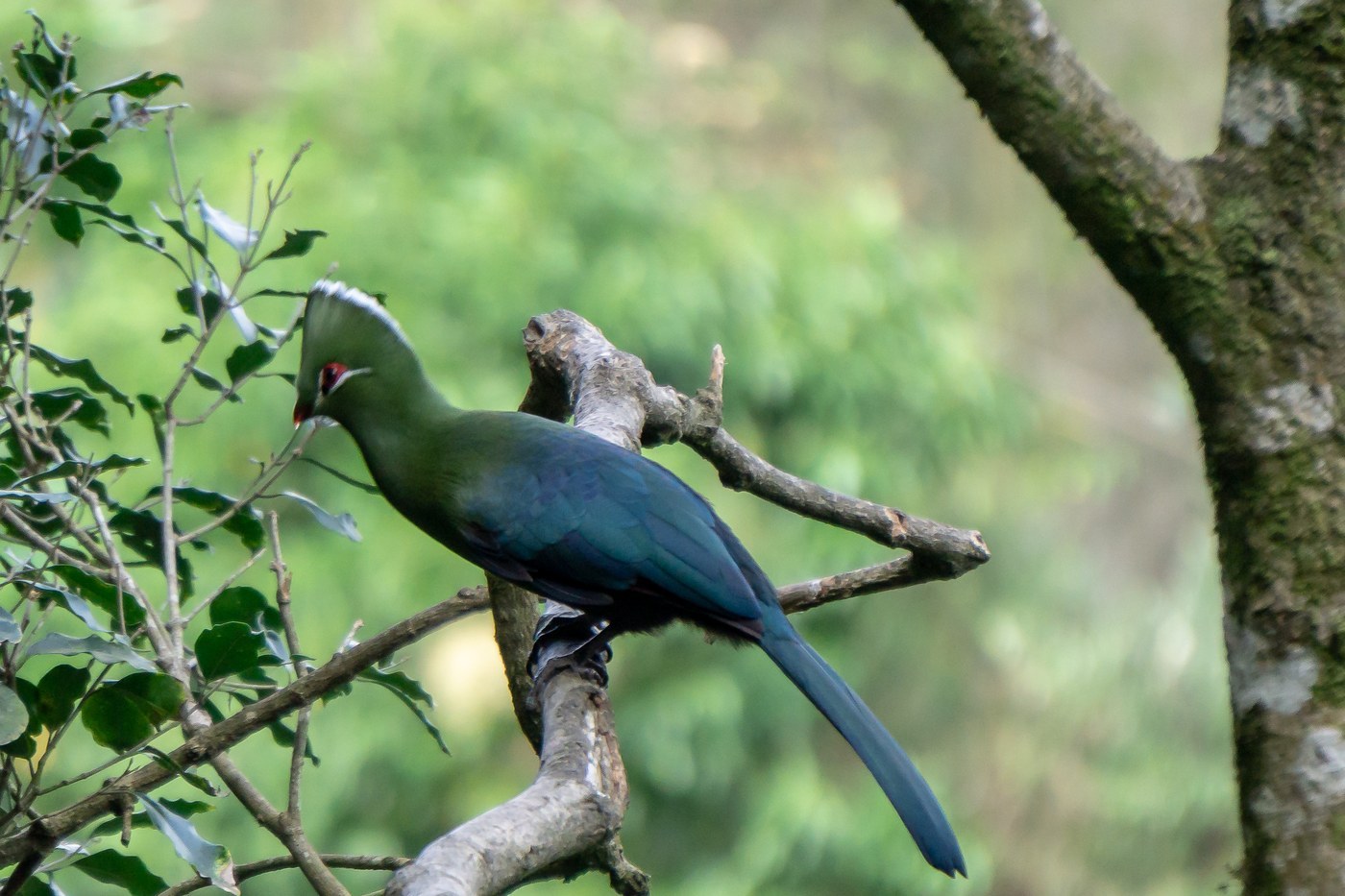
Knysna Turaco
Tauraco corythaix
A shy emerald-green forest turaco of South Africa's southern and eastern woodlands, best known for its far-carrying koorrr call and crimson wing flash.
- Size
- 40–47 cm (16–18.5 in) long
- Habitat
- Indigenous evergreen forest and dense coastal bush
- Type
- other
Spotted a bird like this?
Identify any bird from a photo, free.
Overview
The Knysna Turaco is a striking, secretive fruit-eater of South Africa's indigenous forests, named for the Knysna forest region along the southern Cape coast. Its plumage is a deep, glossy green over the head, neck, and back, with a green crest edged in white and a conspicuous white line beneath a bare red eye-ring.
Like other turacos, it carries crimson-red primary flight feathers that are normally hidden but flash vividly open when the bird flies. The underparts and undertail are duller grey-green.
Quick facts
- Glossy green plumage with a white-tipped green crest
- White facial markings around a red eye-ring
- Crimson flight feathers revealed only in flight
How to identify it
Key field marks
- Green crest with a white tip, distinguishing it from the all-purple crest of the Purple-crested Turaco
- White stripe below the red eye-ring
- Crimson primaries flashing open in flight, shared by most turacos
Similar species
- Purple-crested Turaco shows a solid purple-glossed crest and lacks the white crest tip and eye stripe; ranges overlap only marginally.
- Livingstone's Turaco has a taller, more forward-curving crest and occurs in different, more northerly and easterly forest habitats.
- Schalow's Turaco, sometimes treated as a subspecies of Knysna Turaco, occurs further north and inland with subtly different head markings.
Habitat & range
Range
Endemic to South Africa's forest belt, from the Western Cape (including the Knysna forest) through the Eastern Cape and KwaZulu-Natal, with related populations extending into eastern Zimbabwe and Mozambique.
Habitat
Restricted to indigenous evergreen forest, forested kloofs (ravines), and dense coastal bush with a closed canopy and abundant fruiting trees.
Movement
Sedentary and strongly tied to forest patches; rarely seen away from cover.
Behavior & voice
Behavior
Moves through the canopy mostly by running and hopping along branches, using flight sparingly for short, labored glides between trees, during which the crimson wing patches are briefly exposed.
Voice
Gives a loud, guttural chorus of "kok-kok-kok-kokokoh" calls, often answered by neighboring birds, carrying well through dense forest.
Feeding
Feeds mainly on fruit, with wild figs a particular favorite, and also takes flowers and buds; an important seed disperser for forest trees.
Nesting
Builds a loose, shallow twig platform nest in a tree; typically lays 2 eggs, incubated and tended by both parents.
Frequently asked questions
What does a Knysna Turaco sound like?
It gives a loud, guttural, repeated "kok-kok-kokokoh" call, often in a chorus with neighboring birds, that carries well through dense forest.
Where is the Knysna Turaco found?
It is found in indigenous evergreen forests of South Africa's Western Cape, Eastern Cape, and KwaZulu-Natal, extending into parts of Zimbabwe and Mozambique.
How is the Knysna Turaco different from the Purple-crested Turaco?
The Knysna Turaco has a green crest with a white tip and a white eye stripe, while the Purple-crested Turaco has an all-purple crest and lacks the white facial stripe.
Why are the wings red when they look green at rest?
The crimson primary feathers are folded and hidden at rest, becoming visible only when the wings are opened in flight.
What does the Knysna Turaco eat?
It feeds mainly on forest fruit, especially figs, along with some flowers and buds.
Knysna Turaco guides
In-depth guides for identifying, finding, and understanding Knysna Turaco.
Other birds you may enjoy
Kiwi
35-55 cm (14-22 in) long; roughly chicken-sized
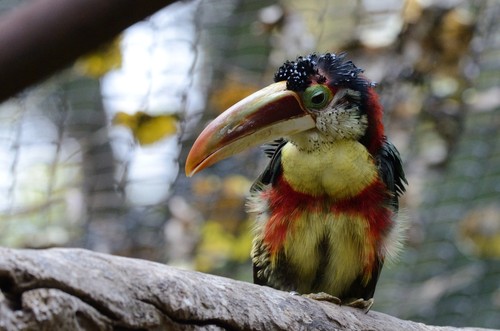
Curl-crested Aracari
41-46 cm (16-18 in) long, including a long bill and tail
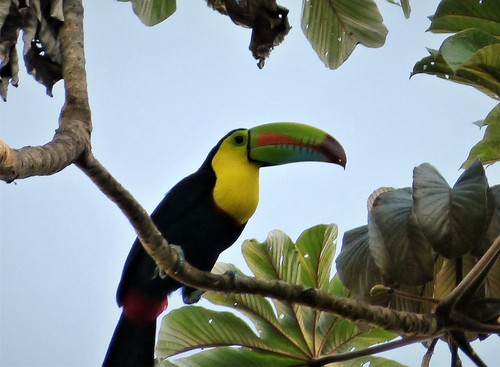
Keel-billed Toucan
42-55 cm (17-22 in) long including bill
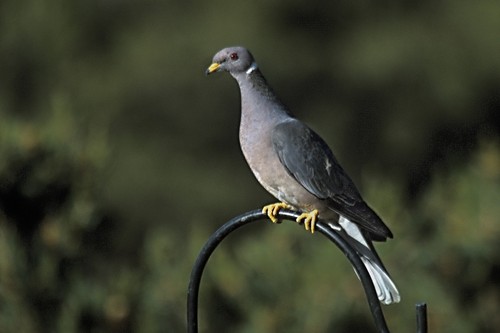
Band-tailed Pigeon
33-38 cm (13-15 in) long, wingspan about 66 cm (26 in)
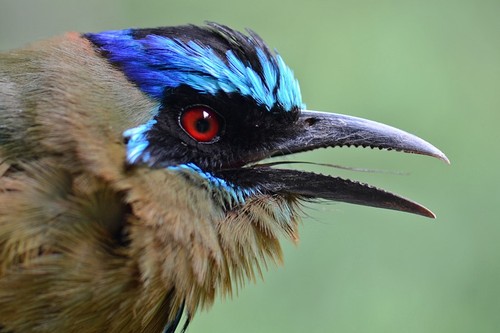
Blue-crowned Motmot
38-43 cm (15-17 in) long including tail
White-tipped Dove
27-30 cm (10.5-12 in) long, 38-43 cm wingspan
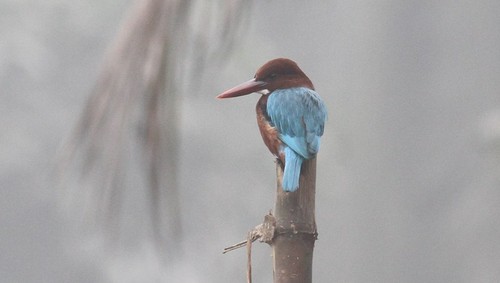
White-throated Kingfisher
27-28 cm (10.5-11 in) long
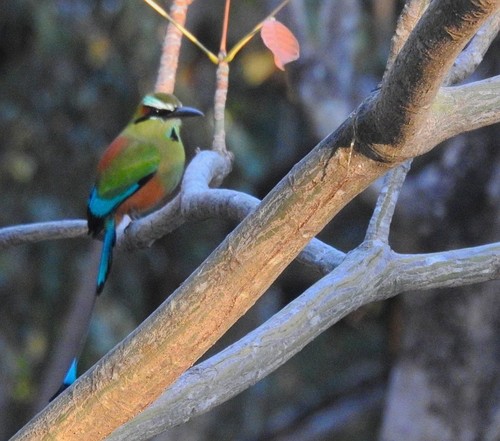
Turquoise-browed Motmot
34 cm (13 in) long including tail
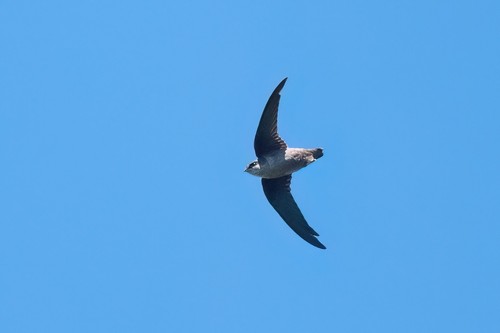
Vaux's Swift
10-12 cm (4-4.5 in) long, 27-30 cm wingspan
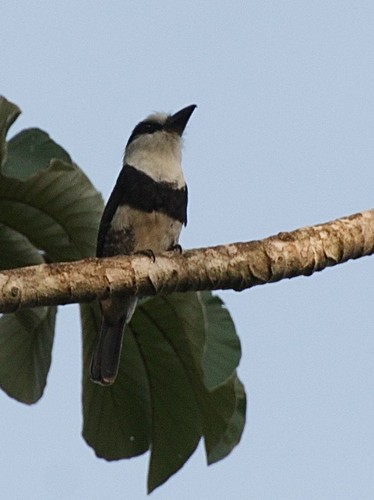
White-necked Puffbird
22-24 cm (8.5-9.5 in) long
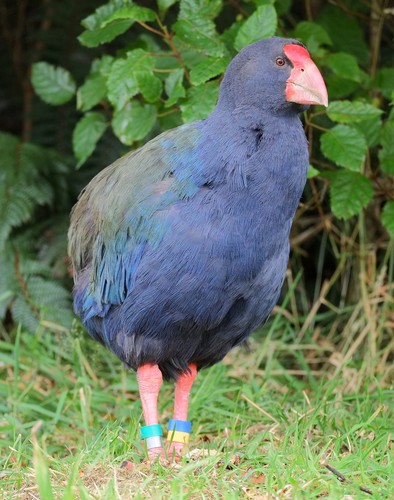
Takahe
50 cm (20 in) long, up to 3.5 kg; flightless
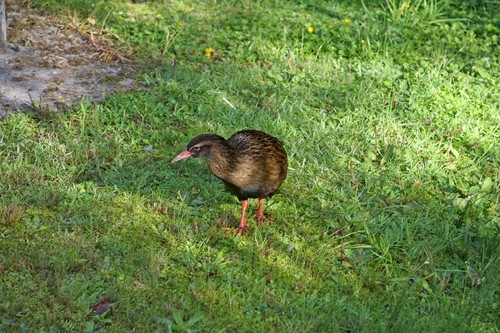
Weka
50-60 cm (20-24 in) long; flightless