
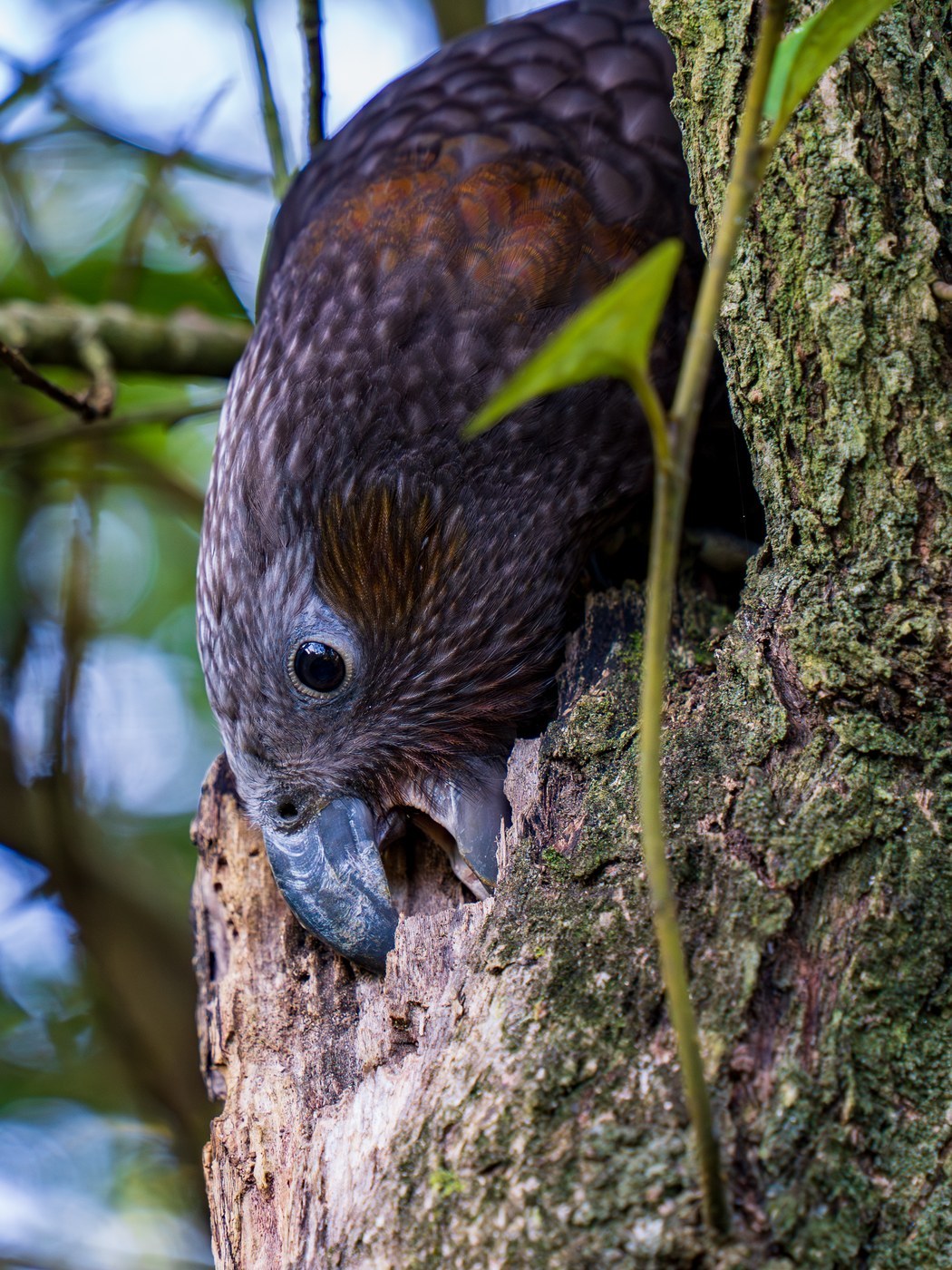
Kaka
Nestor meridionalis
A large, olive-brown New Zealand forest parrot with brilliant crimson underwings, related to the alpine kea and known for its raucous calls and playful, acrobatic behavior.
- Size
- 45 cm (18 in) long
- Habitat
- native forest across New Zealand, especially podocarp and beech forest
- Type
- parrot
Spotted a bird like this?
Identify any bird from a photo, free.
Overview
The Kaka is a large, robust parrot endemic to New Zealand's forests, closely related to the mountain-dwelling Kea but adapted to life in lowland and mid-altitude native forest rather than alpine terrain. Its plumage is mostly olive-brown with a grey-white crown, scaly-patterned nape, and a brilliant crimson wash across the belly and underwings that flashes vividly in flight.
Its strong, curved grey bill is built for tearing into rotten wood and bark to extract grubs, and for husking hard seeds and cones. Kaka are intelligent, playful, and highly vocal, often first detected by their loud, harsh calls echoing through the forest canopy before they are seen.
How to identify it
Key field marks
- Olive-brown body plumage with a scaly-edged appearance on the nape
- Pale grey-white crown
- Crimson-red underwings and lower belly, conspicuous in flight
- Strong, curved dark grey bill
- Large size and bulky build compared to most forest birds
Similar species
- Kea is similar in shape and calls but has overall olive-green plumage (not brown), lives in alpine and subalpine habitat rather than lowland forest, and has little range overlap.
- No other New Zealand forest bird combines a large parrot silhouette with crimson underwings.
Habitat & range
Range
Found in forested parts of both the North and South Islands of New Zealand, though now patchily distributed and often most common on predator-free islands and in well-managed mainland forest reserves.
Habitat
Prefers mature native forest, particularly podocarp and beech forest with abundant old trees offering nesting hollows, sap, and dead wood for foraging.
Migration
Generally sedentary, though birds may move seasonally between forest types to follow flowering and fruiting cycles.
Behavior & voice
Behavior
Bold, inquisitive, and highly social, often seen in small noisy groups moving through the canopy, chasing each other in acrobatic flight, and interacting playfully, behavior reminiscent of its cousin the Kea.
Voice
A loud, harsh, grating "ka-aa" call carries far through the forest, along with a range of whistles, shrieks, and softer conversational notes between birds.
Feeding
Uses its strong bill to tear bark and rotten wood for grubs, extract nectar and sap by chewing into bark, and crack open seeds and cones; it also readily takes fruit.
Nesting
Nests in cavities in large, old trees, laying its eggs on a bed of woodchips; only the female incubates, while the male feeds her throughout incubation and the early chick-rearing period.
Frequently asked questions
Is the Kaka related to the Kea?
Yes, both belong to the genus Nestor and are New Zealand's only forest and alpine parrots respectively; the Kaka lives in lowland forest while the Kea occupies alpine habitat.
Why is the Kaka vulnerable?
Predation of eggs and chicks by introduced stoats, rats, and possums, combined with competition for tree cavities and food, has reduced populations, though pest control has allowed some recovery.
What does a Kaka sound like?
It gives loud, harsh, grating calls that carry through the forest canopy, along with softer whistles and chattering notes.
What do Kaka eat?
A varied diet including fruit, seeds, nectar, tree sap, honeydew, and wood-boring grubs extracted from rotten timber.
Kaka guides
In-depth guides for identifying, finding, and understanding Kaka.
Other birds you may enjoy
Eclectus Parrot
35-42 cm (14-16.5 in) long
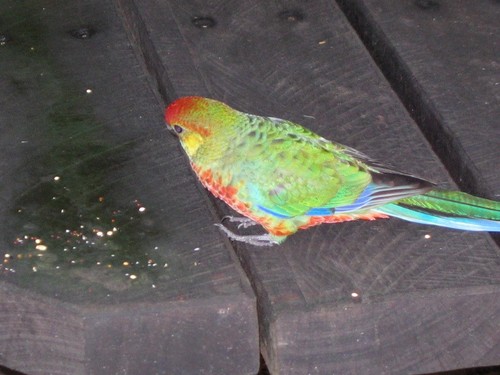
Western Rosella
25-30 cm (10-12 in) long
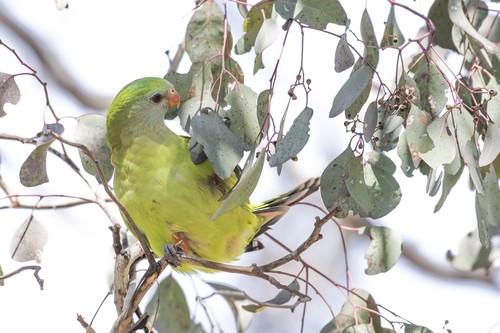
Superb Parrot
About 40 cm (16 in) long including a long tail
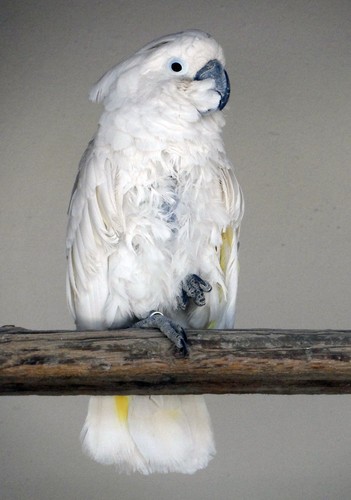
Umbrella Cockatoo
About 46 cm (18 in) long
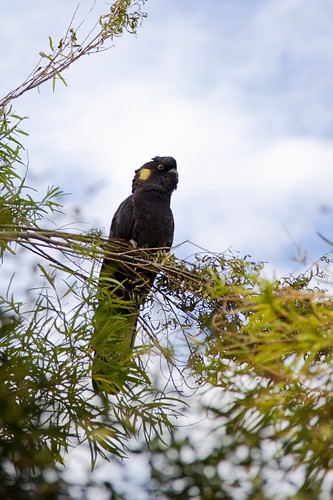
Yellow-tailed Black Cockatoo
55-65 cm long; wingspan up to about 130 cm
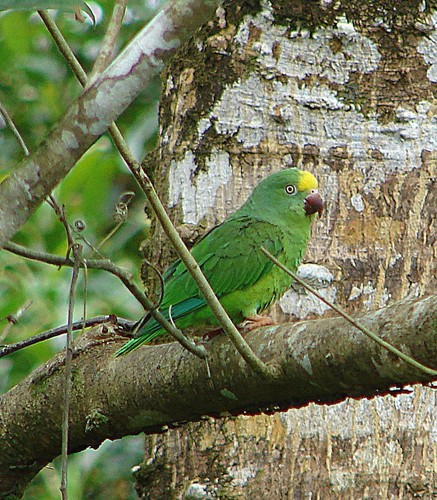
Yellow-crowned Amazon
About 35-38 cm (14-15 in) long
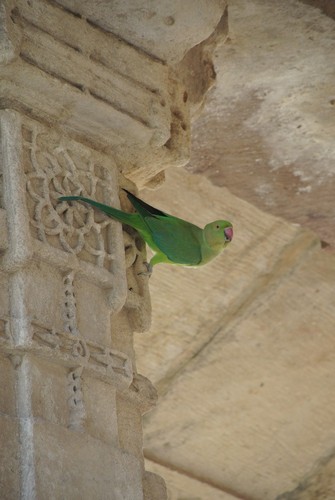
Rose-ringed Parakeet
40 cm (16 in) long including long tail
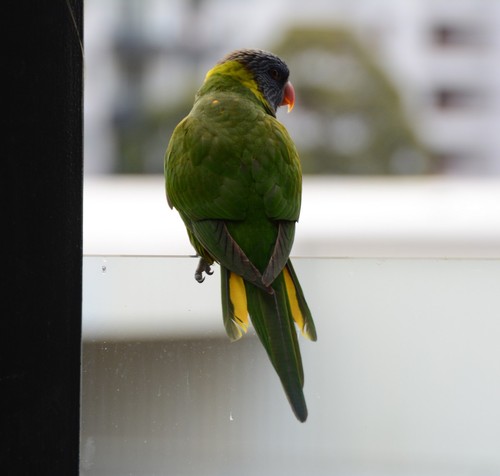
Rainbow Lorikeet
25-30 cm (10-12 in) long
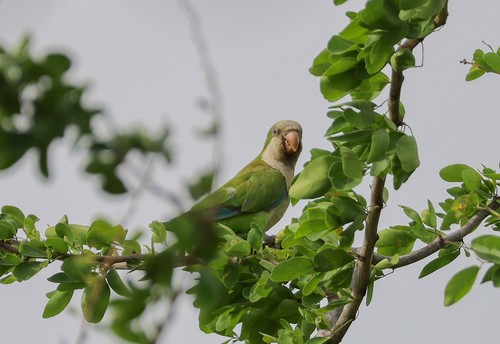
Quaker Parrot
28-31 cm (11-12 in) long
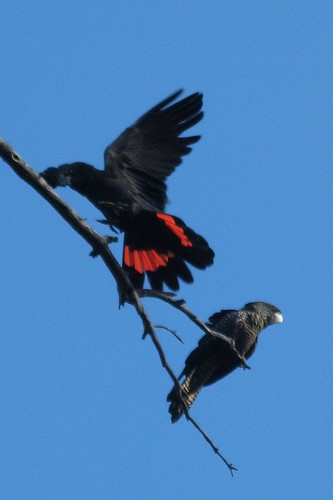
Red-tailed Black Cockatoo
55-65 cm long
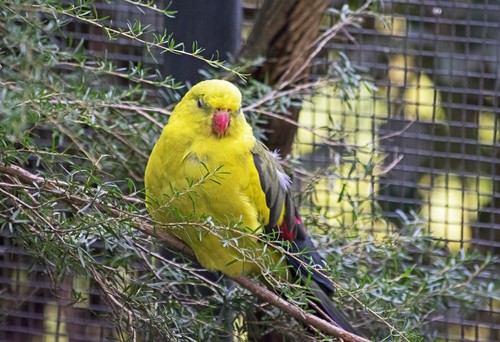
Regent Parrot
37-42 cm (15-17 in) long, including a long tail
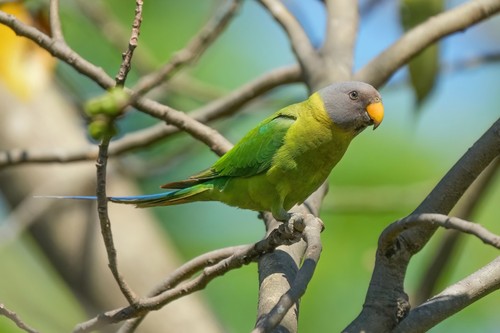
Plum-headed Parakeet
33 cm (13 in) long including tail