
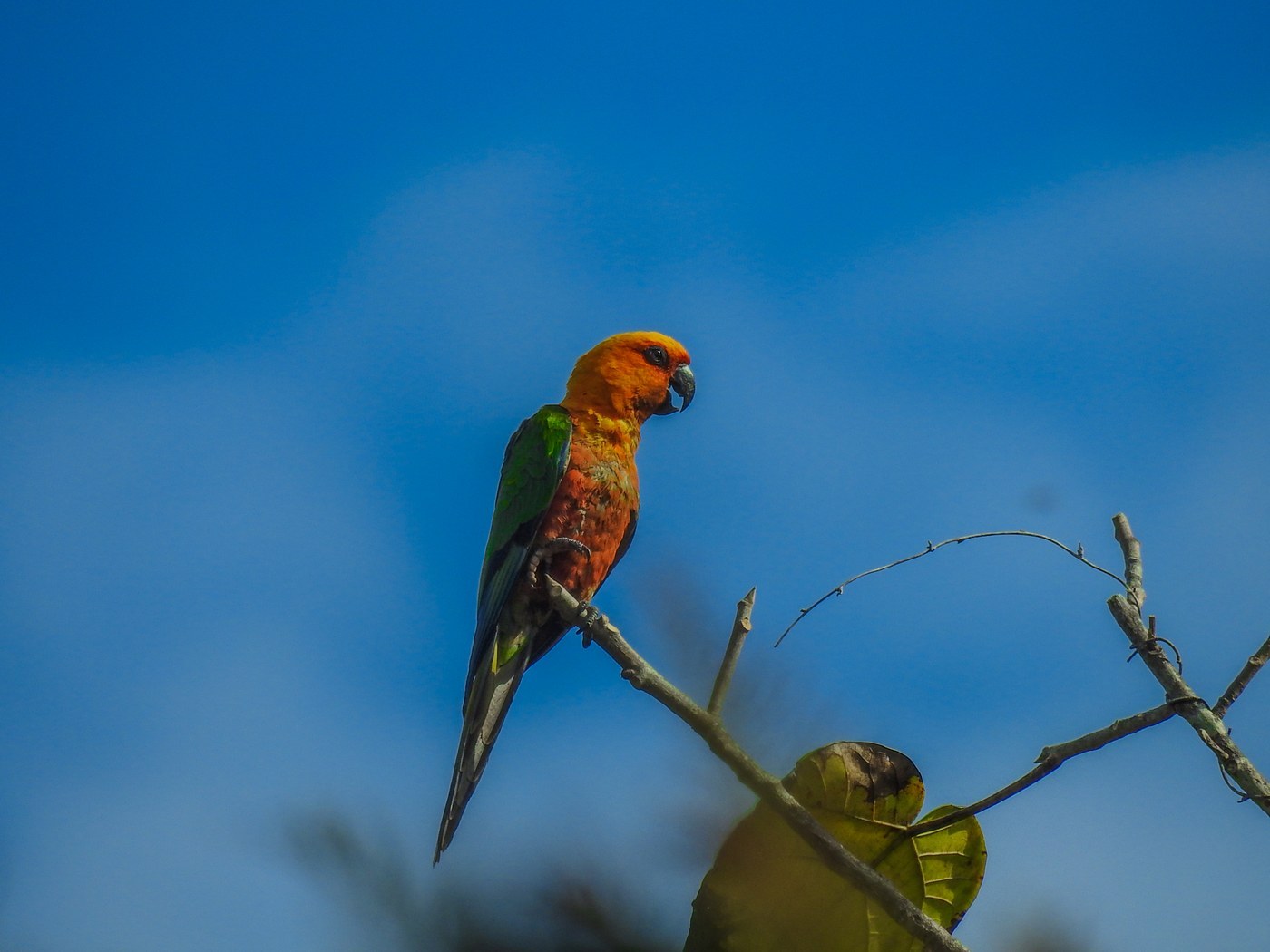
Jenday Conure
Aratinga jandaya
A vividly colored Brazilian parakeet with a golden-orange head and body and contrasting green wings.
- Size
- About 30 cm (12 in) long, including a long tapered tail
- Habitat
- Dry forest, palm groves, savanna woodland, and forest edge in northeastern Brazil
- Type
- parrot
Spotted a bird like this?
Identify any bird from a photo, free.
Overview
The Jenday Conure, also called the Jandaya Parakeet, is a medium-sized, long-tailed parrot native to northeastern Brazil. It is one of the most brightly colored members of the Aratinga genus, combining a golden-yellow head and chest with an orange-red belly patch and bright green wings and tail.
Appearance
- Head, neck, and breast: rich golden-yellow, often with orange tinges on the face
- Belly: orange to reddish-orange patch
- Wings and back: bright green, with blue tips on the primary flight feathers
- Tail: long, green above and olive-blue below, tapering to a point
- Eyes: dark, surrounded by a bare whitish eye-ring
- Bill: black to dark gray, strongly hooked
Sexes look alike, and juveniles are duller with more green mottling on the head that clears with age.
How to identify it
Key field marks
- Golden-yellow head and underparts contrasting with green wings
- Orange-red patch on the lower belly
- Blue-tipped flight feathers visible in flight
- Long, pointed olive-green tail
- Bare whitish skin around the eye
Similar species
- Sun Conure (Aratinga solstitialis) is more uniformly orange-yellow overall with less green on the body and is found in the Guiana Shield, not overlapping with the Jenday's range.
- Golden-capped Conure (Aratinga auricapillus) has a green body with only the crown and throat gold, lacking the Jenday's fully golden head and chest.
- Peach-fronted Conure is smaller, mostly green with only a peach-orange forehead patch, easily separated by its far less colorful plumage.
In the field, the combination of an entirely golden head/breast, orange belly, and green wings is distinctive to the Jenday Conure within its native range.
Habitat & range
Range
The Jenday Conure is endemic to a relatively small area of northeastern Brazil, primarily in the states of Ceará, Piauí, Maranhão, and northern Tocantins/Bahia.
Habitat
It favors dry, semi-arid woodland habitats including caatinga scrub, cerrado savanna, palm groves (especially babassu palm stands), gallery forest along rivers, and cultivated areas such as orchards and plantations near forest edge.
Movements
The species is largely sedentary, though flocks may shift locally in response to seasonal fruiting and flowering, following food availability across its home range rather than undertaking long migrations.
Behavior & voice
Social behavior
Jenday Conures are highly social and gregarious, typically seen in noisy flocks of a dozen to several dozen birds, sometimes mixing with other parakeet species at communal feeding or roosting sites.
Voice
Their calls are loud, harsh, screeching notes given frequently in flight and while perched; flocks are often heard well before they are seen.
Feeding
They forage in the forest canopy and in palm crowns, using their feet to hold food while the bill shells seeds and nuts; corn and other crops are sometimes raided near farmland.
Nesting and breeding
Jenday Conures nest in cavities, most often in dead palm trunks or tree hollows, typically laying a clutch of three to four eggs. Both parents help raise the chicks, and pairs may remain close within the larger flock during the breeding season.
Frequently asked questions
Where is the Jenday Conure found in the wild?
It is native to a limited area of northeastern Brazil, including the states of Ceará, Piauí, and Maranhão, where it inhabits dry woodland, palm groves, and savanna.
How can I tell a Jenday Conure from a Sun Conure?
The Jenday has a golden-yellow head and chest with green wings and an orange belly patch, while the Sun Conure is more uniformly orange-yellow with far less green; their native ranges also do not overlap.
What does a Jenday Conure eat in the wild?
It feeds mainly on seeds, fruits, berries, and flowers, foraging in the tree canopy and palm crowns, and occasionally visits crop fields for grain.
Is the Jenday Conure endangered?
No, it is classified as Least Concern by the IUCN, though its restricted range means local habitat loss could affect populations over time.
Where do Jenday Conures nest?
They nest in cavities, most commonly in dead palm trunks or tree hollows, laying clutches of three to four eggs.
Jenday Conure guides
In-depth guides for identifying, finding, and understanding Jenday Conure.
Other birds you may enjoy
Eclectus Parrot
35-42 cm (14-16.5 in) long
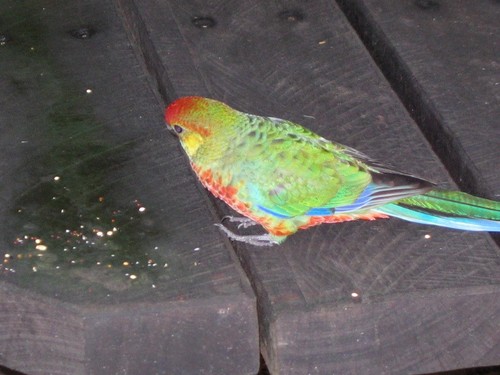
Western Rosella
25-30 cm (10-12 in) long
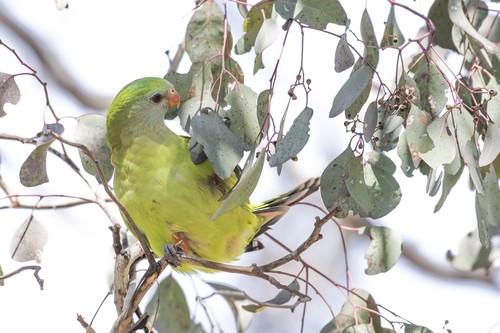
Superb Parrot
About 40 cm (16 in) long including a long tail
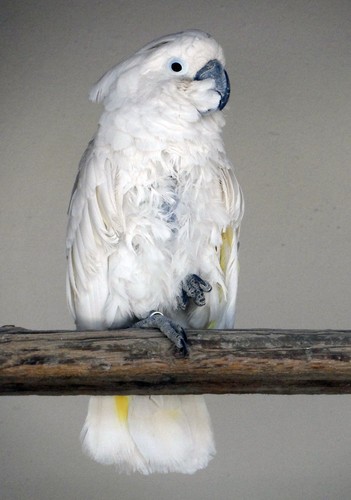
Umbrella Cockatoo
About 46 cm (18 in) long
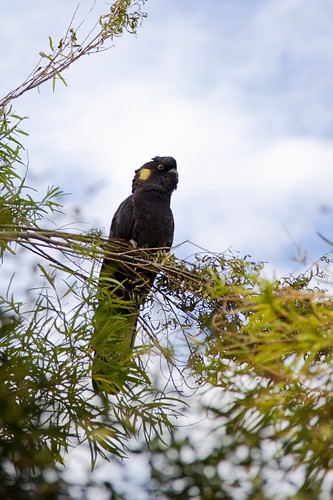
Yellow-tailed Black Cockatoo
55-65 cm long; wingspan up to about 130 cm
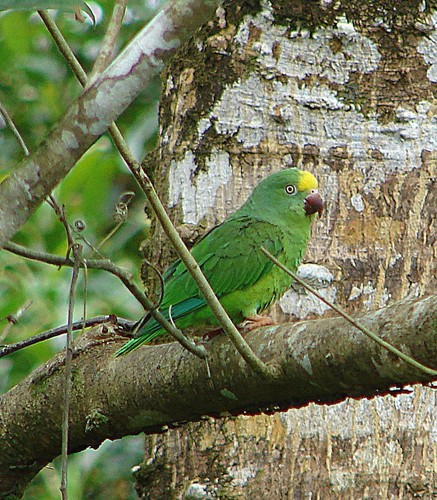
Yellow-crowned Amazon
About 35-38 cm (14-15 in) long
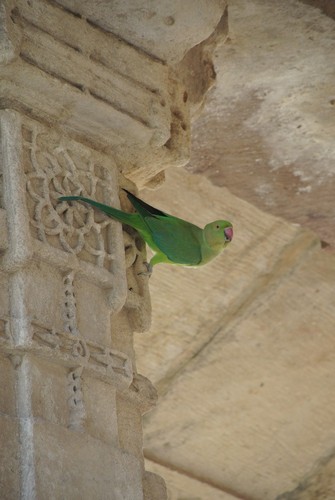
Rose-ringed Parakeet
40 cm (16 in) long including long tail
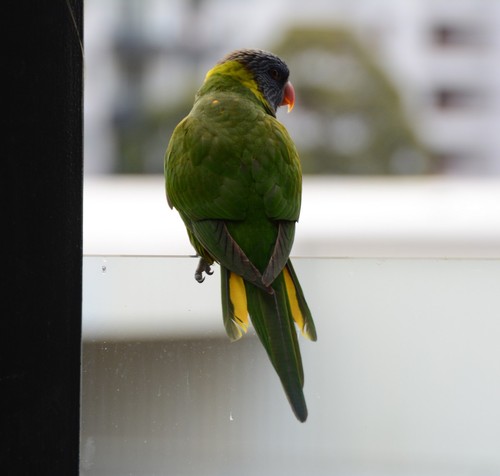
Rainbow Lorikeet
25-30 cm (10-12 in) long
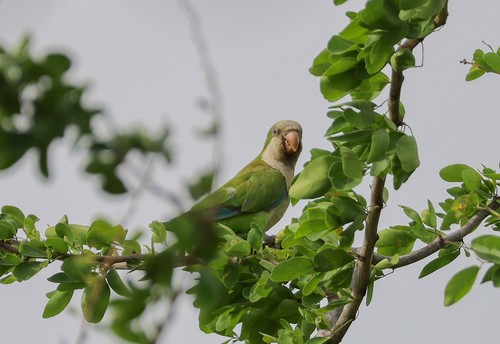
Quaker Parrot
28-31 cm (11-12 in) long
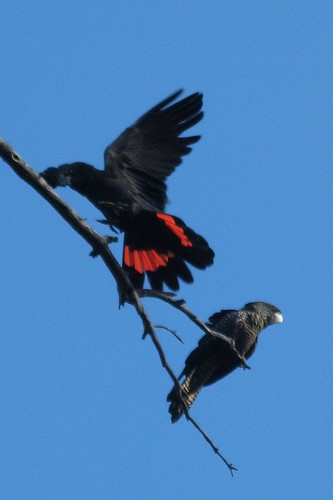
Red-tailed Black Cockatoo
55-65 cm long
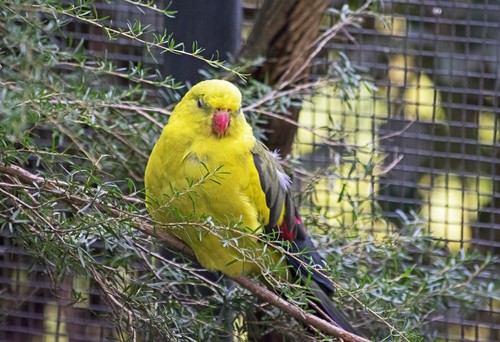
Regent Parrot
37-42 cm (15-17 in) long, including a long tail
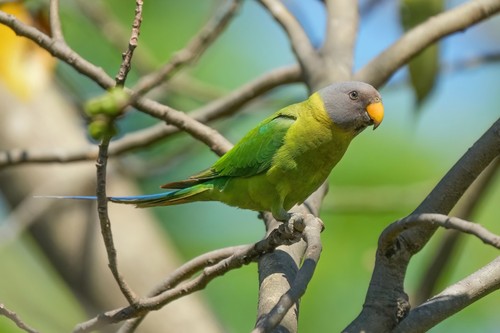
Plum-headed Parakeet
33 cm (13 in) long including tail