
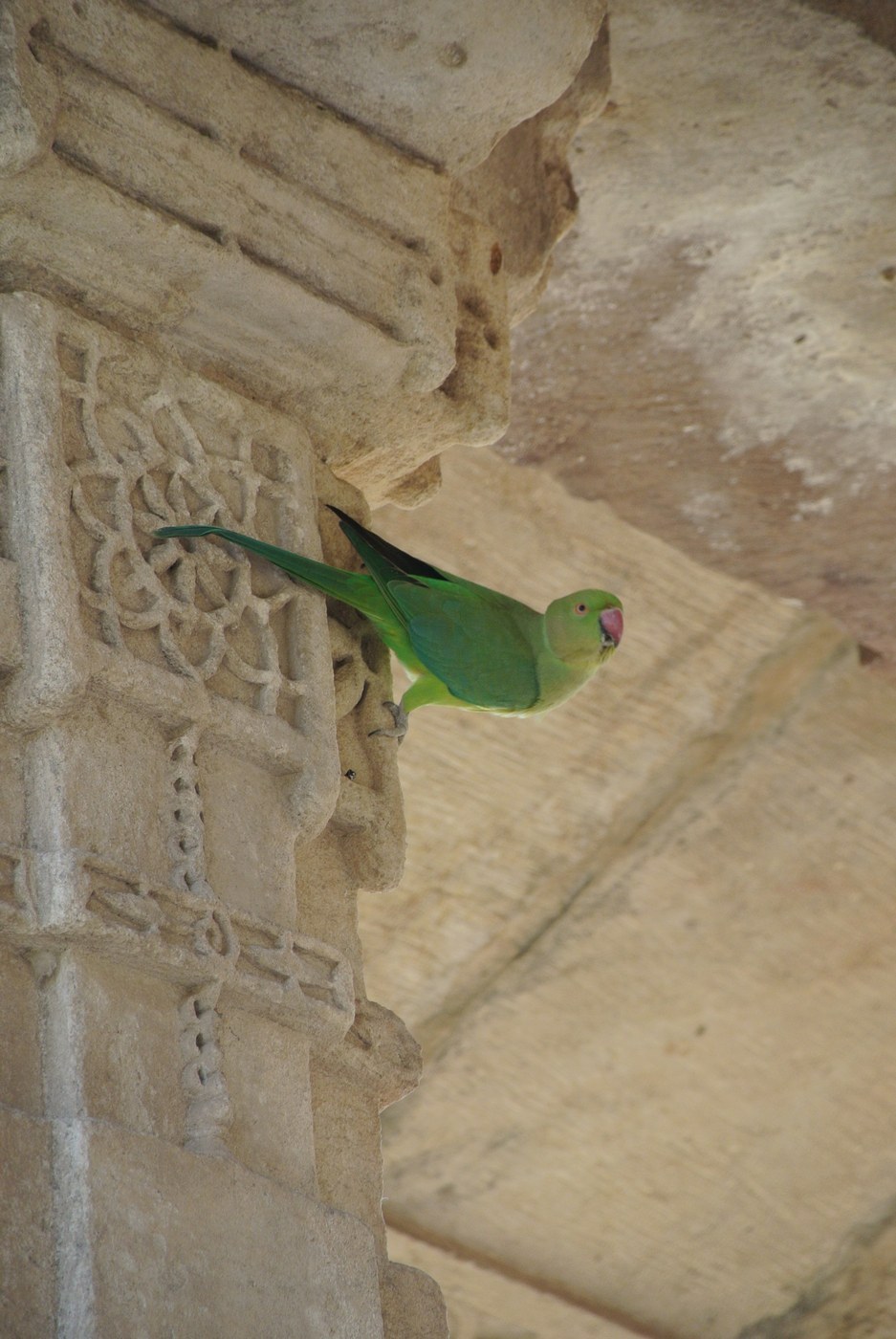
Indian Ringneck Parakeet
Psittacula krameri
A slender, long-tailed green parakeet native to the Indian subcontinent, best known for the males' distinctive rose-and-black neck ring.
- Size
- 38-42 cm (15-16.5 in) long including a long tail
- Habitat
- Open woodland, farmland, and urban parks and gardens
- Type
- parrot
Spotted a bird like this?
Identify any bird from a photo, free.
Overview
The Indian Ringneck Parakeet refers to the Indian subcontinent populations of the Rose-ringed Parakeet, one of the most widely distributed parrot species in the world.
Appearance
The body is slim with a long, tapering tail and overall bright grass-green plumage, with a bluish wash on the central tail feathers. Mature males develop a narrow rose-pink and black ring around the neck along with a black stripe running from the chin to the sides of the neck; the upper mandible is red. Females and immature birds of both sexes lack the neck ring and appear uniformly green.
How to identify it
Key field marks
- Slender body with a long, pointed tail
- Bright green overall plumage
- Mature males show a rose-pink and black neck ring with a black chin stripe
- Red upper mandible
- Fast, direct flight with pointed wings
Similar species
Other Psittacula species, such as the larger Alexandrine Parakeet, share a similar shape but are bigger and show a maroon shoulder patch absent in the Rose-ringed Parakeet. Females and juveniles lacking the neck ring can be confused with other plain green parakeets, though the long tail and slim build are typical of the genus.
Habitat & range
Range
The Indian Ringneck population belongs to the wider Rose-ringed Parakeet species, native to the Indian subcontinent (India, Pakistan, Sri Lanka, Bangladesh) as well as a broad band of sub-Saharan Africa.
Habitat
It is highly adaptable, occupying open woodland, farmland, orchards, and readily using urban parks and gardens.
Migration
Generally non-migratory. Self-sustaining feral populations, established from escaped or released birds, now occur in many cities across Europe, the Middle East, the United States, and Japan, and these populations are similarly sedentary once established.
Behavior & voice
Behavior
Highly gregarious, Indian Ringnecks form large flocks, especially at communal roosts that can hold thousands of birds in some feral populations.
Voice
The call is a loud, sharp, shrieking "kee-ak," frequently given in flight and at roosting sites.
Feeding
Diet in the wild consists of seeds, grain, fruit, buds, blossoms, and nectar; flocks can cause significant damage to agricultural crops in parts of their native range.
Nesting and breeding
Nests are built in cavities, typically tree hollows, though buildings and cliff crevices are sometimes used in urban feral populations. Pairs are seasonally monogamous, and clutches usually contain three to four eggs.
Frequently asked questions
How do you tell a male from a female Indian Ringneck?
Mature males show a rose-pink and black neck ring with a black chin stripe; females and young birds lack the ring and look plain green.
Where is the Indian Ringneck Parakeet native?
It is native to the Indian subcontinent, including India, Pakistan, Sri Lanka, and Bangladesh, as part of the wider Rose-ringed Parakeet species that also occurs across sub-Saharan Africa.
At what age do males develop their neck ring?
The rose and black neck ring typically develops around two to three years of age.
Why are there feral Indian Ringnecks in cities around the world?
Self-sustaining populations have established from escaped or released birds, thriving in urban parks and gardens across parts of Europe, the Middle East, the United States, and Japan.
What does an Indian Ringneck eat in the wild?
It feeds on seeds, grain, fruit, buds, blossoms, and nectar.
Indian Ringneck Parakeet guides
In-depth guides for identifying, finding, and understanding Indian Ringneck Parakeet.
Other birds you may enjoy
Eclectus Parrot
35-42 cm (14-16.5 in) long
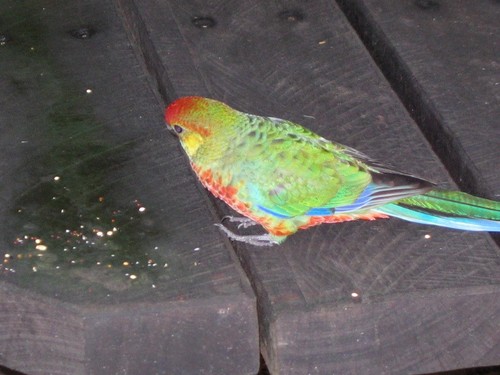
Western Rosella
25-30 cm (10-12 in) long
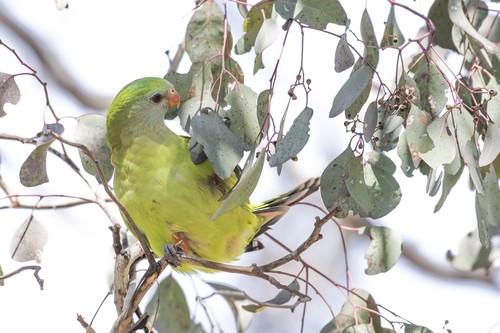
Superb Parrot
About 40 cm (16 in) long including a long tail
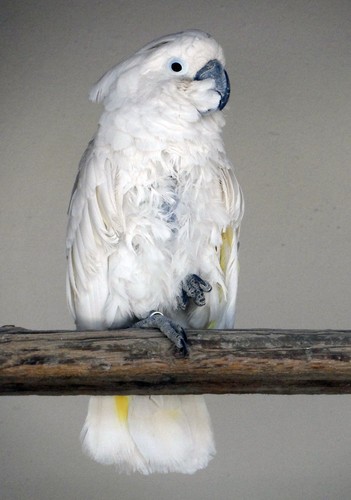
Umbrella Cockatoo
About 46 cm (18 in) long
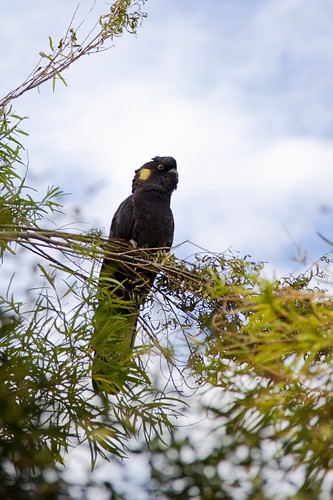
Yellow-tailed Black Cockatoo
55-65 cm long; wingspan up to about 130 cm
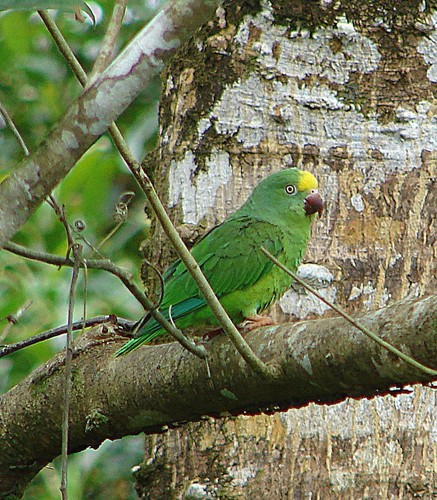
Yellow-crowned Amazon
About 35-38 cm (14-15 in) long
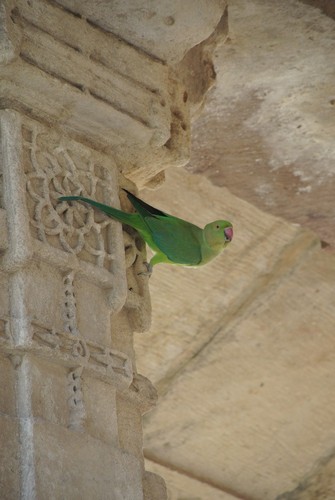
Rose-ringed Parakeet
40 cm (16 in) long including long tail
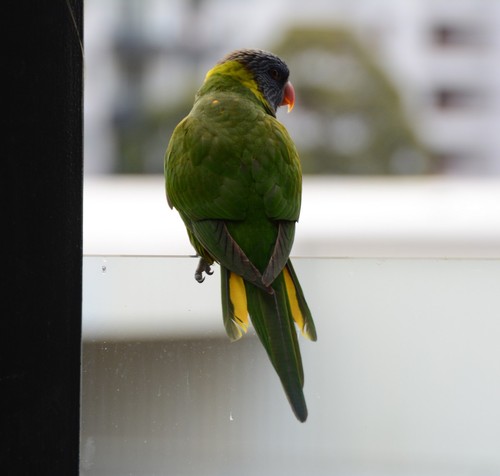
Rainbow Lorikeet
25-30 cm (10-12 in) long
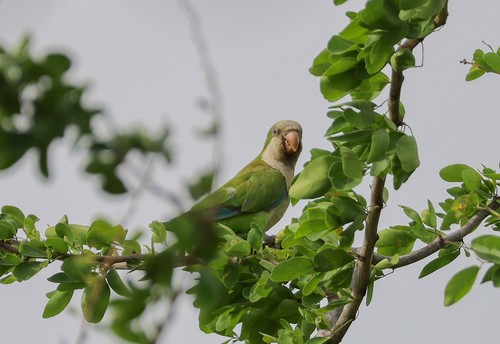
Quaker Parrot
28-31 cm (11-12 in) long
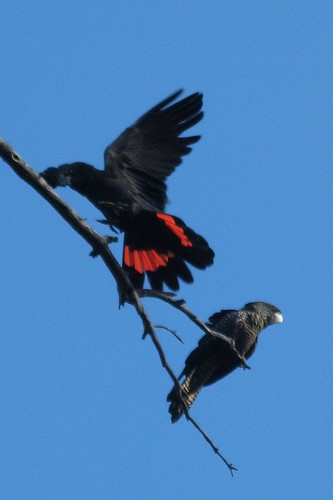
Red-tailed Black Cockatoo
55-65 cm long
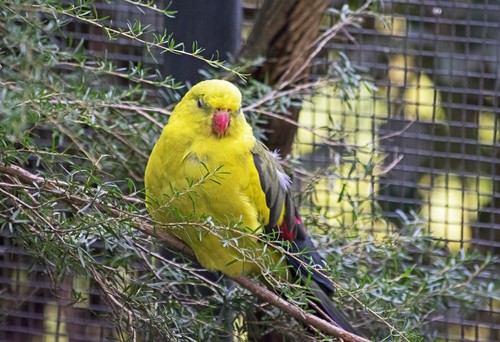
Regent Parrot
37-42 cm (15-17 in) long, including a long tail
Plum-headed Parakeet
33 cm (13 in) long including tail