
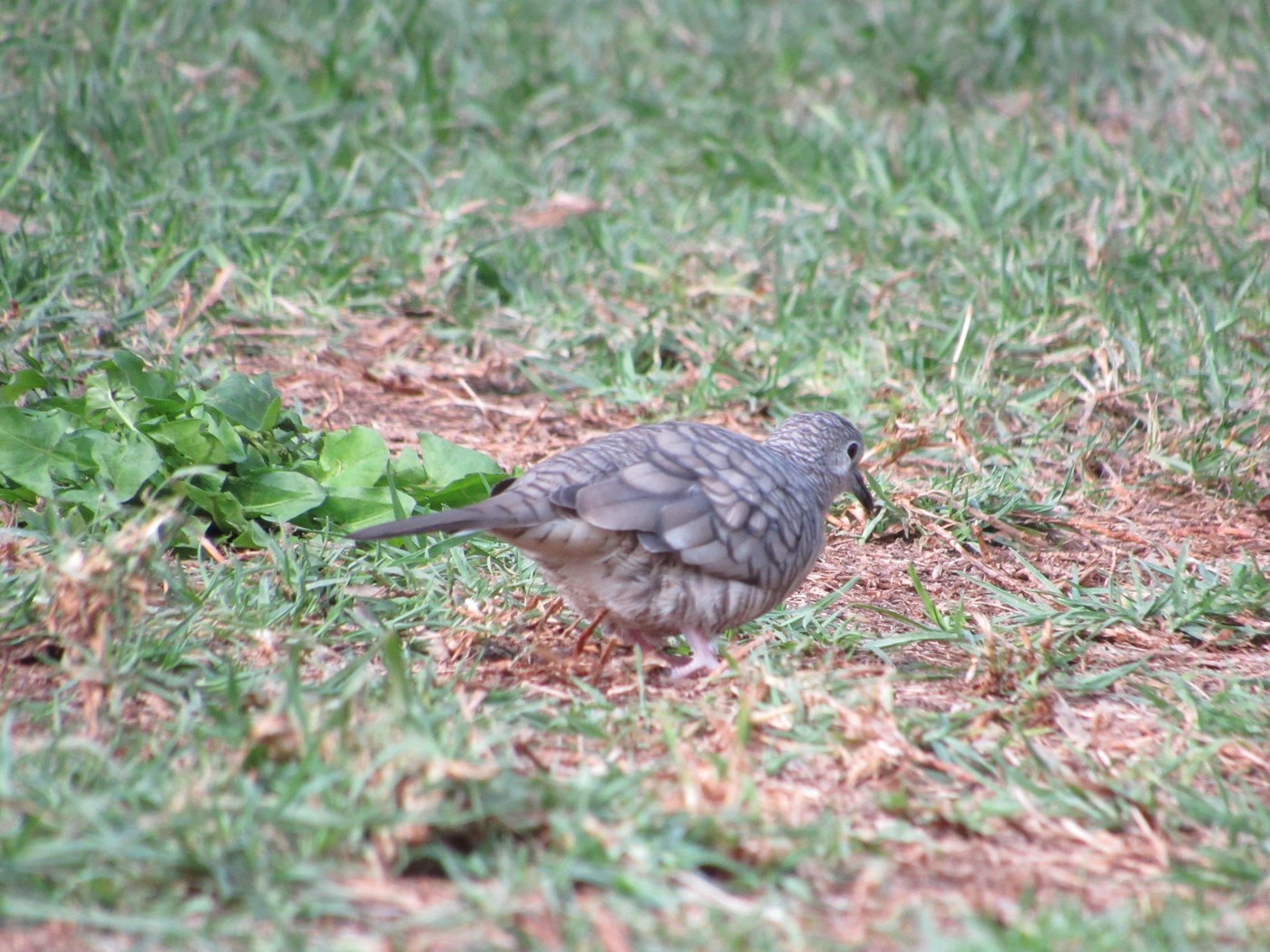
Inca Dove
Columbina inca
A tiny, pale dove of the desert Southwest whose feathers appear scalloped like fish scales and whose flight flashes rusty wing patches.
- Size
- 20-23 cm (8-9 in) long, 28-30 cm wingspan
- Habitat
- arid scrublands, city parks, farmyards, and suburban feeders across the Southwest and Mexico
- Type
- other
Spotted a bird like this?
Identify any bird from a photo, free.
Overview
The Inca Dove is a diminutive, long-tailed dove found throughout the arid and semi-arid Southwest, Mexico, and Central America. Its overall coloring is pale grayish-brown, but every feather on the head, breast, and back is edged in a darker outline, giving the bird an unmistakable scaled or shingled appearance at close range.
In flight, Inca Doves reveal rich rufous-cinnamon patches in the wings and white outer tail feathers, a contrast that is easy to miss when the bird is perched and looking uniformly pale. They are one of the smallest doves in North America, often confused at a glance with sparrows before the scaled pattern becomes visible.
How to identify it
Key Field Marks
- Small size, roughly sparrow-to-robin sized, with a notably long, tapered tail
- Pale grayish-tan overall with dark feather edging producing a distinct "scaly" look
- Rufous wing patches visible in flight
- White outer tail feathers show as the bird flushes
- Pinkish-red legs and a dark bill
Similar Species
The Common Ground Dove is similarly tiny but lacks the scaled plumage pattern and has a shorter tail. The Mourning Dove is much larger, with a plain grayish-brown back and no scalloping. No other small dove in its range shows the same shingled feather texture.
Habitat & range
Inca Doves favor open, dry habitats: desert scrub, thorn woodland, farmland, ranch yards, and especially urban and suburban settings where bare ground and bird feeders provide easy foraging. They are highly tolerant of human development and are common in parking lots, parks, and residential neighborhoods across the southwestern United States, Mexico, and south into Central America.
The species is largely non-migratory, remaining in the same areas year-round, though it has slowly expanded its range northward over the past century as towns and irrigated agriculture have spread through the Southwest.
Behavior & voice
Inca Doves are highly social, often gathering in small flocks that huddle together in a tight "pyramid" formation on cold mornings to conserve heat. Their call is a persistent, two-noted "coo-COO" often rendered as sounding like "no hope," repeated monotonously for long stretches, especially at dawn.
They forage almost entirely on the ground, walking with quick, mincing steps while pecking at seeds and spilled grain. Nests are flimsy platforms of twigs placed in shrubs, trees, or on structures close to human dwellings, and pairs may raise several broods of two eggs each per year.
Frequently asked questions
Why does the Inca Dove look scaly?
Each feather on its head and body has a dark outline, creating a scalloped or scale-like pattern that is unique among North American doves.
What does an Inca Dove sound like?
It gives a repetitive two-note coo often described as sounding like "no hope," repeated over and over, especially during the breeding season.
Where do Inca Doves live?
They are year-round residents of the arid Southwest, Mexico, and Central America, favoring towns, farms, and desert scrub.
How can I tell an Inca Dove from a Mourning Dove?
Inca Doves are much smaller with a scaled feather pattern, while Mourning Doves are larger, plain brownish-gray, and have a more pointed tail.
Do Inca Doves migrate?
No, they are largely non-migratory and remain in the same region throughout the year.
Inca Dove guides
In-depth guides for identifying, finding, and understanding Inca Dove.
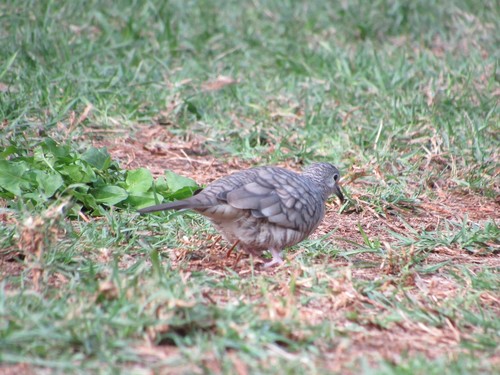
Inca Dove identified by the community
Real birds identified with Bird Identifier.
Other birds you may enjoy
Kiwi
35-55 cm (14-22 in) long; roughly chicken-sized
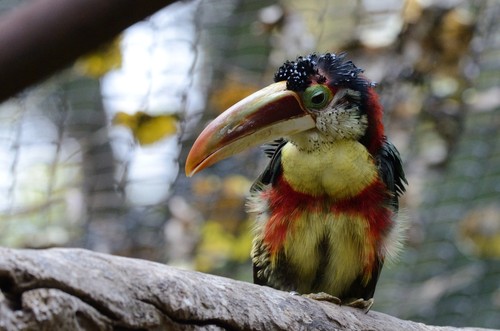
Curl-crested Aracari
41-46 cm (16-18 in) long, including a long bill and tail
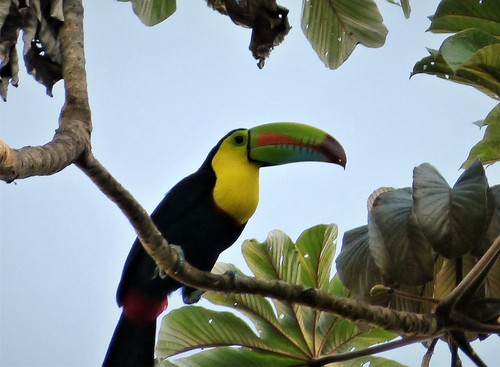
Keel-billed Toucan
42-55 cm (17-22 in) long including bill
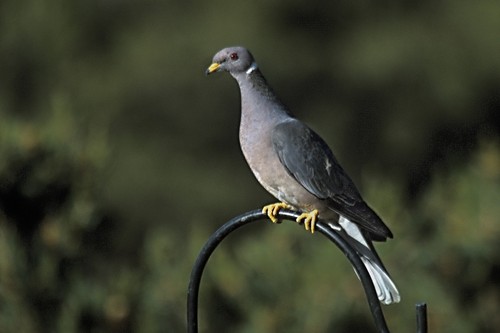
Band-tailed Pigeon
33-38 cm (13-15 in) long, wingspan about 66 cm (26 in)
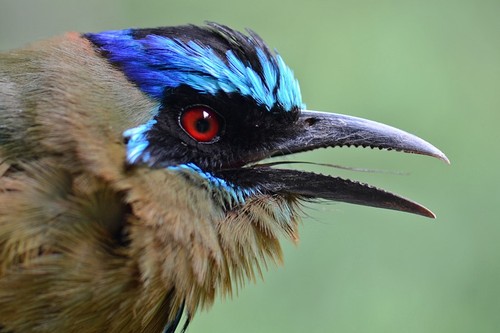
Blue-crowned Motmot
38-43 cm (15-17 in) long including tail
White-tipped Dove
27-30 cm (10.5-12 in) long, 38-43 cm wingspan
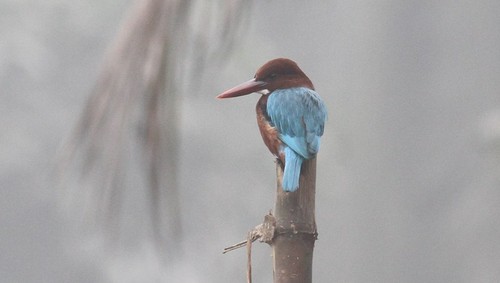
White-throated Kingfisher
27-28 cm (10.5-11 in) long
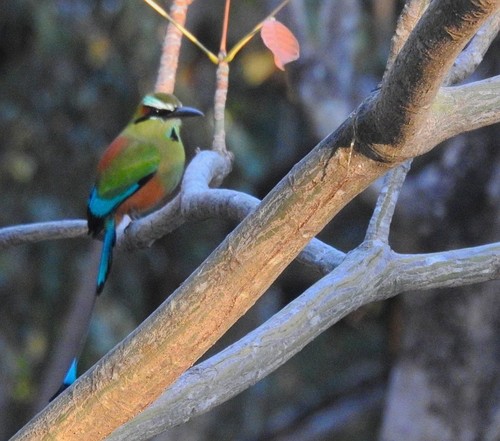
Turquoise-browed Motmot
34 cm (13 in) long including tail
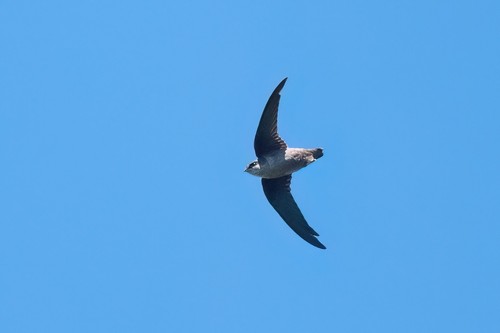
Vaux's Swift
10-12 cm (4-4.5 in) long, 27-30 cm wingspan
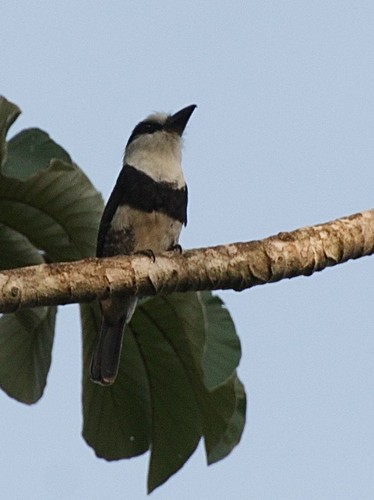
White-necked Puffbird
22-24 cm (8.5-9.5 in) long
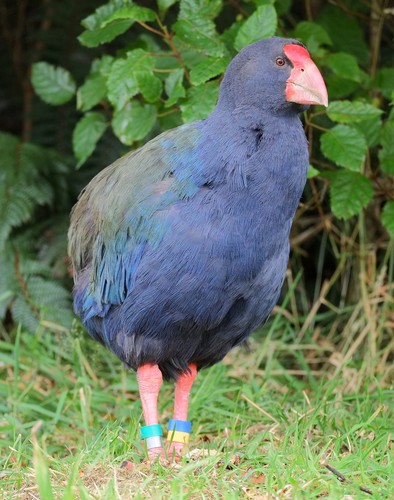
Takahe
50 cm (20 in) long, up to 3.5 kg; flightless
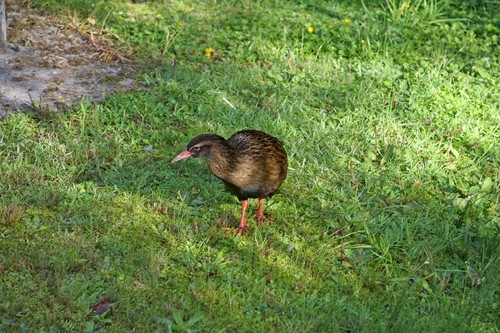
Weka
50-60 cm (20-24 in) long; flightless