
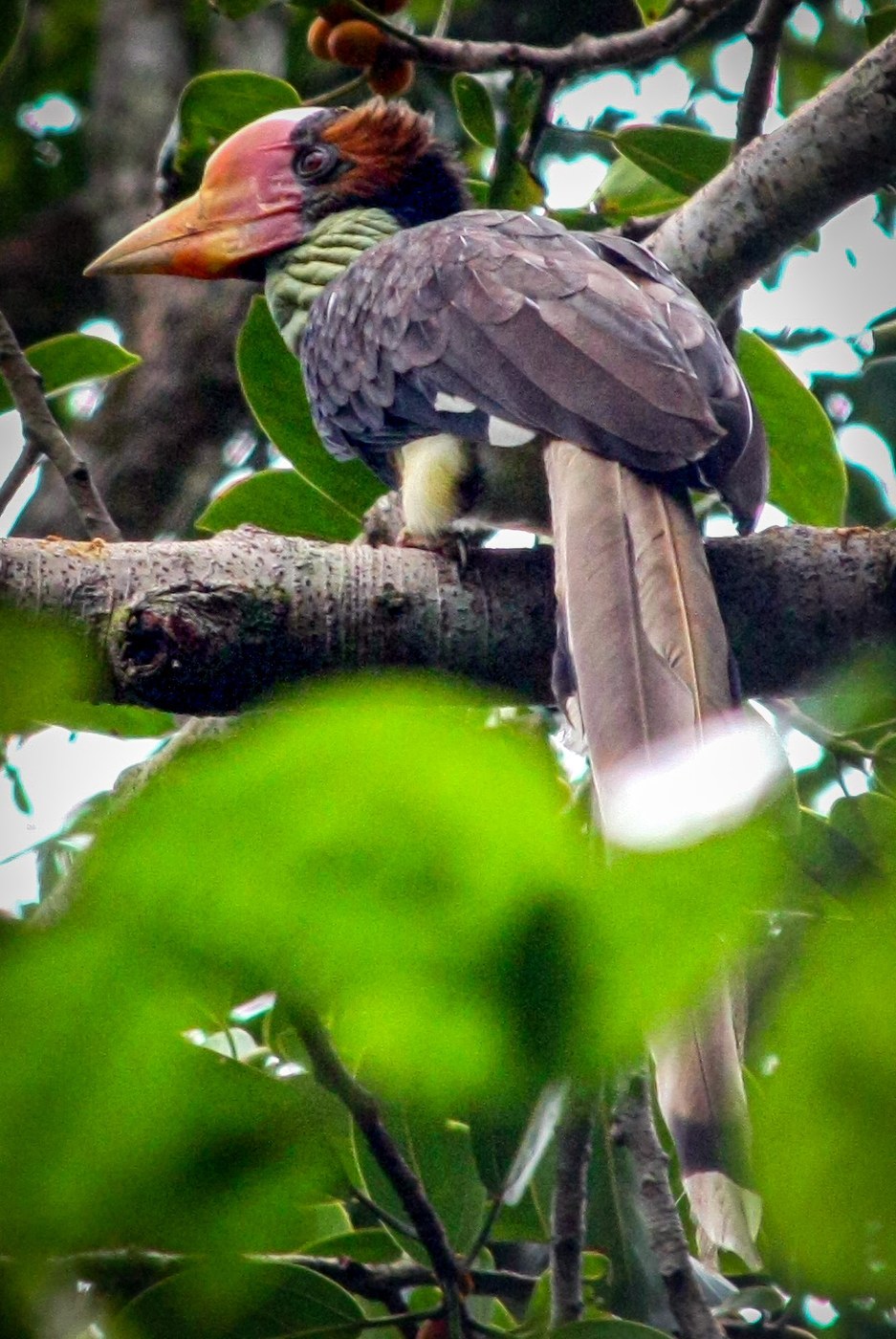
Helmeted Hornbill
Rhinoplax vigil
A rare Southeast Asian rainforest hornbill famed for its unique solid ivory casque, extremely long tail streamers, and eerie cackling call, now critically endangered from poaching.
- Size
- About 110-120 cm including very long central tail feathers
- Habitat
- Lowland primary rainforest of Sumatra, Borneo, and the Malay Peninsula
- Type
- other
Spotted a bird like this?
Identify any bird from a photo, free.
Overview
The Helmeted Hornbill is one of the most unusual hornbills in the world, distinguished from all its relatives by a solid, dense casque rather than the hollow, lightweight casque of other hornbill species. This solid keratin structure, sometimes called "hornbill ivory," has made the bird a target of intense poaching for the carving trade, pushing it to the brink of extinction.
Adults have dark brownish-black plumage, bare red facial and throat skin, and dramatically elongated central tail feathers that can add up to half a meter to the bird's total length. The solid casque is used by males in aerial jousting duels, in which pairs collide casque-to-casque in flight.
How to identify it
Key field marks
- Solid, densely built casque, unlike the hollow casques of other hornbills
- Extremely long, projecting central tail feathers
- Bare red skin on the face and throat, with a paler throat patch in females
- Loud, distinctive call: a series of accelerating hollow "tok" notes ending in a maniacal cackling laugh
Similar species
- Rhinoceros Hornbill and Great Hornbill: both have much larger, hollow casques and shorter tails, lacking the Helmeted Hornbill's long tail streamers.
Habitat & range
Habitat
Helmeted Hornbills depend on undisturbed lowland primary rainforest with tall emergent trees, particularly strangler figs, and rarely persist in logged or degraded forest.
Range
Found on Sumatra, Borneo, the Malay Peninsula, and formerly southern Myanmar and Thailand, though it has disappeared from many areas.
Migration
The species is non-migratory and highly sedentary, remaining within stable home ranges in intact forest.
Behavior & voice
Behavior
Helmeted Hornbills are shy and typically encountered singly or in pairs, foraging high in the forest canopy and rarely descending to open areas.
Voice
The call is one of the most distinctive sounds of Southeast Asian rainforests: a series of loud, hollow "tok" notes that accelerate and culminate in a maniacal cackling laugh, audible over great distances.
Feeding
Figs, particularly strangler fig fruit, make up the bulk of the diet, supplemented by small animals such as insects and small vertebrates.
Nesting and breeding
As in other hornbills, the female seals herself into a tree cavity nest with mud and droppings, leaving a narrow slit for the male to pass food through; the species requires large, mature trees for nesting, which have become increasingly scarce due to logging.
Frequently asked questions
Why is the Helmeted Hornbill critically endangered?
It is heavily poached for its solid casque, known as 'hornbill ivory,' which is carved and sold illegally, in addition to suffering from severe habitat loss.
What makes the Helmeted Hornbill's casque different from other hornbills?
Its casque is solid and dense, unlike the hollow, lightweight casques found in all other hornbill species, making it valuable for carving.
What does the Helmeted Hornbill sound like?
It gives a series of loud, hollow 'tok' notes that speed up and end in a distinctive cackling, laughter-like call.
What are the long feathers on a Helmeted Hornbill's tail for?
The elongated central tail feathers are thought to play a role in flight display and are a distinctive visual feature of the species.
Where does the Helmeted Hornbill live?
It inhabits primary lowland rainforest on Sumatra, Borneo, and the Malay Peninsula.
Helmeted Hornbill guides
In-depth guides for identifying, finding, and understanding Helmeted Hornbill.
Other birds you may enjoy
Kiwi
35-55 cm (14-22 in) long; roughly chicken-sized
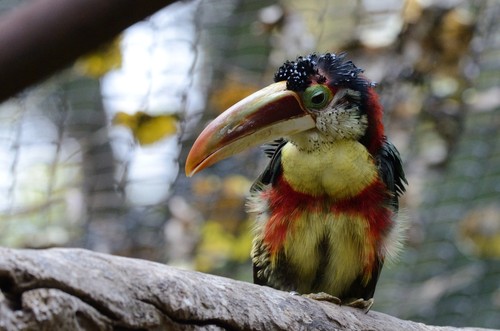
Curl-crested Aracari
41-46 cm (16-18 in) long, including a long bill and tail
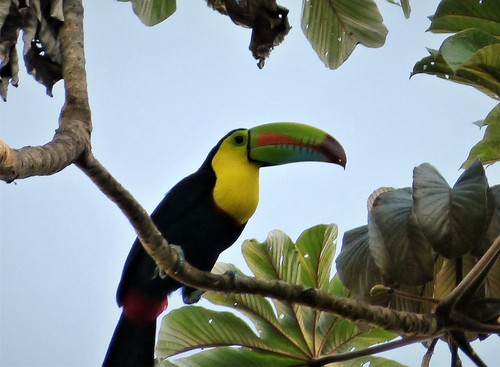
Keel-billed Toucan
42-55 cm (17-22 in) long including bill
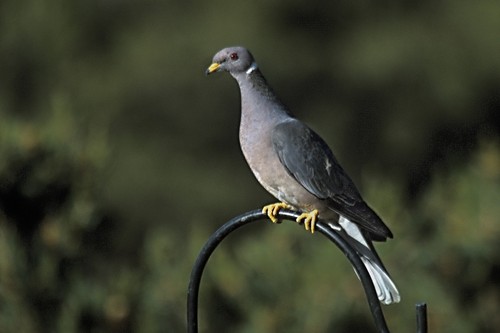
Band-tailed Pigeon
33-38 cm (13-15 in) long, wingspan about 66 cm (26 in)
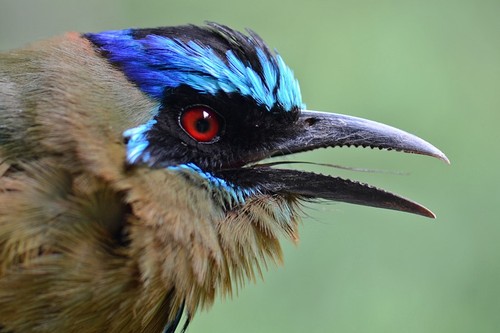
Blue-crowned Motmot
38-43 cm (15-17 in) long including tail
White-tipped Dove
27-30 cm (10.5-12 in) long, 38-43 cm wingspan
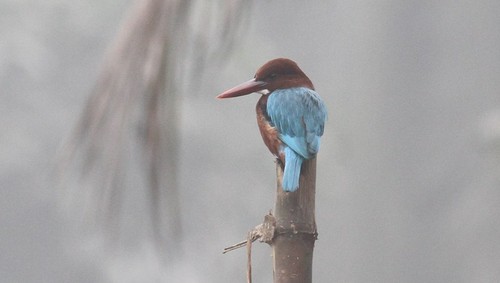
White-throated Kingfisher
27-28 cm (10.5-11 in) long
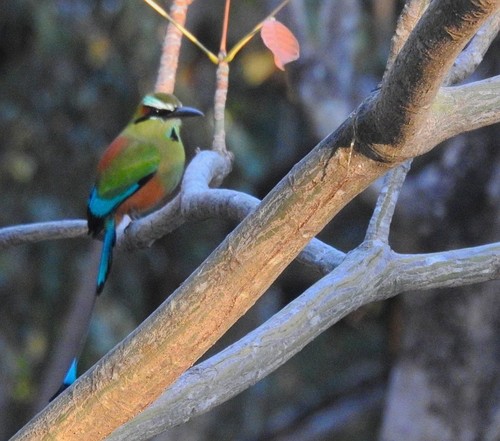
Turquoise-browed Motmot
34 cm (13 in) long including tail
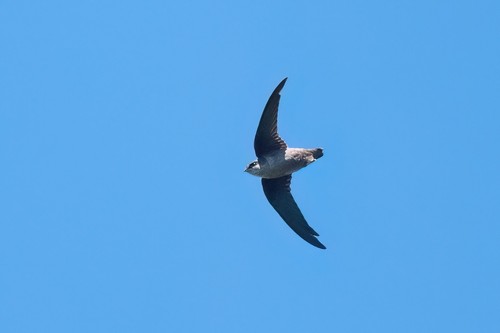
Vaux's Swift
10-12 cm (4-4.5 in) long, 27-30 cm wingspan
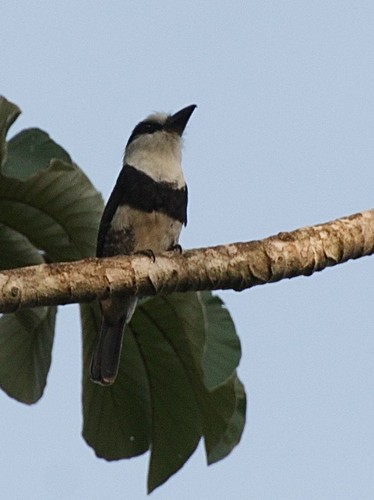
White-necked Puffbird
22-24 cm (8.5-9.5 in) long
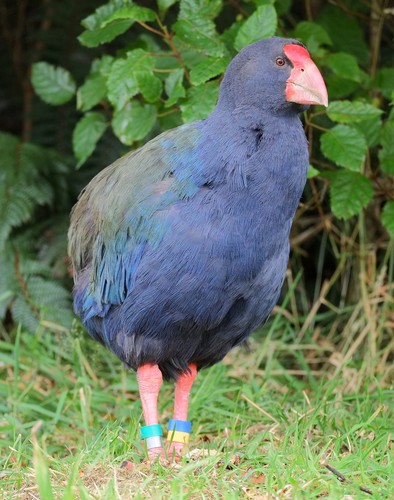
Takahe
50 cm (20 in) long, up to 3.5 kg; flightless
Weka
50-60 cm (20-24 in) long; flightless