
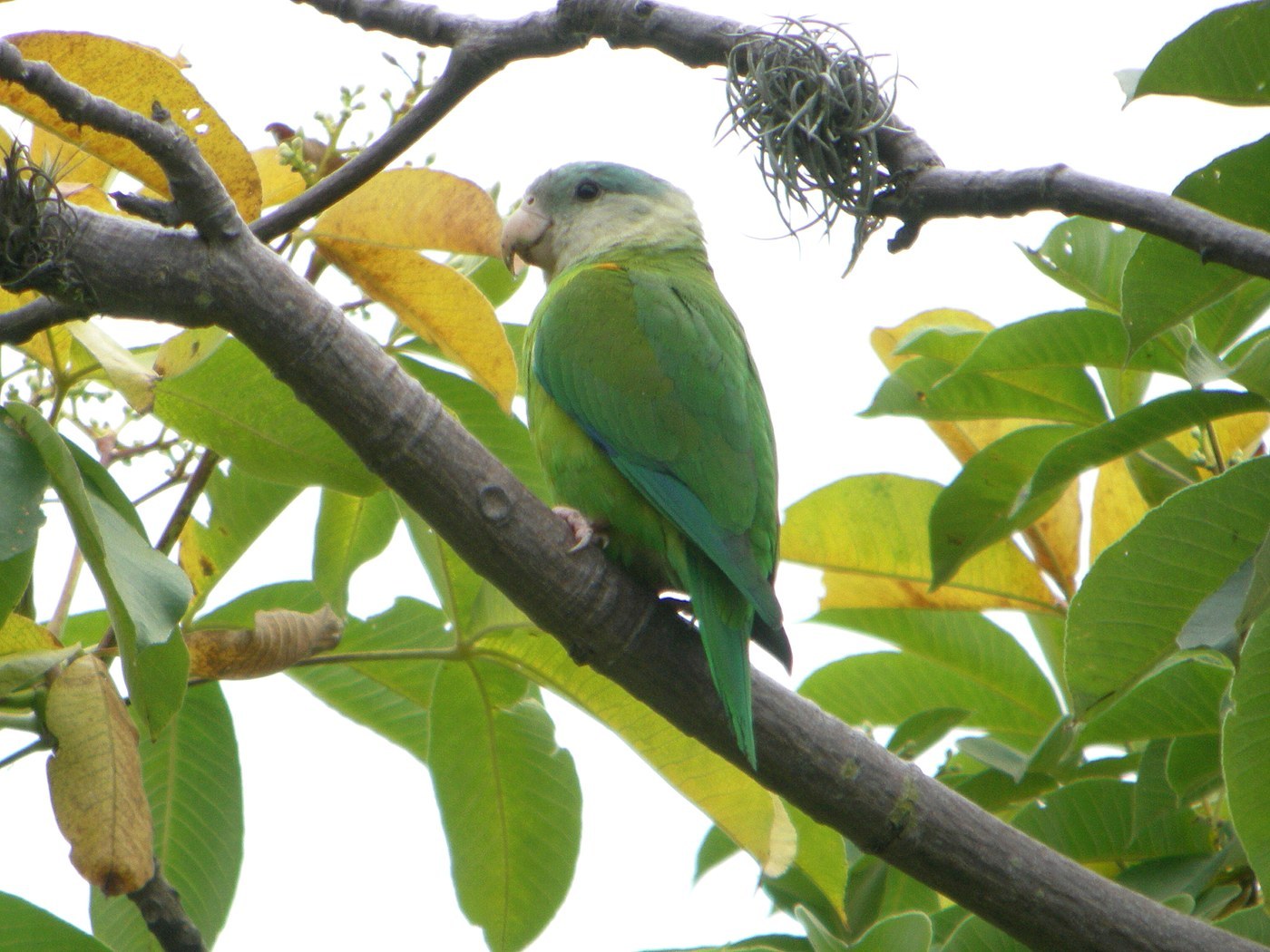
Grey-cheeked Parakeet
Brotogeris pyrrhoptera
A small green South American parakeet with a gray face and orange underwing patches, native to the dry forests of coastal Ecuador and northern Peru.
- Size
- About 18-19 cm (7-7.5 in) long
- Habitat
- Dry deciduous forest, scrub, and woodland of the Tumbesian region of Ecuador and Peru
- Type
- parrot
Spotted a bird like this?
Identify any bird from a photo, free.
Overview
The Grey-cheeked Parakeet is a small, mostly green parrot restricted to the dry Tumbesian forests of southwestern Ecuador and adjacent northwestern Peru. It belongs to the genus Brotogeris, a group of small, fast-flying Neotropical parakeets.
It is bright green overall with a pale grayish wash across the face and throat that gives the species its name. In flight, orange patches on the underwing coverts and bend of the wing become visible, contrasting with the otherwise green plumage.
Plumage
- Body bright green
- Face and throat washed pale gray
- Underwing coverts and wing-bend orange
- Short, pointed tail typical of Brotogeris parakeets
How to identify it
Key field marks
- Small, compact green parakeet with a grayish face
- Orange patch at the bend of the wing and on underwing coverts, most visible in flight
- Fast, direct flight with rapid wingbeats, often in noisy small flocks
Similar species
Other Brotogeris parakeets, such as the Orange-chinned Parakeet, lack the gray facial wash and have a different underwing pattern; the Grey-cheeked Parakeet's restricted dry-forest range in the Tumbesian region also helps confirm identification, as few other small green parakeets overlap there.
Habitat & range
Range
The Grey-cheeked Parakeet is endemic to the Tumbesian dry forest region, found only in southwestern Ecuador and immediately adjacent northwestern Peru.
Habitat
It inhabits deciduous dry forest, scrub, and semi-arid woodland, including degraded and secondary growth areas, often near remaining patches of taller forest. Much of its habitat has been cleared for agriculture, contributing to its threatened status. It is largely sedentary within its limited range.
Behavior & voice
Behavior
Grey-cheeked Parakeets are social, usually encountered in small, fast-moving, vocal flocks that forage together in fruiting or flowering trees.
Voice
Calls are sharp, high-pitched chattering notes given frequently in flight, typical of small Brotogeris parakeets.
Feeding
They feed on fruit, seeds, and blossoms gathered in the forest canopy, moving between feeding sites in flocks.
Nesting
They nest in cavities, sometimes in old woodpecker holes or in arboreal termite mounds, laying small clutches typical of the genus.
Frequently asked questions
Where does the Grey-cheeked Parakeet live?
It is endemic to the dry Tumbesian forest region of southwestern Ecuador and adjacent northwestern Peru.
How do you identify a Grey-cheeked Parakeet?
Look for a small green parakeet with a grayish face and orange patches on the underwing and wing-bend, visible mainly in flight.
Why is the Grey-cheeked Parakeet Near Threatened?
Its restricted dry-forest habitat in the Tumbesian region has been significantly reduced by deforestation and agricultural conversion.
What does the Grey-cheeked Parakeet eat?
It feeds on fruit, seeds, and blossoms foraged in flocks in the forest canopy.
Is the Grey-cheeked Parakeet the same as a parrotlet?
It is sometimes called Grey-cheeked Parrotlet, but taxonomically it belongs to the genus Brotogeris, distinct from the true parrotlets of the genus Forpus.
Grey-cheeked Parakeet guides
In-depth guides for identifying, finding, and understanding Grey-cheeked Parakeet.
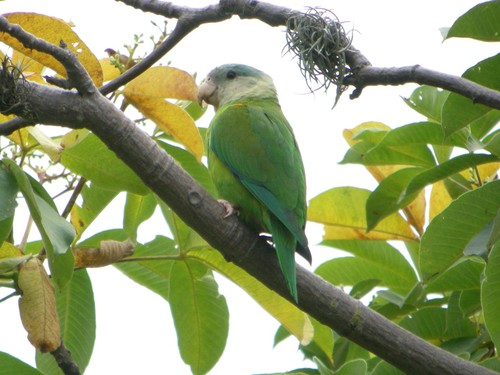
Grey-cheeked Parakeet identified by the community
Real birds identified with Bird Identifier.
Other birds you may enjoy
Eclectus Parrot
35-42 cm (14-16.5 in) long
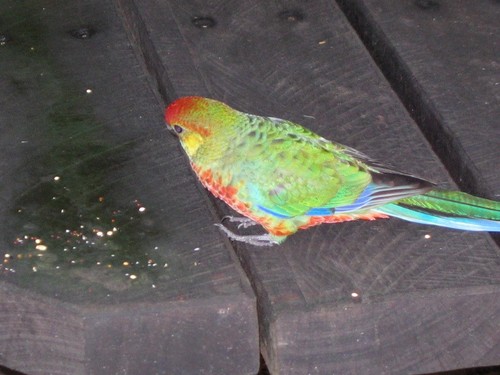
Western Rosella
25-30 cm (10-12 in) long
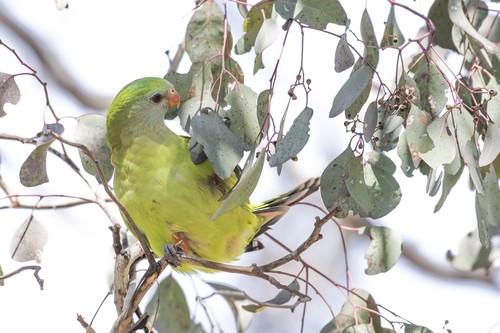
Superb Parrot
About 40 cm (16 in) long including a long tail
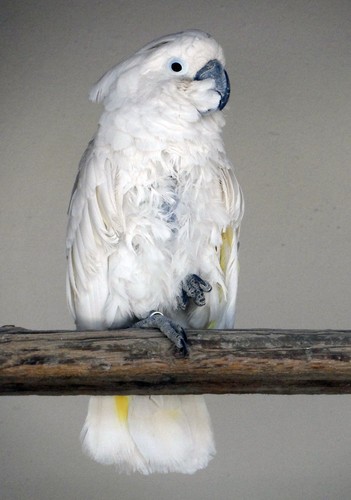
Umbrella Cockatoo
About 46 cm (18 in) long
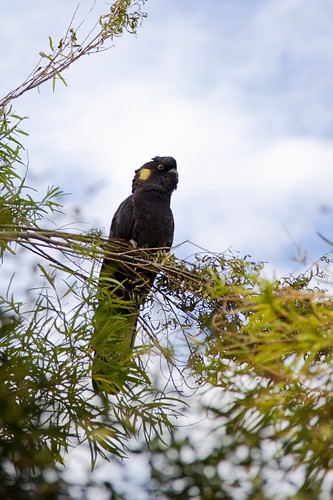
Yellow-tailed Black Cockatoo
55-65 cm long; wingspan up to about 130 cm
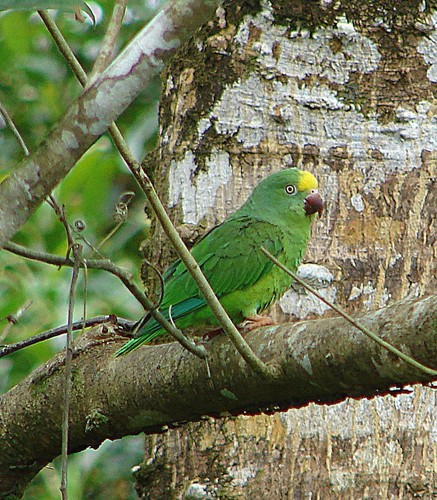
Yellow-crowned Amazon
About 35-38 cm (14-15 in) long
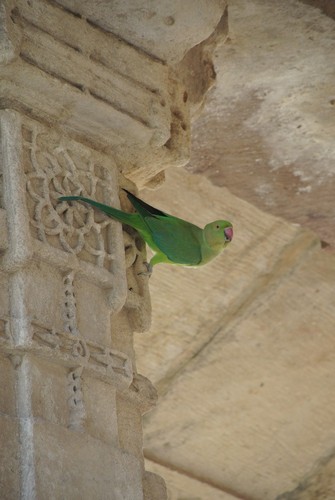
Rose-ringed Parakeet
40 cm (16 in) long including long tail
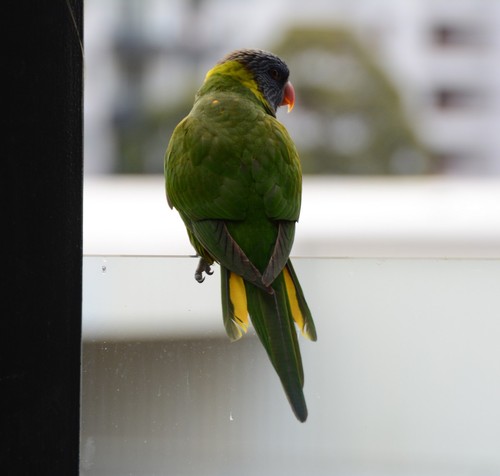
Rainbow Lorikeet
25-30 cm (10-12 in) long
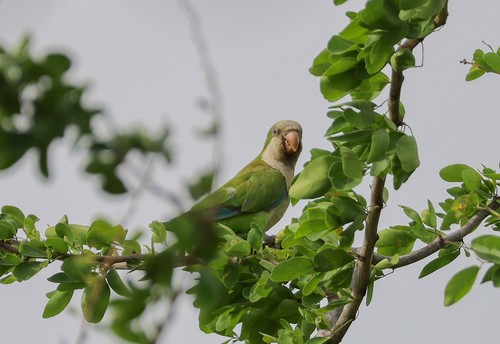
Quaker Parrot
28-31 cm (11-12 in) long
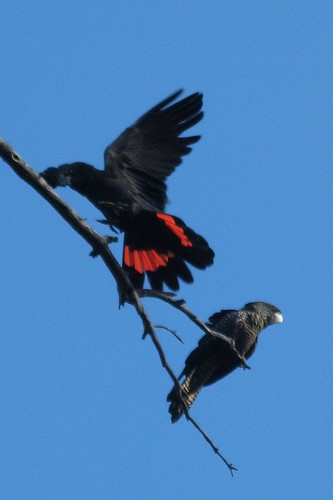
Red-tailed Black Cockatoo
55-65 cm long
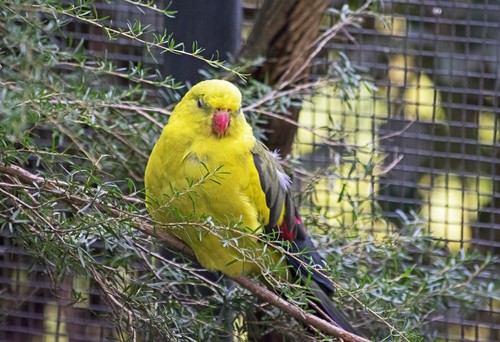
Regent Parrot
37-42 cm (15-17 in) long, including a long tail
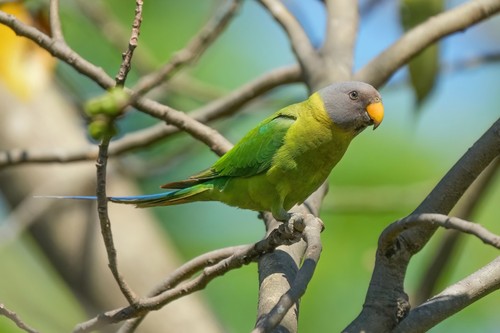
Plum-headed Parakeet
33 cm (13 in) long including tail