
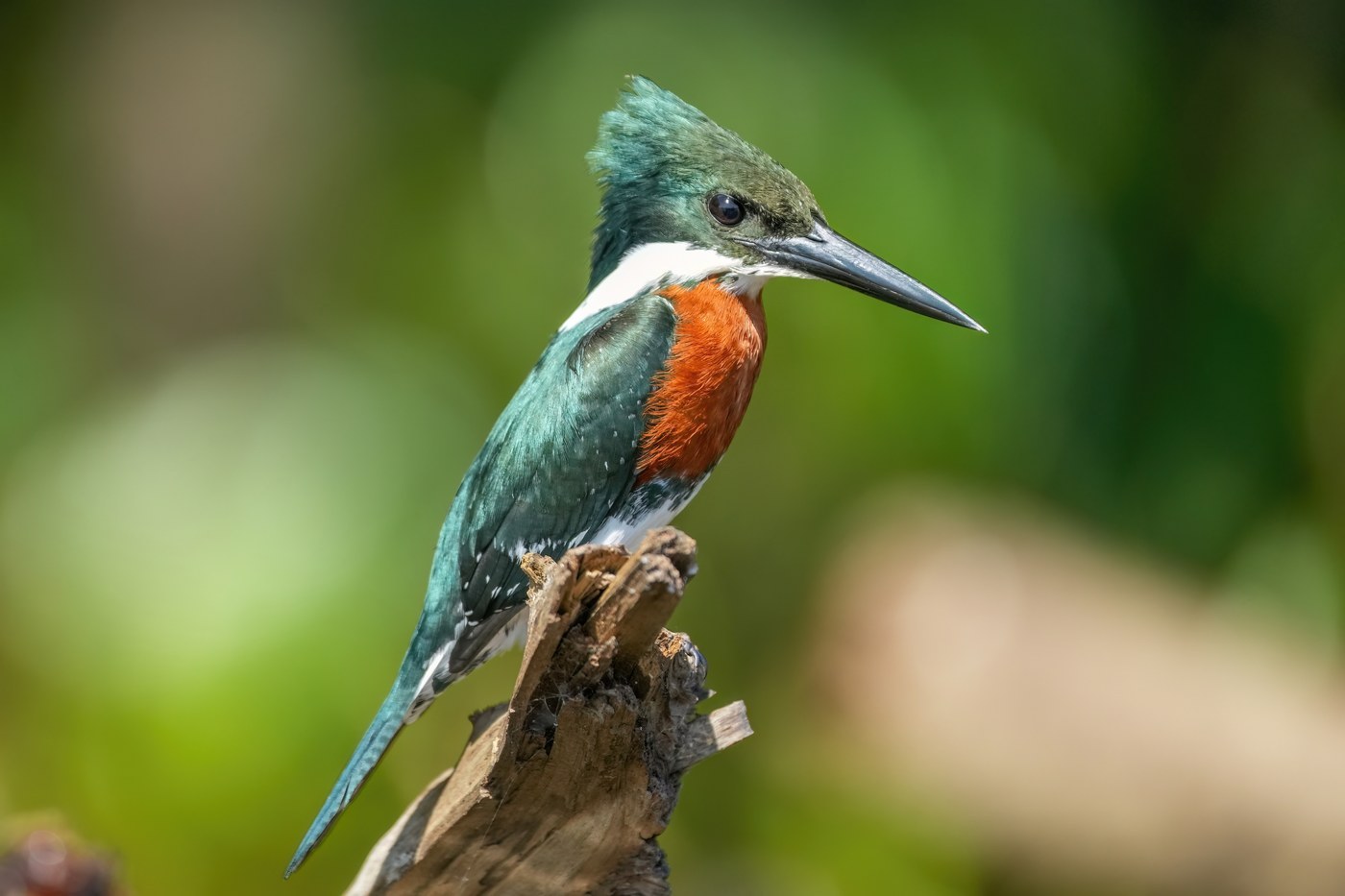
Green Kingfisher
Chloroceryle americana
The smallest kingfisher in the United States, a dark green, white-spotted bird of quiet streams along the southern borderlands.
- Size
- 19-23 cm (7.5-9 in) long, 28-30 cm wingspan
- Habitat
- small streams, rivers, and quiet freshwater edges
- Type
- other
Spotted a bird like this?
Identify any bird from a photo, free.
Overview
The Green Kingfisher is a small, sharply patterned kingfisher found along quiet streams and rivers near the U.S.-Mexico border. Both sexes have glossy dark green upperparts finely spotted with white and a clean white collar and underparts, but the sexes differ in their breast markings: males show a solid rufous-chestnut band across the chest, while females show a band of green spots. Its small size and preference for narrow, shaded waterways set it apart from its larger relatives.
How to identify it
Key Field Marks
- Small size, the smallest kingfisher regularly found in the United States
- Dark, glossy green upperparts finely spotted with white
- White collar and underparts
- Male: solid rufous-chestnut breast band; female: green spotted breast band
Similar Species
- Belted Kingfisher is much larger with a shaggy blue-gray crest and blue-gray, not green, upperparts.
- Ringed Kingfisher is much larger with entirely rufous-chestnut underparts.
Habitat & range
Habitat
Green Kingfishers favor small, quiet streams, rivers, and pond edges, often in shaded or partly wooded settings, perching low over the water.
Range
In the United States they occur locally along the Rio Grande in south Texas and in parts of southeastern Arizona, with a much broader range through Mexico, Central America, and South America.
Migration
The species is largely nonmigratory, remaining resident year-round within its range.
Behavior & voice
Behavior
Green Kingfishers are typically solitary and often perch low, close to the water's surface, on branches or rocks along the stream edge, bobbing their heads and flicking their tails.
Voice
Calls include sharp, high-pitched "tik" or "click" notes, often given in a rapid series when the bird is disturbed and flies off low over the water.
Feeding
They hunt by watching from a low perch and diving to catch small fish and aquatic insects, relying on stealth and a low vantage point rather than the higher hovering flight of larger kingfishers.
Nesting
Like other kingfishers, Green Kingfishers excavate a burrow into an earthen bank near water, where the female lays her eggs in a chamber at the end of the tunnel.
Frequently asked questions
How do you tell a male from a female Green Kingfisher?
Males have a solid rufous-chestnut band across the chest, while females show a band made up of green spots instead.
Where can you find a Green Kingfisher in the United States?
It occurs locally along the Rio Grande in south Texas and in parts of southeastern Arizona, favoring small, quiet streams.
How is the Green Kingfisher different from the Belted Kingfisher?
The Green Kingfisher is much smaller, with dark green (not blue-gray) upperparts and no shaggy crest, and prefers smaller, shadier waterways.
What does a Green Kingfisher eat?
It feeds mainly on small fish and aquatic insects, caught by diving from a low perch near the water's edge.
Green Kingfisher guides
In-depth guides for identifying, finding, and understanding Green Kingfisher.
Other birds you may enjoy
Kiwi
35-55 cm (14-22 in) long; roughly chicken-sized
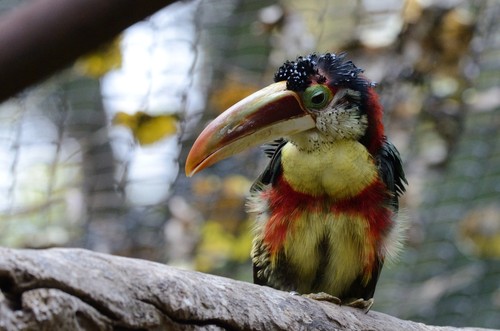
Curl-crested Aracari
41-46 cm (16-18 in) long, including a long bill and tail
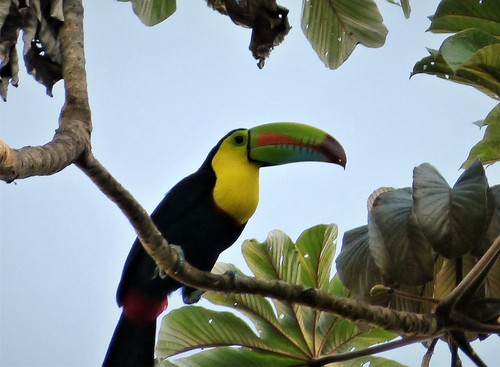
Keel-billed Toucan
42-55 cm (17-22 in) long including bill
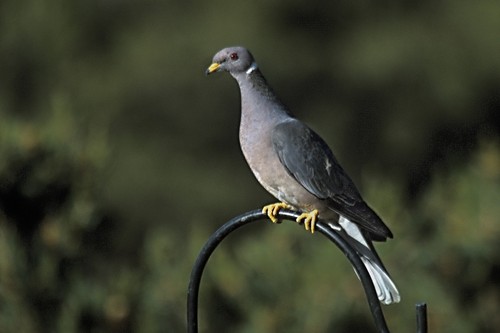
Band-tailed Pigeon
33-38 cm (13-15 in) long, wingspan about 66 cm (26 in)
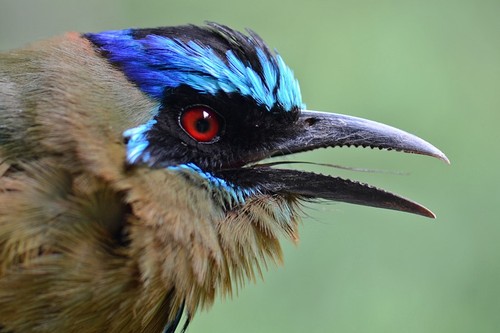
Blue-crowned Motmot
38-43 cm (15-17 in) long including tail
White-tipped Dove
27-30 cm (10.5-12 in) long, 38-43 cm wingspan
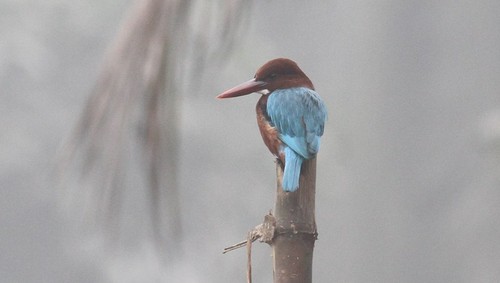
White-throated Kingfisher
27-28 cm (10.5-11 in) long
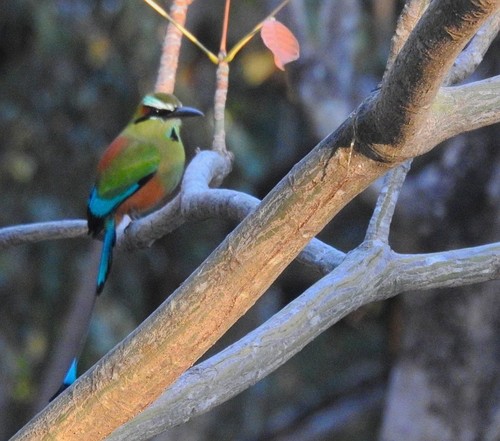
Turquoise-browed Motmot
34 cm (13 in) long including tail
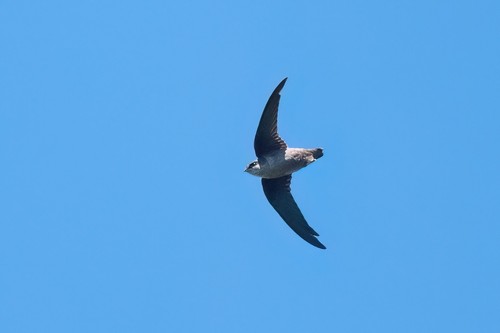
Vaux's Swift
10-12 cm (4-4.5 in) long, 27-30 cm wingspan
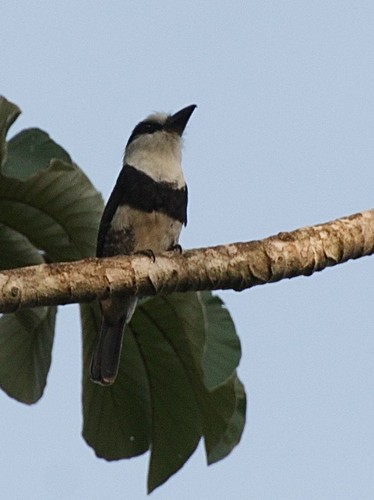
White-necked Puffbird
22-24 cm (8.5-9.5 in) long
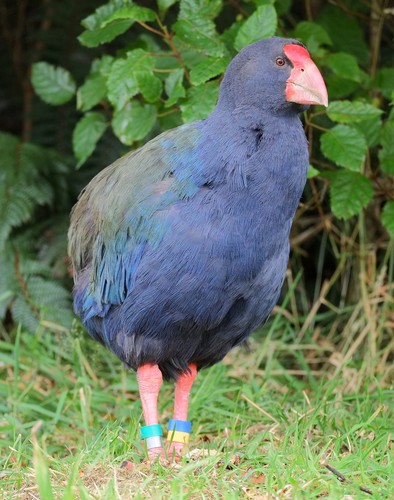
Takahe
50 cm (20 in) long, up to 3.5 kg; flightless
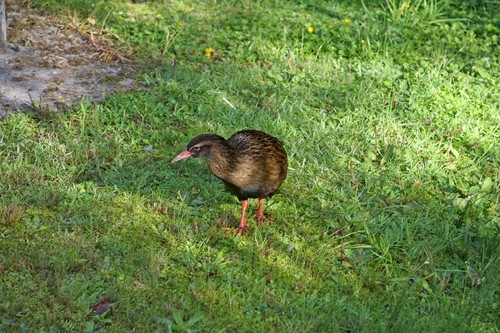
Weka
50-60 cm (20-24 in) long; flightless