
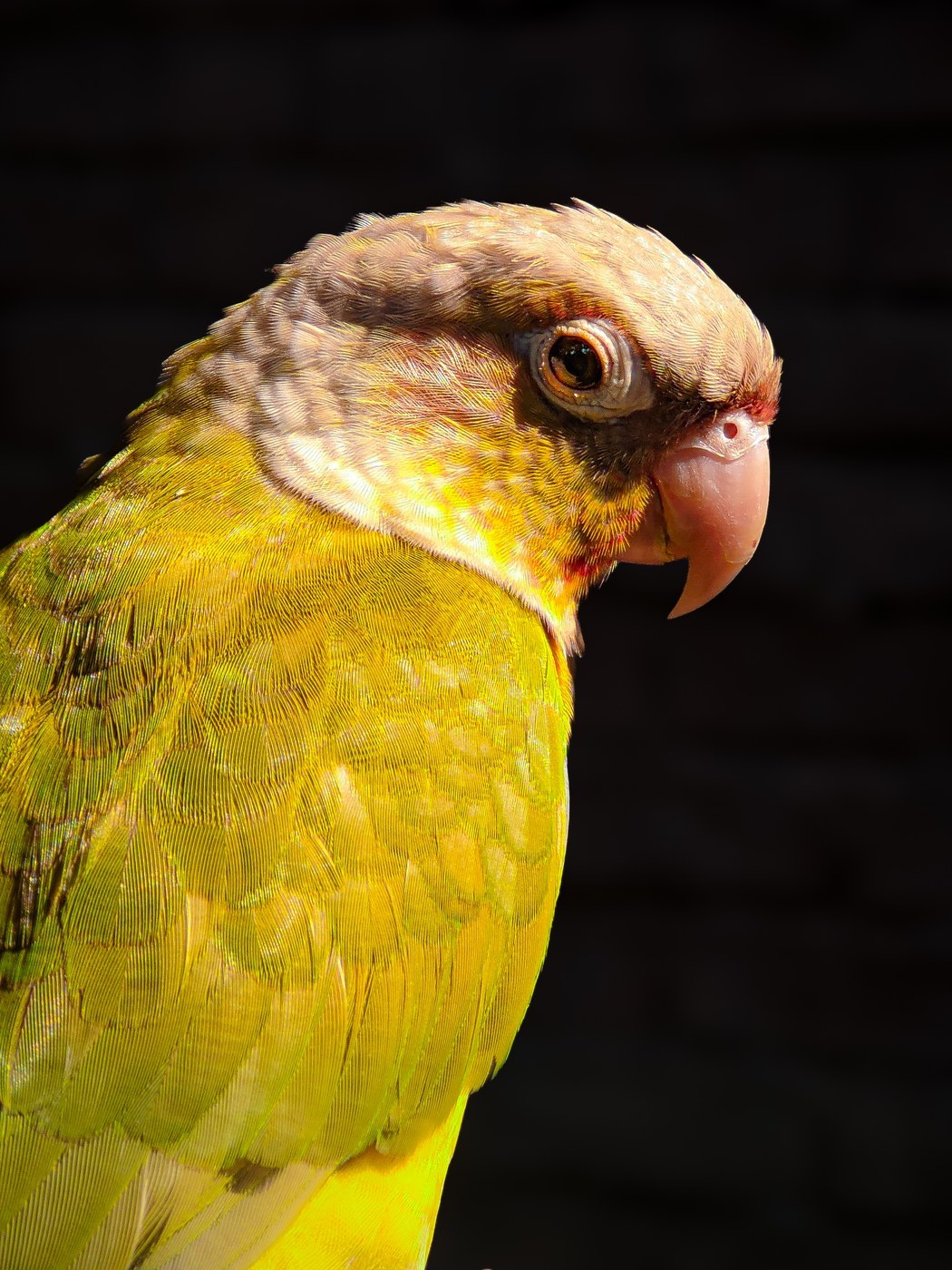
Green-cheeked Conure
Pyrrhura molinae
A small South American parakeet with a scaly grey-brown chest, green cheeks, and a deep maroon tail.
- Size
- About 26 cm long
- Habitat
- Humid and semi-humid lowland and montane forest edge
- Type
- parrot
Spotted a bird like this?
Identify any bird from a photo, free.
Overview
The Green-cheeked Conure, or Green-cheeked Parakeet, is a small, compact member of the Pyrrhura group of South American parakeets, known for its subtly patterned plumage. The crown is dark grey-brown, the cheeks and throat green, and the chest shows fine grey-white scalloping that gives way to a maroon patch on the lower belly and a long, deep maroon-red tail.
Appearance
- Dusky grey-brown crown and nape
- Bright green cheeks, wings, and back
- Grey-brown chest feathers edged in pale grey, creating a scaled or scalloped look
- Maroon-red lower belly and a long, dark maroon tail
- Bare white eye-ring around a dark eye
How to identify it
Key field marks
- Small size compared to most other conures
- Scalloped grey-brown chest pattern unique among green-bodied parakeets
- Long maroon-red tail, noticeably darker and redder than the green body
- White, bare eye-ring contrasting with the darker face
Similar species
Other Pyrrhura species, such as the Maroon-bellied Conure, are similar but typically lack the same crisp chest scalloping or show differences in cheek color; range is often the best way to separate closely related Pyrrhura species. The much larger Blue-crowned Conure has a blue crown and lacks any chest scalloping.
Habitat & range
Range
Native to south-central South America, including Bolivia, Paraguay, western Brazil (Mato Grosso), and northern Argentina.
Habitat
Inhabits humid and semi-humid forest, forest edge, and adjacent woodland, from lowlands up into subtropical foothill forest; generally a non-migratory resident that may move locally for food.
Behavior & voice
Behavior
Highly social, typically moving in small, tight flocks that keep in constant vocal contact as they forage through the canopy.
Voice
Gives high-pitched, chattering calls and shorter chirps, generally less harsh and lower in volume than larger conure species.
Feeding
Forages in the mid to upper canopy for seeds, fruit, berries, nuts, and blossoms, often hanging upside down to reach food.
Nesting and breeding
Nests in tree cavities, laying a small clutch of white eggs incubated by the female while the male stands guard and provisions her.
Frequently asked questions
What does a Green-cheeked Conure look like?
It is a small parakeet with a dark grey-brown crown, green cheeks and wings, a scalloped grey chest, and a long maroon-red tail.
Where are Green-cheeked Conures from?
They are native to south-central South America, including Bolivia, Paraguay, western Brazil, and northern Argentina.
What is the difference between a Green-cheeked Conure and other Pyrrhura parakeets?
Green-cheeked Conures show a distinct scaled grey-brown chest pattern and green cheeks, and are typically distinguished from close relatives by range and subtle plumage details.
What habitat do Green-cheeked Conures prefer?
They live in humid and semi-humid forest and forest-edge habitats from lowland to subtropical foothill elevations.
Green-cheeked Conure guides
In-depth guides for identifying, finding, and understanding Green-cheeked Conure.
Other birds you may enjoy
Eclectus Parrot
35-42 cm (14-16.5 in) long
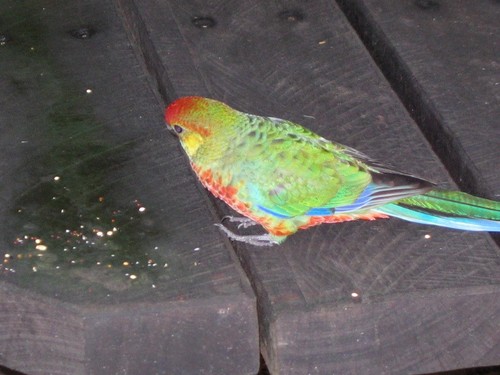
Western Rosella
25-30 cm (10-12 in) long
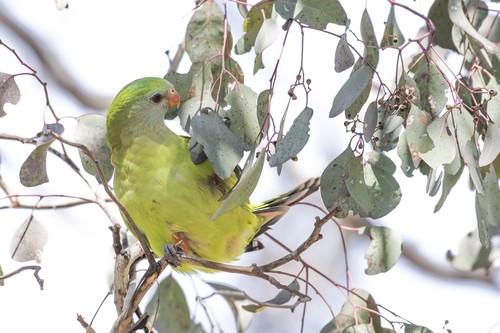
Superb Parrot
About 40 cm (16 in) long including a long tail
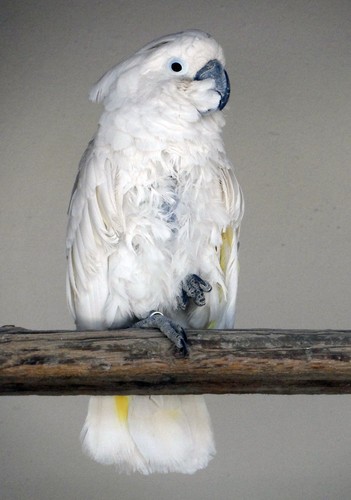
Umbrella Cockatoo
About 46 cm (18 in) long
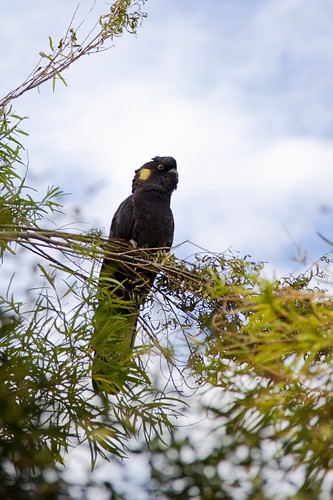
Yellow-tailed Black Cockatoo
55-65 cm long; wingspan up to about 130 cm
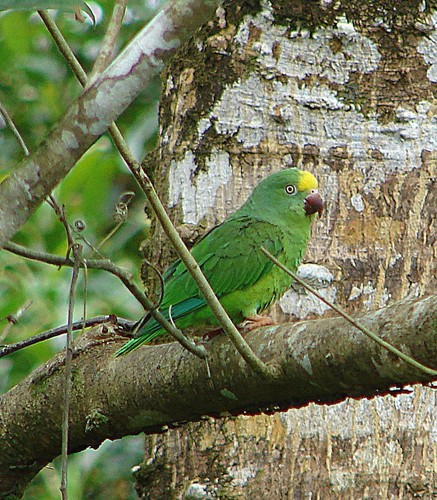
Yellow-crowned Amazon
About 35-38 cm (14-15 in) long
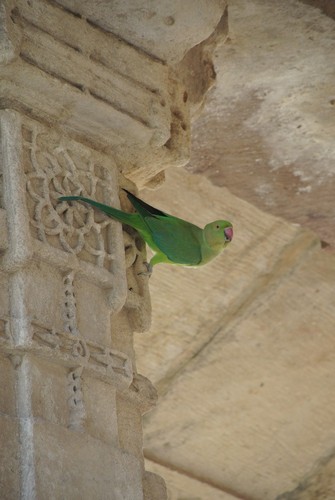
Rose-ringed Parakeet
40 cm (16 in) long including long tail
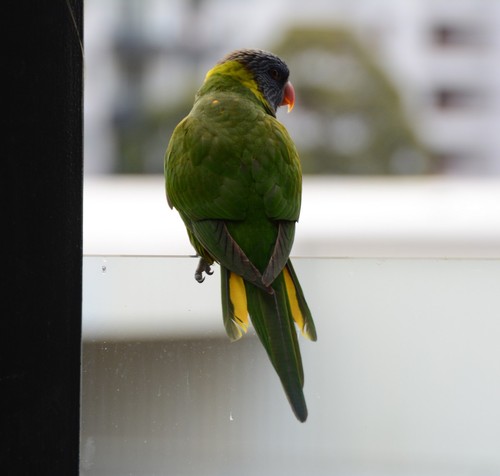
Rainbow Lorikeet
25-30 cm (10-12 in) long
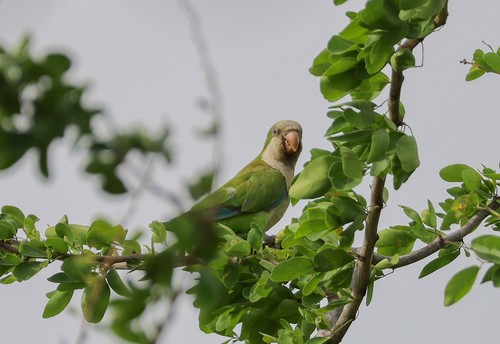
Quaker Parrot
28-31 cm (11-12 in) long
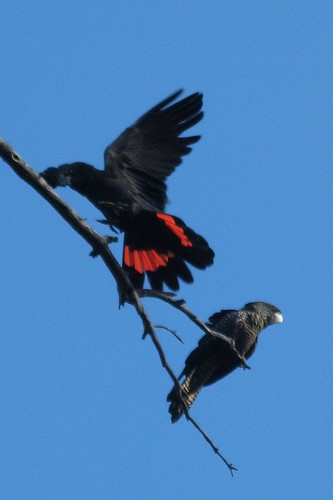
Red-tailed Black Cockatoo
55-65 cm long
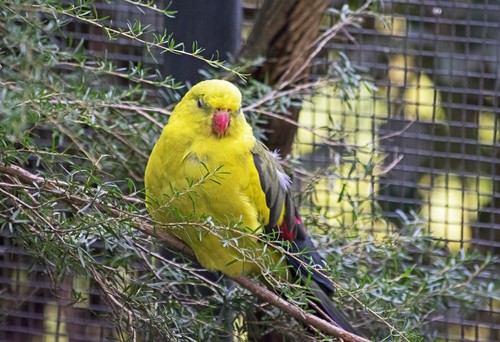
Regent Parrot
37-42 cm (15-17 in) long, including a long tail
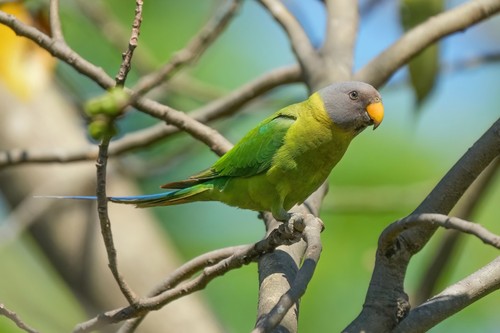
Plum-headed Parakeet
33 cm (13 in) long including tail