
Green-cheeked Conure Identification Guide
A small, stocky South American parakeet, the Green-cheeked Conure (Green-cheeked Parakeet) shows a dark gray-brown hood, bright green body, maroon tail, and a red-tinged belly patch, typically seen in noisy, fast-flying flocks.
Read the full Green-cheeked Conure encyclopedia entry →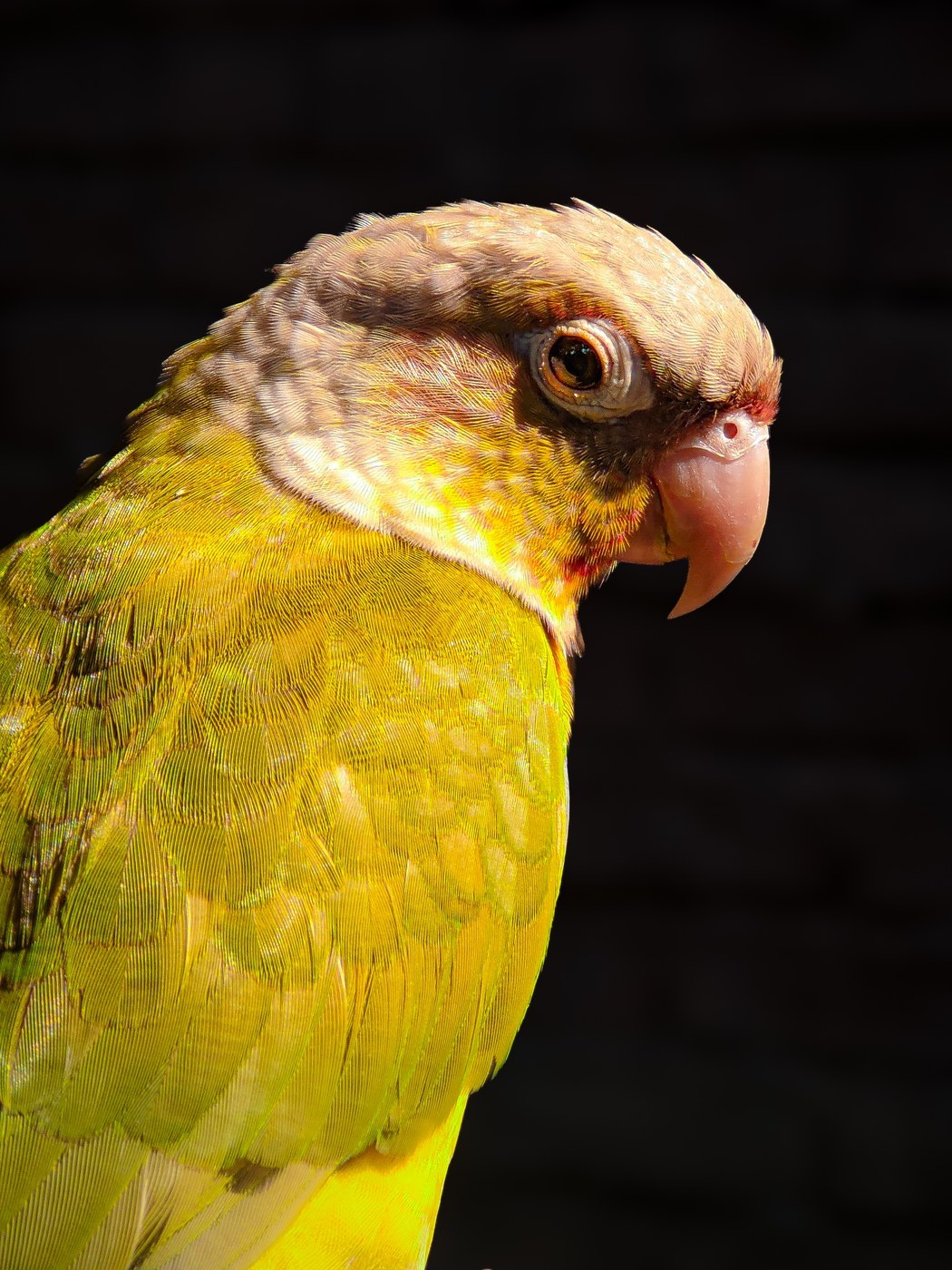
Key Field Marks
- Size & shape: A small parrot about 10 inches (26 cm) long, with a short, squarish tail (short relative to many other conures), stocky body, and proportionally large head.
- Plumage: A dark grayish-brown to blackish hood covers the crown, nape, and cheeks (hence the name, though the cheeks read more dusky-olive than bright green up close); body is mostly bright green; a maroon-red patch is often visible on the lower belly; the tail is long and maroon-tipped.
- Face: Bare white eye-ring contrasts with the dark hood, a useful close-range mark.
- Bill: Small, dark gray, strongly hooked, typical parrot shape.
- Behavior: Highly social, moves in noisy, fast-flying flocks through the forest canopy and edge, often first detected by chattering calls overhead before being seen; feeds on fruit, seeds, and blossoms.
Separating It From Similar Species
- Other South American conures sharing its range (e.g., Maroon-bellied Parakeet, Blaze-winged Parakeet) look similar but differ in details: Maroon-bellied Parakeet has duller, more olive-brown head plumage without as sharply defined a dark hood, and its maroon belly patch tends to be more extensive; Blaze-winged Parakeet shows red patches in the wing (a "blaze") that Green-cheeked lacks.
- Overall, the combination of a solidly dark blackish-gray hood, white eye-ring, and green body with limited maroon on the belly and tail helps distinguish it from co-occurring conure species, though views in flight can be brief and calls plus range are often the most practical identification tools.
Where & When to See It
- Habitat: Humid and semi-humid forest, forest edge, and adjacent woodland, from lowlands into foothills.
- Range: South-central South America — Mato Grosso and adjacent regions of Brazil, Bolivia, Paraguay, and northern Argentina.
- Season: Resident year-round with no long-distance migration; flocks may shift locally in response to fruiting trees.
Voice
- Calls are shrill, chattering, and somewhat screechy notes given constantly in flight and while foraging — typical noisy conure chatter that often reveals a flock's presence well before it comes into view.
Frequently asked questions
What is the most reliable field mark for Green-cheeked Conure?
A solid dark grayish-brown to blackish hood over the head and cheeks combined with a white bare eye-ring, a green body, and a maroon-tipped tail.
How do you tell Green-cheeked Conure from Maroon-bellied Parakeet?
Maroon-bellied Parakeet has a duller, more olive-brown head without as crisply defined a dark hood, and typically shows a more extensive maroon belly patch than Green-cheeked Conure.
Where does the wild Green-cheeked Conure occur?
In humid forest and forest edge of south-central South America, including parts of Brazil (Mato Grosso), Bolivia, Paraguay, and northern Argentina.
Why are Green-cheeked Conures often heard before seen?
Like most conures, they travel in noisy, fast-moving flocks giving frequent shrill, chattering calls, which usually announce their presence in the canopy before individual birds can be picked out visually.