
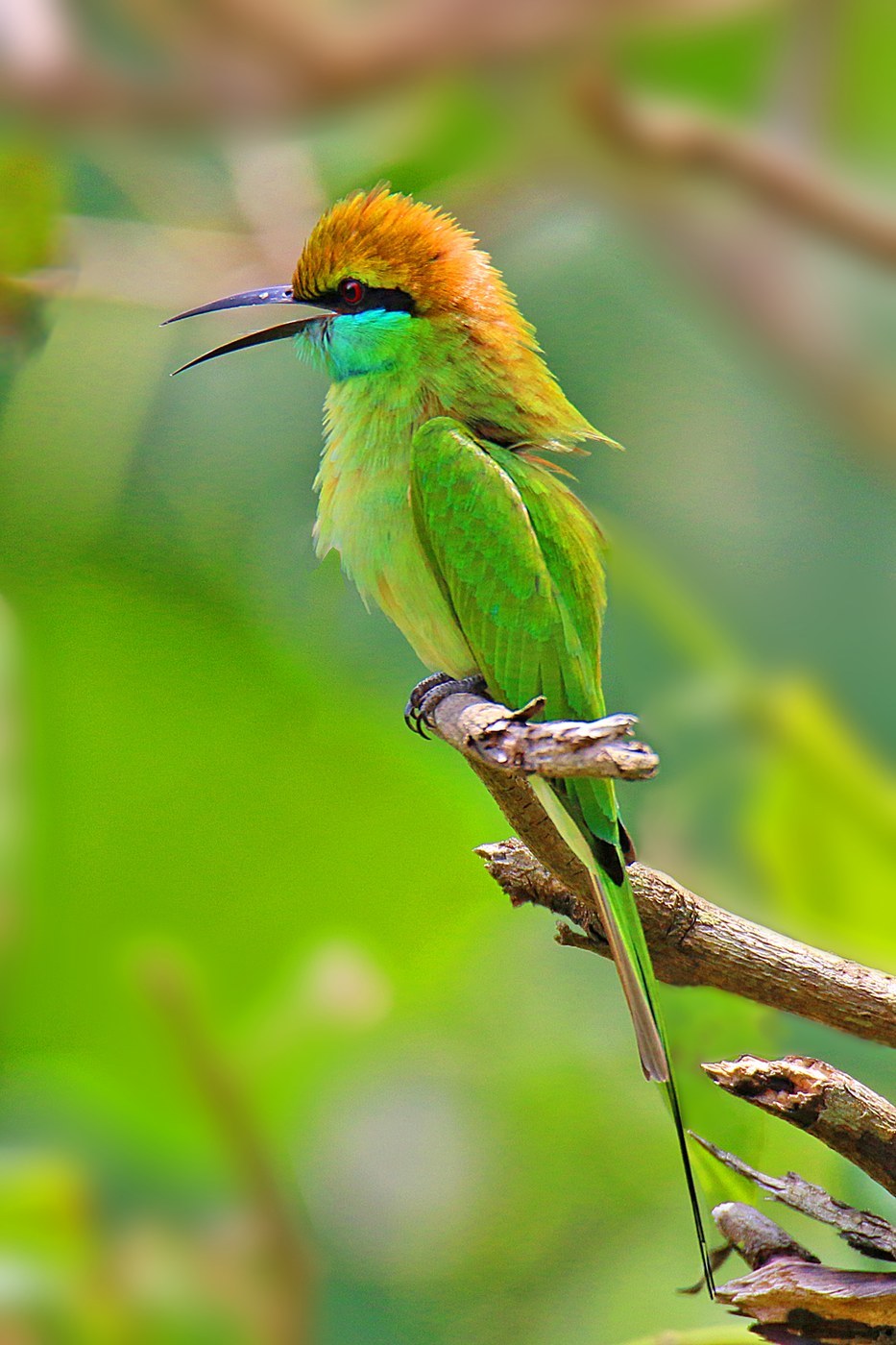
Green Bee-eater
Merops orientalis
A slender emerald-green bird with elongated central tail feathers and a black eye stripe, an agile aerial hunter of bees and wasps.
- Size
- 16-18 cm (6.3-7 in) long including elongated central tail feathers
- Habitat
- open country, farmland, scrub, and grassland across Africa, the Middle East, and South Asia
- Type
- other
Spotted a bird like this?
Identify any bird from a photo, free.
Overview
The Green Bee-eater is a small, elegant, mostly grass-green bird with a slender downcurved black bill, a black stripe running through the eye, and a thin blue throat patch bordered below by a fine black gorget. A pair of elongated, wire-like central tail feathers projects beyond the rest of the tail, adding to its graceful silhouette, especially when perched on wires or thin branches.
As its name suggests, the species specializes in catching bees, wasps, and other stinging insects on the wing, skillfully removing venom by beating and rubbing the prey against a perch before swallowing it — a behavior that also protects it from being stung.
How to identify it
Key field marks
- Overall bright grass-green plumage
- Black stripe through the eye; thin blue throat patch edged with a black gorget
- Slender, gently downcurved black bill
- Elongated central tail feathers (wire-like, best seen in flight or at rest)
- Graceful, acrobatic flight with frequent aerial sallies
Similar species
Other bee-eater species, such as the Blue-cheeked Bee-eater or Blue-tailed Bee-eater, are larger with more extensive blue in the plumage; the Green Bee-eater is the smallest and most uniformly green bee-eater across most of its range.
Habitat & range
Green Bee-eaters range across a huge area from sub-Saharan Africa through the Middle East and the Indian subcontinent into Southeast Asia. They favor open, dry country: farmland, scrub, grassland, and cultivated land, often perching conspicuously on wires, fences, or bare twigs.
The species is largely resident, though some local seasonal movements occur in response to insect abundance.
Behavior & voice
Voice
A cheerful, rolling "tree-tree-tree" or "tit-tit" call, often given in flight, contributing to the species' lively, sociable presence in open country.
Feeding
Green Bee-eaters hunt by sallying from an exposed perch to catch flying insects — especially bees, wasps, and dragonflies — in mid-air, returning to the perch to subdue the prey by beating it against the branch before eating it, which removes stingers and venom.
Nesting and breeding
They nest colonially or in loose groups, excavating tunnel burrows in sandy banks, road cuttings, or flat ground, where both parents dig the burrow and feed the chicks. Clutches typically number 4-6 eggs.
Frequently asked questions
How does a Green Bee-eater safely eat bees and wasps?
It beats and rubs the insect against a perch before swallowing it, a behavior that removes the stinger and venom sac.
How can I identify a Green Bee-eater?
Look for a small, slender, bright green bird with a black eye stripe, a thin blue throat patch, and elongated wire-like central tail feathers.
Where do Green Bee-eaters nest?
They dig tunnel burrows into sandy banks or flat open ground, sometimes nesting in loose colonies.
What do Green Bee-eaters eat besides bees?
They take a wide range of flying insects, including wasps, dragonflies, and other winged prey caught in aerial sallies.
Green Bee-eater guides
In-depth guides for identifying, finding, and understanding Green Bee-eater.
Other birds you may enjoy
Kiwi
35-55 cm (14-22 in) long; roughly chicken-sized
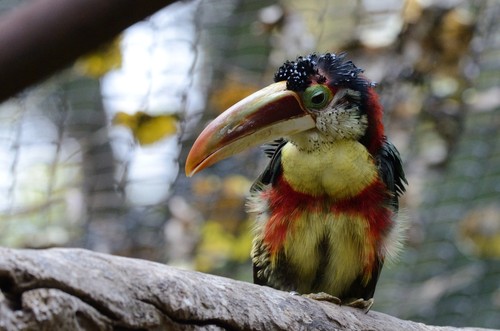
Curl-crested Aracari
41-46 cm (16-18 in) long, including a long bill and tail
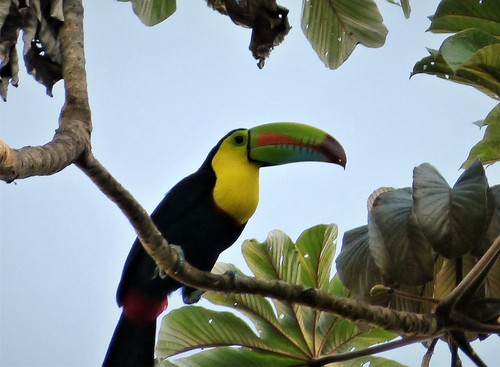
Keel-billed Toucan
42-55 cm (17-22 in) long including bill
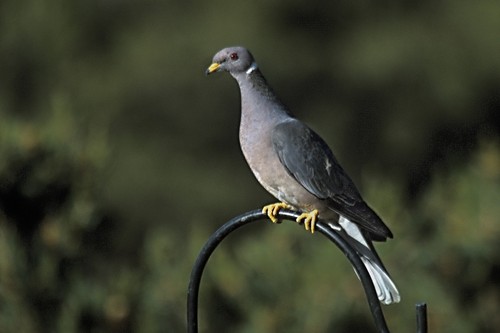
Band-tailed Pigeon
33-38 cm (13-15 in) long, wingspan about 66 cm (26 in)
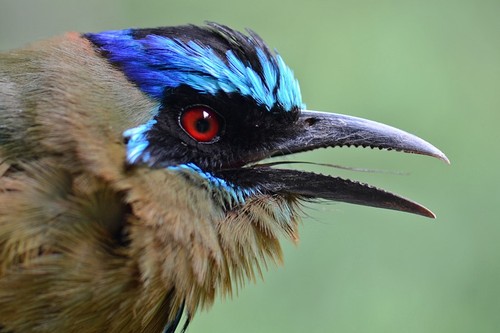
Blue-crowned Motmot
38-43 cm (15-17 in) long including tail
White-tipped Dove
27-30 cm (10.5-12 in) long, 38-43 cm wingspan
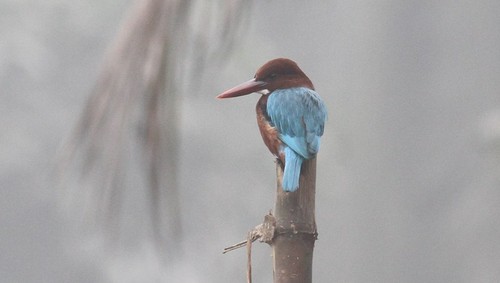
White-throated Kingfisher
27-28 cm (10.5-11 in) long
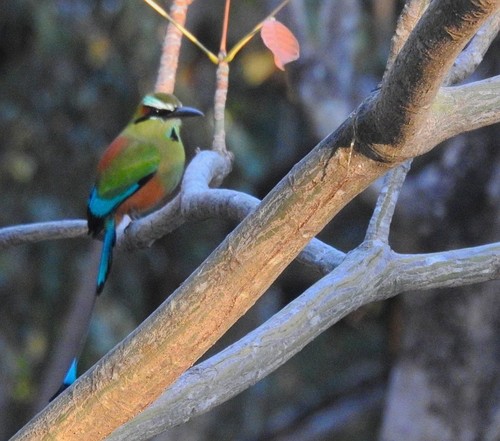
Turquoise-browed Motmot
34 cm (13 in) long including tail
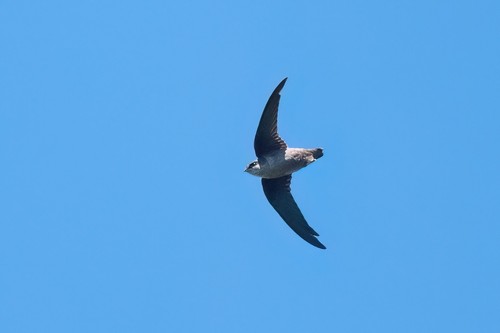
Vaux's Swift
10-12 cm (4-4.5 in) long, 27-30 cm wingspan
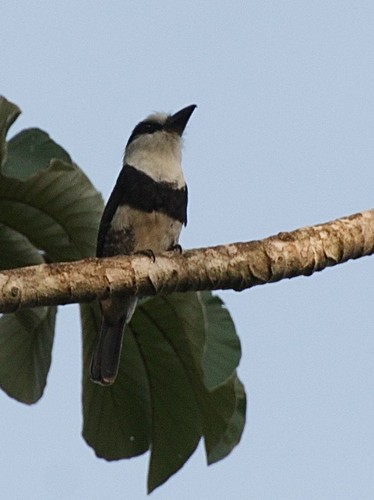
White-necked Puffbird
22-24 cm (8.5-9.5 in) long
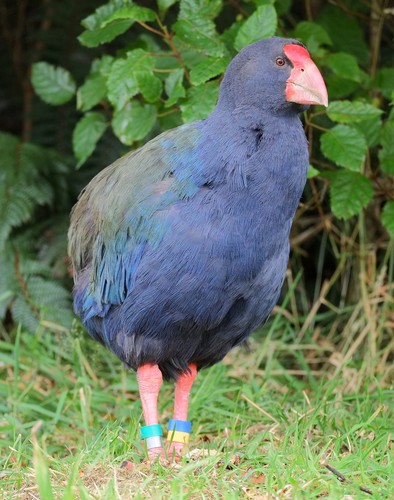
Takahe
50 cm (20 in) long, up to 3.5 kg; flightless
Weka
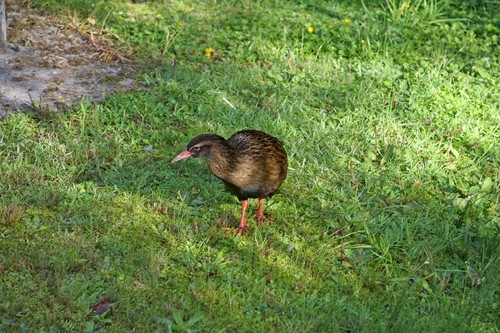
50-60 cm (20-24 in) long; flightless