
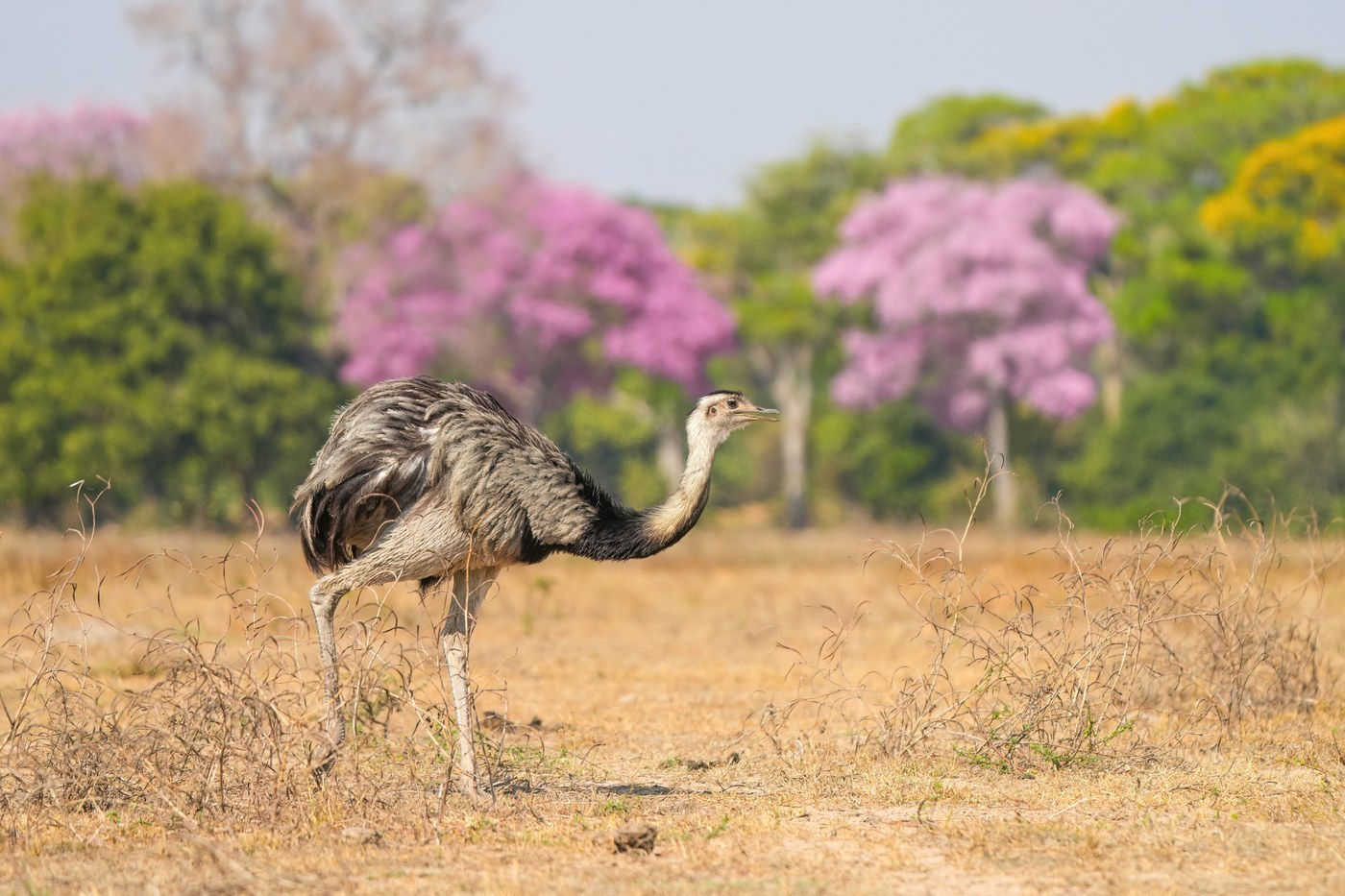
Greater Rhea
Rhea americana
South America's largest bird, a flightless grassland species with shaggy gray-brown plumage resembling a smaller relative of the Ostrich.
- Size
- 1.3-1.5 m (4.3-5 ft) tall; the largest bird in South America
- Habitat
- Open grassland, pampas, and savanna of South America
- Type
- other
Spotted a bird like this?
Identify any bird from a photo, free.
Overview
The Greater Rhea is the largest bird native to South America, a flightless grassland species with loose, shaggy gray-brown plumage and long bare legs. Superficially resembling a smaller Ostrich, it has a long neck, a flattened head, and large dark eyes suited to spotting predators across open terrain.
Rheas are gregarious birds, typically seen moving in small flocks across the pampas and savannas of central and southern South America.
How to identify it
Key Field Marks
- Large flightless body with grayish-brown, shaggy plumage
- Long bare gray legs with three forward-facing toes
- Long neck and small flattened head
- Males may show darker, blacker feathering on the neck during breeding
- Loose flocks in open grassland habitat
Similar Species
- The Lesser (Darwin's) Rhea is smaller, paler, and found farther south in Patagonia and the Andean altiplano, with white-tipped feathers giving a more speckled look
- No other large flightless bird occurs within its South American range
Habitat & range
Range
Central and eastern South America, including Brazil, Paraguay, Uruguay, Bolivia, and Argentina.
Habitat
Open grassland, pampas, savanna, and agricultural land with scattered low vegetation; avoids dense forest.
Migration
Non-migratory, though flocks may shift locally with seasonal food and water availability.
Behavior & voice
Behavior
Gregarious for much of the year, forming flocks of a dozen or more birds, often mixing with grazing mammals such as deer or cattle. Runs swiftly with wings held out for balance when fleeing danger.
Voice
Generally silent, but males give a deep booming or roaring call during the breeding season to attract mates and declare territory.
Feeding
Omnivorous grazer, eating broad-leaved plants, seeds, fruit, and roots, along with insects, small reptiles, and other small animals.
Nesting & Breeding
Polygynous like other large ratites: a male mates with several females who lay eggs in a shared ground nest, and the male alone incubates and raises the chicks.
Frequently asked questions
Can Greater Rheas fly?
No, they are flightless; they use their long legs to run swiftly and their wings mainly for balance and display.
How is the Greater Rhea different from an Ostrich?
The Greater Rhea is smaller, native to South America rather than Africa, and has three toes instead of two.
Why is the Greater Rhea Near Threatened?
Habitat conversion to agriculture, along with historic hunting pressure, has reduced populations across parts of its range.
Do Greater Rheas live in groups?
Yes, they are typically gregarious, forming flocks especially outside the breeding season.
What do Greater Rheas eat?
A varied diet of broad-leaved plants, seeds, roots, and small animals like insects and lizards.
Greater Rhea guides
In-depth guides for identifying, finding, and understanding Greater Rhea.
Other birds you may enjoy
Kiwi
35-55 cm (14-22 in) long; roughly chicken-sized
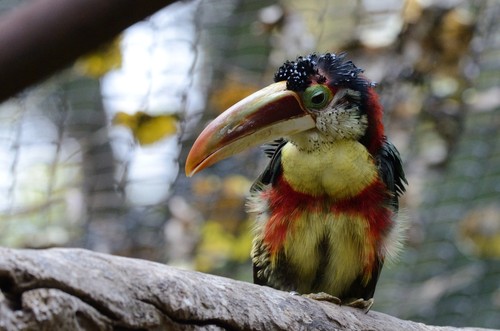
Curl-crested Aracari
41-46 cm (16-18 in) long, including a long bill and tail
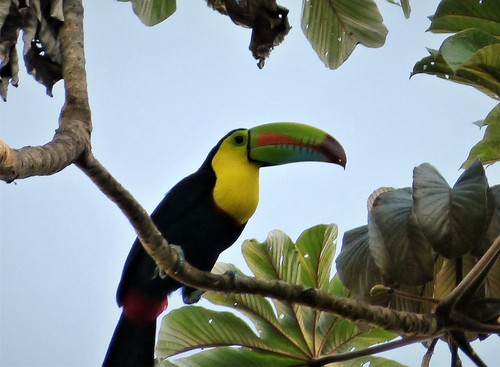
Keel-billed Toucan
42-55 cm (17-22 in) long including bill
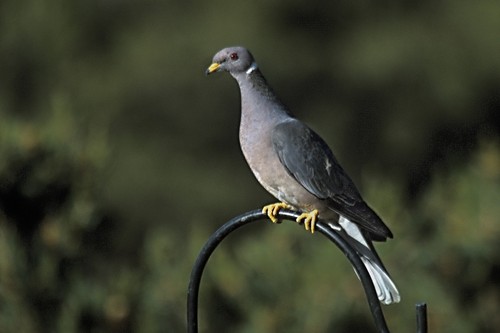
Band-tailed Pigeon
33-38 cm (13-15 in) long, wingspan about 66 cm (26 in)
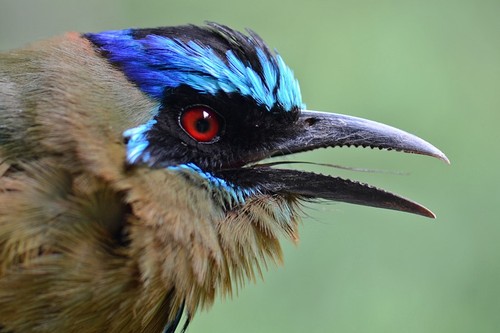
Blue-crowned Motmot
38-43 cm (15-17 in) long including tail
White-tipped Dove
27-30 cm (10.5-12 in) long, 38-43 cm wingspan
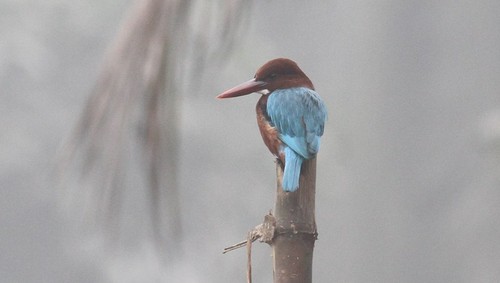
White-throated Kingfisher
27-28 cm (10.5-11 in) long
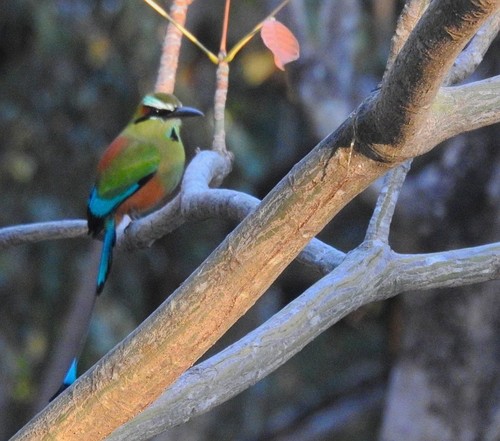
Turquoise-browed Motmot
34 cm (13 in) long including tail
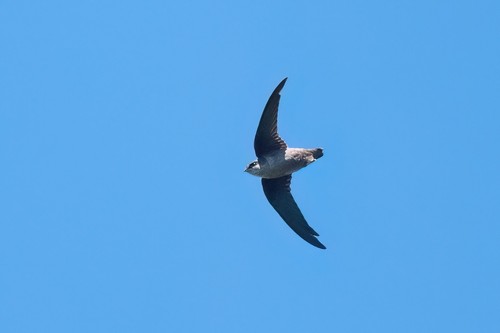
Vaux's Swift
10-12 cm (4-4.5 in) long, 27-30 cm wingspan
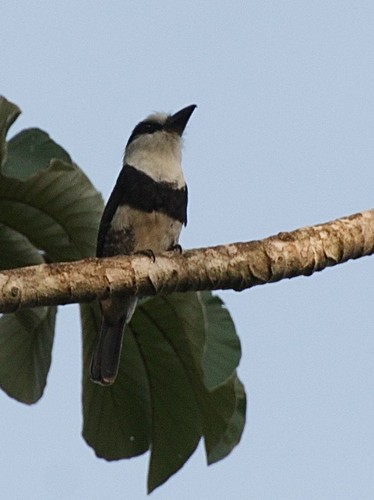
White-necked Puffbird
22-24 cm (8.5-9.5 in) long
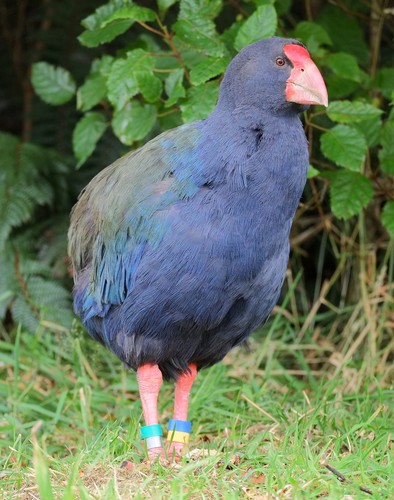
Takahe
50 cm (20 in) long, up to 3.5 kg; flightless
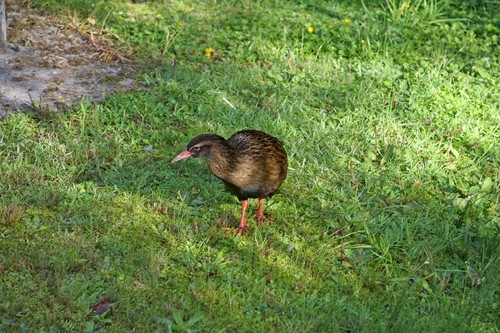
Weka
50-60 cm (20-24 in) long; flightless