
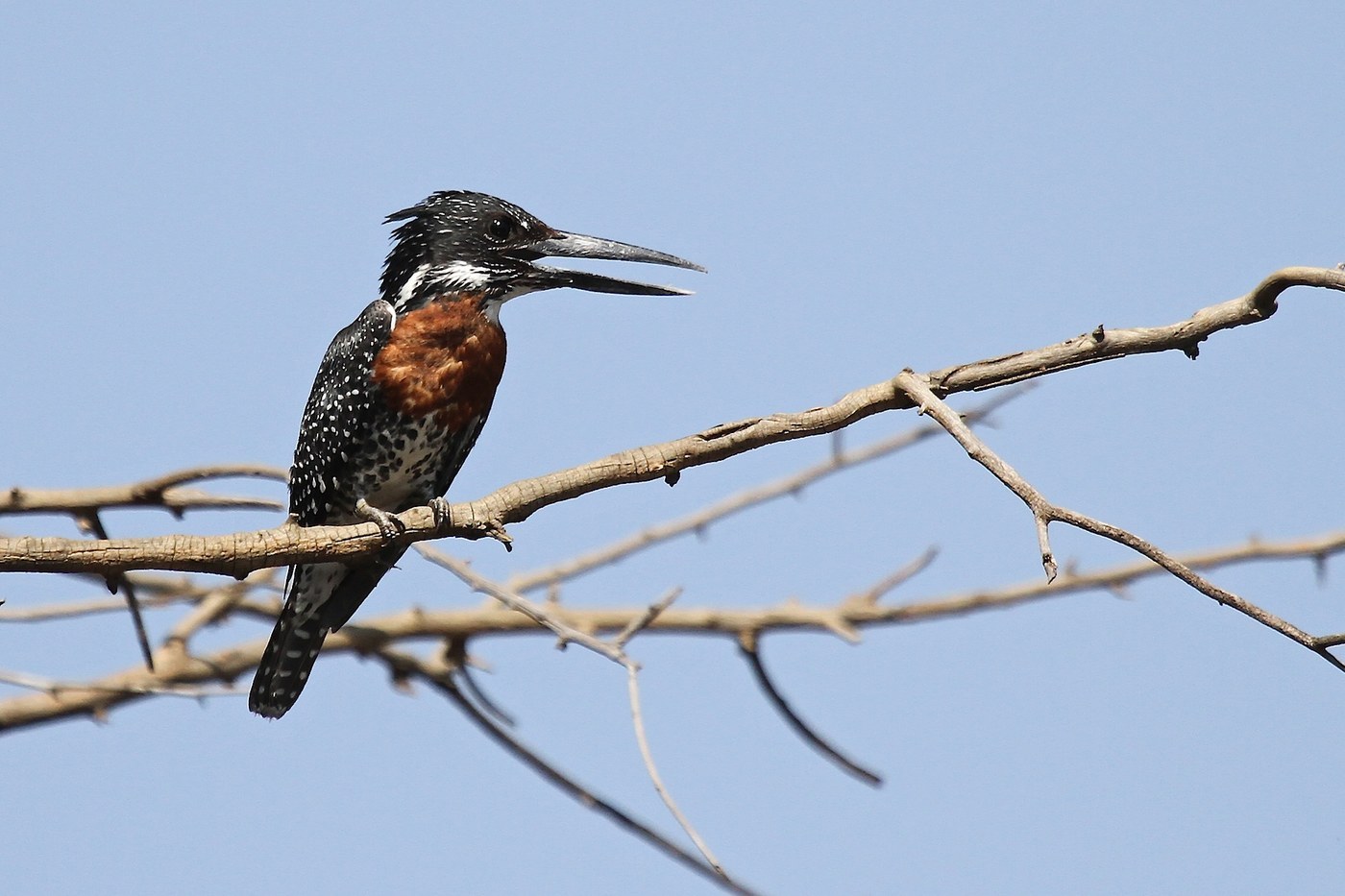
Giant Kingfisher
Megaceryle maxima
Africa's largest kingfisher, a shaggy-crested, black-and-white speckled bird that hunts fish and crabs from streamside perches.
- Size
- 42-46 cm (17-18 in) long
- Habitat
- rivers, lakes, forest streams, mangroves, and rocky coasts
- Type
- other
Spotted a bird like this?
Identify any bird from a photo, free.
Overview
The Giant Kingfisher is by far the largest kingfisher in Africa, roughly the size of a crow. It has a heavy, dagger-like black bill, a shaggy black crest speckled with white, and a black-and-white spotted back and wings. The sexes differ in underparts color: males have a chestnut breast band with white-spotted flanks, while females show a chestnut belly and white-spotted breast.
Despite its bulk, it is a powerful and agile hunter, plunge-diving from overhanging perches into rivers, lakes, and estuaries to seize prey.
How to identify it
Key field marks
- Very large size, roughly crow-sized, dwarfing other African kingfishers
- Shaggy, speckled black-and-white crest
- Heavy black bill
- Rufous/chestnut patch on breast (male) or belly (female), contrasting with white-spotted black upperparts
Similar species
- Pied Kingfisher is much smaller and entirely black-and-white with no chestnut coloring.
- Malachite Kingfisher and African Pygmy Kingfisher are tiny and brightly colored, easily separated by size alone.
- Half-collared Kingfisher is smaller and mostly blue above.
Habitat & range
Habitat
Found along wooded rivers, lakes, forest streams, estuaries, mangroves, and rocky coastlines with clear water for hunting.
Range
Widespread across sub-Saharan Africa, from Senegal east to Ethiopia and south to South Africa.
Migration
Generally sedentary and territorial, remaining on a fixed stretch of water year-round.
Behavior & voice
Behavior
Hunts by watching from a low perch overhanging water, then plunge-diving to seize prey in its powerful bill; also hovers briefly over open water before diving.
Voice
A loud, harsh, far-carrying "wa-ka wa-ka" or rattling cackle, often given in flight.
Feeding
Takes fish, crabs, frogs, and large aquatic insects, beating larger prey against a branch before swallowing.
Nesting
Excavates a long tunnel nest, often over a meter deep, into a riverbank or earthen cliff; lays 2-4 white eggs.
Frequently asked questions
How big is a Giant Kingfisher?
It is about 42-46 cm (17-18 in) long, roughly crow-sized, making it the largest kingfisher species in Africa.
What does a Giant Kingfisher eat?
Mainly fish and crabs, along with frogs and large aquatic insects, captured by plunge-diving from a perch.
How do you tell a male from a female Giant Kingfisher?
Males have a chestnut breast band with white-spotted flanks, while females have a chestnut belly with a white-spotted breast.
Where does the Giant Kingfisher live?
Across sub-Saharan Africa along rivers, lakes, forest streams, and coastal estuaries with clear water.
Giant Kingfisher guides
In-depth guides for identifying, finding, and understanding Giant Kingfisher.
Other birds you may enjoy
Kiwi
35-55 cm (14-22 in) long; roughly chicken-sized
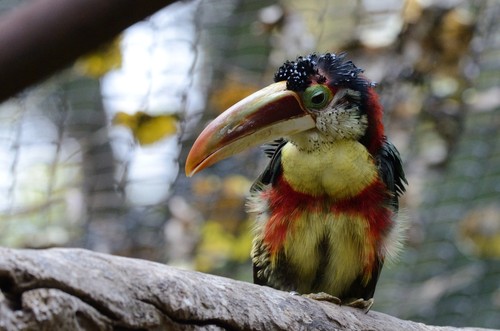
Curl-crested Aracari
41-46 cm (16-18 in) long, including a long bill and tail
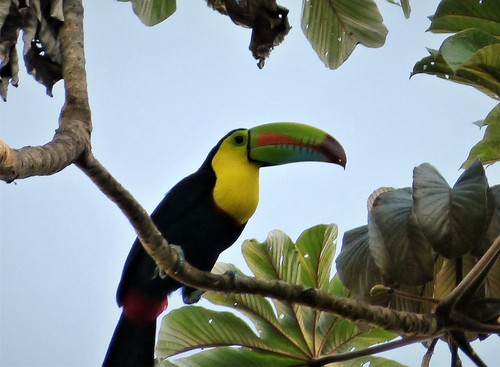
Keel-billed Toucan
42-55 cm (17-22 in) long including bill
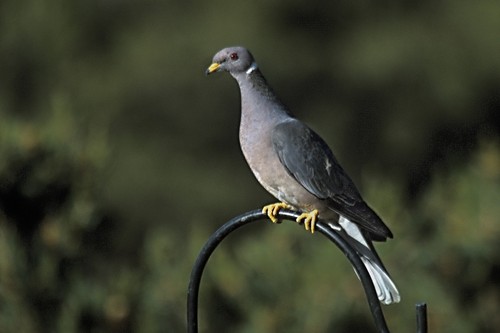
Band-tailed Pigeon
33-38 cm (13-15 in) long, wingspan about 66 cm (26 in)
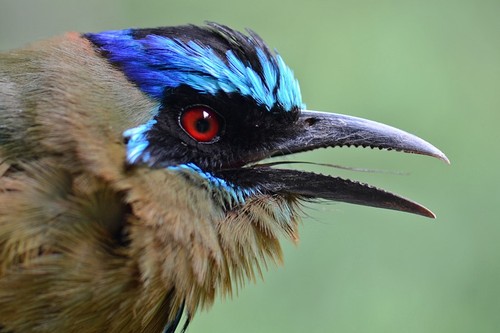
Blue-crowned Motmot
38-43 cm (15-17 in) long including tail
White-tipped Dove
27-30 cm (10.5-12 in) long, 38-43 cm wingspan
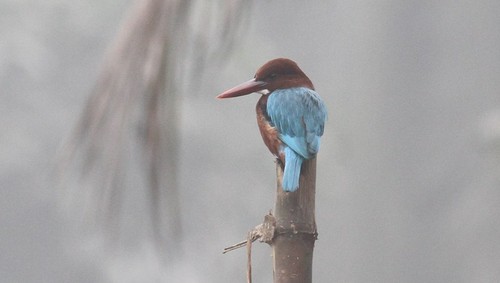
White-throated Kingfisher
27-28 cm (10.5-11 in) long
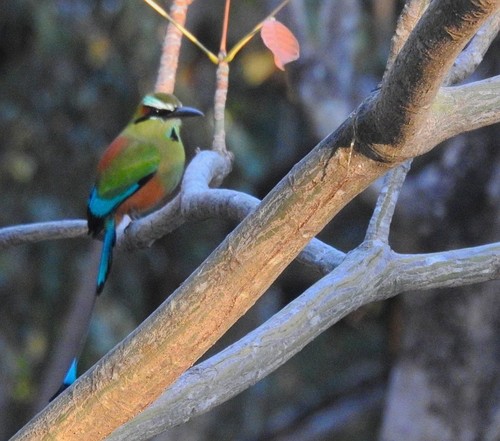
Turquoise-browed Motmot
34 cm (13 in) long including tail
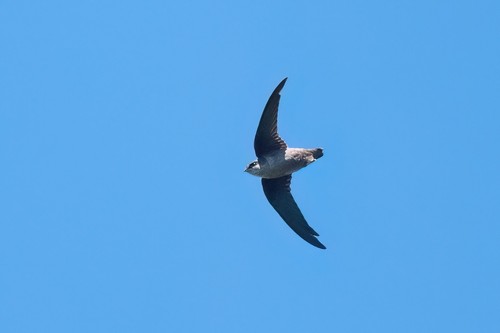
Vaux's Swift
10-12 cm (4-4.5 in) long, 27-30 cm wingspan
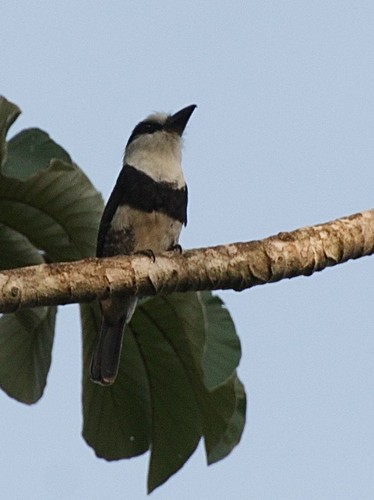
White-necked Puffbird
22-24 cm (8.5-9.5 in) long
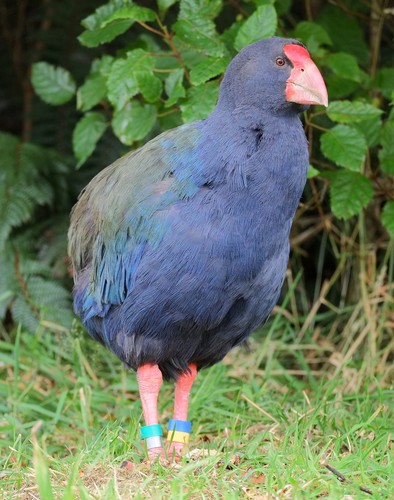
Takahe
50 cm (20 in) long, up to 3.5 kg; flightless
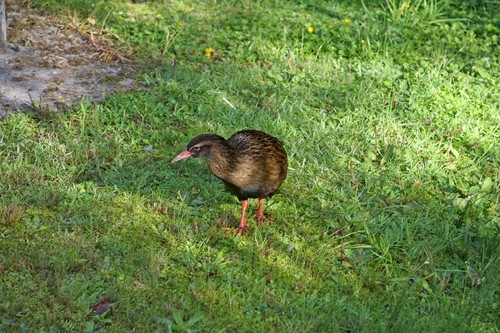
Weka
50-60 cm (20-24 in) long; flightless