
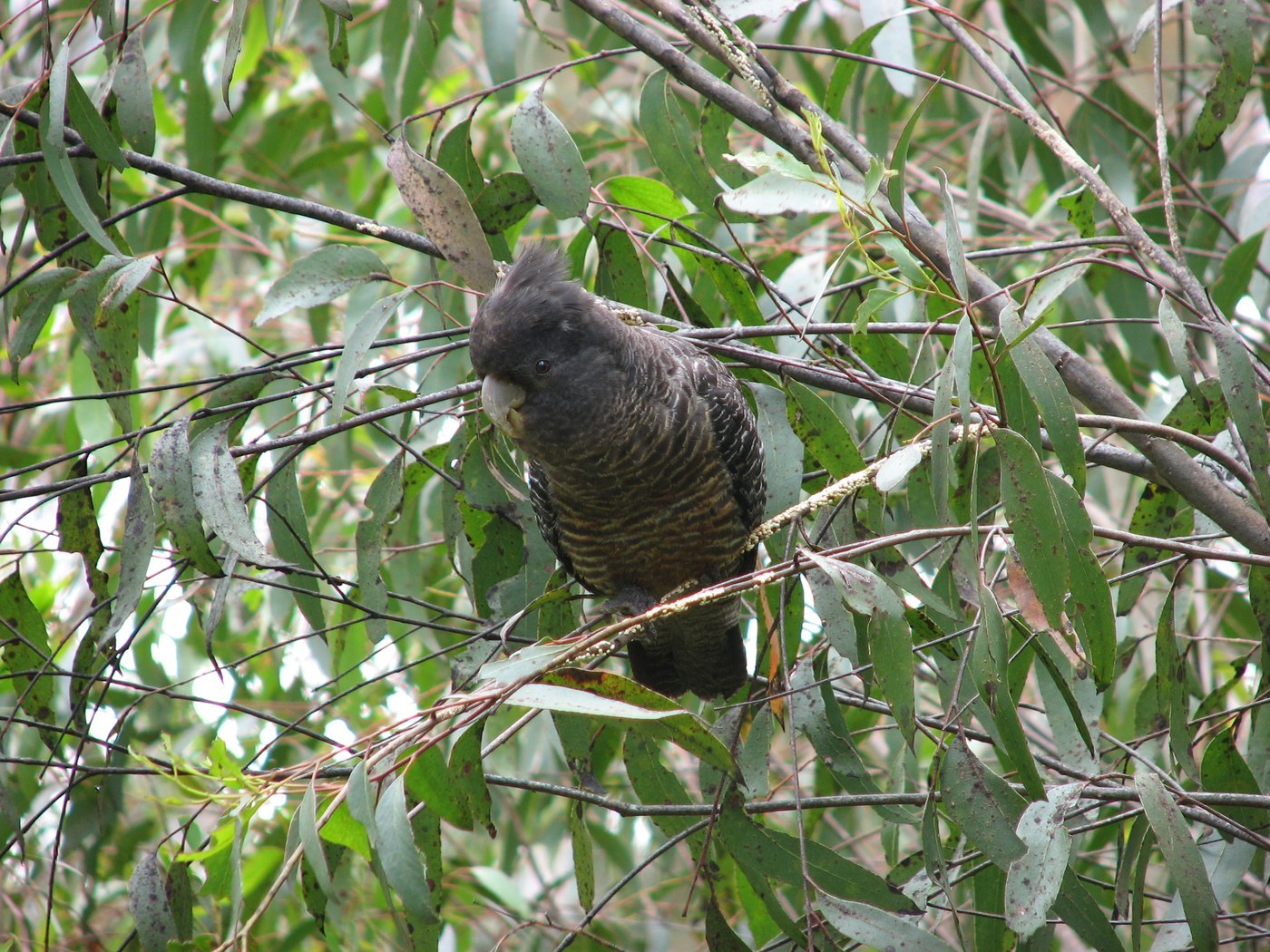
Gang-gang Cockatoo
Callocephalon fimbriatum
A small grey cockatoo of southeastern Australia's mountain forests, with males sporting a striking scarlet, wispy-crested head.
- Size
- 32-37 cm long; small for a cockatoo
- Habitat
- Tall wet eucalypt forest, moving to woodland and gardens in winter
- Type
- parrot
Spotted a bird like this?
Identify any bird from a photo, free.
Overview
The Gang-gang Cockatoo is a small, stocky cockatoo restricted to southeastern Australia. Overall plumage is slate grey, with each feather on the underparts finely scalloped in pale grey or off-white, giving a soft, textured look.
Males are unmistakable, with a bright scarlet-red head and a wispy, curled crest. Females have an all-grey head with a smaller, less conspicuous grey crest, and their underparts are more strongly scalloped with orange-yellow edging compared to males.
How to identify it
Key field marks
- Small, compact cockatoo with a fine, curled crest
- Males: bright red head and crest against grey body
- Females: grey head, grey crest, and orange-yellow scalloped underparts
- Distinctive creaking, growling call unlike other cockatoo screeches
Similar species
No other Australian cockatoo shares the male's scarlet head, making adult males unmistakable. Females could be mistaken for other grey parrots at a glance, but the curled crest and scalloped plumage pattern are distinctive.
Habitat & range
Range
Found in southeastern Australia, centered on the Great Dividing Range and adjacent ranges from central New South Wales and the Australian Capital Territory south through Victoria. It is the faunal emblem of the Australian Capital Territory.
Habitat
Breeds in tall, wet montane eucalypt forest, often at higher elevations. Outside the breeding season it descends to lower-elevation woodland, farmland, parks and gardens, including in urban Canberra and Melbourne.
Movement
An altitudinal migrant, moving from high-elevation breeding forest to lower, more open country in autumn and winter.
Behavior & voice
Voice
Gives a distinctive slow, creaking or growling call, often likened to a rusty gate hinge or a cork being twisted in a bottle, quite unlike the sharp screeches of most other cockatoos.
Feeding
Feeds quietly and can often be approached closely while foraging on eucalypt and wattle seeds, and introduced fruits such as hawthorn berries; also eats various native and exotic seeds and nuts in gardens.
Breeding
Nests in hollows high in tall, old eucalypts, typically near water, laying two to three eggs. Populations were significantly affected by the extensive 2019-2020 Australian bushfires, which burned large areas of breeding habitat.
Frequently asked questions
What does a Gang-gang Cockatoo sound like?
It gives a slow, creaking or growling call often compared to a rusty gate hinge, quite different from the sharp screech of most cockatoos.
How do you identify a male Gang-gang Cockatoo?
Males have a bright scarlet-red head and a wispy curled crest set against an otherwise grey, scalloped body.
Where do Gang-gang Cockatoos live?
Southeastern Australia, mainly along the Great Dividing Range from central New South Wales and the ACT through Victoria, breeding in tall wet mountain forest and moving to lower elevations in winter.
Are Gang-gang Cockatoos threatened?
Yes, the species is considered Vulnerable, with populations significantly affected by severe bushfires and ongoing loss of old-growth nesting habitat.
Gang-gang Cockatoo guides
In-depth guides for identifying, finding, and understanding Gang-gang Cockatoo.
Other birds you may enjoy
Eclectus Parrot
35-42 cm (14-16.5 in) long
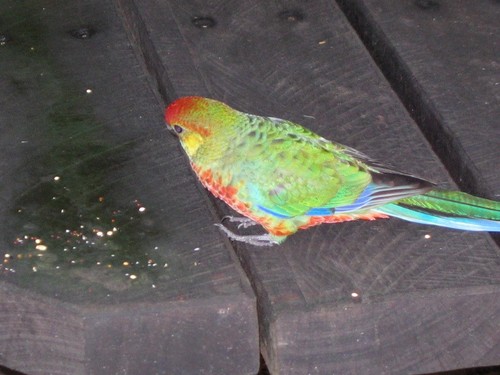
Western Rosella
25-30 cm (10-12 in) long
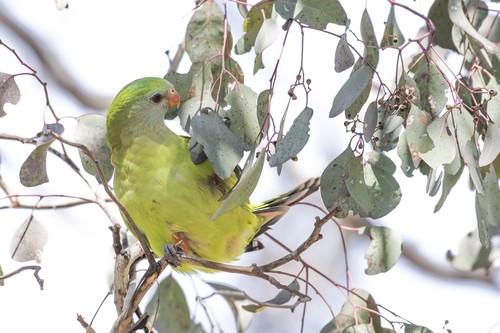
Superb Parrot
About 40 cm (16 in) long including a long tail
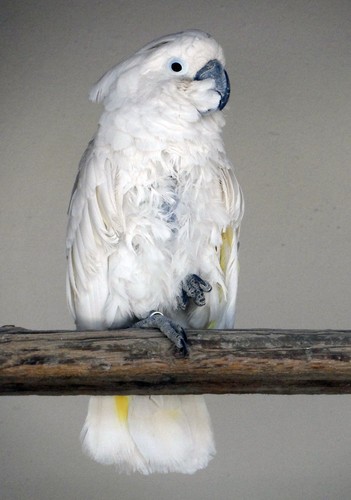
Umbrella Cockatoo
About 46 cm (18 in) long
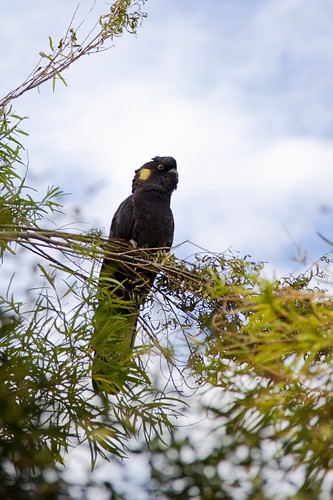
Yellow-tailed Black Cockatoo
55-65 cm long; wingspan up to about 130 cm
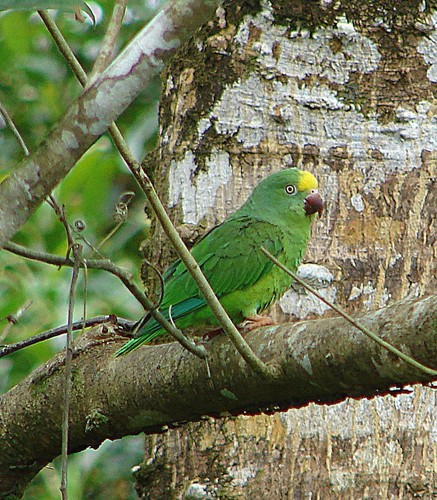
Yellow-crowned Amazon
About 35-38 cm (14-15 in) long
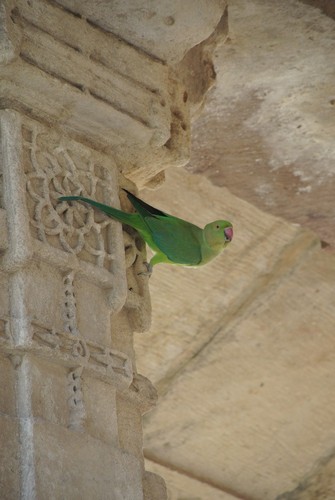
Rose-ringed Parakeet
40 cm (16 in) long including long tail
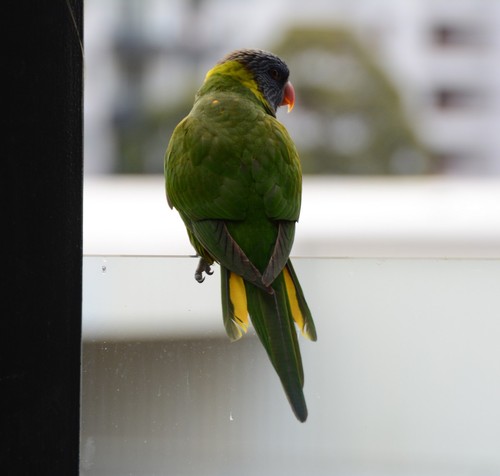
Rainbow Lorikeet
25-30 cm (10-12 in) long
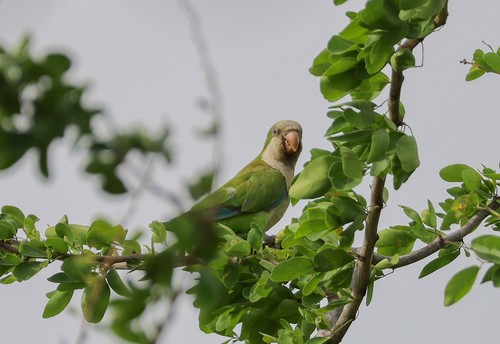
Quaker Parrot
28-31 cm (11-12 in) long
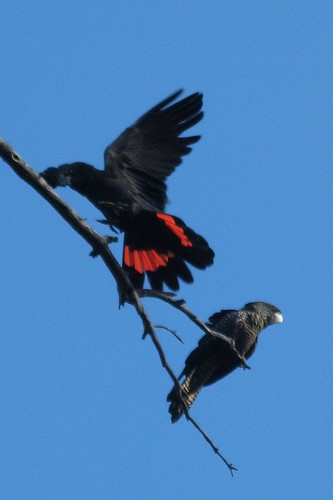
Red-tailed Black Cockatoo
55-65 cm long
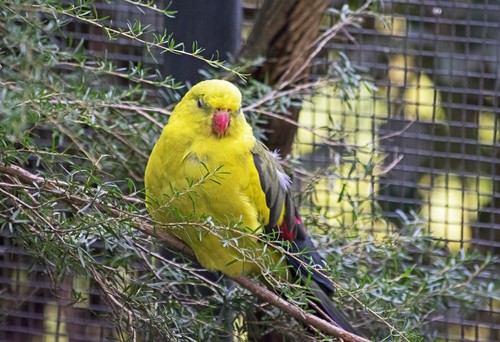
Regent Parrot
37-42 cm (15-17 in) long, including a long tail
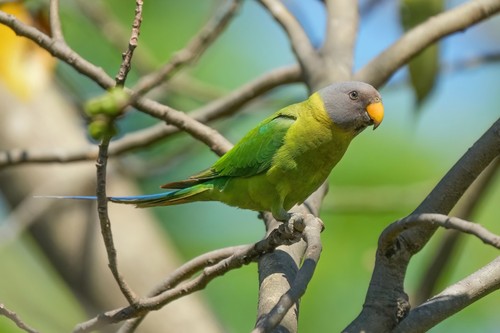
Plum-headed Parakeet
33 cm (13 in) long including tail