
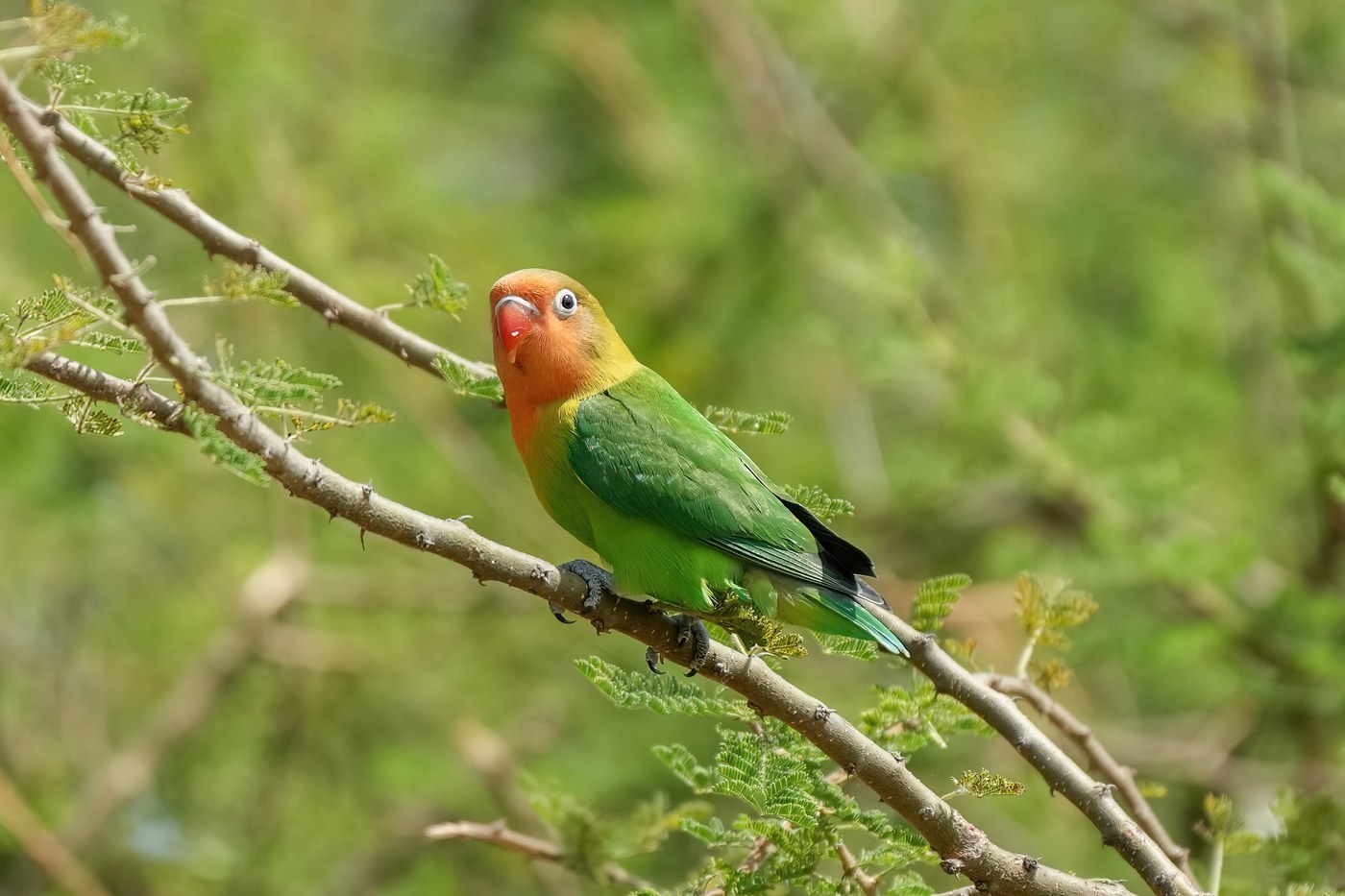
Fischer's Lovebird
Agapornis fischeri
A small East African parrot with an olive-green head, orange-red face, and a bold white eye-ring.
- Size
- About 14-15 cm (5.5-6 in) long
- Habitat
- Grassland, savanna woodland, and cultivated land near Lake Victoria
- Type
- parrot
Spotted a bird like this?
Identify any bird from a photo, free.
Overview
Fischer's Lovebird is a small, brightly colored parrot restricted to a compact range in north-central Tanzania around Lake Victoria. It is one of the most recognizable lovebird species due to its striking head pattern.
Appearance
The body is mostly bright green, with an olive-green crown and nape blending into a vivid orange-red face and throat. A conspicuous white ring of bare skin surrounds each eye. The rump is blue, the bill is red, and the tail is short and squared. Sexes look alike.
General Impression
Fischer's Lovebirds are lively, fast-flying, and highly social, usually seen in small chattering flocks moving between feeding grounds and water.
How to identify it
Key Field Marks
- Olive-green crown and nape
- Bright orange-red face and throat
- Bold white bare-skin eye-ring
- Red bill
- Green body with blue rump
Similar Species
- Masked Lovebird has a dark blackish-brown (not olive-green) head and a yellow chest/collar rather than orange-red.
- Peach-faced Lovebird lacks the white eye-ring entirely and shows a softer peach wash rather than a sharply orange-red face.
- Hybrids between Fischer's and Masked Lovebirds occur where ranges overlap or in captivity, showing intermediate head coloration.
The white eye-ring combined with an orange-red (rather than yellow or peach) face is the most reliable way to identify this species.
Habitat & range
Range
Native to a small area of north-central Tanzania, primarily south and southeast of Lake Victoria. Introduced or escaped populations have become established in parts of Kenya, including around Nairobi.
Habitat
Inhabits open grassland, acacia savanna woodland, and agricultural areas, generally at moderate elevations and near water. It readily visits cultivated fields to feed on grain.
Movements
Generally sedentary, though flocks may shift locally in response to seasonal food and water availability.
Behavior & voice
Social Behavior
Strongly gregarious, typically found in flocks of a dozen to several dozen birds, often mixing with other lovebird species where ranges meet.
Voice
Gives shrill, piercing chirps and screeches, especially in flight; flocks are noisy and vocal throughout the day.
Feeding
Forages on the ground and in low vegetation for grass seeds, and readily raids cultivated grain crops such as millet and sorghum.
Nesting and Breeding
Builds a bulky stick nest within tree cavities or crevices, carrying nesting material tucked into its rump feathers. Clutches usually number four to six eggs, incubated by the female for roughly 23 days, with both parents helping to feed chicks after hatching.
Frequently asked questions
What distinguishes a Fischer's Lovebird from other lovebirds?
Its combination of an olive-green head, orange-red face, red bill, and bold white eye-ring is unique among the closely related lovebird species.
Where is Fischer's Lovebird found?
It is native to a limited area of north-central Tanzania around Lake Victoria, with some introduced populations in Kenya.
Is Fischer's Lovebird endangered?
It is listed as Near Threatened due to a small, restricted range and past trapping pressure for the pet trade.
Do Fischer's Lovebirds have a white ring around their eyes?
Yes, a conspicuous ring of white bare skin around each eye is one of its most diagnostic features.
What do Fischer's Lovebirds eat?
Mainly grass seeds and cultivated grains, along with fruit and other plant material.
Fischer's Lovebird guides
In-depth guides for identifying, finding, and understanding Fischer's Lovebird.
Other birds you may enjoy
Eclectus Parrot
35-42 cm (14-16.5 in) long
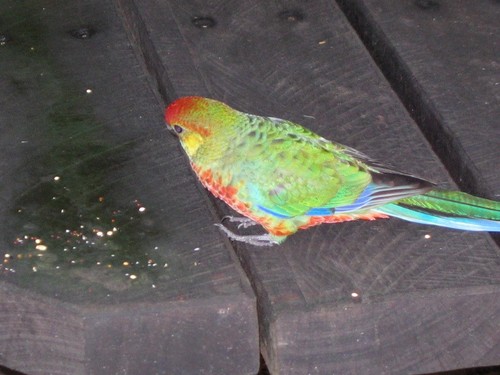
Western Rosella
25-30 cm (10-12 in) long
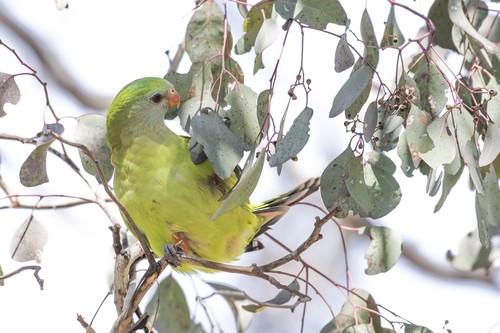
Superb Parrot
About 40 cm (16 in) long including a long tail
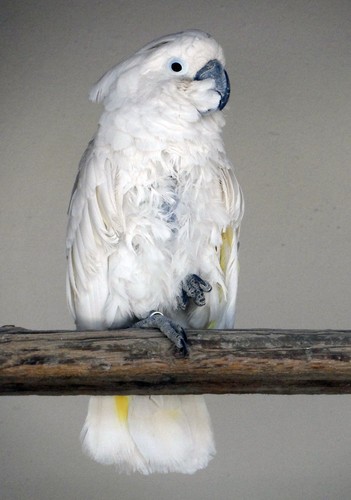
Umbrella Cockatoo
About 46 cm (18 in) long
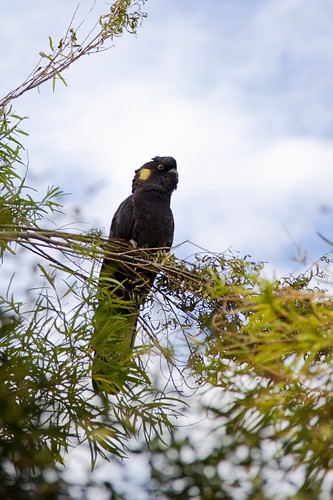
Yellow-tailed Black Cockatoo
55-65 cm long; wingspan up to about 130 cm
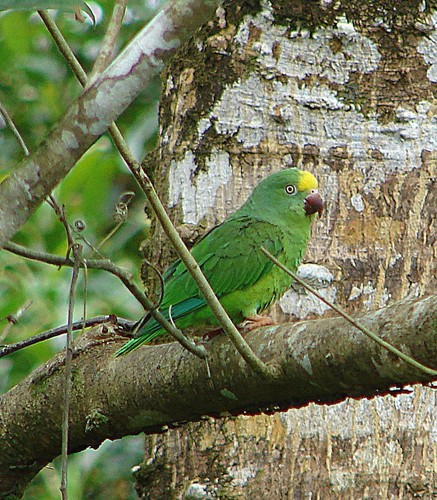
Yellow-crowned Amazon
About 35-38 cm (14-15 in) long
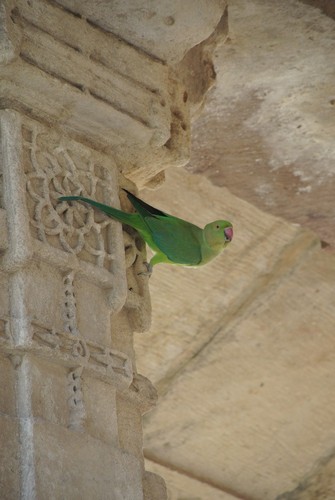
Rose-ringed Parakeet
40 cm (16 in) long including long tail
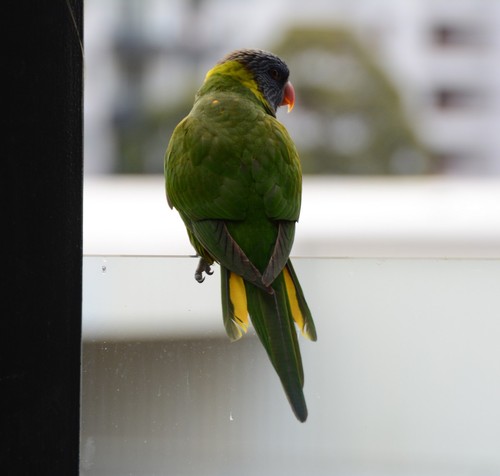
Rainbow Lorikeet
25-30 cm (10-12 in) long
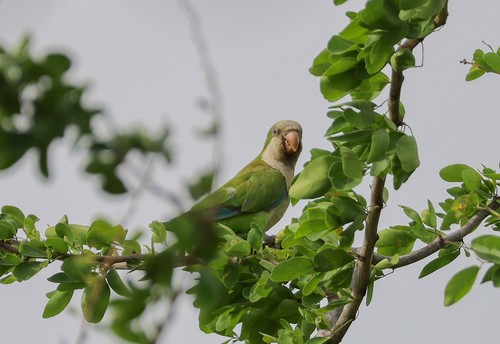
Quaker Parrot
28-31 cm (11-12 in) long
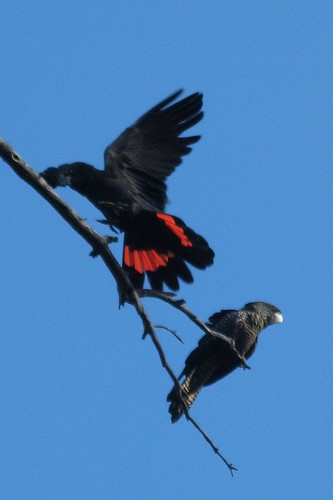
Red-tailed Black Cockatoo
55-65 cm long
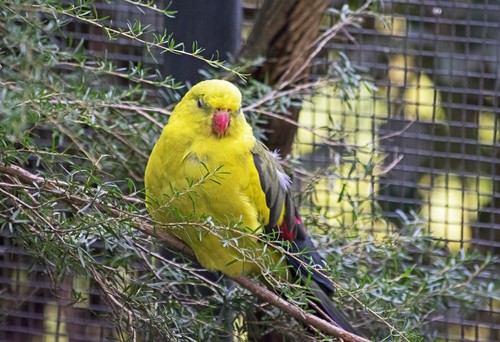
Regent Parrot
37-42 cm (15-17 in) long, including a long tail
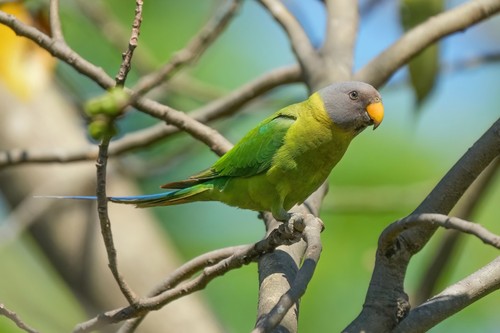
Plum-headed Parakeet
33 cm (13 in) long including tail