
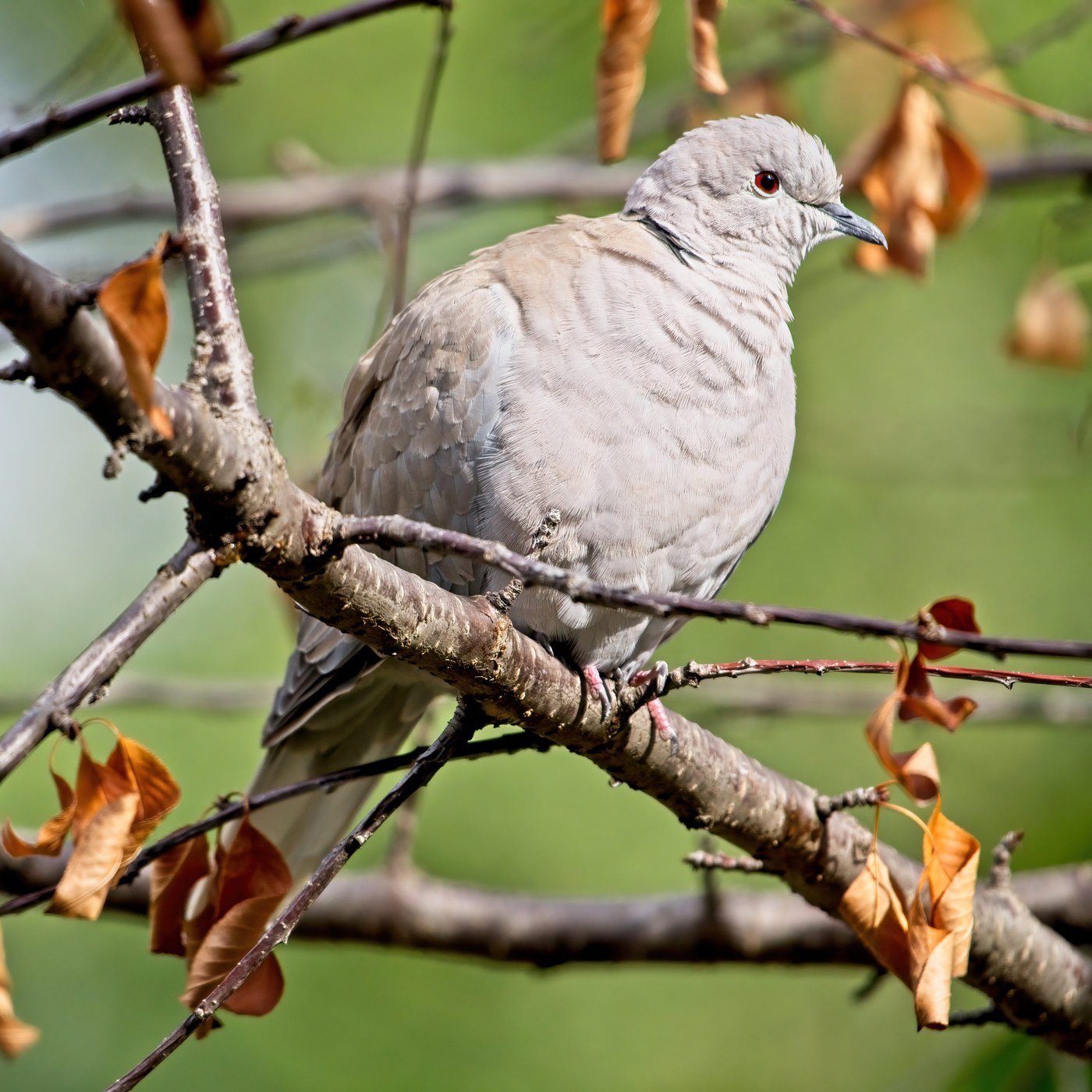
Eurasian Collared-Dove
Streptopelia decaocto
A pale, sandy-gray dove with a distinctive black half-collar on the nape, rapidly expanding across North America since escaping captivity in Florida in the 1980s.
- Size
- 31-33 cm (12-13 in) long, 47-55 cm (18.5-21.7 in) wingspan
- Habitat
- suburban and urban areas, farmland, and open country with scattered trees
- Type
- other
Spotted a bird like this?
Identify any bird from a photo, free.
Overview
The Eurasian Collared-Dove is a medium-large, pale sandy-gray dove native to Asia and Europe that has spectacularly expanded its range across North America since a small number of escaped or released birds became established in the Bahamas and Florida in the 1970s-80s. It is larger and paler overall than the native Mourning Dove, with a squared (not pointed) tail and a distinctive narrow black half-collar edged in white on the back of the neck, which gives the species its name.
How to identify it
Key field marks
- Pale, sandy-gray to buffy-gray overall plumage
- Narrow black half-collar edged with white on the nape
- Squared-off tail with a broad white terminal band, versus the pointed tail of Mourning Dove
- Larger and stockier than Mourning Dove, with a proportionally shorter tail
Similar species
Mourning Dove is smaller, darker, more uniformly brownish, lacks the neck collar, and has a long, pointed (not squared) tail. Ringed Turtle-Dove, an escaped cage bird sometimes seen locally, is smaller and paler still, essentially a domesticated form of a related species.
Habitat & range
Habitat and Range
Eurasian Collared-Doves favor suburban and urban neighborhoods, farmyards, and open country with scattered trees or utility wires for perching, often near a reliable source of grain or bird feeders.
Range
Native to Asia and Europe, the species arrived in North America via the Bahamas in the 1970s and spread explosively across Florida and then the rest of the continental United States and southern Canada over the following decades, now found nearly nationwide.
Migration
Eurasian Collared-Doves are non-migratory and largely sedentary, though the species' overall range has expanded dramatically through dispersal of young birds rather than seasonal migration.
Behavior & voice
Behavior
These doves are often seen in pairs or small groups perched conspicuously on wires, rooftops, and bare tree branches, and can be locally abundant around grain sources.
Voice
The call is a monotonous, three-syllable "coo-COO-cup" or "kuk-KOOO-kook," repeated persistently and quite different in rhythm from the softer, more mournful call of the Mourning Dove.
Feeding
They feed mainly on seeds and grain, often visiting bird feeders and gathering in numbers around agricultural operations and grain spills.
Nesting and breeding
Pairs build a simple stick platform nest in a tree or on a structure and can breed nearly year-round in mild climates, raising multiple broods of typically two eggs each.
Frequently asked questions
How did the Eurasian Collared-Dove get to North America?
A small number of birds escaped or were released in the Bahamas in the 1970s and reached Florida shortly after; from there the species spread explosively across nearly the entire continental United States and southern Canada.
How do you tell a Eurasian Collared-Dove from a Mourning Dove?
The Collared-Dove is larger and paler with a black half-collar on the nape and a squared tail with a broad white band, while the Mourning Dove is smaller, more uniformly brown, lacks a collar, and has a long pointed tail.
Is the Eurasian Collared-Dove a problem for native birds?
It is considered an introduced species and can be locally abundant, but current evidence suggests limited direct competitive impact on most native dove species, though it is still monitored as a non-native species.
What does the Eurasian Collared-Dove's call sound like?
It gives a persistent, monotonous three-syllable coo, often rendered as 'coo-COO-cup,' repeated over and over from an exposed perch.
Eurasian Collared-Dove guides
In-depth guides for identifying, finding, and understanding Eurasian Collared-Dove.
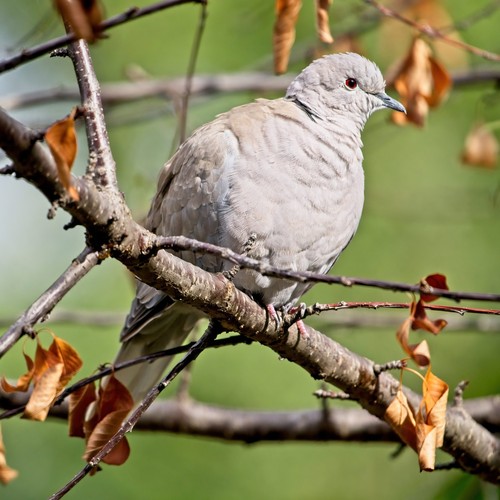
Eurasian Collared-Dove identified by the community
Real birds identified with Bird Identifier.
Other birds you may enjoy
Kiwi
35-55 cm (14-22 in) long; roughly chicken-sized
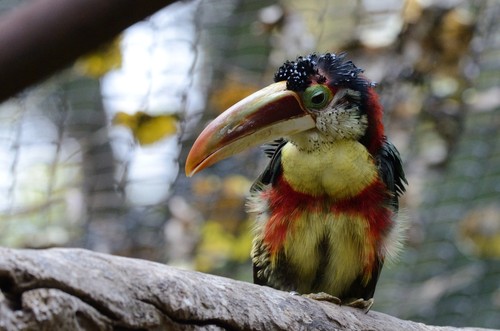
Curl-crested Aracari
41-46 cm (16-18 in) long, including a long bill and tail
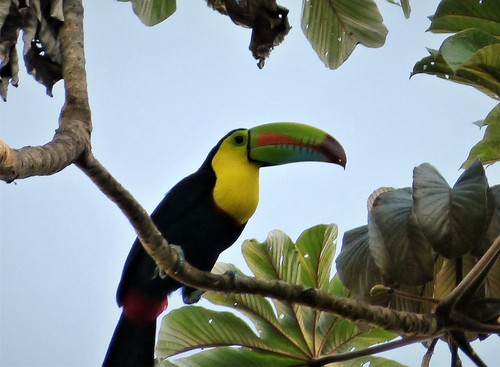
Keel-billed Toucan
42-55 cm (17-22 in) long including bill
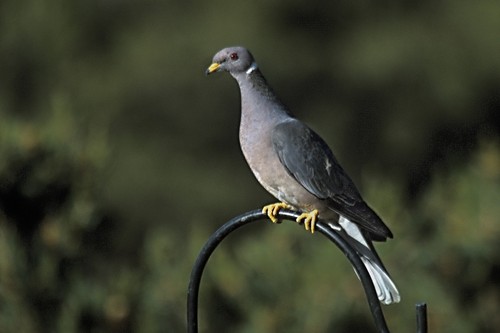
Band-tailed Pigeon
33-38 cm (13-15 in) long, wingspan about 66 cm (26 in)
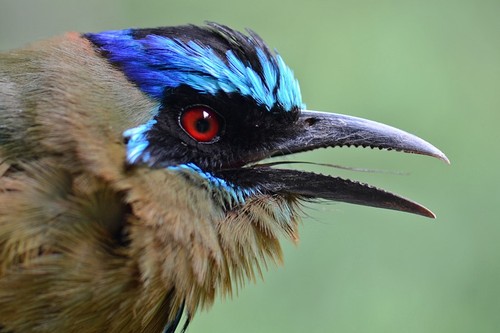
Blue-crowned Motmot
38-43 cm (15-17 in) long including tail
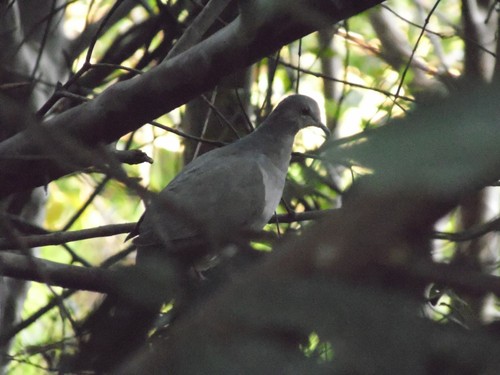
White-tipped Dove
27-30 cm (10.5-12 in) long, 38-43 cm wingspan
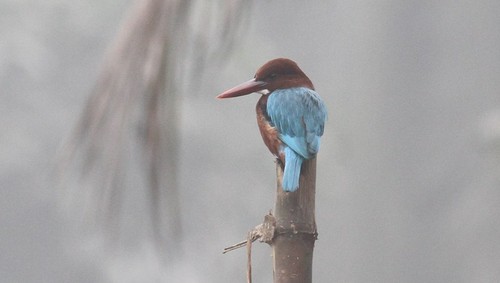
White-throated Kingfisher
27-28 cm (10.5-11 in) long
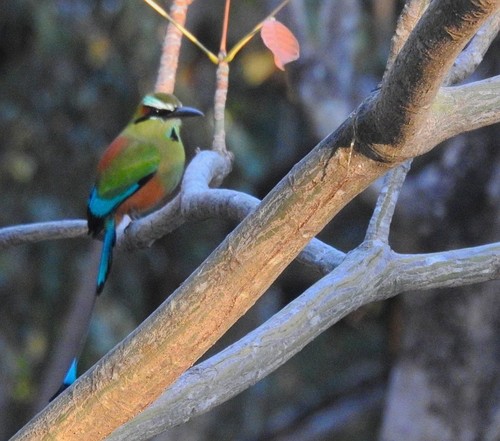
Turquoise-browed Motmot
34 cm (13 in) long including tail
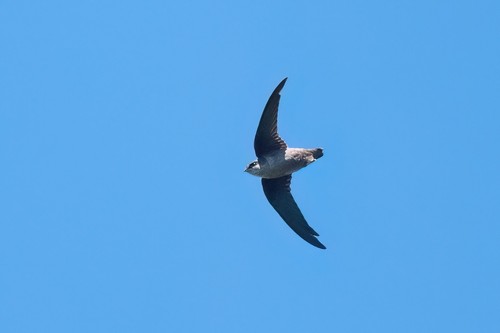
Vaux's Swift
10-12 cm (4-4.5 in) long, 27-30 cm wingspan
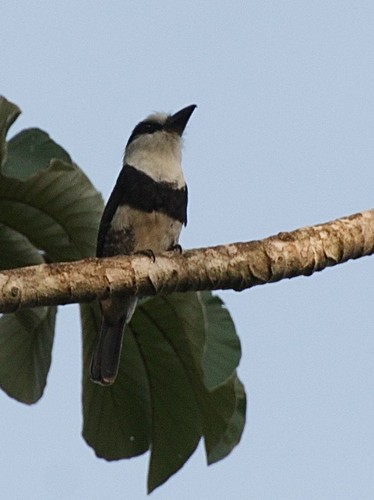
White-necked Puffbird
22-24 cm (8.5-9.5 in) long
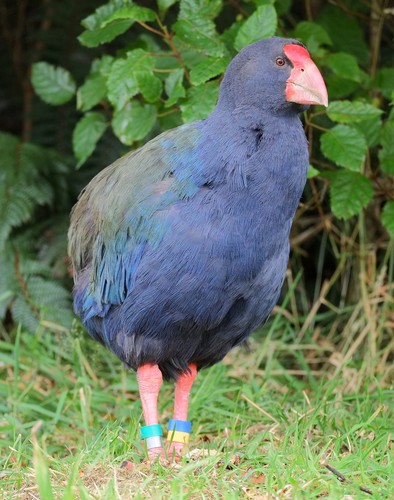
Takahe
50 cm (20 in) long, up to 3.5 kg; flightless
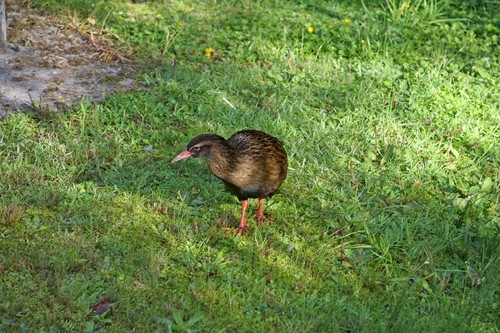
Weka
50-60 cm (20-24 in) long; flightless