
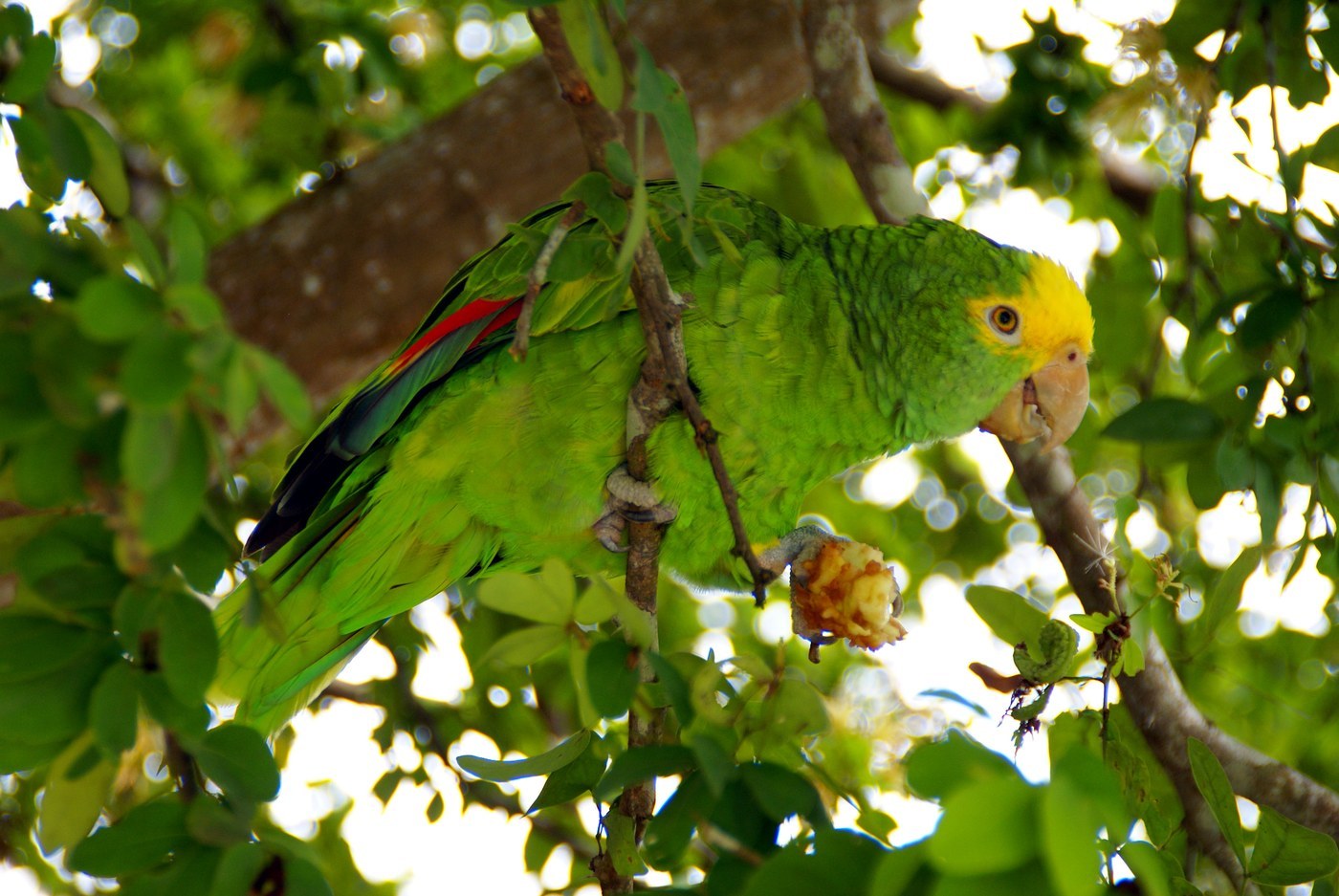
Double Yellow-headed Amazon
Amazona oratrix
A large Amazon parrot with an entirely yellow head, native to Mexico and northern Central America and now heavily threatened.
- Size
- About 38-43 cm (15-17 in) long, a large Amazon parrot
- Habitat
- Tropical deciduous forest, gallery forest, and mangroves in Mexico and northern Central America
- Type
- parrot
Spotted a bird like this?
Identify any bird from a photo, free.
Overview
The Double Yellow-headed Amazon, more formally known as the Yellow-headed Amazon or Yellow-headed Parrot, is a large, striking parrot native to Mexico and parts of northern Central America. Adults are distinguished by a head that is entirely yellow, a trait that increases with age from a more limited yellow patch in immature birds.
Appearance
- Head: fully yellow in mature adults, including the crown, face, and often the nape
- Body: rich green with darker scalloped feather edges
- Wing: red patch at the bend of the wing, with some yellow on the upper wing coverts ("yellow shoulder") in some populations
- Tail: green, broad and squared off
- Bill: pale horn-colored
- Eyes: orange iris with a whitish bare eye-ring
Juveniles hatch with mostly green heads, gradually acquiring more yellow feathering as they mature over several years.
How to identify it
Key field marks
- Head entirely yellow in adults, more extensive than in related Amazon species
- Red patch at the bend of the wing
- Large, heavy-bodied build even by Amazon parrot standards
- Loud, resonant calls often given from exposed perches
Similar species
- Yellow-crowned Amazon and Yellow-naped Amazon show yellow restricted to the crown or nape rather than covering the entire head.
- Blue-fronted Amazon has a blue forehead patch, which the Yellow-headed Amazon lacks entirely.
- Immature Yellow-headed Amazons with less yellow can resemble Yellow-crowned Amazons, but range and the pattern of yellow spreading from the forehead help distinguish them.
A fully yellow head on a large, heavy Amazon parrot within its Mexican and Central American range is the clearest identifying feature.
Habitat & range
Range
The Double Yellow-headed Amazon is native to Mexico, Belize, Guatemala, and historically Honduras, with populations now fragmented and much reduced across this range.
Habitat
It inhabits tropical deciduous and semi-deciduous forest, gallery forest along rivers, and mangrove-lined lowlands, generally in humid to seasonally dry lowland areas.
Movements
The species is largely resident, though it may make local movements tied to seasonal food availability. Its overall range has contracted significantly due to habitat conversion and historical trapping pressure.
Behavior & voice
Social behavior
Outside the breeding season, Yellow-headed Amazons often gather in flocks, sometimes numbering dozens of birds, at productive feeding trees or communal roosts.
Voice
They produce loud, far-carrying screeches and a range of other calls; the species is renowned among Amazon parrots for its strong ability to mimic sounds, which historically made it heavily sought after and contributed to population declines.
Feeding
They forage in the forest canopy for fruits, seeds, nuts, and berries, and are also known to visit fruiting trees in agricultural or disturbed landscapes near forest.
Nesting and breeding
Pairs nest in large tree cavities, frequently in tall trees within gallery or deciduous forest, laying a clutch of typically two to four eggs. Nesting success has been affected in many areas by the loss of large old trees suitable for nest cavities.
Frequently asked questions
What is the difference between the Double Yellow-headed Amazon and the Yellow-headed Amazon?
They are the same species, Amazona oratrix; "Double Yellow-headed" is a traditional common name referring to the entirely yellow head of mature adults.
Where does the Double Yellow-headed Amazon live?
It is native to Mexico and parts of northern Central America, including Belize and Guatemala, inhabiting tropical deciduous forest, gallery forest, and mangroves.
Why is the Double Yellow-headed Amazon endangered?
It is classified as Endangered due to a combination of extensive habitat loss and decades of intensive trapping pressure driven by its striking appearance and vocal ability.
How do you tell an adult from a juvenile Double Yellow-headed Amazon?
Juveniles have mostly green heads with limited yellow, while adults develop a fully yellow head over several years as they mature.
What does a Double Yellow-headed Amazon eat?
It feeds on fruits, seeds, nuts, and berries foraged in forest canopy and edge habitats.
Double Yellow-headed Amazon guides
In-depth guides for identifying, finding, and understanding Double Yellow-headed Amazon.
Other birds you may enjoy
Eclectus Parrot
35-42 cm (14-16.5 in) long
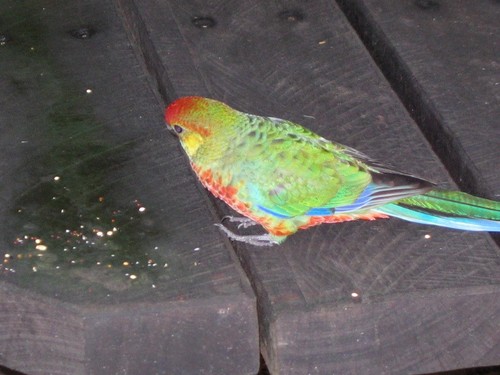
Western Rosella
25-30 cm (10-12 in) long
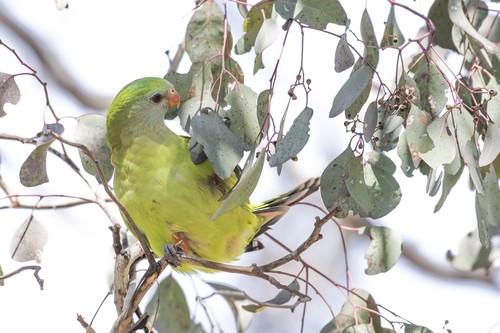
Superb Parrot
About 40 cm (16 in) long including a long tail
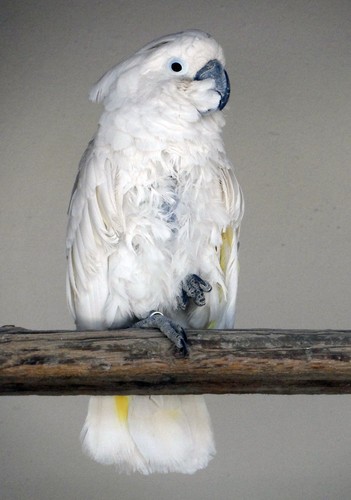
Umbrella Cockatoo
About 46 cm (18 in) long
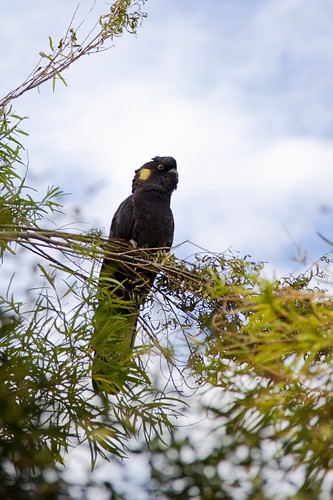
Yellow-tailed Black Cockatoo
55-65 cm long; wingspan up to about 130 cm
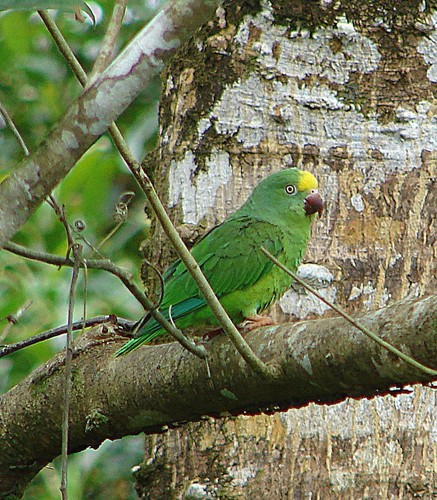
Yellow-crowned Amazon
About 35-38 cm (14-15 in) long
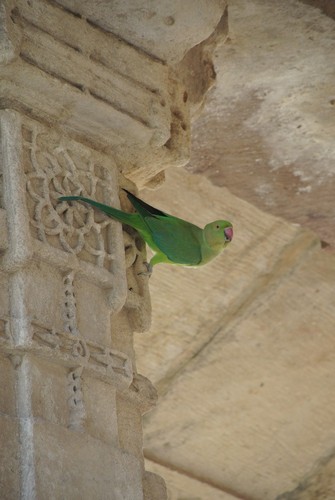
Rose-ringed Parakeet
40 cm (16 in) long including long tail
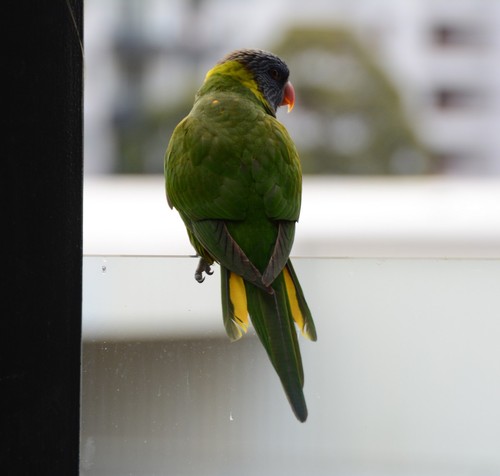
Rainbow Lorikeet
25-30 cm (10-12 in) long
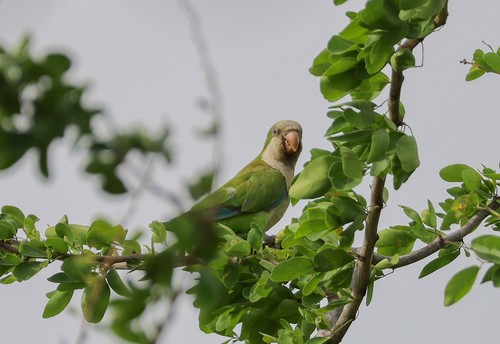
Quaker Parrot
28-31 cm (11-12 in) long
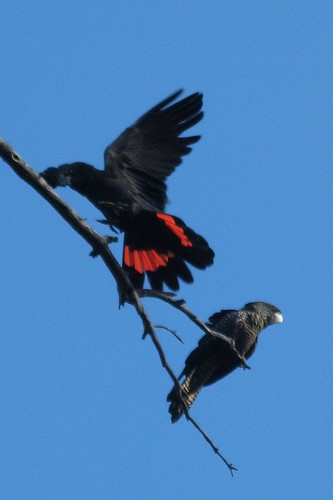
Red-tailed Black Cockatoo
55-65 cm long
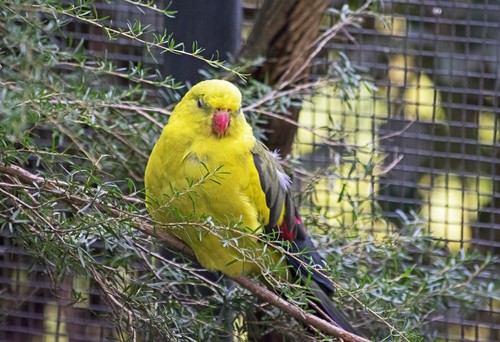
Regent Parrot
37-42 cm (15-17 in) long, including a long tail
Plum-headed Parakeet
33 cm (13 in) long including tail