
Double Yellow-headed Amazon Identification Guide
A large, stocky green parrot with an extensively yellow head, native to Mexico and Central America but also found as noisy, established feral flocks in a few US cities.
Read the full Double Yellow-headed Amazon encyclopedia entry →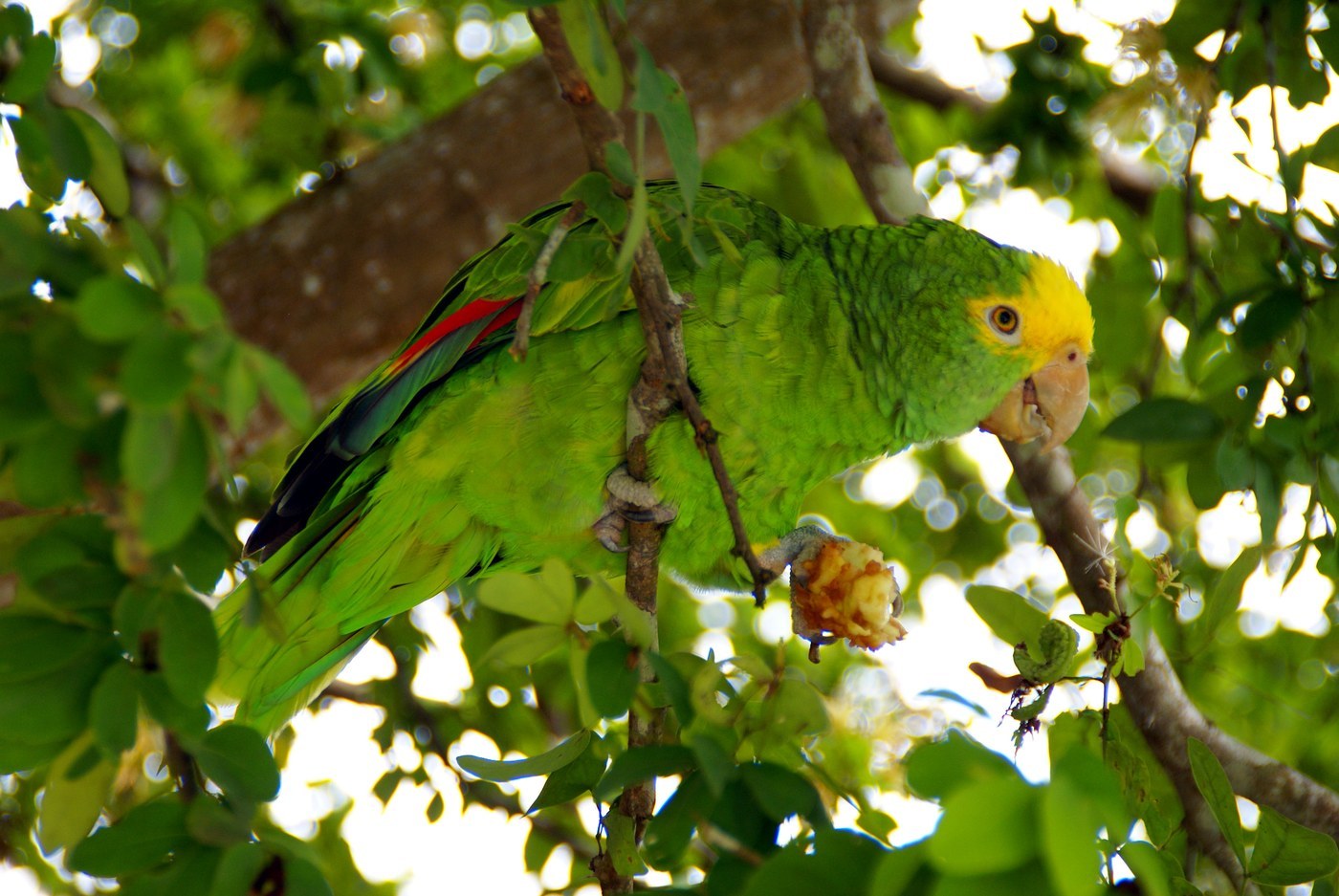
Key Field Marks
- Size & shape: A large, stocky parrot about 15 in (38 cm) long with a short, square tail and a strong, pale-horn-colored hooked bill.
- Adult plumage: Overall bright green body; extensive yellow covering the head — the exact amount varies by subspecies from just the forehead and crown to nearly the whole head and upper neck — with a small patch of red at the bend of the wing and some yellow flecking on the thighs.
- Immatures: Mostly green-headed with only a small patch of yellow on the forehead, gradually acquiring more yellow with age over several years.
- Behavior: Highly social and vocal, often seen in noisy flocks, especially at dawn and dusk roosting/commuting flights; strong, direct flight on shallow wingbeats typical of Amazon parrots.
Separating It From Similar Species
- Yellow-crowned Amazon / Yellow-naped Amazon: Both show much more limited yellow, restricted to the crown or the nape, respectively, rather than the extensive head coverage of the Double Yellow-headed Amazon.
- Lilac-crowned Amazon: Shows a maroon forehead and lilac/pale crown rather than yellow.
- Red-lored Amazon: Has a red forehead/lores with a mostly green head, lacking the broad yellow hood.
- Overall rule: The single best mark is simply how much of the head is solid yellow — this species shows the most extensive yellow hood of the commonly encountered Amazona species in the US.
Habitat, Range & Season
Native range is lowland Mexico (both coasts), Belize, Guatemala, and Honduras, in palm groves, riparian woodland, and semi-open tropical habitat; the species is endangered in the wild due to historic trapping for the pet trade and ongoing habitat loss. In the United States, self-sustaining feral populations descended from escaped or released cage birds are established in urban and suburban areas of Southern California, South Texas, and South Florida, where the birds are year-round residents in parks, palm-lined streets, and older neighborhoods with mature trees.
Voice
Very loud and raucous — a range of squawks, screeches, and whistled notes typical of Amazon parrots, often given in noisy chorus as flocks fly to and from communal roosts at dawn and dusk; some individuals can mimic human speech in captivity.
Frequently asked questions
Are Double Yellow-headed Amazons native to the United States?
No — their native range is Mexico and northern Central America. US sightings, mainly in Southern California, South Texas, and South Florida, come from established feral populations descended from escaped or released pet birds.
How do I distinguish a Double Yellow-headed Amazon from a Yellow-naped Amazon?
The Double Yellow-headed Amazon shows yellow spread over much of the head, while the Yellow-naped Amazon has yellow restricted mainly to the back of the neck (nape), with a mostly green crown and face.
Why are Double Yellow-headed Amazons considered endangered?
Decades of heavy trapping for the cage-bird trade combined with ongoing deforestation across their native Mexican and Central American range have sharply reduced wild populations, even though feral populations persist elsewhere.
Where in the US can feral Double Yellow-headed Amazons be seen?
Established flocks occur in urban and suburban areas with mature trees in parts of Southern California, South Texas, and South Florida, often most visible at dawn or dusk roosting flights.