

Domestic Pigeon
Columba livia domestica
The familiar pigeon of city streets and parks, descended from escaped and released domesticated Rock Doves and now established in urban areas worldwide.
- Size
- Body length 29-36 cm (11-14 in); wingspan roughly 50-67 cm (20-26 in)
- Habitat
- Cities, towns, farmland, and cliffs; thrives around human settlements worldwide
- Type
- other
Spotted a bird like this?
Identify any bird from a photo, free.
Overview
Overview
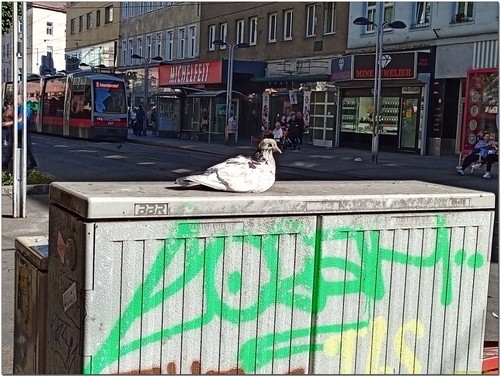
The Domestic Pigeon refers to Rock Doves (Columba livia) that have been bred in captivity for centuries, as well as the free-living, feral populations descended from escaped or released domestic birds. These feral pigeons are now found in nearly every major city in the world, forming one of the most widely recognized urban birds.
Appearance
Plumage is highly variable due to the mixed ancestry of feral flocks, ranging from the classic blue-grey form with two dark wing bars and an iridescent green-and-purple neck sheen, to all-white, black, brown, pied, and checkered variations. Body shape is stocky with a small head, short legs, and a fairly short, rounded tail.
How to identify it
Key Field Marks
- Plump body with a small head and short neck showing iridescent sheen in good light
- Highly variable plumage color, but many retain the ancestral blue-grey form with two black wing bars
- Fast, direct flight with audible wing claps on takeoff
Similar Species
Domestic and feral pigeons are essentially the same species as the wild Rock Dove, distinguished mainly by their tamer behavior around people and greater plumage variability. They can be told from the Wood Pigeon by their smaller size and lack of white neck and wing patches, and from doves such as the Eurasian Collared-Dove by their bulkier build and shorter tail.
Habitat & range
Habitat and Range
Feral and domestic pigeons are found worldwide, especially in urban and suburban environments, agricultural land, and rocky or coastal areas resembling the cliffs used by their wild ancestors. They are non-migratory and typically remain in a home area year-round.
Distribution
Established on every continent except Antarctica, largely as a result of introductions tied to the spread of domesticated stock over the past several thousand years.
Behavior & voice
Behavior
Domestic pigeons are highly social, forming large flocks that feed, roost, and rest together, especially in urban plazas and parks where food is abundant. They are well known for a strong homing ability, a trait intensified through selective breeding in some lines.
Voice
Gives a soft, rolling "coo-roo-coo" call, along with softer contact coos exchanged between mates and flock members.
Nesting and Breeding
Pairs are monogamous and nest on ledges, building supports, and other flat, sheltered surfaces that mimic natural cliff ledges. They typically lay two white eggs per clutch and can breed multiple times per year, with both parents producing crop milk to feed the young.
Frequently asked questions
Are domestic and feral pigeons the same species as wild Rock Doves?
Yes, they are all Columba livia; feral pigeons descend from domesticated stock that escaped or was released.
Why do city pigeons show so many different colors?
Centuries of selective breeding in captivity produced varied plumage, which persists and continues to mix in feral populations.
Where do feral pigeons nest in cities?
On building ledges, bridges, and other flat, sheltered structures that resemble the cliff ledges used by wild Rock Doves.
How did pigeons become so widespread in cities?
Domesticated pigeons kept historically escaped or were released and adapted readily to urban structures resembling cliff habitat.
Domestic Pigeon guides
In-depth guides for identifying, finding, and understanding Domestic Pigeon.
Other birds you may enjoy
Kiwi
35-55 cm (14-22 in) long; roughly chicken-sized
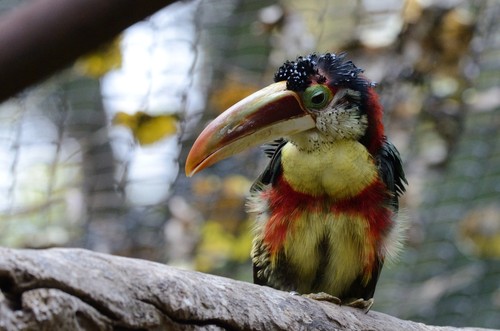
Curl-crested Aracari
41-46 cm (16-18 in) long, including a long bill and tail
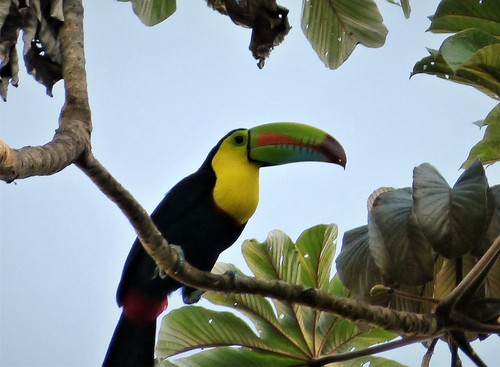
Keel-billed Toucan
42-55 cm (17-22 in) long including bill
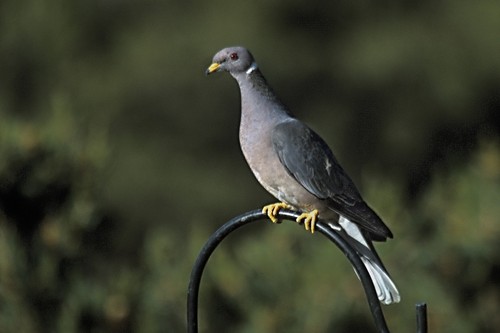
Band-tailed Pigeon
33-38 cm (13-15 in) long, wingspan about 66 cm (26 in)
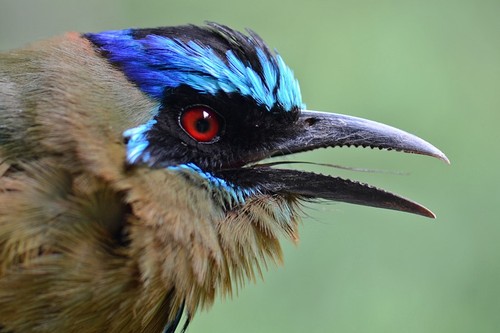
Blue-crowned Motmot
38-43 cm (15-17 in) long including tail
White-tipped Dove
27-30 cm (10.5-12 in) long, 38-43 cm wingspan
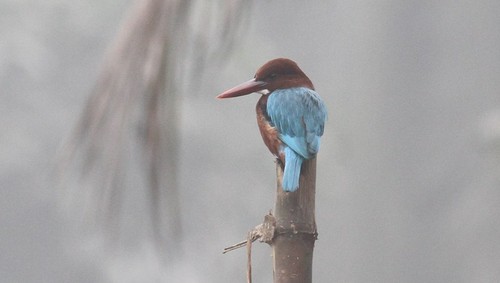
White-throated Kingfisher
27-28 cm (10.5-11 in) long
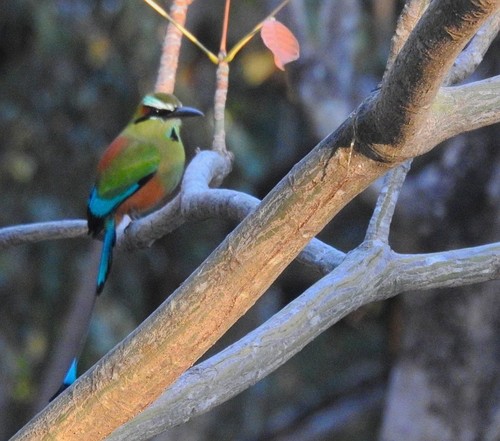
Turquoise-browed Motmot
34 cm (13 in) long including tail
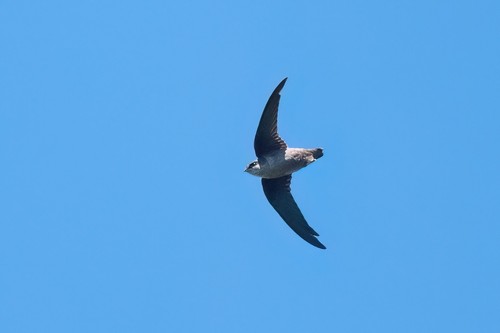
Vaux's Swift
10-12 cm (4-4.5 in) long, 27-30 cm wingspan
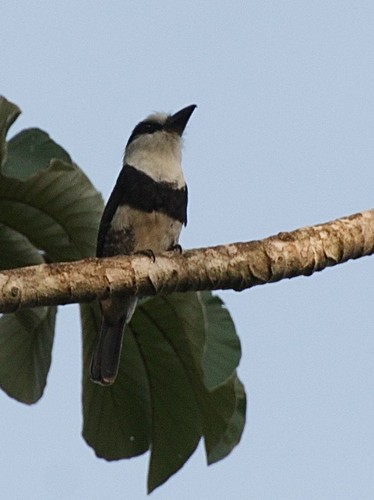
White-necked Puffbird
22-24 cm (8.5-9.5 in) long
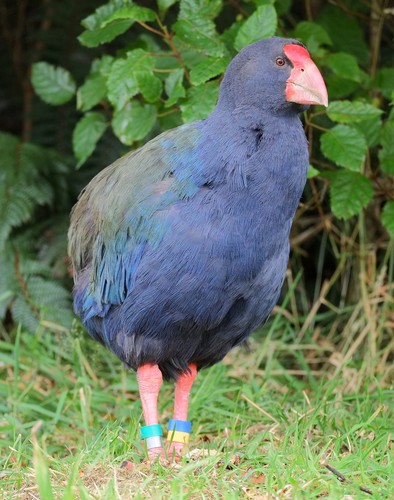
Takahe
50 cm (20 in) long, up to 3.5 kg; flightless
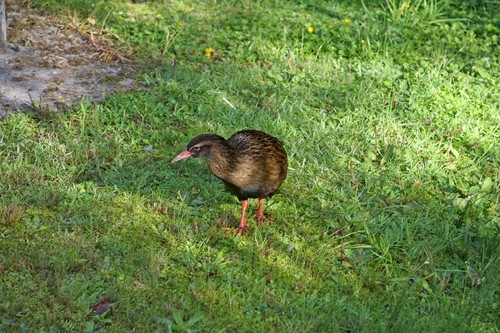
Weka
50-60 cm (20-24 in) long; flightless