
Domestic Pigeon Identification Guide
The familiar city pigeon descended from the wild Rock Dove, identifiable by its plump build, small head, and hugely variable plumage from blue-gray to white, black, or patchy.
Read the full Domestic Pigeon encyclopedia entry →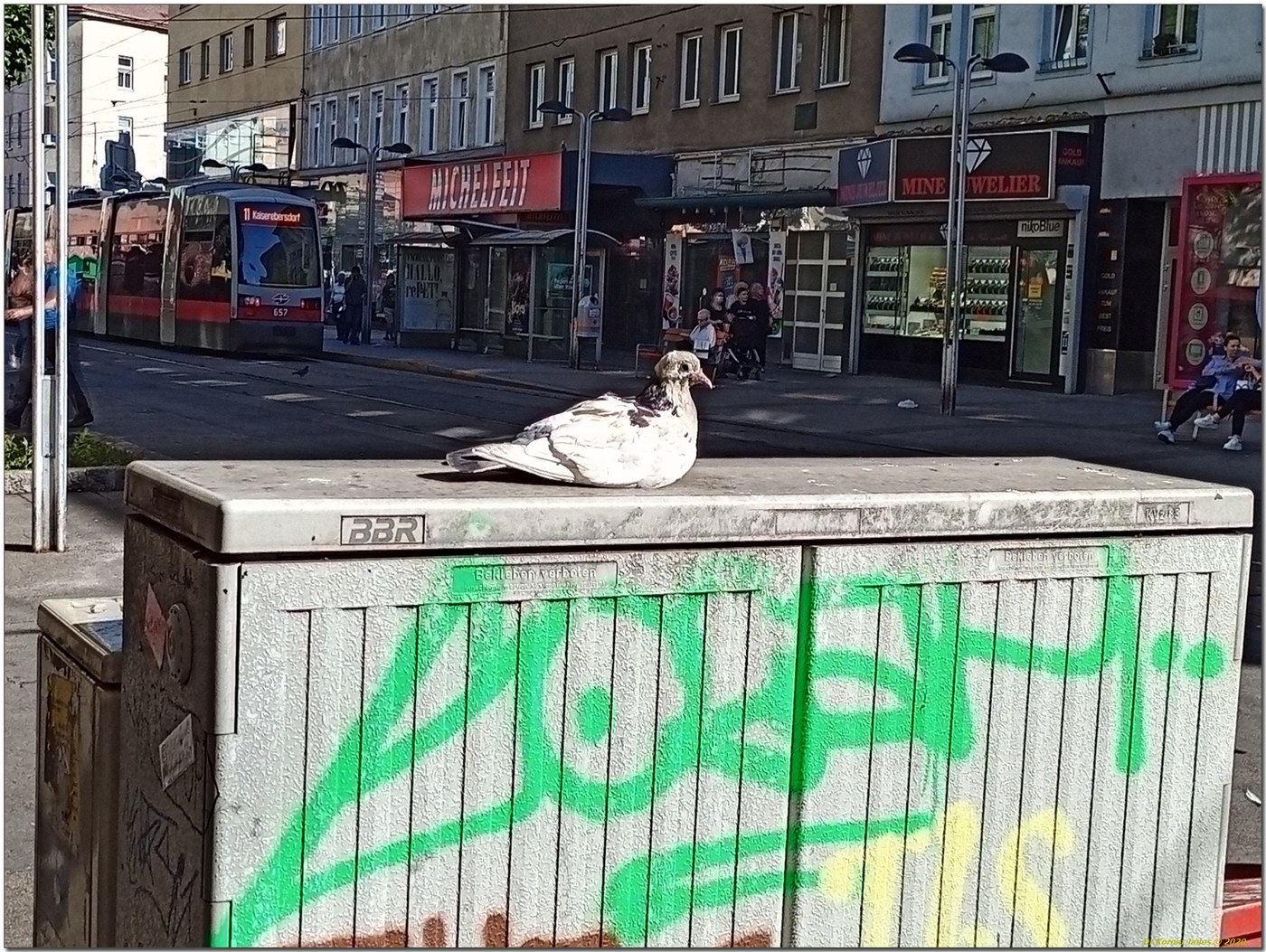
Key Field Marks
- Size & shape: A plump, barrel-chested bird about 13 in (32 cm) long with a small, rounded head, short neck, and short reddish legs — the classic "pigeon" silhouette seen in every city.
- Plumage: Extremely variable due to centuries of domestication and interbreeding of escaped stock. The ancestral "wild type" is blue-gray with two black bars across each wing, an iridescent green-and-purple sheen on the neck, and a black band across the tail tip, but feral flocks commonly include all-white, all-black, rusty-red, pied (patchy), and checkered individuals.
- Bill: Small, dark, with a fleshy whitish cere (bump) at the base.
- Behavior: Walks with a distinctive head-bobbing gait, gathers in large flocks on ledges, rooftops, and pavement, and is closely tied to human structures, which mimic the cliff ledges used by the ancestral wild Rock Dove.
Separating It From Similar Species
- Band-tailed Pigeon: A genuinely wild western species — larger, with a yellow bill and legs, a pale gray band across the tip of the tail, and a white crescent on the back of the neck; found in forested foothills rather than city centers.
- Eurasian Collared-Dove: Smaller and slimmer, sandy pale gray-brown overall with a neat black half-collar on the back of the neck and a longer, more tapered tail.
- Mourning Dove: Slimmer and more streamlined, soft grayish-brown with black spots on the wings and a long, pointed tail — lacks the chunky build and plumage variability of feral pigeons.
Habitat, Range & Season
Domestic (feral) Pigeons are year-round residents essentially worldwide in urban and suburban areas, agricultural buildings, bridges, and quarries — anywhere with ledges for roosting and nesting plus a reliable food source. They do not migrate and can be found in the same city blocks in every season.
Voice
A soft, rolling, guttural cooing, often rendered as "coo-cuh-coo-coo" or "roo-c'too-coo," given from rooftops and ledges, along with a wing-clapping sound in flight during display.
Frequently asked questions
Are city pigeons the same species as the wild Rock Dove?
Yes — feral/domestic pigeons are descended from the Rock Dove (Columba livia), which was domesticated thousands of years ago and later escaped or was released to found today's urban populations.
Why do city pigeons come in so many different colors?
Centuries of selective breeding in captivity produced many color and pattern variants, and these traits persist and interbreed freely in feral flocks, unlike genuinely wild bird populations.
How do I tell a feral pigeon from a Mourning Dove?
Feral pigeons are noticeably plumper and more variably colored with a short, fan-shaped tail, while Mourning Doves are slimmer, uniformly soft brown, and have a long, pointed tail.
Do Domestic Pigeons migrate?
No, feral pigeons are non-migratory and typically remain in the same urban area year-round.