

Common Potoo
Nyctibius griseus
A large, cryptically patterned nocturnal bird that perches bolt upright on broken branch stubs, vanishing into the bark by day.
- Size
- 34-38 cm (13-15 in) long, roughly 70-80 cm wingspan
- Habitat
- open woodlands, forest edges, savanna with scattered trees, and gardens across Central and South America
- Type
- other
Spotted a bird like this?
Identify any bird from a photo, free.
Overview
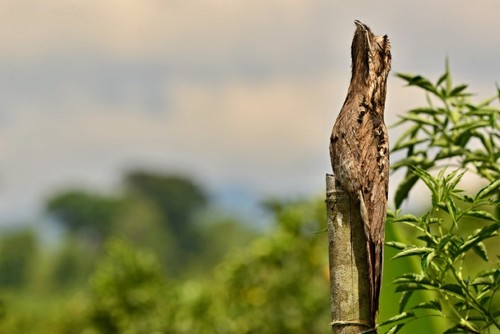
The Common Potoo is a large nocturnal bird related to nightjars and frogmouths, famous for its uncanny ability to disappear in plain sight. By day it perches upright on a broken branch stub or fence post, stretching its head skyward and closing its huge eyes to slits, so that its mottled gray-brown, bark-like plumage renders it almost invisible.
At roughly the size of a small hawk, the potoo has an enormous head, a tiny hooked bill that conceals a cavernous gape, and long wings and tail that fold neatly against the body when perched. Its eyes, adapted for night vision, often catch a torch beam and glow a distinctive orange-red.
Despite its unassuming daytime disguise, the Common Potoo becomes an active aerial hunter after dark, sallying out from favored perches to snatch large flying insects in its wide mouth before returning to the same spot, much like a giant flycatcher of the night.
How to identify it
Key field marks
- Large, stocky, upright silhouette with a big rounded head and short neck
- Mottled gray, brown, and black plumage that mimics broken bark or a snapped branch
- Tiny bill but an extremely wide gape lined with bristles
- Huge yellow to orange eyes that reflect brightly in torchlight
- Long tail and wings that project past the perch, held tight to the body
Similar species
Other potoo species (Great Potoo, Long-tailed Potoo) overlap in range but the Common Potoo is smaller and slimmer than the Great Potoo, and shorter-tailed than the Long-tailed Potoo. Nightjars are smaller, more compact, and typically seen flying low over open ground rather than perched upright on exposed snags. By day, a motionless potoo is most often mistaken for a dead branch stub rather than confused with another bird.
Habitat & range
Habitat
Common Potoos favor open and semi-open habitats with scattered trees: forest edges, savanna, plantations, riverine woodland, and even large gardens or parks with tall trees, rather than dense unbroken rainforest.
Range
The species is widespread from southern Mexico and Central America through most of South America east of the Andes, south to northern Argentina, and it also occurs on Trinidad and Tobago.
Migration
Most populations are resident year-round, though local movements in response to food availability are suspected in some areas.
Behavior & voice
Behavior
Common Potoos are strictly nocturnal and famously motionless by day, relying entirely on camouflage rather than flight to avoid detection. At dusk they become active, launching short sallying flights from a fixed perch to seize insects in mid-air before returning to the same or a nearby perch.
Voice
The voice is an eerie, mournful, descending series of wailing notes often rendered as 'poor-me-one' or 'poooor... me... all...', given mainly around dusk and through the night; this haunting call has inspired folklore across its range.
Feeding
It feeds almost exclusively on large nocturnal flying insects such as beetles, moths, and winged termites, taken in flight from an open perch.
Nesting and breeding
The Common Potoo builds no nest at all. The single egg is laid directly in a shallow depression atop a broken branch stub, and the incubating adult's cryptic plumage keeps it hidden in plain view throughout incubation and chick-rearing.
Frequently asked questions
Why does the Common Potoo stand so still?
Its gray-brown, bark-patterned plumage camouflages it as a broken branch stub, so remaining motionless with its head pointed skyward is its primary defense against predators during the day.
What does a Common Potoo eat?
It eats large flying insects such as moths and beetles, which it catches in short aerial sallies from a favorite night perch.
Where does the Common Potoo build its nest?
It builds no nest; the single egg is laid in a small notch or depression on top of a bare branch stub.
What does a Common Potoo sound like?
It gives a haunting, descending wail often described as 'poor-me-one,' heard mainly at dusk and during the night.
Is the Common Potoo related to owls?
No, despite superficial similarities it is more closely related to nightjars and frogmouths, not to owls.
Common Potoo guides
In-depth guides for identifying, finding, and understanding Common Potoo.
Other birds you may enjoy
Kiwi
35-55 cm (14-22 in) long; roughly chicken-sized
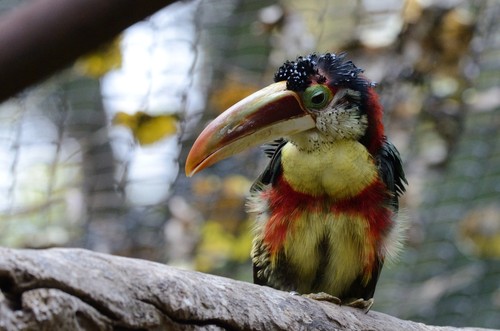
Curl-crested Aracari
41-46 cm (16-18 in) long, including a long bill and tail
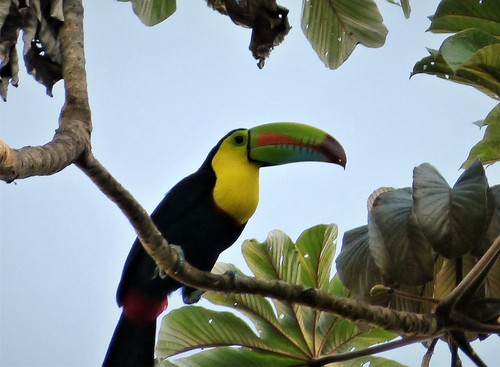
Keel-billed Toucan
42-55 cm (17-22 in) long including bill
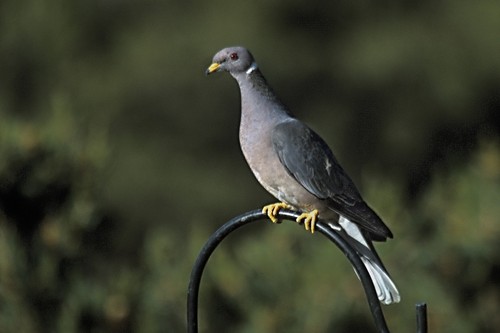
Band-tailed Pigeon
33-38 cm (13-15 in) long, wingspan about 66 cm (26 in)
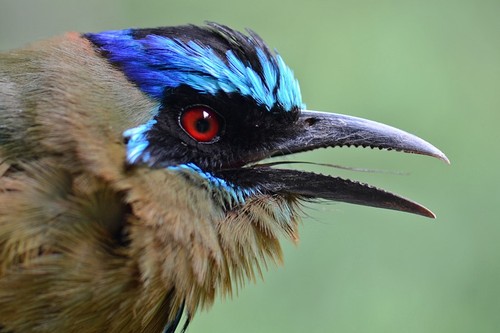
Blue-crowned Motmot
38-43 cm (15-17 in) long including tail
White-tipped Dove
27-30 cm (10.5-12 in) long, 38-43 cm wingspan
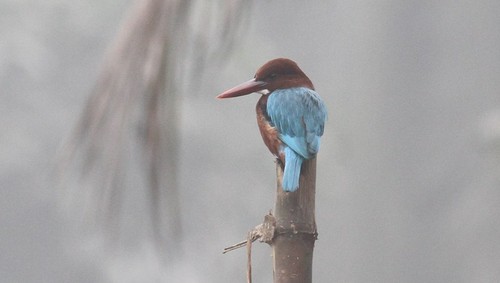
White-throated Kingfisher
27-28 cm (10.5-11 in) long
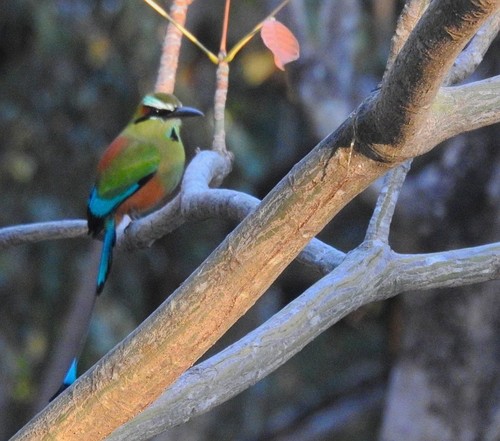
Turquoise-browed Motmot
34 cm (13 in) long including tail
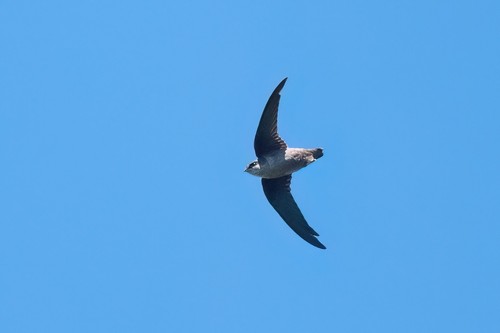
Vaux's Swift
10-12 cm (4-4.5 in) long, 27-30 cm wingspan
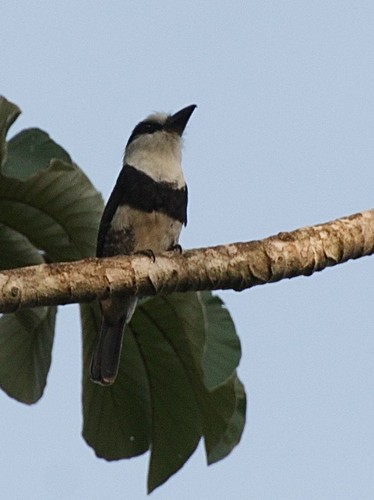
White-necked Puffbird
22-24 cm (8.5-9.5 in) long
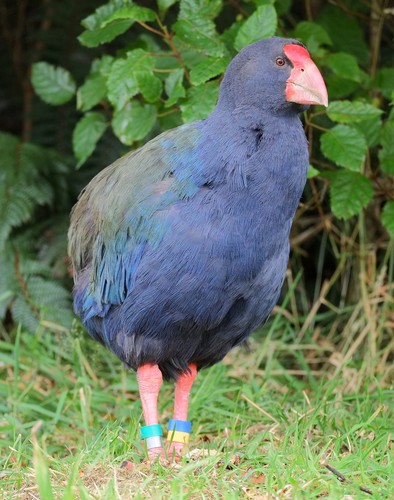
Takahe
50 cm (20 in) long, up to 3.5 kg; flightless
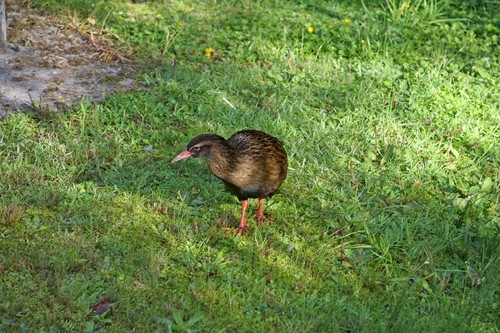
Weka
50-60 cm (20-24 in) long; flightless