
Common Pigeon
Columba livia
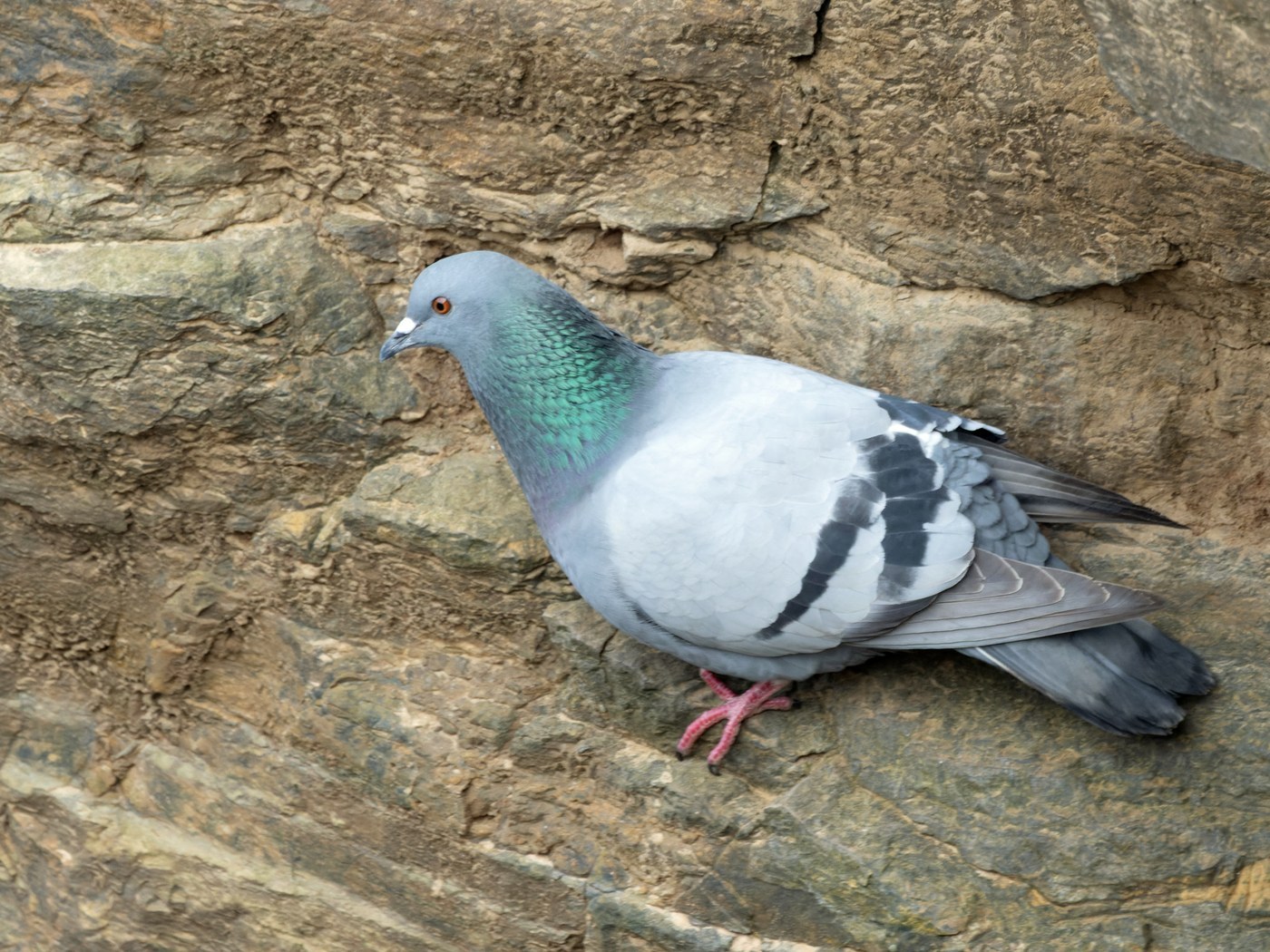
The familiar city pigeon, a highly adaptable descendant of the wild Rock Dove, seen worldwide in an enormous variety of plumage colors.
- Size
- 29-35 cm (11-14 in) long, 62-68 cm wingspan
- Habitat
- cliffs and coastal rocks in its wild form; cities, towns, and farmland as feral populations
- Type
- other
Spotted a bird like this?
Identify any bird from a photo, free.
Overview
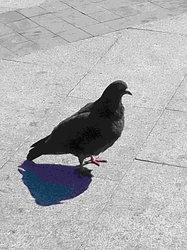
The Common Pigeon, also known as the Rock Dove or Rock Pigeon, is the ancestor of the domestic and feral pigeons found in cities worldwide. The ancestral wild form is blue-grey with a white rump, two bold black wing bars, and an iridescent green-and-purple sheen on the neck, but feral populations show enormous variation, including white, black, chequered, and reddish-brown forms resulting from centuries of domestication and interbreeding.
It is one of the most familiar birds on Earth, thriving in close association with humans in almost every major city, where ledges and building crevices substitute for the cliff ledges used by its wild ancestor.
How to identify it
Key field marks
- Highly variable plumage in feral birds, but wild-type shows blue-grey body, white rump, and two bold black wing bars
- Iridescent green-purple neck patch
- Stocky build with a small head and short legs
- Soft, repeated cooing call
- Fast, direct flight with clipped wingbeats
Similar species
- Stock Dove is smaller, lacks a white rump, and has only short, incomplete wing bars.
- Common Woodpigeon is larger with a white neck patch and larger white wing bar.
Feral Common Pigeons show so much plumage variation that overall shape, size, and behavior are more reliable identification clues than color pattern.
Habitat & range
Habitat
The wild ancestral form nests on coastal cliffs and rocky terrain; feral descendants now dominate urban and suburban environments worldwide, as well as farmland, using buildings, bridges, and other structures as substitute cliffs.
Range
Originally native to Europe, North Africa, and southern Asia; feral populations derived from domesticated stock are now established on every continent except Antarctica.
Migration
Resident and non-migratory, with feral birds rarely moving far from their home site.
Behavior & voice
Behavior
Highly gregarious, often forming large flocks in urban areas where food is abundant, and remarkably tame around humans, feeding readily on the ground in public spaces.
Voice
Gives a soft, repeated, rolling coo, often rendered as "coo-roo-c'coo", used in both contact and courtship contexts.
Feeding
Opportunistic and adaptable, feeding on seeds and grain in rural areas and on a wide range of discarded human food in urban settings.
Nesting and breeding
Nests on ledges, in building crevices, or under bridges, building a simple platform of twigs and debris. Pairs can breed year-round in mild climates, laying 2 white eggs incubated by both parents for about 17-19 days.
Frequently asked questions
Are city pigeons and Rock Doves the same species?
Yes, feral city pigeons are descended from the wild Rock Dove and remain the same species, Columba livia, despite great variation in plumage.
Why do city pigeons come in so many colors?
Centuries of domestication and interbreeding with escaped domestic pigeons have produced a wide range of plumage patterns not seen in the ancestral wild Rock Dove.
Where do wild Rock Doves nest?
On coastal cliffs and rocky ledges, a habit that feral urban pigeons continue by nesting on building ledges and under bridges.
What do Common Pigeons eat?
Seeds and grain in rural or wild settings, and a wide variety of scavenged food in cities.
Common Pigeon guides
In-depth guides for identifying, finding, and understanding Common Pigeon.
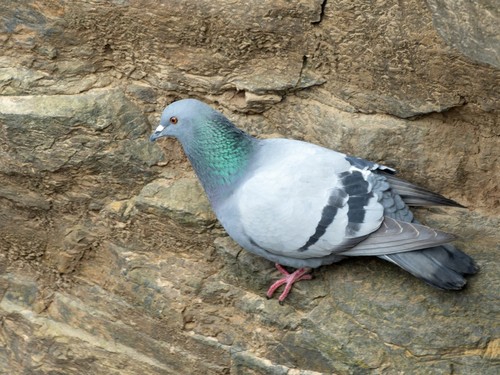
Common Pigeon identified by the community
Real birds identified with Bird Identifier.
Other birds you may enjoy
Kiwi
35-55 cm (14-22 in) long; roughly chicken-sized
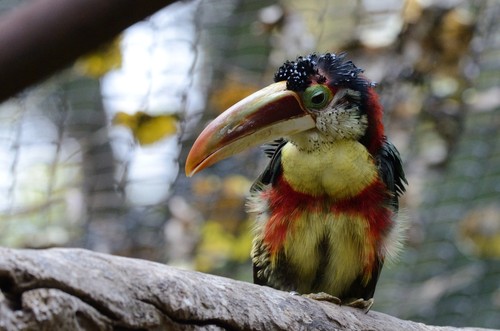
Curl-crested Aracari
41-46 cm (16-18 in) long, including a long bill and tail
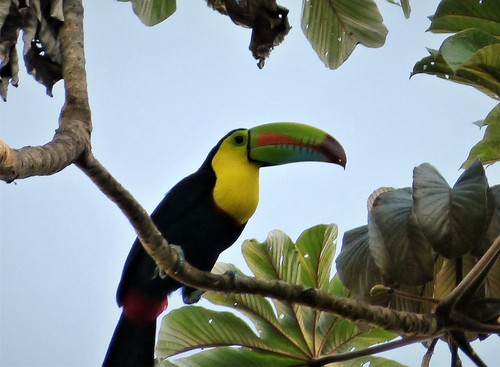
Keel-billed Toucan
42-55 cm (17-22 in) long including bill
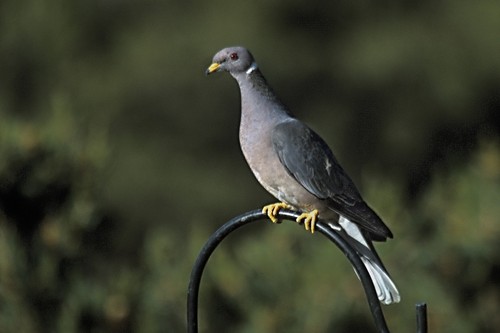
Band-tailed Pigeon
33-38 cm (13-15 in) long, wingspan about 66 cm (26 in)
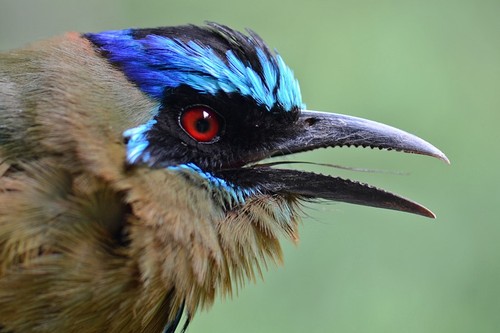
Blue-crowned Motmot
38-43 cm (15-17 in) long including tail
White-tipped Dove
27-30 cm (10.5-12 in) long, 38-43 cm wingspan
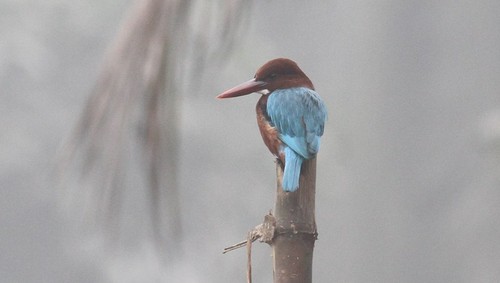
White-throated Kingfisher
27-28 cm (10.5-11 in) long
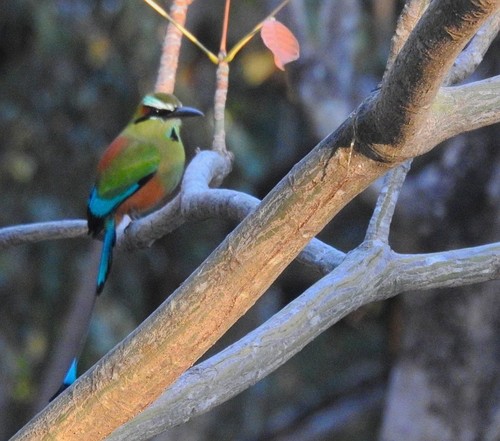
Turquoise-browed Motmot
34 cm (13 in) long including tail
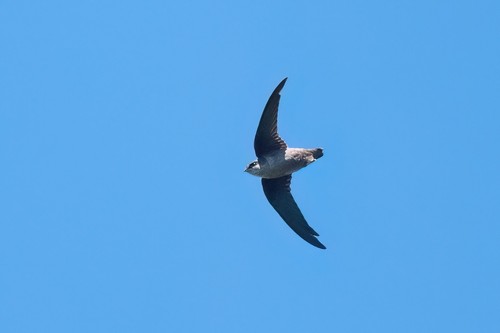
Vaux's Swift
10-12 cm (4-4.5 in) long, 27-30 cm wingspan
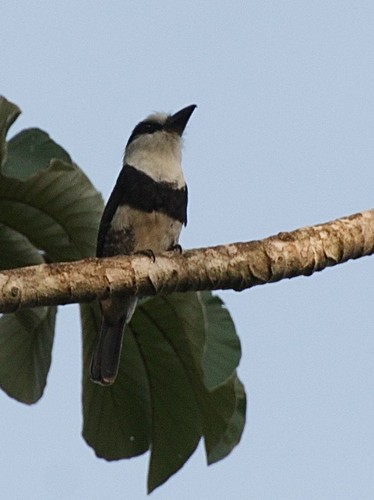
White-necked Puffbird
22-24 cm (8.5-9.5 in) long
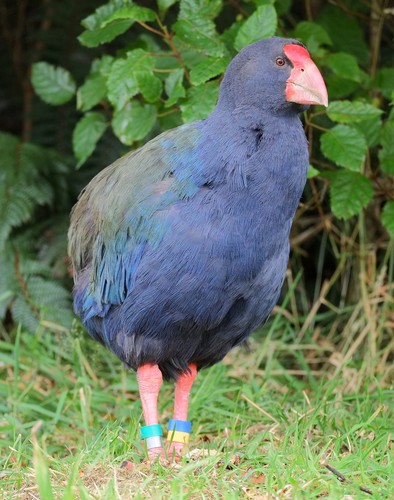
Takahe
50 cm (20 in) long, up to 3.5 kg; flightless
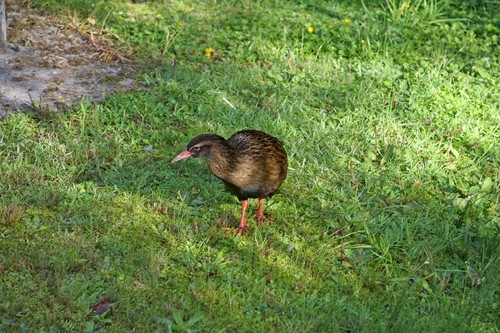
Weka
50-60 cm (20-24 in) long; flightless