Common Pigeon Identification Guide
The familiar urban pigeon, descended from wild Rock Doves, recognized by its stocky build, iridescent neck sheen, and highly variable plumage.
Read the full Common Pigeon encyclopedia entry →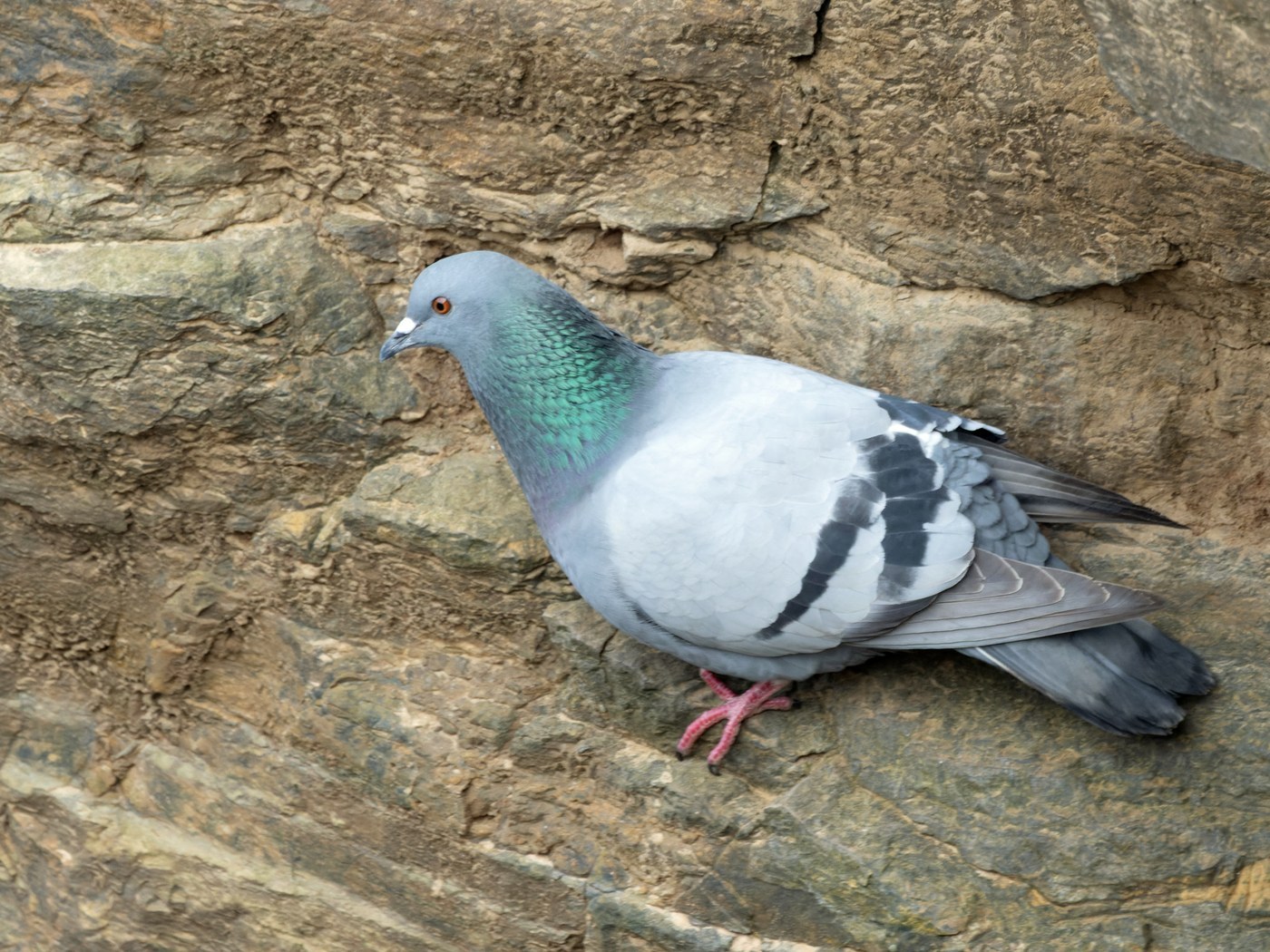
Key Field Marks
Size & Shape
- Stocky, medium-sized bird about 29–37 cm long with a wingspan of roughly 62–72 cm
- Small, rounded head, short neck, and short reddish legs
- Broad, rounded wings and a squared-off tail
Plumage
- The ancestral "blue bar" pattern shows bluish-gray body, two bold black bars across each wing, a black band at the tail tip, and a white rump patch, with an iridescent green-and-purple sheen on the neck
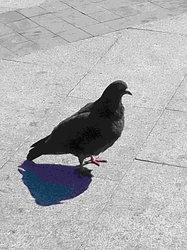
- Feral populations are highly variable due to centuries of domestication, ranging from all-white to rusty-red, checkered, pied, or nearly black
- Dark eyes (often orange-red), a dark bill with a distinctive pale, fleshy cere at the base
Behavior
- Highly gregarious, forming large flocks in urban plazas, parks, farmland, and around bridges and buildings that mimic natural cliff ledges
- Fast, direct flight with steady wingbeats interspersed with short glides; performs audible wing-clapping display flights
- Walks with a characteristic head-bobbing gait while foraging on the ground
Similar Species
- Band-tailed Pigeon (western North America): larger, with a yellow bill and legs and a pale gray band across the tail tip, and typically found in forested habitat rather than cities
- Eurasian Collared-Dove: smaller and slimmer, pale sandy-buff overall with a thin black half-collar on the nape, and a distinctly different cooing call
- Mourning Dove: slimmer body, pointed tail, tan-brown plumage, and a mournful cooing call, lacking the pigeon's stocky build and white rump
Habitat & Range
- Native wild Rock Doves nest on sea cliffs and rocky outcrops across Europe, North Africa, and western Asia
- Feral, human-associated populations are now found in cities and towns worldwide, nesting on building ledges, bridges, and other structures that substitute for cliffs
- Non-migratory; resident year-round wherever established
Voice & Song
- Soft, rolling cooing song, often rendered "coo-roo-c'coo" or "roo-c'too-coo"
- Wings make a sharp clapping sound during display flights
Frequently asked questions
Is the Common Pigeon the same bird as the city pigeon?
Yes, the birds seen in cities worldwide are feral descendants of the wild Rock Dove (Rock Pigeon), the species commonly called Common Pigeon.
Why do city pigeons look so different from each other?
Centuries of domestication and interbreeding among escaped domestic pigeons produced enormous plumage variation, from the ancestral blue-bar pattern to white, red, checkered, and pied forms.
How do I tell a Common Pigeon from a Mourning Dove?
Common Pigeons are stockier with a squared tail and white rump, while Mourning Doves are slimmer with a long pointed tail and no white rump.
Where do wild Rock Doves naturally nest?
On sea cliffs and rocky ledges across their native range in Europe, North Africa, and western Asia — a habit feral urban pigeons replicate on building ledges and bridges.
What does a Common Pigeon sound like?
It gives a soft, repetitive cooing song, often written as "coo-roo-c'coo," and its wings make an audible clapping sound during display flights.
Common Pigeon identified by the community
Recent Common Pigeon sightings identified with Bird Identifier.