
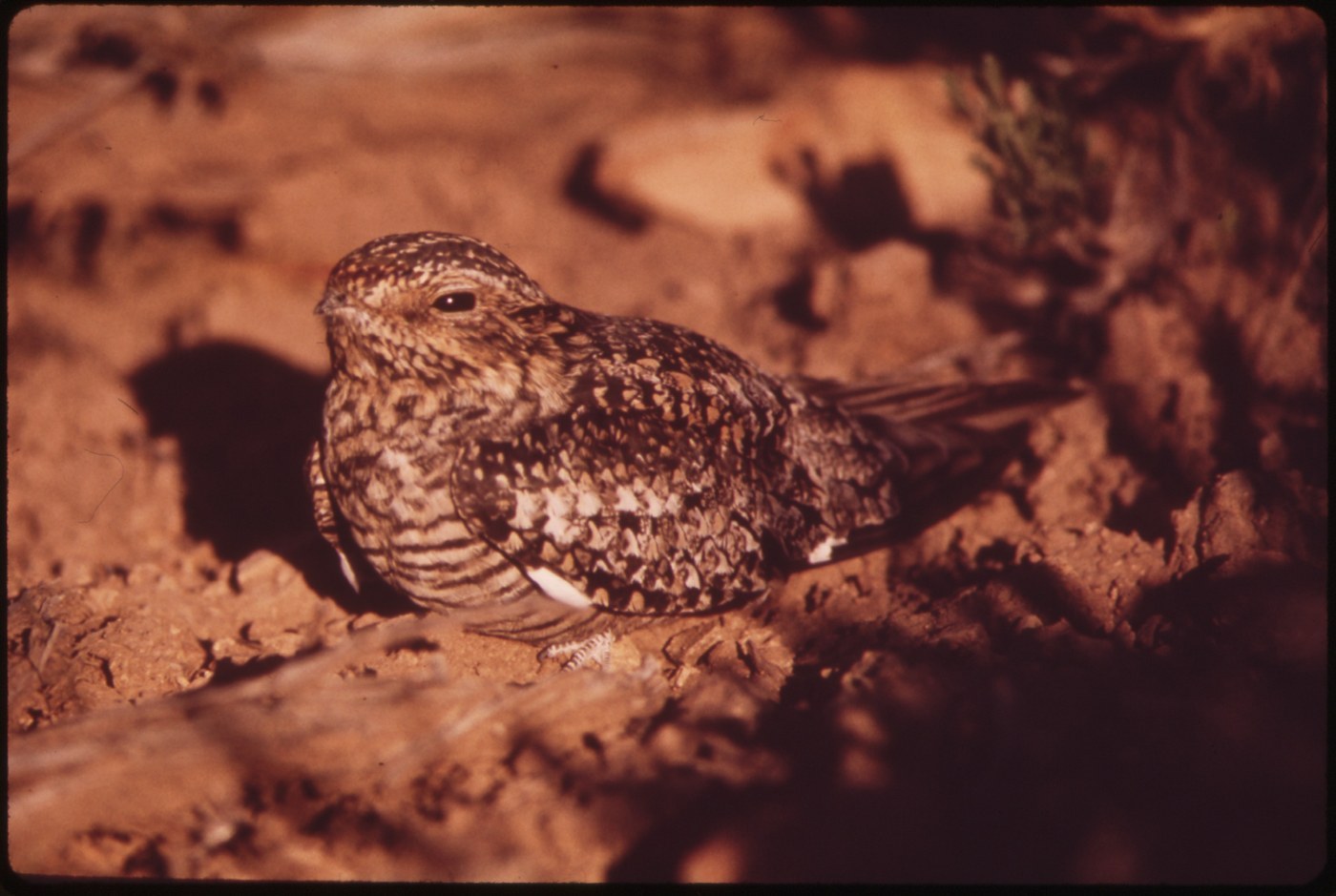
Common Nighthawk
Chordeiles minor
A cryptically patterned, long-winged aerial insect-hunter often seen at dusk with erratic, bat-like flight and a nasal "peent" call.
- Size
- 22-24 cm (8.5-9.5 in) long, 56-60 cm wingspan
- Habitat
- open country, forest clearings, and urban areas with flat gravel roofs
- Type
- other
Spotted a bird like this?
Identify any bird from a photo, free.
Overview
The Common Nighthawk is a master of aerial insect-hunting, spending much of its active time on the wing at dawn and dusk over open country and even city skies. Despite its name, it is not related to true hawks but is a member of the nightjar family. Its plumage is a beautiful mix of mottled gray, brown, black, and buff that provides superb camouflage when the bird rests motionless on the ground, a branch, or a gravel rooftop during the day. In flight, long, pointed wings show a bold white bar, and the tail is slightly notched.
How to identify it
Key Field Marks
- Long, pointed wings with a bold white bar crossing each wing (males also show a white throat patch and white tail band)
- Cryptic mottled gray-brown-black plumage, excellent camouflage at rest
- Erratic, bat-like flight with sudden dips and turns while hunting insects
- Distinctive nasal, buzzy "peent" call given in flight
Similar Species
- Lesser Nighthawk is smaller, buffier overall, with the wing bar positioned closer to the wingtip, and gives a soft trilling call rather than a nasal peent.
- Common Poorwill and other nightjars lack the long, pointed wings and white wing bar, and fly closer to the ground with more fluttering wingbeats.
Habitat & range
Habitat
Common Nighthawks use a wide range of open habitats, including grasslands, forest clearings, burned areas, and, notably, flat gravel rooftops in towns and cities, which mimic their natural open-ground nesting sites.
Range
They breed across most of North America, from northern Canada south through the United States into Mexico and Central America.
Migration
Common Nighthawks are long-distance migrants, wintering in South America, and are frequently observed migrating in loose flocks at dusk in late summer.
Behavior & voice
Behavior
They are crepuscular and nocturnal foragers, most active at dawn and dusk, catching flying insects on the wing with a wide, gaping mouth.
Voice
The distinctive nasal "peent" call is given in flight; males also produce a deep, resonant booming sound with their wings during steep courtship dives.
Feeding
They feed exclusively on flying insects, including beetles, moths, and flying ants, caught in aerial sallies, sometimes foraging around streetlights that attract insects at night.
Nesting
Common Nighthawks do not build a nest; instead, the female lays her eggs directly on bare ground, gravel, or flat rooftops, relying on cryptic plumage to avoid detection by predators.
Frequently asked questions
Is the Common Nighthawk actually a hawk?
No, despite its name it is not related to hawks at all; it belongs to the nightjar family and is an aerial insect specialist.
What is the booming sound Common Nighthawks make?
During courtship, males perform steep dives and pull up sharply, causing air to rush through their wing feathers and produce a deep booming sound.
Why do Common Nighthawks nest on rooftops?
Flat gravel rooftops resemble the open, bare ground the species naturally prefers for nesting, and they provide safe, predator-free sites in urban areas.
What time of day are Common Nighthawks most active?
They are most active at dawn and dusk, though they may also forage after dark, especially around lights that attract insects.
Common Nighthawk guides
In-depth guides for identifying, finding, and understanding Common Nighthawk.
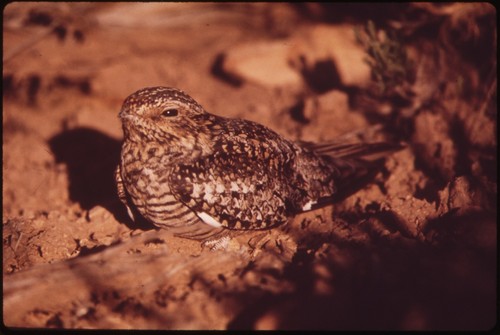
Other birds you may enjoy
Kiwi
35-55 cm (14-22 in) long; roughly chicken-sized
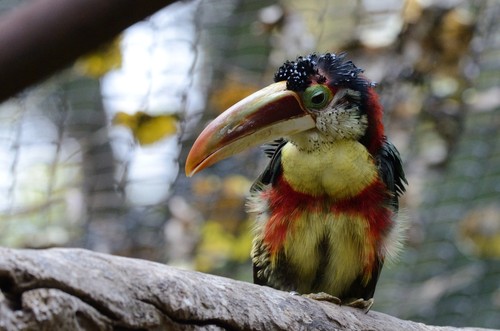
Curl-crested Aracari
41-46 cm (16-18 in) long, including a long bill and tail
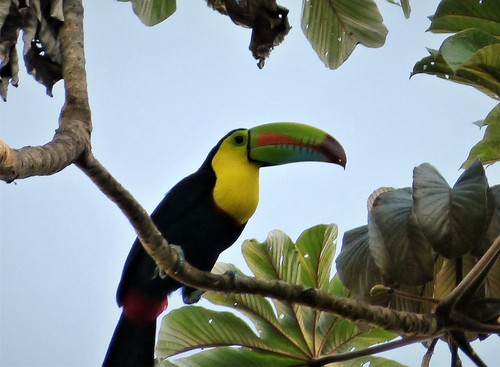
Keel-billed Toucan
42-55 cm (17-22 in) long including bill
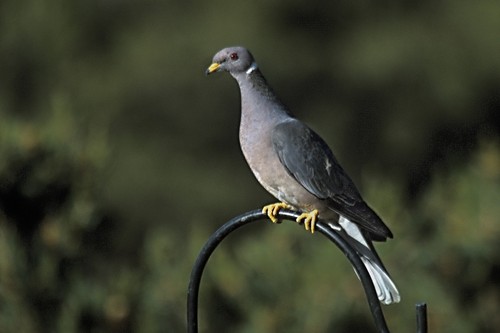
Band-tailed Pigeon
33-38 cm (13-15 in) long, wingspan about 66 cm (26 in)
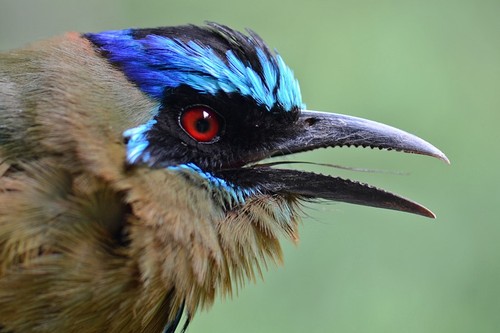
Blue-crowned Motmot
38-43 cm (15-17 in) long including tail
White-tipped Dove
27-30 cm (10.5-12 in) long, 38-43 cm wingspan
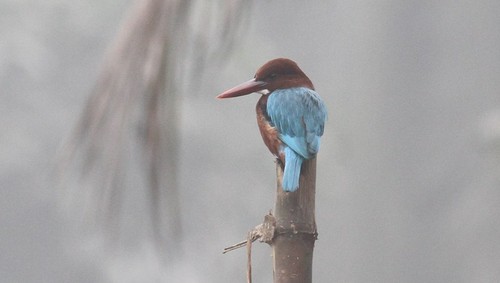
White-throated Kingfisher
27-28 cm (10.5-11 in) long
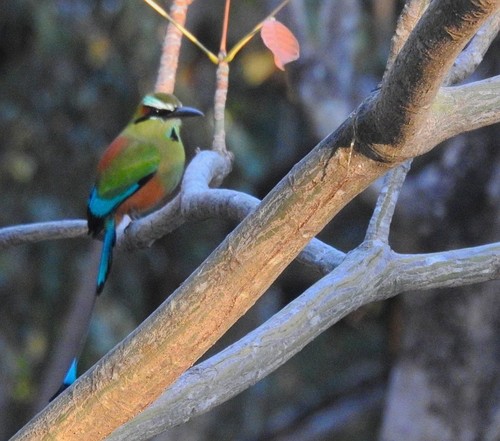
Turquoise-browed Motmot
34 cm (13 in) long including tail
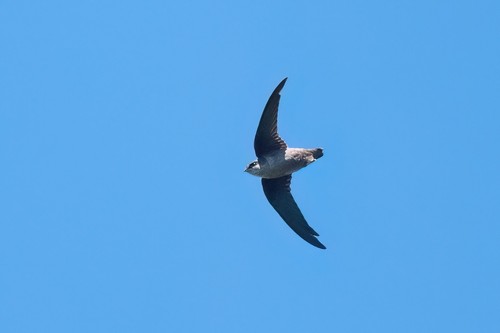
Vaux's Swift
10-12 cm (4-4.5 in) long, 27-30 cm wingspan
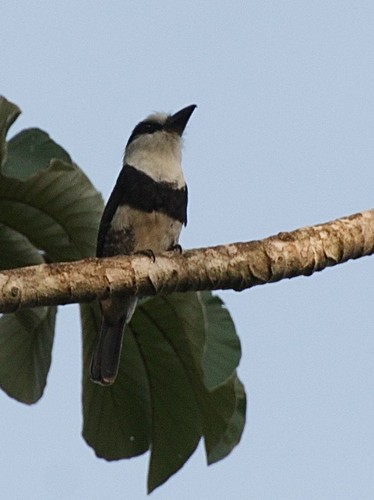
White-necked Puffbird
22-24 cm (8.5-9.5 in) long
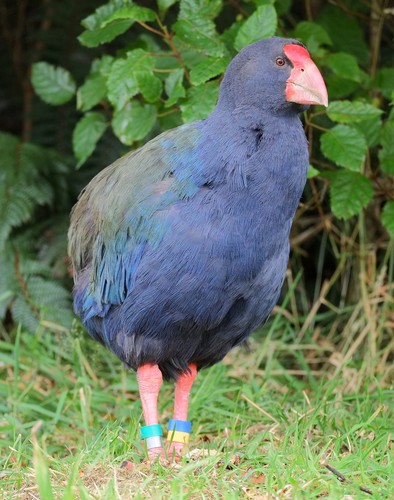
Takahe
50 cm (20 in) long, up to 3.5 kg; flightless
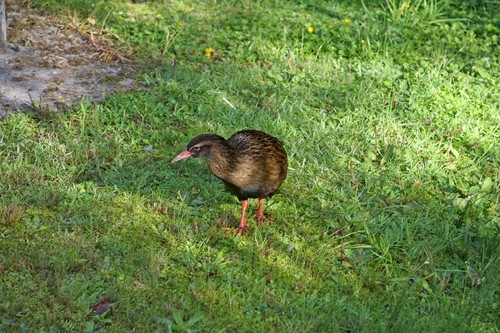
Weka
50-60 cm (20-24 in) long; flightless