
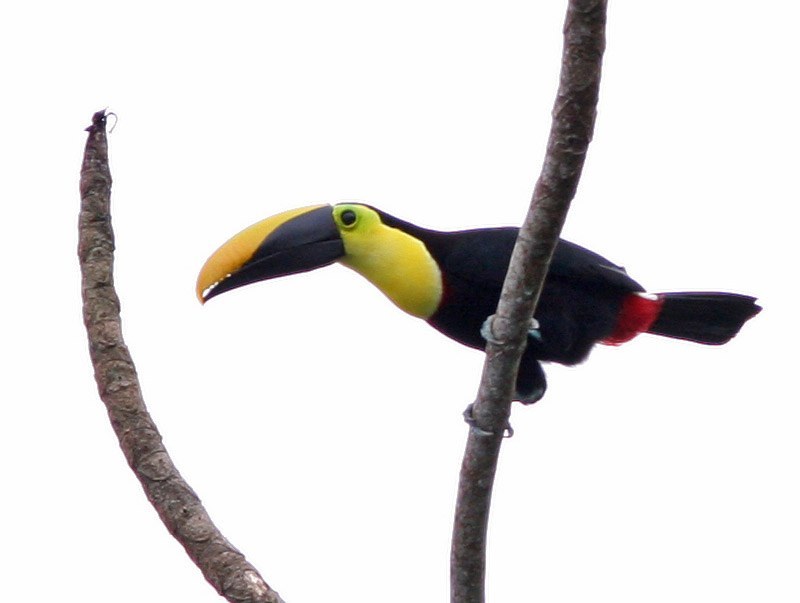
Chestnut-mandibled Toucan
Ramphastos ambiguus
One of the largest toucans in the Americas, with black plumage, a yellow bib, and a long bill that is mostly black above with a distinctive chestnut-brown lower mandible.
- Size
- 54-61 cm (21-24 in) long including bill
- Habitat
- humid lowland and foothill rainforest
- Type
- other
Spotted a bird like this?
Identify any bird from a photo, free.
Overview
The Chestnut-mandibled Toucan, now generally treated as part of the larger Black-mandibled Toucan complex, is among the biggest of all toucans, with glossy black plumage, a bright yellow throat and chest, a patch of red beneath the tail, and pale blue skin around the eye. Its long bill is mostly blackish above, contrasting with a warm chestnut-brown lower mandible that gives the species its name and provides a reliable field mark at close range.
A true giant of the canopy, it moves through the forest in small family groups, hopping heavily between branches, its loud, far-carrying calls often the first clue to its presence long before it comes into view.
How to identify it
Key field marks
- Very large size, among the biggest toucans
- Glossy black body with a bright yellow throat and chest
- Long bill, blackish above with a chestnut-brown lower mandible
- Red undertail coverts and blue skin around the eye
Similar species
- Keel-billed Toucan is smaller with a boldly rainbow-colored bill rather than the mostly black-and-chestnut bill of this species.
- Channel-billed Toucan is also smaller, with a shorter, mostly black bill lacking the extensive chestnut lower mandible.
Habitat & range
Habitat
Inhabits humid lowland and foothill rainforest, secondary forest, and forest edge, favoring the canopy.
Range
Found from Honduras and Nicaragua south through Costa Rica and Panama into western Colombia and Ecuador.
Migration
Generally non-migratory, with local movements tied to fruit availability.
Behavior & voice
Behavior
Usually encountered in small groups of a few individuals, hopping between branches in the high canopy; often the loudest and most conspicuous large bird in its forest habitat.
Voice
A loud, far-carrying, yelping or croaking call, often rendered as a repeated "kreeick" and audible over long distances.
Feeding
Feeds mainly on fruit, supplemented with insects, small vertebrates, and the eggs or nestlings of other birds.
Nesting
Nests in large natural tree cavities; lays 2-4 white eggs, with both parents sharing incubation and chick-rearing duties.
Frequently asked questions
How do you identify a Chestnut-mandibled Toucan?
Look for a very large black-and-yellow toucan with a long bill that is dark above and warm chestnut-brown along the lower mandible.
Is the Chestnut-mandibled Toucan the same as the Black-mandibled Toucan?
Yes, it is generally treated as part of the same species complex, sometimes called the Black-mandibled Toucan, found from Central America into northwestern South America.
What does a Chestnut-mandibled Toucan eat?
Mostly fruit, along with insects, small vertebrates, and occasionally the eggs or chicks of other birds.
Where does the Chestnut-mandibled Toucan live?
In humid lowland and foothill rainforest from Honduras and Nicaragua south to western Colombia and Ecuador.
Chestnut-mandibled Toucan guides
In-depth guides for identifying, finding, and understanding Chestnut-mandibled Toucan.
Other birds you may enjoy
Kiwi
35-55 cm (14-22 in) long; roughly chicken-sized
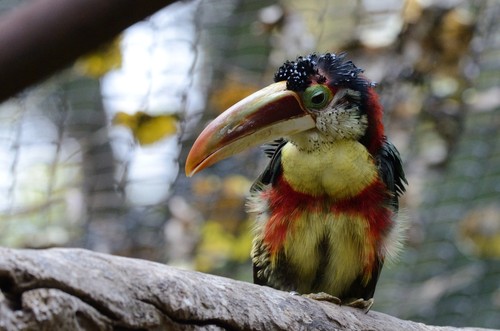
Curl-crested Aracari
41-46 cm (16-18 in) long, including a long bill and tail
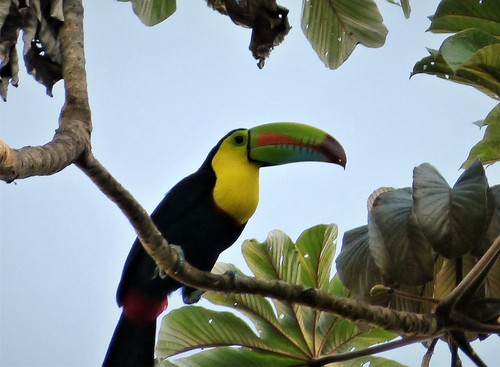
Keel-billed Toucan
42-55 cm (17-22 in) long including bill
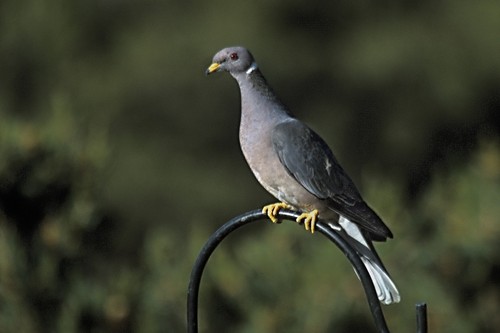
Band-tailed Pigeon
33-38 cm (13-15 in) long, wingspan about 66 cm (26 in)
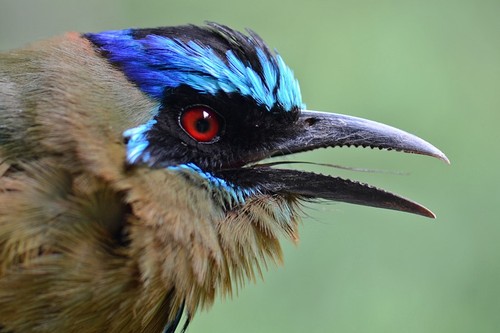
Blue-crowned Motmot
38-43 cm (15-17 in) long including tail
White-tipped Dove
27-30 cm (10.5-12 in) long, 38-43 cm wingspan
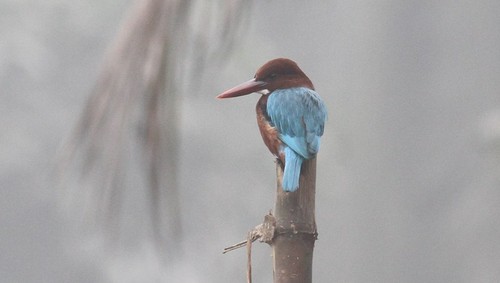
White-throated Kingfisher
27-28 cm (10.5-11 in) long
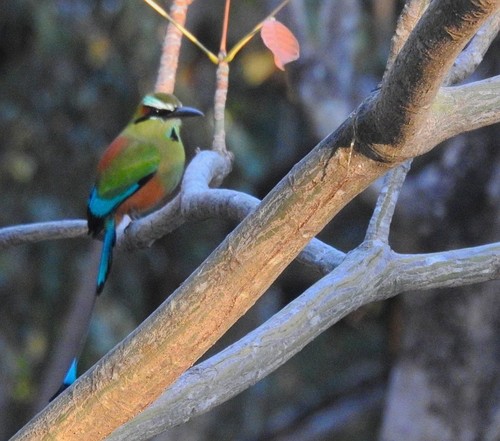
Turquoise-browed Motmot
34 cm (13 in) long including tail
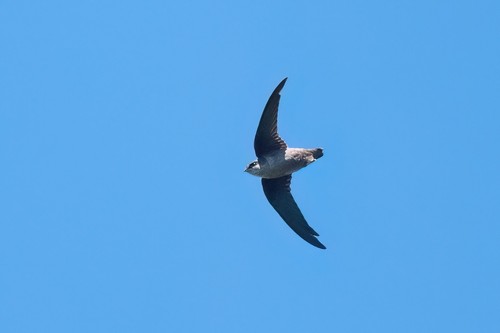
Vaux's Swift
10-12 cm (4-4.5 in) long, 27-30 cm wingspan
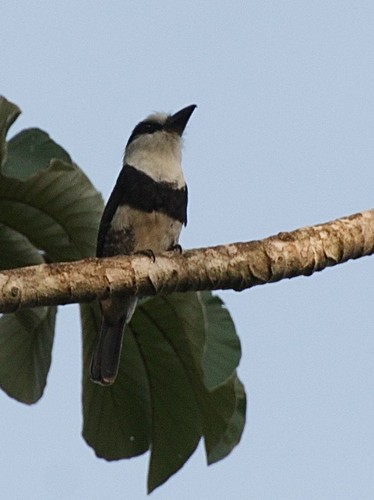
White-necked Puffbird
22-24 cm (8.5-9.5 in) long
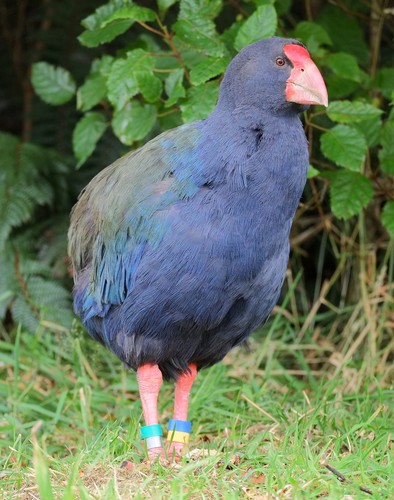
Takahe
50 cm (20 in) long, up to 3.5 kg; flightless
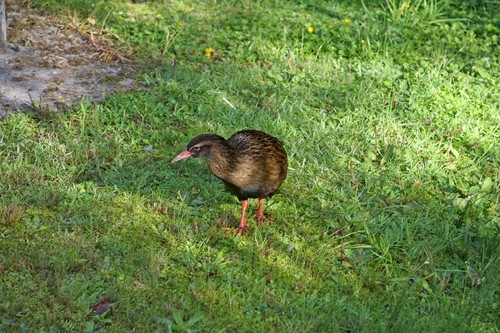
Weka
50-60 cm (20-24 in) long; flightless