
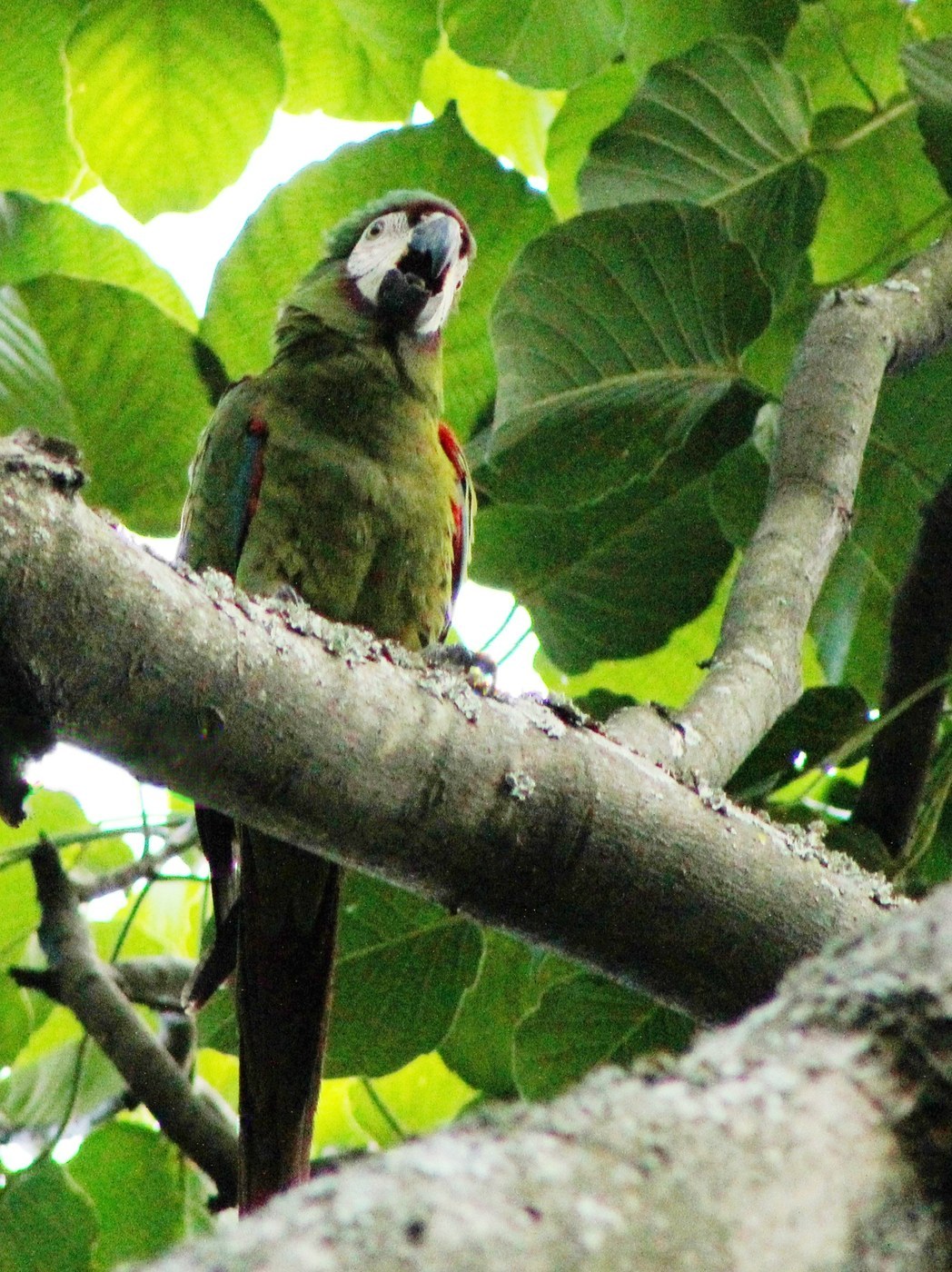
Chestnut-fronted Macaw
Ara severus
A small macaw, mostly green with a brownish-chestnut forehead patch, reddish shoulders visible in flight, and a bare whitish face lined with fine dark feathers.
- Size
- 45-50 cm (18-20 in) long
- Habitat
- forest edge, gallery forest, and savanna woodland
- Type
- parrot
Spotted a bird like this?
Identify any bird from a photo, free.
Overview
The Chestnut-fronted Macaw, also known as the Severe Macaw, is one of the smaller members of the macaw group, with predominantly green plumage that turns bluish on the flight feathers and tail. A small patch of brownish-chestnut feathers marks the forehead, while the underside of the tail and flight feathers glow a warm reddish color, most visible when the bird is in flight overhead.
The bare facial skin is pale and crossed by narrow lines of tiny dark feathers, giving the face a delicately patterned look at close range. Typically encountered in pairs or small noisy flocks, it forages in forest edge and semi-open woodland, frequently commuting to and from communal roosts in loud, chattering groups at dawn and dusk.
How to identify it
Key field marks
- Small macaw, mostly green with a bluish tint to flight feathers and tail
- Small chestnut-brown patch on the forehead
- Reddish underside to the tail and flight feathers, visible in flight
- Pale bare face lined with fine dark feather markings
Similar species
- Chestnut-fronted Macaw can be confused with smaller macaws like the Red-shouldered Macaw, which is much smaller with a shorter tail and lacks the chestnut forehead patch.
- Larger green macaws such as the Military Macaw are considerably bigger with a red forehead band rather than chestnut, and a much longer tail.
Habitat & range
Habitat
Inhabits forest edge, gallery forest, savanna woodland, and cultivated areas with scattered trees.
Range
Found across much of northern and central South America, including the Amazon basin and parts of Panama.
Migration
Non-migratory, though flocks may move locally in search of fruiting trees.
Behavior & voice
Behavior
Usually seen in pairs or small flocks, often flying between feeding areas and communal roosts at dawn and dusk with loud, chattering calls.
Voice
Harsh, raucous squawking calls, generally higher-pitched and less resonant than those of the larger macaw species.
Feeding
Feeds mainly on seeds, nuts, fruit, and flowers, foraging in the canopy of forest edge and semi-open habitats.
Nesting
Nests in tree cavities, sometimes in abandoned termite mounds or old woodpecker holes; lays 2-3 white eggs.
Frequently asked questions
How do you identify a Chestnut-fronted Macaw?
Look for a small, mostly green macaw with a small chestnut-brown patch on the forehead and reddish coloring visible under the tail and wings in flight.
Why is it also called the Severe Macaw?
Severe Macaw is an older common name for the same species, Ara severus, still used in some regions and in the pet trade.
What does a Chestnut-fronted Macaw eat?
Seeds, nuts, fruit, and flowers foraged in forest edge and semi-open woodland.
Where does the Chestnut-fronted Macaw live?
In forest edge and savanna woodland across much of northern and central South America and parts of Panama.
Chestnut-fronted Macaw guides
In-depth guides for identifying, finding, and understanding Chestnut-fronted Macaw.
Other birds you may enjoy
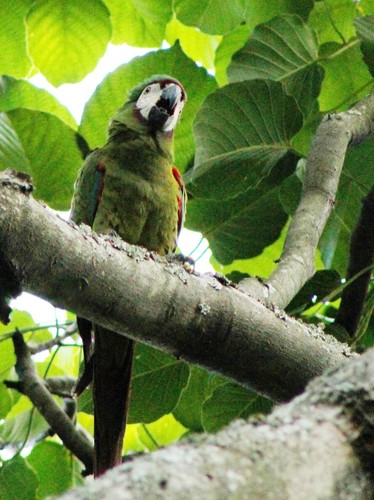
Eclectus Parrot
35-42 cm (14-16.5 in) long
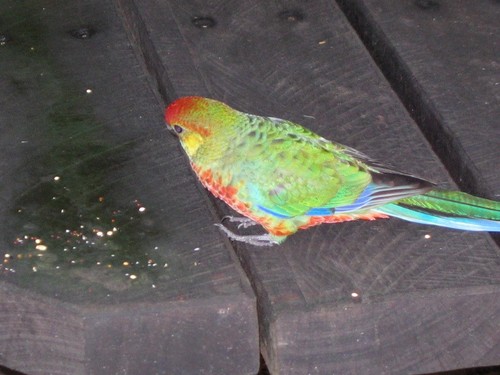
Western Rosella
25-30 cm (10-12 in) long
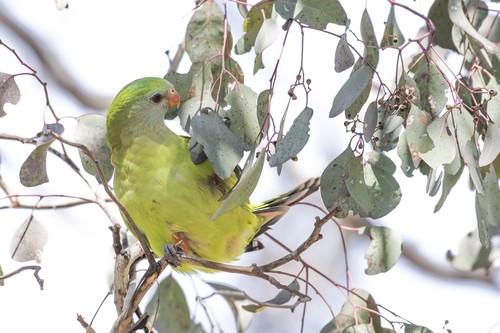
Superb Parrot
About 40 cm (16 in) long including a long tail
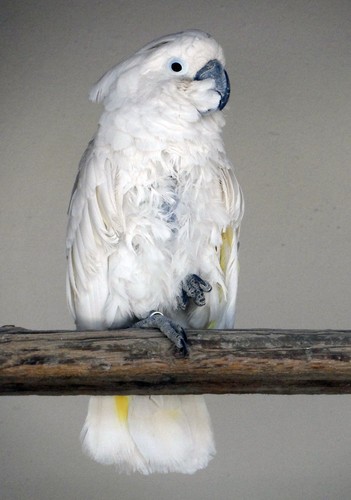
Umbrella Cockatoo
About 46 cm (18 in) long
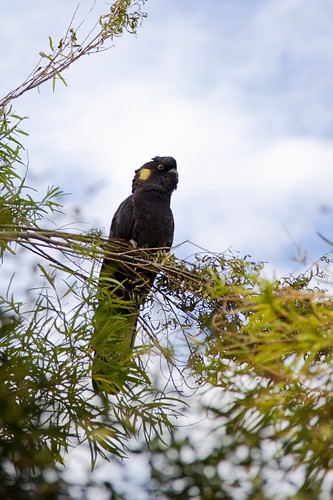
Yellow-tailed Black Cockatoo
55-65 cm long; wingspan up to about 130 cm
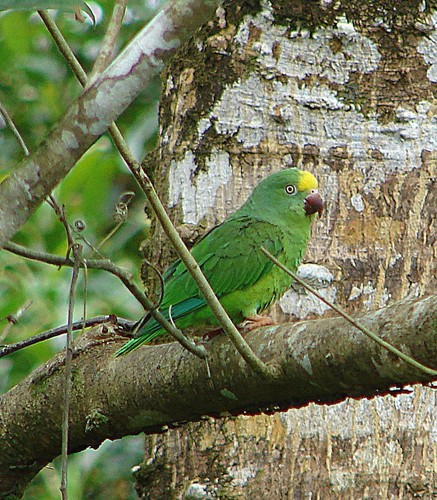
Yellow-crowned Amazon
About 35-38 cm (14-15 in) long
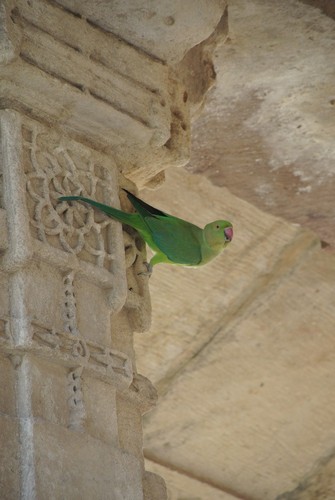
Rose-ringed Parakeet
40 cm (16 in) long including long tail
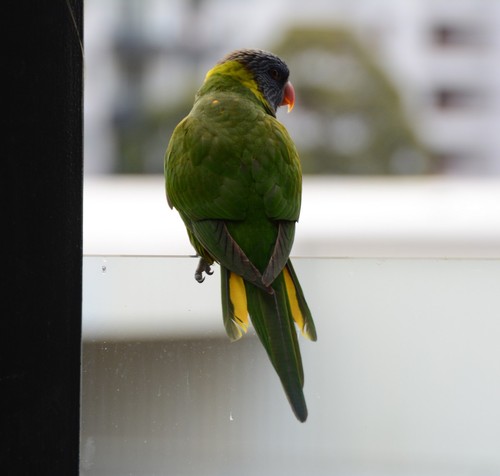
Rainbow Lorikeet
25-30 cm (10-12 in) long
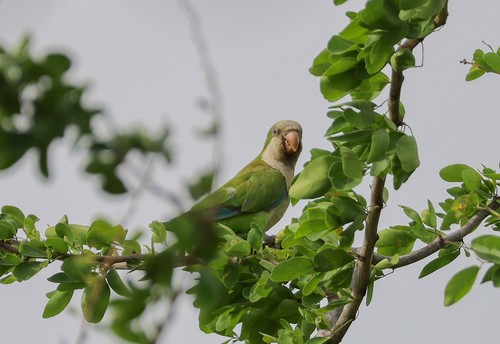
Quaker Parrot
28-31 cm (11-12 in) long
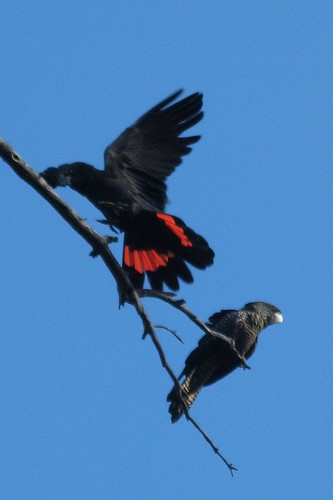
Red-tailed Black Cockatoo
55-65 cm long
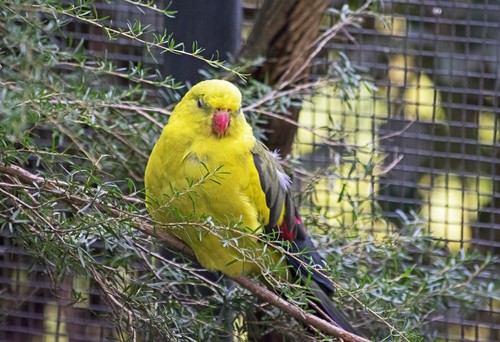
Regent Parrot
37-42 cm (15-17 in) long, including a long tail
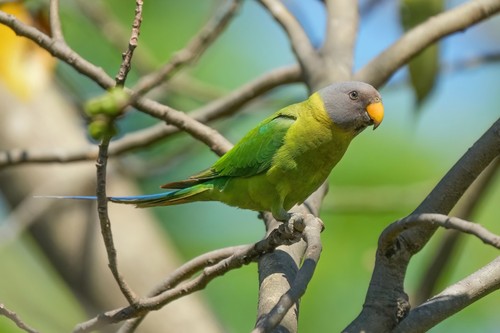
Plum-headed Parakeet
33 cm (13 in) long including tail