
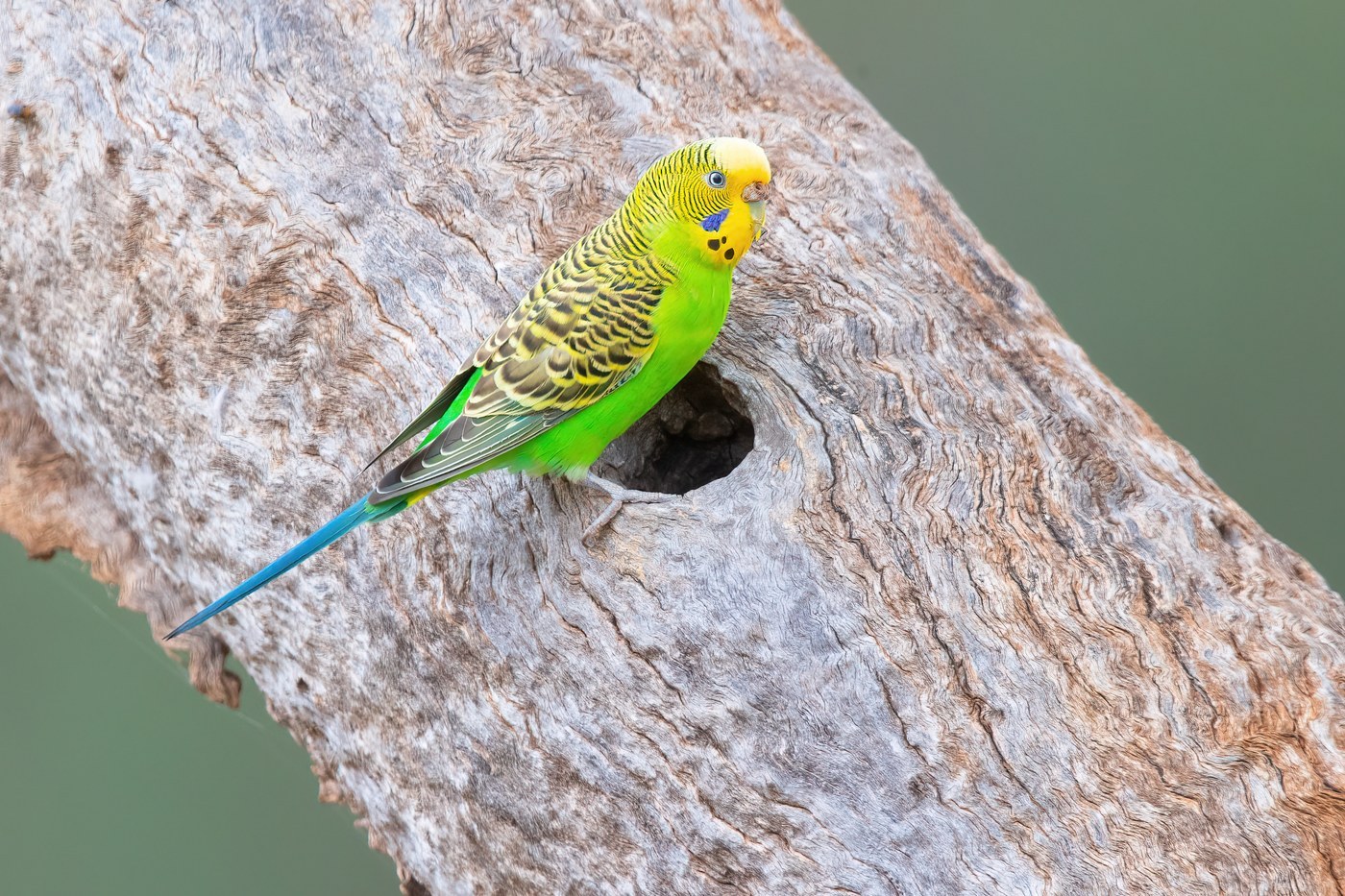
Budgerigar
Melopsittacus undulatus
A small, nomadic Australian parrot; the wild form is bright green and yellow with fine black scalloping across the back and wings.
- Size
- 18 cm (7 in) long, 30 cm wingspan
- Habitat
- open grasslands, scrublands, and dry woodlands
- Type
- parrot
Spotted a bird like this?
Identify any bird from a photo, free.
Overview
The Budgerigar is a small, slender parrot native to the arid interior of Australia. In its natural wild-type coloring, it shows a bright yellow face and forehead, a light green body, and a back and wings finely scalloped in black-and-yellow barring that provides excellent camouflage against dry grass. A row of small black spots crosses the throat, and the long, tapering tail is deep blue-green.
Wild Budgerigars are highly nomadic, following rainfall and the resulting flush of seeding grasses across the vast Australian outback, and they form flocks that can number from dozens to many thousands of birds when conditions are favorable. The species is also the ancestor of the many color varieties bred worldwide, but the natural wild form remains green and yellow.
How to identify it
Key field marks
- Bright yellow face and forehead with a row of small black throat spots
- Light green body plumage
- Black-and-yellow scalloped pattern across the back and wings
- Long, tapering blue-green tail
- Small size and fast, direct flight in tight flocks
Similar species
- No other Australian parrot shares the Budgerigar's combination of small size, scalloped back pattern, and bright yellow face; its flocking behavior and habitat also help distinguish it from similar-sized finches at a distance.
Habitat & range
Habitat
Inhabits open grasslands, scrublands, and dry woodlands across the arid and semi-arid interior of Australia, often near water sources.
Range
Endemic to mainland Australia, found widely across the continent's interior.
Migration
Highly nomadic rather than strictly migratory, moving unpredictably across the landscape in response to rainfall and the availability of seeding grasses.
Behavior & voice
Behavior
Highly social and gregarious, forming large, fast-flying flocks that move together in search of food and water; flocks can grow enormously after good rains trigger widespread grass seeding.
Voice
A constant, chattering warble and a range of soft contact calls kept up within flocks.
Feeding
Feeds almost entirely on grass seeds, foraging on the ground and among seeding grass stems, often in large groups.
Nesting
Nests in tree hollows, often in loose colonies when food is abundant; lays 4-8 white eggs.
Frequently asked questions
What color is a wild Budgerigar?
The natural wild-type Budgerigar is light green with a yellow face and fine black-and-yellow scalloped patterning across the back and wings, quite different from the many color varieties bred in captivity.
Where do Budgerigars live in the wild?
They are native to the arid interior of Australia, inhabiting open grasslands, scrublands, and dry woodlands.
Why do wild Budgerigars form such large flocks?
They are highly nomadic, following rainfall across the outback, and flocks can swell dramatically after rain triggers widespread grass seeding, providing abundant food.
What do wild Budgerigars eat?
Almost entirely grass seeds, foraged on the ground and from seeding grass stems.
Budgerigar guides
In-depth guides for identifying, finding, and understanding Budgerigar.
Budgerigar identified by the community
Real birds identified with Bird Identifier.

Other birds you may enjoy
Eclectus Parrot
35-42 cm (14-16.5 in) long
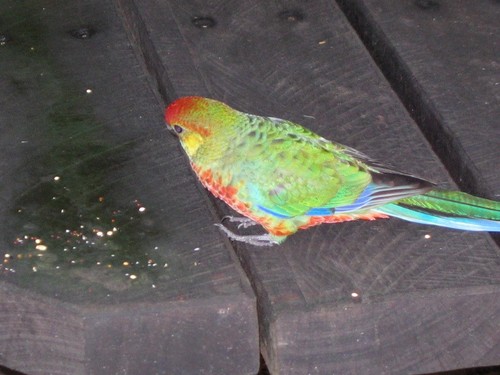
Western Rosella
25-30 cm (10-12 in) long
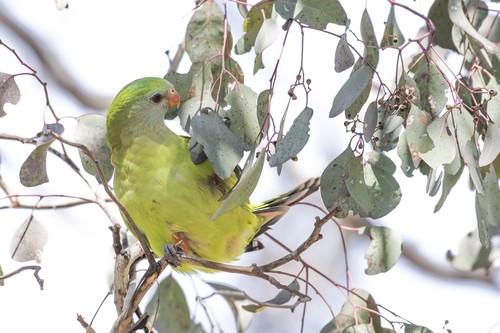
Superb Parrot
About 40 cm (16 in) long including a long tail
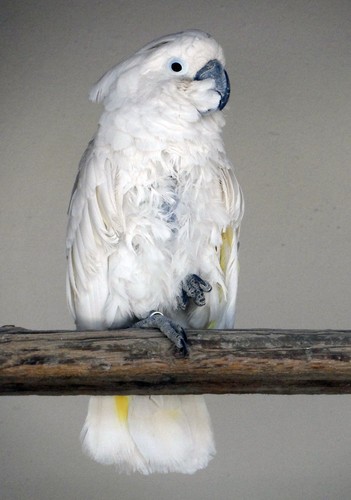
Umbrella Cockatoo
About 46 cm (18 in) long
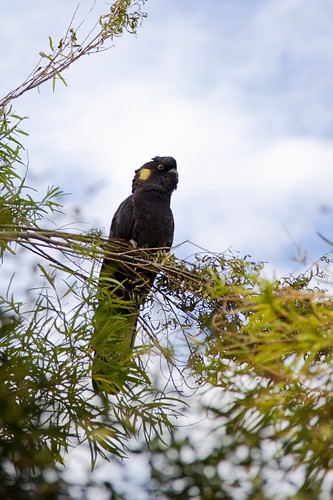
Yellow-tailed Black Cockatoo
55-65 cm long; wingspan up to about 130 cm
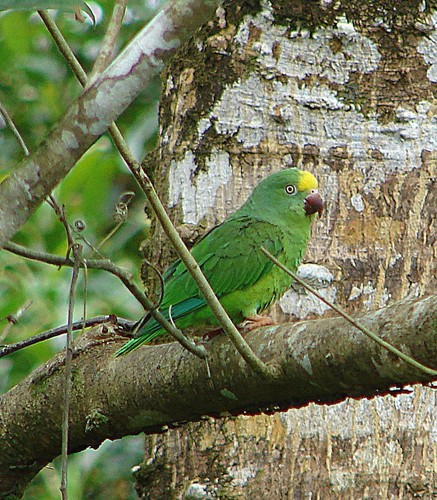
Yellow-crowned Amazon
About 35-38 cm (14-15 in) long
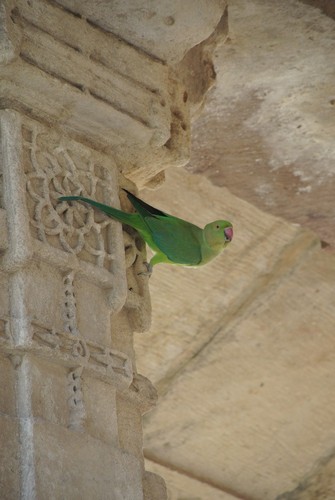
Rose-ringed Parakeet
40 cm (16 in) long including long tail
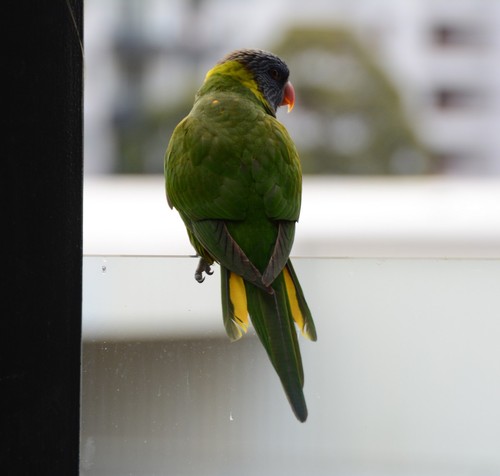
Rainbow Lorikeet
25-30 cm (10-12 in) long
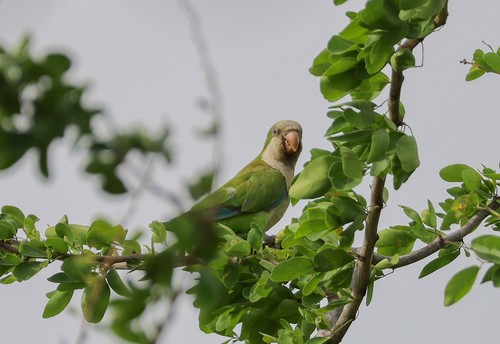
Quaker Parrot
28-31 cm (11-12 in) long
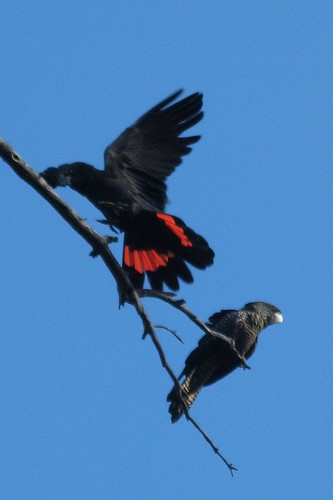
Red-tailed Black Cockatoo
55-65 cm long
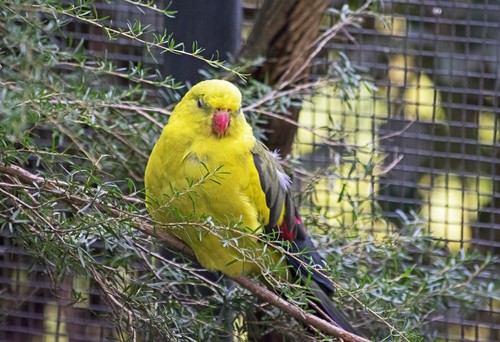
Regent Parrot
37-42 cm (15-17 in) long, including a long tail
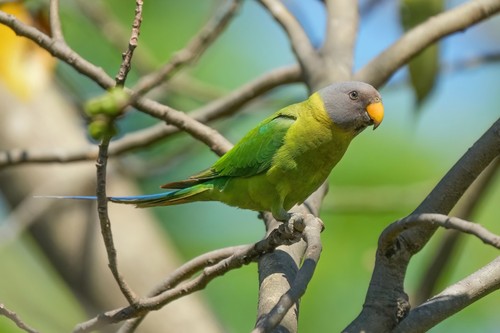
Plum-headed Parakeet
33 cm (13 in) long including tail