
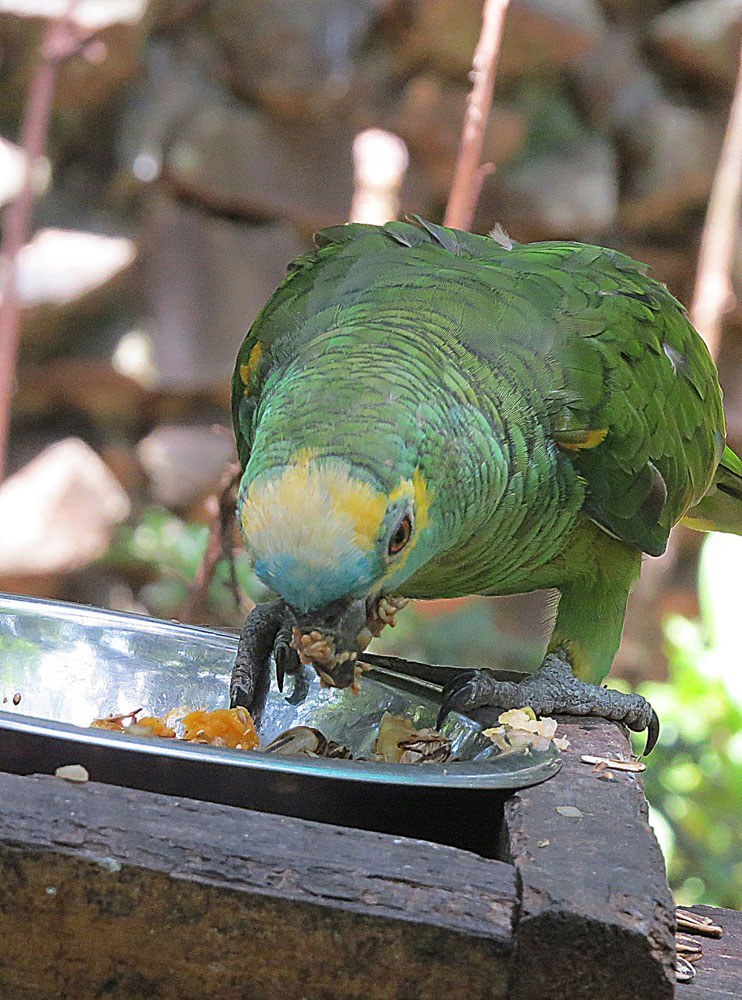
Blue-fronted Amazon
Amazona aestiva
A green Amazon parrot of central South America known for its bright blue forehead and variable yellow face.
- Size
- About 37 cm (14.5 in) long
- Habitat
- Dry deciduous forest, gallery forest, and palm savanna (cerrado) in central South America
- Type
- parrot
Spotted a bird like this?
Identify any bird from a photo, free.
Overview
The Blue-fronted Amazon, also called the Turquoise-fronted Amazon, is a robust, medium-sized parrot native to the dry forests and savannas of central South America. It is well known for its colorful facial pattern, which combines a blue forehead with a variably extensive yellow face.
Appearance
- Body: green overall with darker scalloped edging on the feathers
- Forehead: bright turquoise-blue patch
- Face and crown: yellow, with the extent varying by individual and subspecies
- Wing: red patch on the shoulder (alula) and sometimes red in the flight feathers, plus a band of blue in the wing
- Bill: horn-gray, strong and hooked
- Eyes: orange to red iris with a whitish eye-ring
Juveniles show duller colors with less blue and yellow on the head, which brighten with maturity.
How to identify it
Key field marks
- Blue forehead patch combined with yellow on the face and crown
- Red patch at the shoulder, often visible as a bright spot on the folded wing
- Green body with a stocky, short-tailed Amazon parrot shape
- Loud, frequent vocalizations from perched or flying birds
Similar species
- Yellow-crowned Amazon and Yellow-headed Amazon lack the blue forehead patch, showing yellow without the turquoise frontal marking.
- Orange-winged Amazon has blue on the crown rather than the forehead and an orange (not red) wing patch.
- Mealy Amazon is larger, paler, and lacks the blue-and-yellow facial pattern entirely.
The distinctive blue-over-yellow face pattern is the most reliable mark for separating this species from other Amazon parrots in its range.
Habitat & range
Range
The Blue-fronted Amazon is native to central South America, including much of Brazil, Bolivia, Paraguay, and northern Argentina.
Habitat
It favors dry, seasonal habitats such as deciduous woodland, gallery forest along rivers, palm savanna, and cerrado scrubland, generally avoiding dense humid rainforest.
Movements
The species is mostly sedentary, though flocks may move locally between feeding areas depending on the fruiting and flowering season, particularly in regions with a pronounced dry season.
Behavior & voice
Social behavior
Blue-fronted Amazons are usually found in pairs or small family groups, gathering into larger flocks at communal feeding and roosting sites, especially outside the breeding season.
Voice
Their vocal repertoire includes loud, harsh screeches and a variety of squawks and whistles; the species is well known for its strong mimicking ability among Amazon parrots.
Feeding
They feed in trees and shrubs on fruits, seeds, nuts, and blossoms, and may also visit agricultural areas where crops such as corn are available.
Nesting and breeding
Pairs nest in tree cavities, often high in large trees, laying a clutch of typically three to five eggs. Both parents share in incubation and feeding duties until the young fledge.
Frequently asked questions
What makes the Blue-fronted Amazon distinctive?
It has a bright turquoise-blue forehead combined with a yellow face and crown, plus a red patch at the shoulder, set against an otherwise green body.
Where does the Blue-fronted Amazon live?
It is native to central South America, including Brazil, Bolivia, Paraguay, and northern Argentina, favoring dry forest, gallery forest, and cerrado savanna.
Is the Blue-fronted Amazon endangered?
It is listed as Near Threatened by the IUCN, with populations affected by habitat loss and past trapping pressure.
What does a Blue-fronted Amazon eat?
It feeds mainly on fruits, seeds, nuts, and blossoms found in dry forest and savanna vegetation.
How can I distinguish a Blue-fronted Amazon from a Yellow-crowned Amazon?
The Blue-fronted Amazon has a turquoise-blue forehead patch in addition to yellow on the face, while the Yellow-crowned Amazon lacks any blue and shows only a yellow crown patch.
Blue-fronted Amazon guides
In-depth guides for identifying, finding, and understanding Blue-fronted Amazon.
Other birds you may enjoy
Eclectus Parrot
35-42 cm (14-16.5 in) long
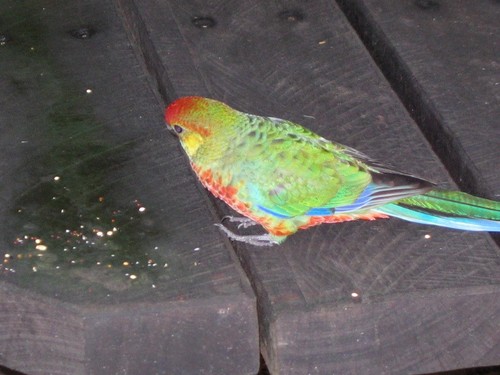
Western Rosella
25-30 cm (10-12 in) long
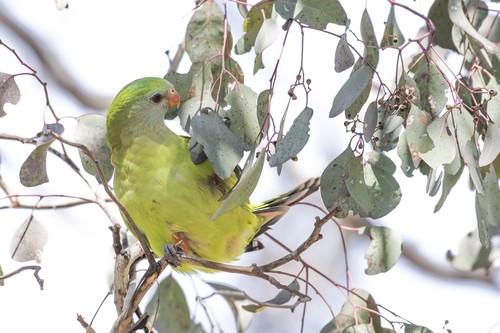
Superb Parrot
About 40 cm (16 in) long including a long tail
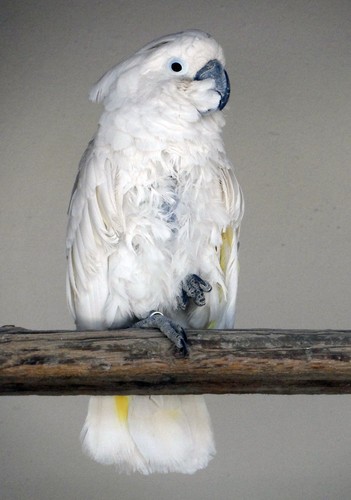
Umbrella Cockatoo
About 46 cm (18 in) long
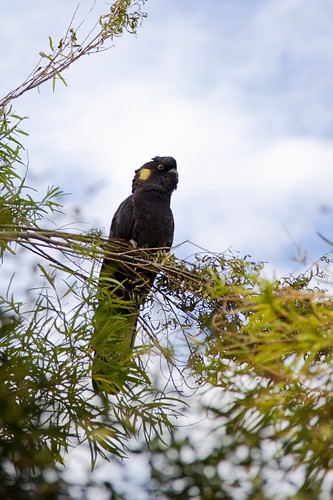
Yellow-tailed Black Cockatoo
55-65 cm long; wingspan up to about 130 cm
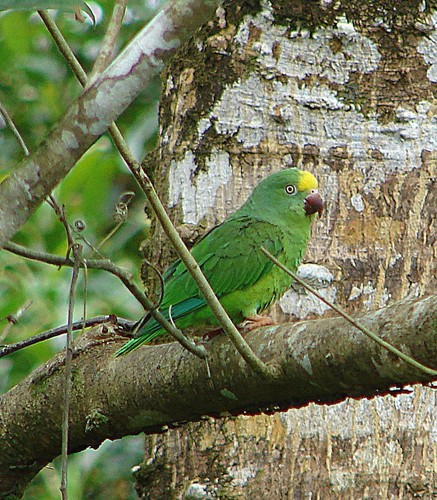
Yellow-crowned Amazon
About 35-38 cm (14-15 in) long
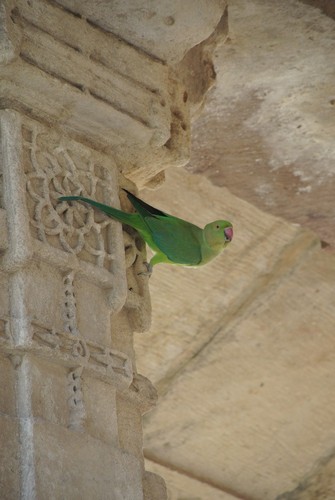
Rose-ringed Parakeet
40 cm (16 in) long including long tail
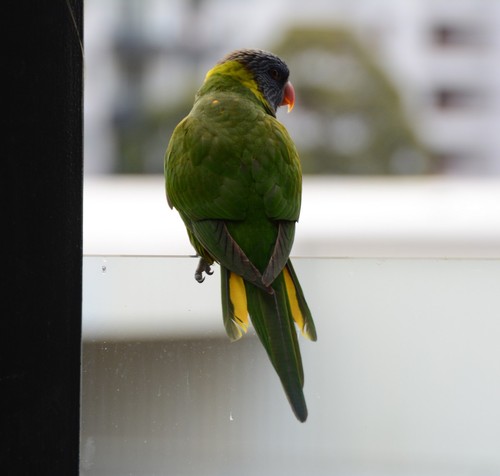
Rainbow Lorikeet
25-30 cm (10-12 in) long
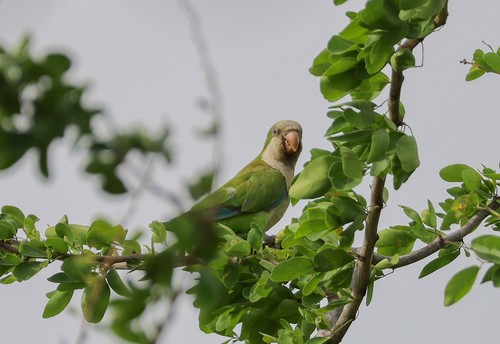
Quaker Parrot
28-31 cm (11-12 in) long
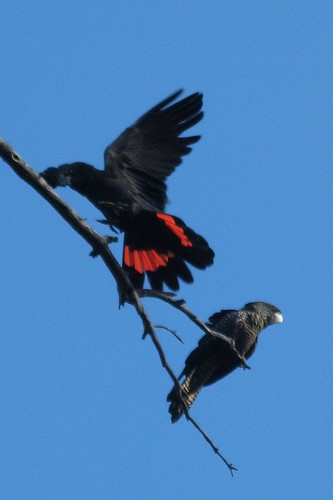
Red-tailed Black Cockatoo
55-65 cm long
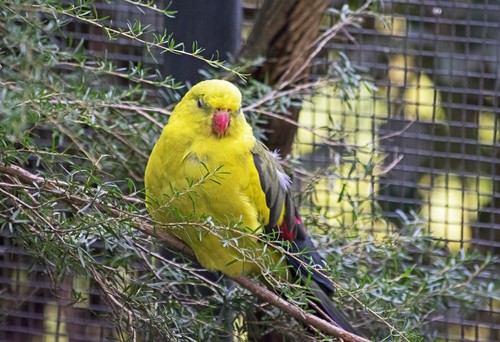
Regent Parrot
37-42 cm (15-17 in) long, including a long tail
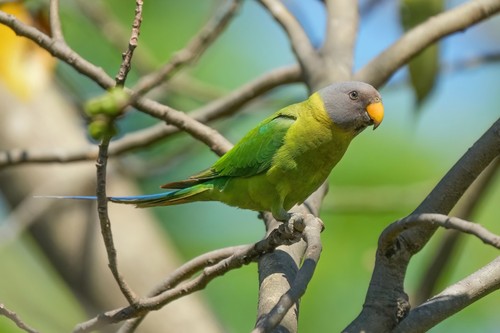
Plum-headed Parakeet
33 cm (13 in) long including tail