
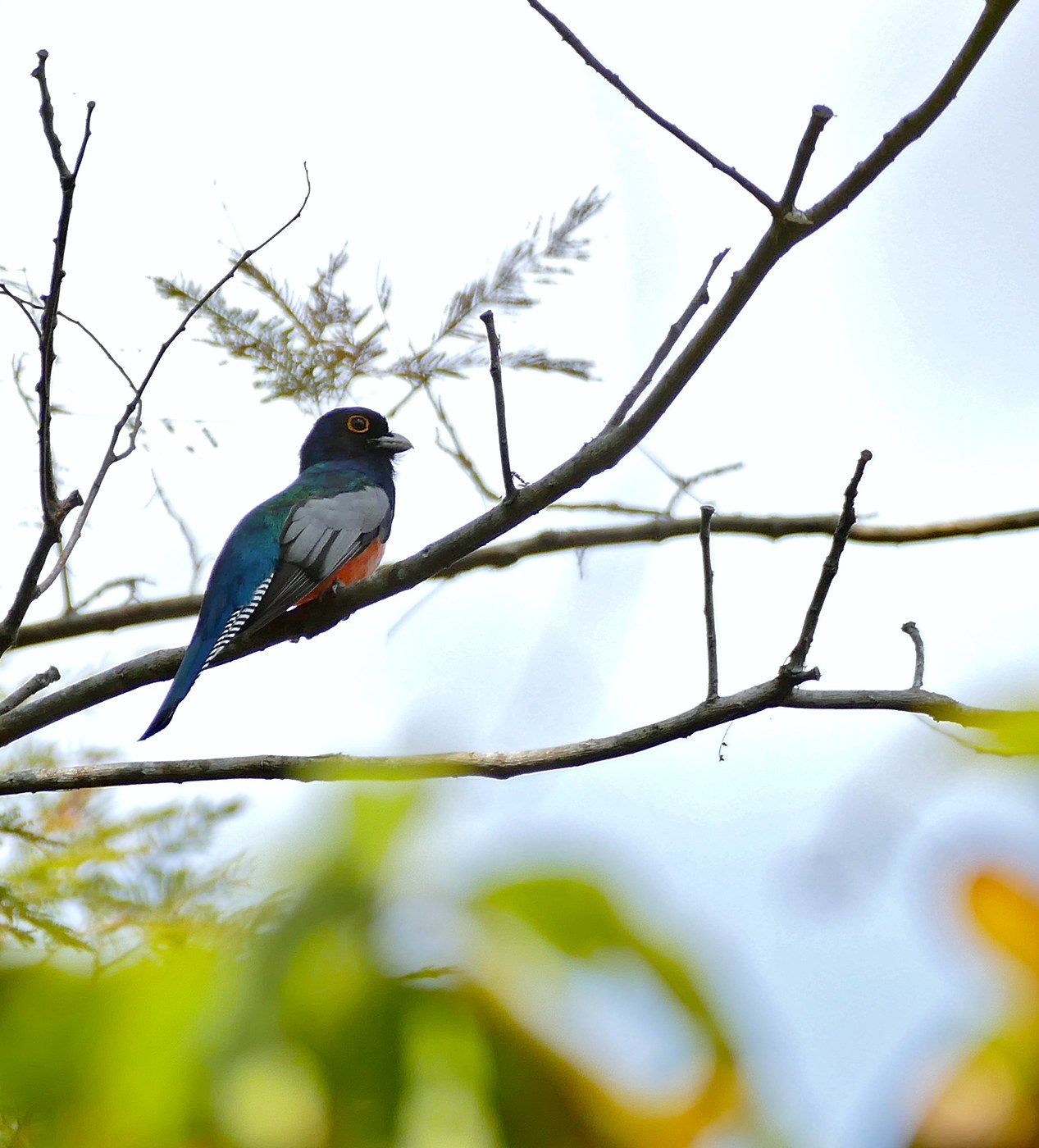
Blue-crowned Trogon
Trogon curucui
A South American trogon with a green head washed in blue on the crown, a black facial mask, and a yellow belly.
- Size
- 23-25 cm (9-10 in) long
- Habitat
- forest edge, gallery forest, and semi-open woodland
- Type
- other
Spotted a bird like this?
Identify any bird from a photo, free.
Overview
The Blue-crowned Trogon is a colorful, moderately sized trogon of central South America, closely related to the Gartered Trogon of Central America and once considered part of the same species complex. Males show a glossy green head and back with a subtle blue sheen concentrated on the crown, a black face mask, a green chest, and a bright yellow belly; the undertail is finely barred black-and-white, and a blue ring of bare skin surrounds the eye. Females are grayer overall with a white eye-ring or postocular spot, retaining the yellow belly.
How to identify it
Key field marks
- Male: green head with a blue-toned crown, black face mask, green chest, yellow belly, finely barred undertail, blue eye-ring.
- Female: grayer overall, yellow belly, whitish eye markings.
Similar species
Black-throated Trogon has a solid black throat rather than a green chest with just a facial mask, and lacks the blue crown sheen. Gartered Trogon (its Central American counterpart) is very similar but occurs in a largely separate range; the two were formerly considered conspecific.
Habitat & range
Blue-crowned Trogons inhabit forest edge, gallery forest, dry to semi-humid woodland, and secondary growth across central South America, including the southern Amazon fringe, the Cerrado and Chaco regions, and parts of Brazil, Bolivia, Paraguay, and northern Argentina. It is a non-migratory resident, generally found at lower elevations and tolerant of more open or seasonal woodland than many forest-interior trogons.
Behavior & voice
Voice
A soft series of clear, evenly spaced whistled notes, delivered from a perch, similar in structure to other trogons in its genus.
Feeding
It forages by sitting still and sallying out to pluck fruit or catch large insects in flight, returning to the same or a nearby perch, in typical trogon fashion.
Nesting and breeding
Pairs excavate a cavity in rotten wood or make use of an existing cavity, sometimes within an active termite or wasp nest, for their nest. Both parents share incubation and feeding of the young.
Frequently asked questions
How is Blue-crowned Trogon different from Black-throated Trogon?
Blue-crowned Trogon has a green chest and only a black facial mask (with a blue-toned crown), while Black-throated Trogon has a solid black throat and chest border.
Where is Blue-crowned Trogon found?
In forest edge, gallery forest, and semi-open woodland across central South America, including Brazil, Bolivia, Paraguay, and northern Argentina.
Is Blue-crowned Trogon related to Gartered Trogon?
Yes, the two were formerly considered the same species and remain very similar in appearance, but now are treated as separate species occupying largely different ranges.
What does it eat?
Fruit and large insects, caught by sallying from a perch.
Blue-crowned Trogon guides
In-depth guides for identifying, finding, and understanding Blue-crowned Trogon.
Other birds you may enjoy
Kiwi
35-55 cm (14-22 in) long; roughly chicken-sized
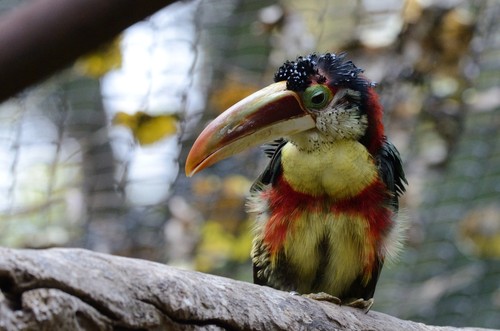
Curl-crested Aracari
41-46 cm (16-18 in) long, including a long bill and tail
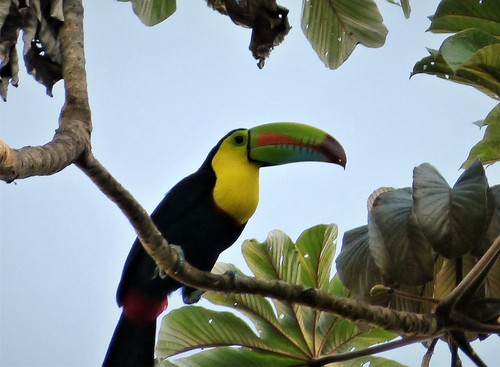
Keel-billed Toucan
42-55 cm (17-22 in) long including bill
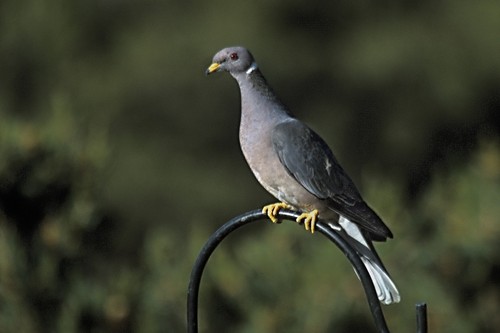
Band-tailed Pigeon
33-38 cm (13-15 in) long, wingspan about 66 cm (26 in)
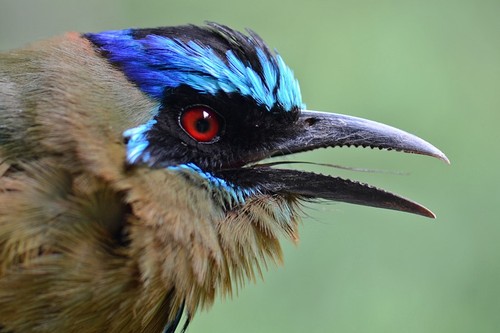
Blue-crowned Motmot
38-43 cm (15-17 in) long including tail
White-tipped Dove
27-30 cm (10.5-12 in) long, 38-43 cm wingspan
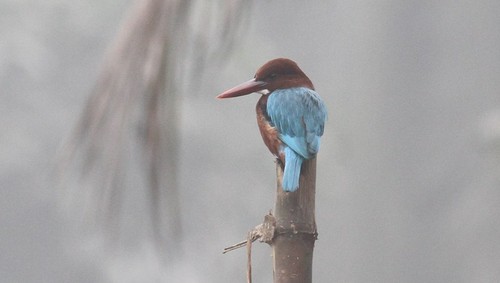
White-throated Kingfisher
27-28 cm (10.5-11 in) long
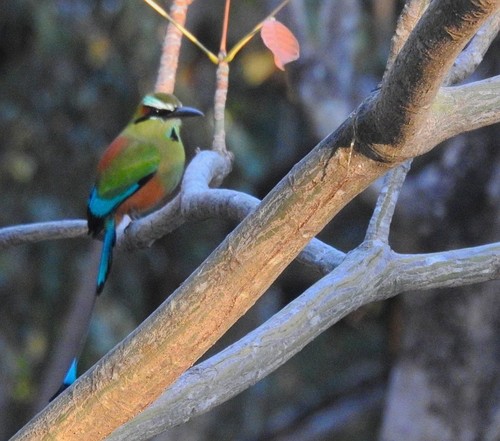
Turquoise-browed Motmot
34 cm (13 in) long including tail
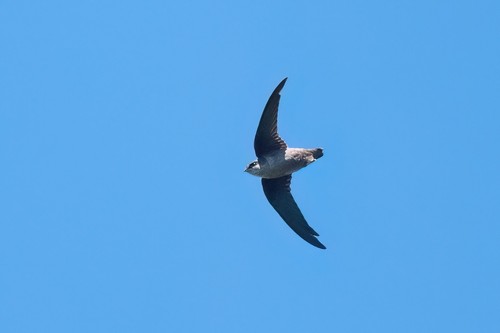
Vaux's Swift
10-12 cm (4-4.5 in) long, 27-30 cm wingspan
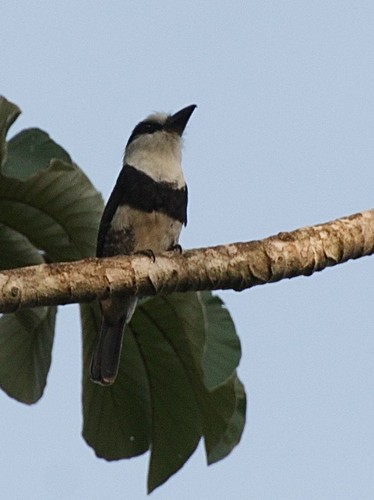
White-necked Puffbird
22-24 cm (8.5-9.5 in) long
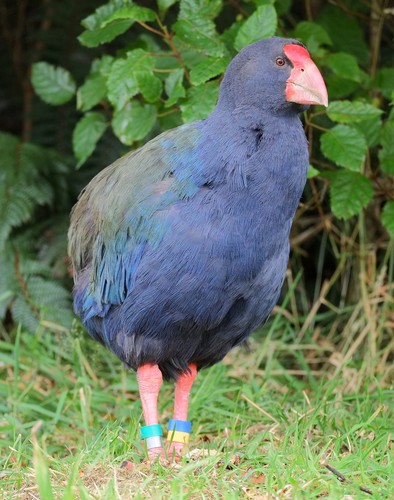
Takahe
50 cm (20 in) long, up to 3.5 kg; flightless
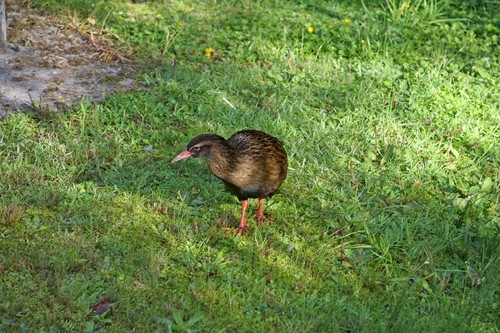
Weka
50-60 cm (20-24 in) long; flightless