
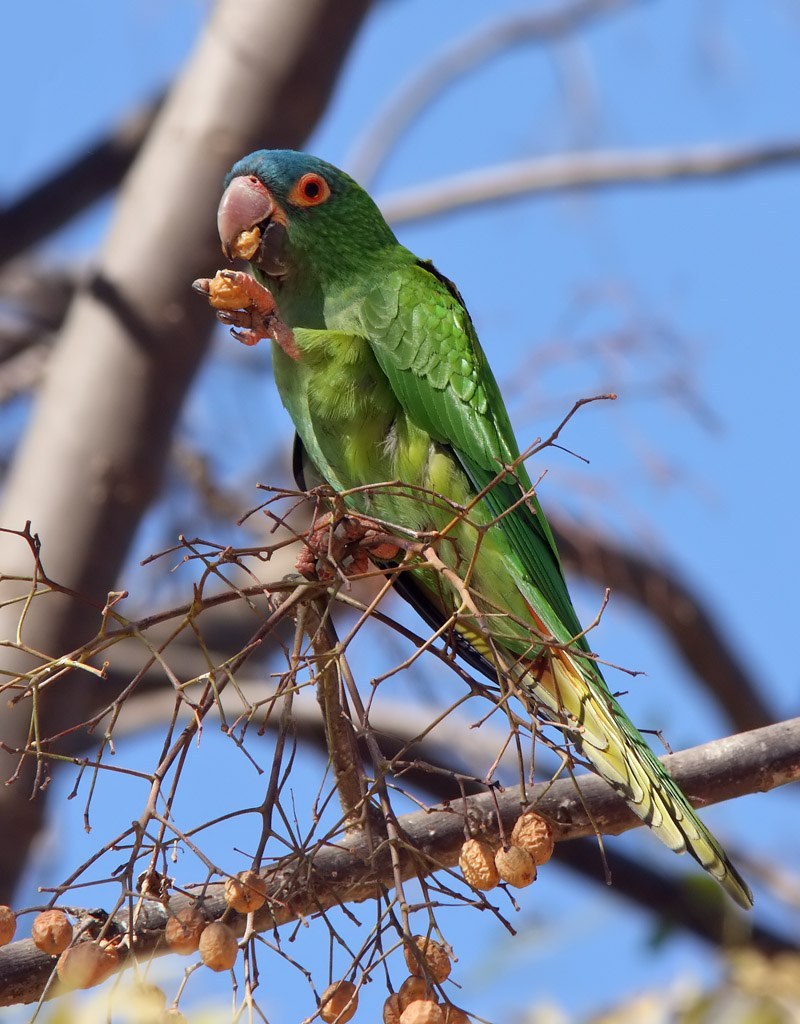
Blue-crowned Conure
Thectocercus acuticaudatus
A large, mostly green South American parakeet named for the pale blue wash across its forehead and crown.
- Size
- Around 35–38 cm long including a long pointed tail
- Habitat
- Dry woodland, savanna, palm groves, and scrubland
- Type
- parrot
Spotted a bird like this?
Identify any bird from a photo, free.
Overview
The Blue-crowned Conure, also known as the Blue-crowned Parakeet, is a sizeable South American parakeet with predominantly bright green plumage set off by a distinctive powder-blue crown and forehead that fades into the green of the nape.
Appearance
- Overall green body plumage, slightly paler and yellower on the underparts
- Pale to deep sky-blue forehead and crown, the feature that gives the species its name
- Long, pointed tail tipped with a maroon-brown wash
- Pale, horn-colored bill and a bare whitish eye-ring
How to identify it
Key field marks
- Blue wash restricted to the forehead and crown, rather than covering the whole head
- Long, sharply pointed tail, longer in proportion than many other conures
- Pale bill and whitish eye-ring standing out against the green face
Similar species
The Green-cheeked Conure is much smaller with a dark maroon tail and scalloped grey chest, lacking any blue crown. Mitred and Red-masked Parakeets show extensive red on the head rather than blue. The Nanday Conure has a solid black hood covering the entire head rather than a blue patch limited to the crown.
Habitat & range
Range
Widely distributed across central South America, including parts of Colombia, Venezuela, Bolivia, Paraguay, Brazil, Uruguay, and northern Argentina, with a disjunct population in Colombia's Caribbean lowlands.
Habitat
Inhabits dry woodland, cerrado savanna, palm groves, and scrubby forest edge, generally favoring open or semi-open habitats over dense rainforest; it is largely sedentary but may wander locally for food.
Behavior & voice
Behavior
Gregarious and often seen in noisy flocks that can number from a dozen to over a hundred birds, particularly outside the breeding season.
Voice
Gives loud, harsh, screeching calls typical of larger conures, often given in flight and at communal roosts.
Feeding
Forages in trees and on the ground for seeds, fruit, berries, and blossoms, and will feed on cultivated crops such as maize and sorghum near farmland.
Nesting and breeding
Nests in tree cavities and sometimes in arboreal termite mounds, laying a clutch of several white eggs that the female incubates.
Frequently asked questions
Why is it called the Blue-crowned Conure?
It gets its name from the pale blue feathering that covers its forehead and crown, contrasting with its otherwise green plumage.
Where do Blue-crowned Conures live in the wild?
They are native to central South America, found in dry woodland and savanna habitats across Bolivia, Paraguay, Brazil, Argentina, and parts of Colombia and Venezuela.
How can you tell a Blue-crowned Conure from a Green-cheeked Conure?
The Blue-crowned Conure is much larger with a blue crown and long pointed maroon-tipped tail, while the Green-cheeked Conure is small with a grey scalloped chest and no blue on the head.
What do Blue-crowned Conures eat?
They feed on seeds, fruit, berries, and blossoms, and will also forage on cultivated grain near farmland.
Blue-crowned Conure guides
In-depth guides for identifying, finding, and understanding Blue-crowned Conure.
Other birds you may enjoy
Eclectus Parrot
35-42 cm (14-16.5 in) long
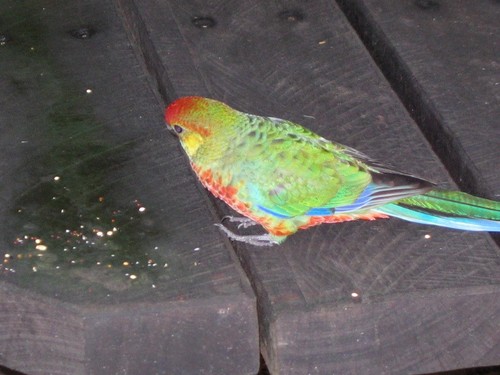
Western Rosella
25-30 cm (10-12 in) long
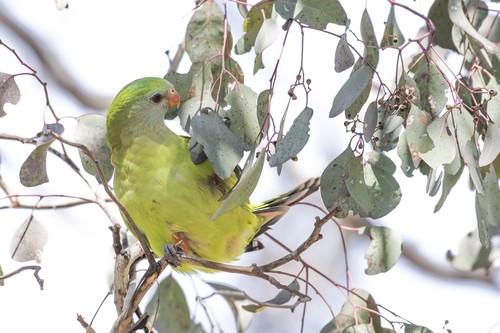
Superb Parrot
About 40 cm (16 in) long including a long tail
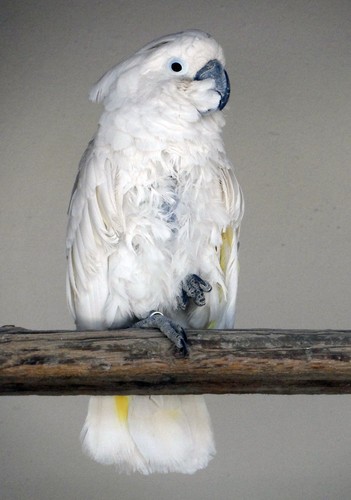
Umbrella Cockatoo
About 46 cm (18 in) long
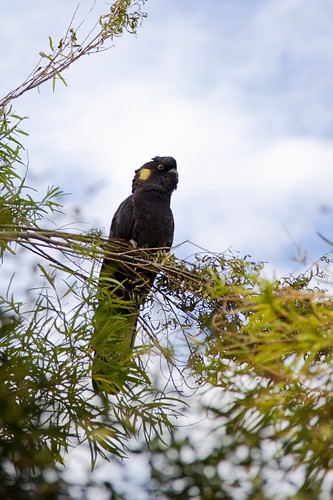
Yellow-tailed Black Cockatoo
55-65 cm long; wingspan up to about 130 cm
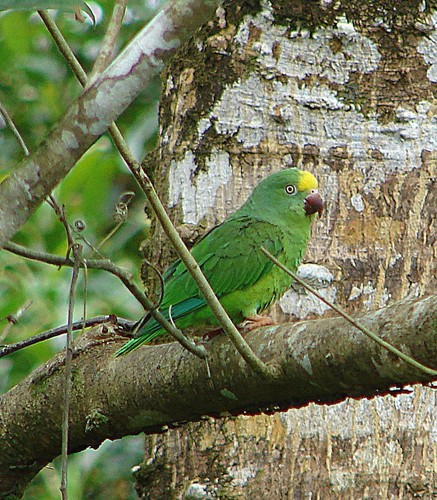
Yellow-crowned Amazon
About 35-38 cm (14-15 in) long
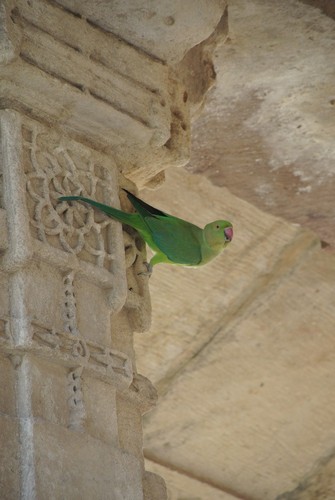
Rose-ringed Parakeet
40 cm (16 in) long including long tail
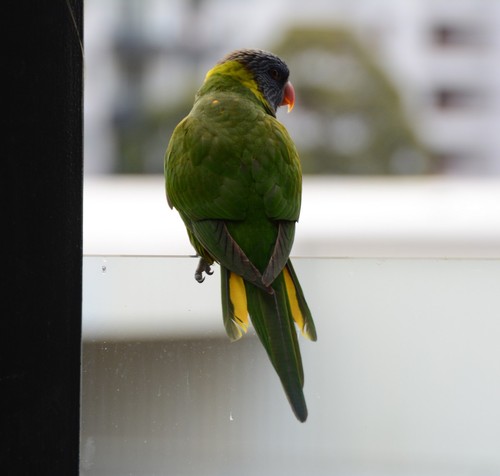
Rainbow Lorikeet
25-30 cm (10-12 in) long
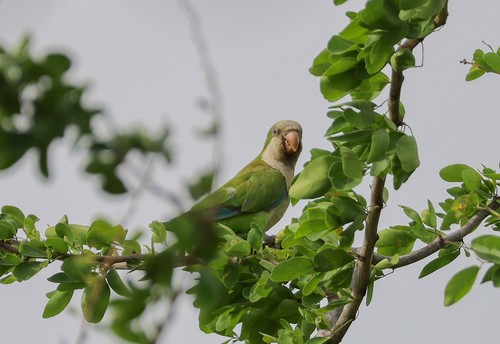
Quaker Parrot
28-31 cm (11-12 in) long
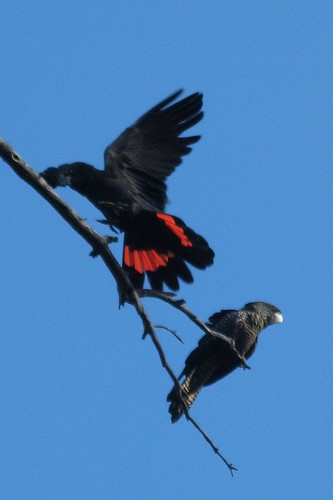
Red-tailed Black Cockatoo
55-65 cm long
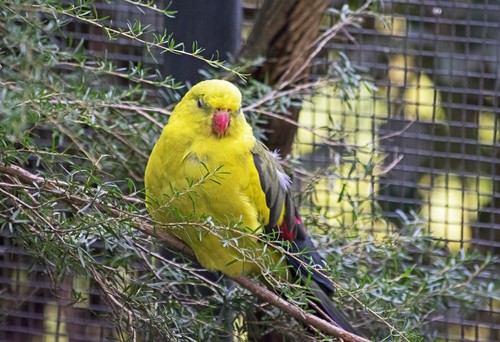
Regent Parrot
37-42 cm (15-17 in) long, including a long tail
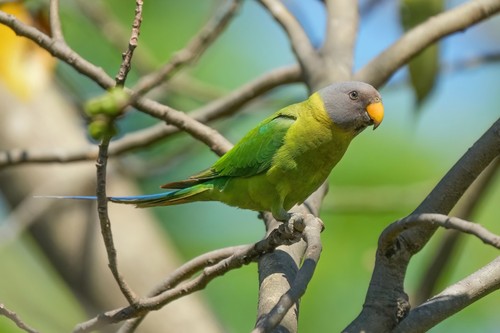
Plum-headed Parakeet
33 cm (13 in) long including tail