
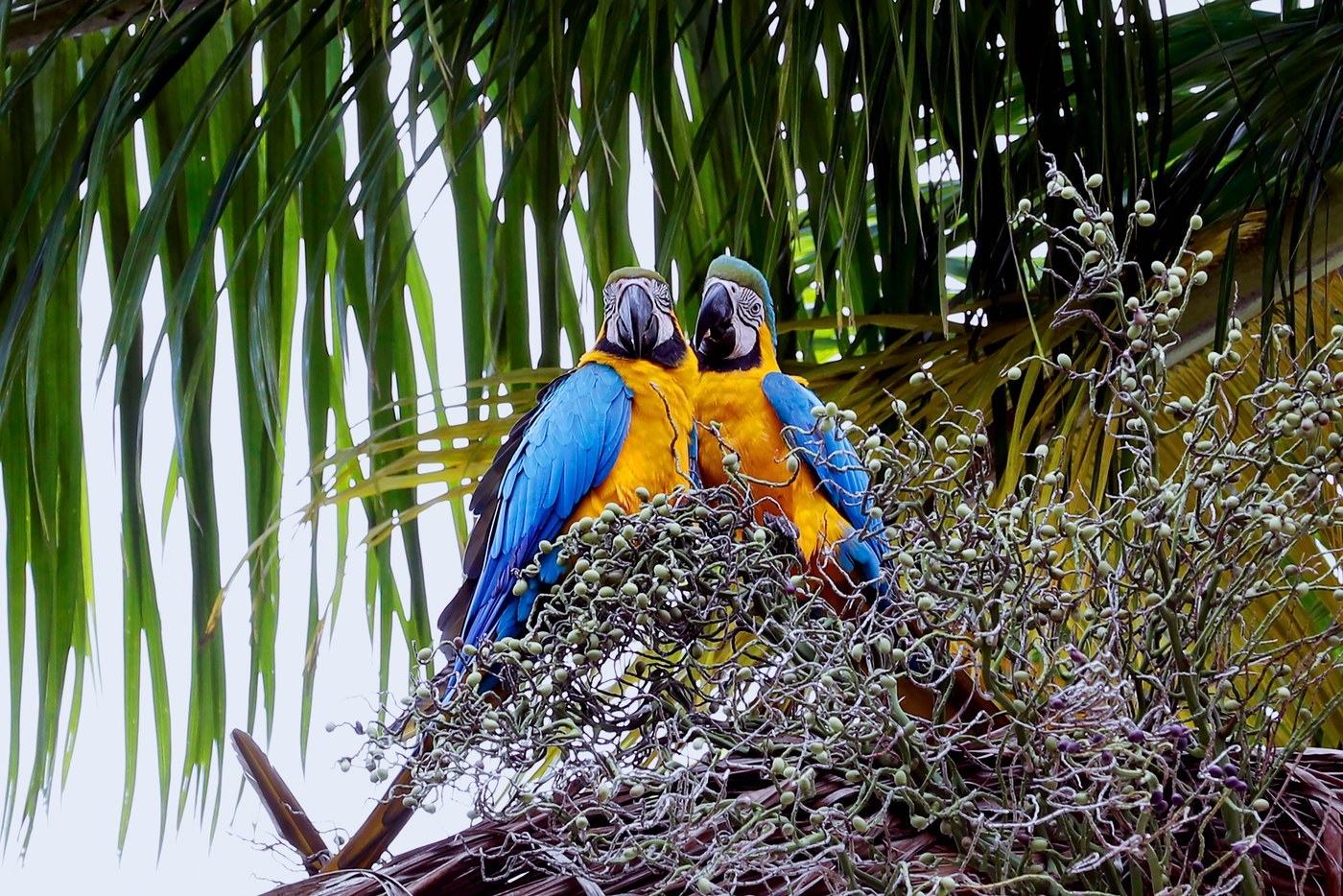
Blue-and-yellow Macaw
Ara ararauna
A large macaw with vivid sky-blue upperparts and golden-yellow underparts, found across much of tropical Central and South America.
- Size
- 76-86 cm (30-34 in) long including tail; wingspan approx. 100-114 cm
- Habitat
- Tropical lowland forest, gallery forest, and palm swamps
- Type
- parrot
Spotted a bird like this?
Identify any bird from a photo, free.
Overview
The Blue-and-yellow Macaw is one of the most recognizable parrots in the world, a large, long-tailed macaw of Neotropical lowland forests. It is widespread and relatively common across much of its extensive range.
The upperparts, wings, and long tail are a rich turquoise-blue, while the underparts, underwing, and undertail are bright golden-yellow. The face has bare white skin marked with lines of small dark feathers, framing a black chin and throat, and the crown is green. The heavy black bill is well suited to cracking hard palm nuts.
How to identify it
Key field marks
- Blue back, wings, and tail contrasting sharply with yellow underparts
- Bare white facial skin with fine dark feather lines
- Black chin patch and large black bill
- Long, pointed blue tail
Similar species
No other widespread macaw combines blue upperparts with yellow underparts, making this species largely unmistakable within its range. It differs from the Blue-throated Macaw, a rare and geographically restricted species, by having a black rather than blue throat and much broader facial feather lines.
Habitat & range
Range
The Blue-and-yellow Macaw occurs from Panama through much of tropical South America east of the Andes, including the Amazon Basin, and locally in Trinidad.
Habitat
It favors humid lowland forest, forest edge, gallery forest along rivers, and swampy areas with stands of Mauritia and other palms, whose fruit is a key food source.
Movements
Generally non-migratory, though pairs and flocks make regular daily flights between roosting sites and feeding areas, and may shift locally to track fruiting palms.
Behavior & voice
Social behavior
Blue-and-yellow Macaws are usually seen in pairs or small family groups, sometimes gathering in larger flocks at communal roosts, feeding areas, or clay licks where they ingest mineral-rich soil.
Voice
Calls are loud, harsh, and far-carrying, including deep growling squawks and screeches given in flight and at the roost.
Feeding
They feed in the canopy on a wide variety of fruits, nuts, and seeds, using their powerful bill to crack open hard palm nuts other animals cannot access, and often use one foot to hold food.
Nesting and breeding
Pairs nest in large tree cavities, often in dead palms, laying clutches of 2-3 eggs. Macaws form strong, long-term pair bonds and mates often stay in close contact, perching side by side and allopreening.
Frequently asked questions
How can you identify a Blue-and-yellow Macaw?
Look for blue upperparts and wings paired with golden-yellow underparts, a black chin, and bare white facial skin marked with thin dark feather lines.
What do Blue-and-yellow Macaws eat in the wild?
They primarily eat fruits, nuts, and seeds, including hard palm nuts that they crack open with their powerful bill.
Where do Blue-and-yellow Macaws live?
They range across tropical Central and South America, favoring humid lowland forest, gallery forest, and palm swamps.
Why do macaws visit clay licks?
Macaws and other parrots visit exposed riverbank clay to ingest minerals and clay that may help buffer toxins found in some unripe or seed foods.
Do Blue-and-yellow Macaws mate for life?
Yes, they form strong, long-term pair bonds and are usually seen together year-round.
Blue-and-yellow Macaw guides
In-depth guides for identifying, finding, and understanding Blue-and-yellow Macaw.
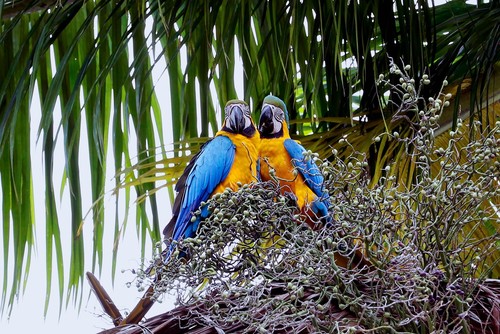
Blue-and-yellow Macaw identified by the community
Real birds identified with Bird Identifier.
Other birds you may enjoy
Eclectus Parrot
35-42 cm (14-16.5 in) long
Western Rosella
25-30 cm (10-12 in) long
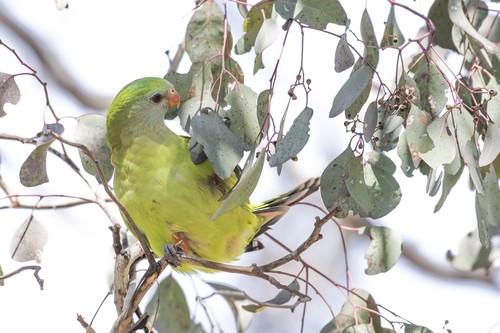
Superb Parrot
About 40 cm (16 in) long including a long tail
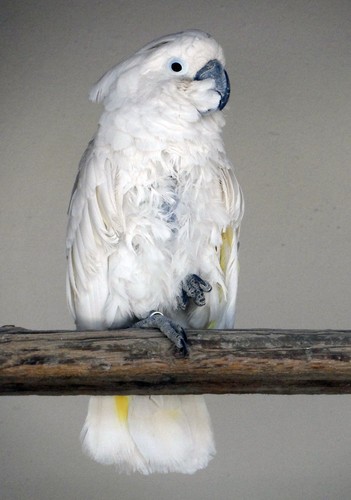
Umbrella Cockatoo
About 46 cm (18 in) long
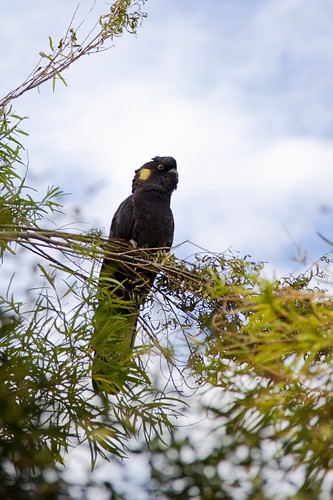
Yellow-tailed Black Cockatoo
55-65 cm long; wingspan up to about 130 cm
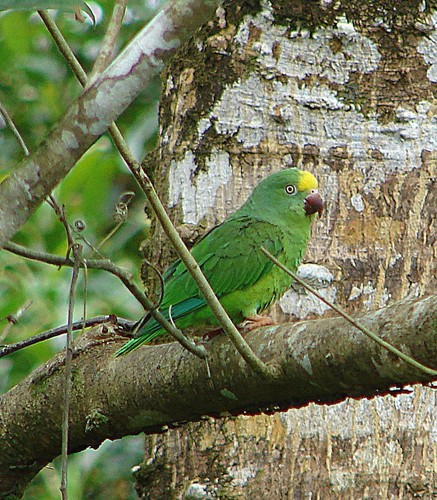
Yellow-crowned Amazon
About 35-38 cm (14-15 in) long
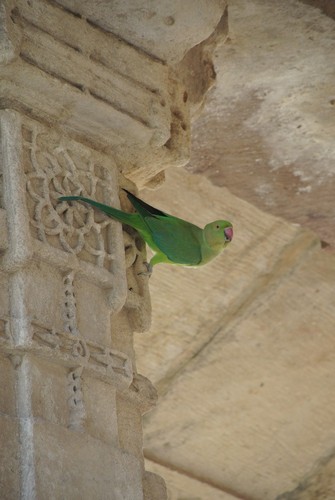
Rose-ringed Parakeet
40 cm (16 in) long including long tail
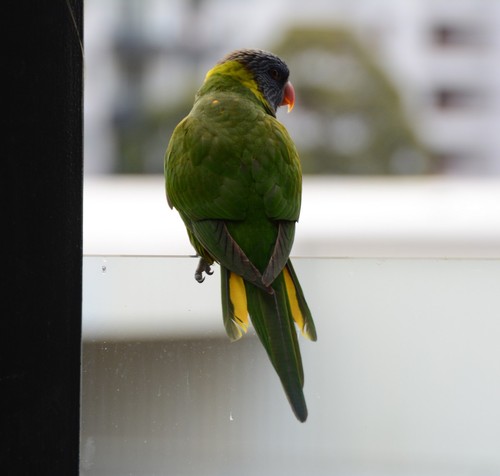
Rainbow Lorikeet
25-30 cm (10-12 in) long
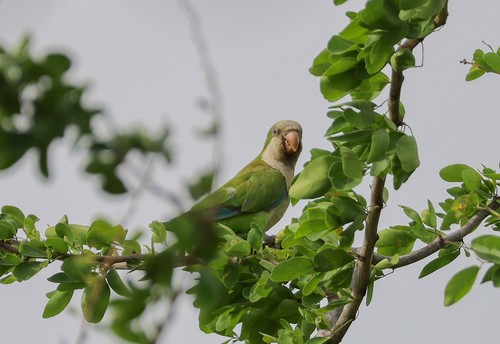
Quaker Parrot
28-31 cm (11-12 in) long
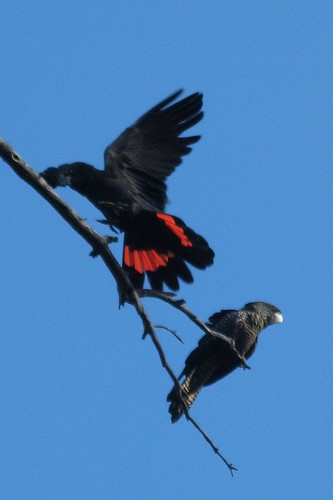
Red-tailed Black Cockatoo
55-65 cm long
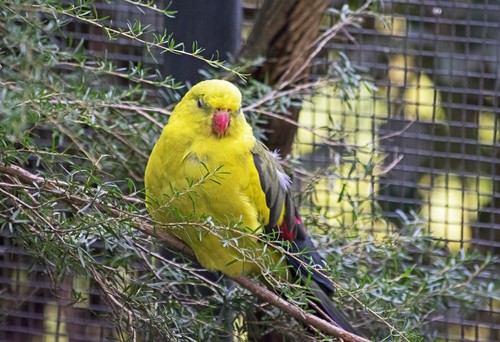
Regent Parrot
37-42 cm (15-17 in) long, including a long tail
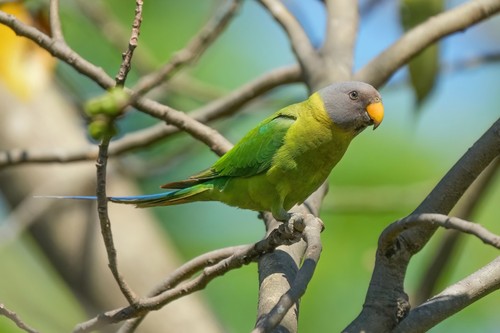
Plum-headed Parakeet
33 cm (13 in) long including tail