Blue-and-yellow Macaw Identification Guide
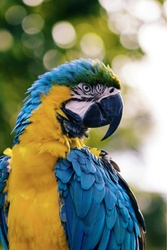
One of the largest and most familiar South American parrots, easily known by its vivid blue back and golden-yellow underparts.
Read the full Blue-and-yellow Macaw encyclopedia entry →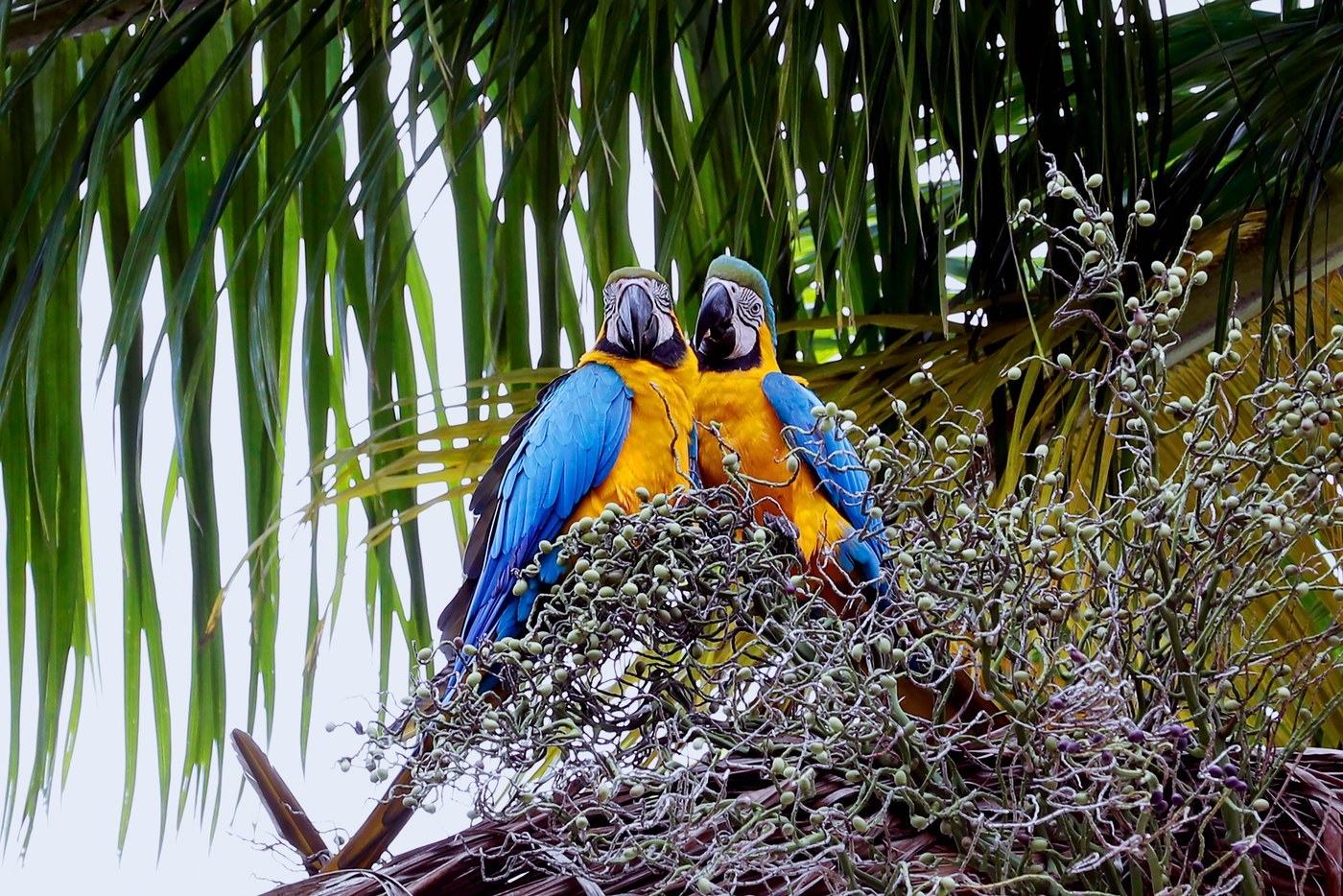
Key Field Marks
- Size & shape: A very large macaw, roughly 76–86 cm long including a long, pointed, graduated tail — one of the bigger parrots in its range, with powerful flight on broad wings.
- Plumage: Bright blue upperparts (crown, back, wings, and tail) contrast with vivid golden-yellow underparts (throat, breast, and belly); a green patch on the forehead; a black chin/throat patch.
- Face: Large area of bare white facial skin patterned with fine lines of small black feathers — unique among the macaws for the extent of this bare white face.
- Bill: Large, strongly hooked, black bill built for cracking hard palm nuts and seeds.
Separating It from Similar Species
- Blue-throated Macaw is smaller, shows a more turquoise (less deep) blue, has a wider expanse of bare facial skin, and — most usefully — has a blue (not black) throat patch.
- Military Macaw is mostly green, not blue and yellow, ruling out confusion at a glance.
- No other widespread macaw combines this exact blue-above/yellow-below pattern with the black chin patch, making adults essentially unmistakable within range.
Where & When to See It
- Range: Lowland tropical South America, from Panama south through the Amazon basin to Bolivia, Brazil, and Paraguay; also found in Trinidad.
- Habitat: Humid lowland forest, forest edge, and especially palm swamps and gallery forest near rivers and wetlands — moriche palm stands are a favored habitat and food source.
- Season: A non-migratory resident throughout its range; a year-round bird wherever it occurs, though pairs may travel to different feeding areas seasonally as fruit and palm nuts ripen.
Behavior & Voice
- Typically seen in pairs or small family groups, sometimes gathering in larger numbers at productive fruiting trees or clay licks.
- Flies with slow, deliberate wingbeats, often high above the canopy, and is highly vocal both at rest and in flight.
- Voice: loud, raucous squawks, harsh screeches, and a distinctive rolling "raaah" call, especially given by pairs flying together.
Frequently asked questions
How do you tell a Blue-and-yellow Macaw from a Blue-throated Macaw?
Blue-throated Macaw is smaller and more turquoise, with a wider bare facial patch and a blue throat, whereas Blue-and-yellow Macaw has a deeper blue back and a black throat patch.
What habitat does the Blue-and-yellow Macaw prefer?
Lowland tropical forest, forest edge, and especially palm swamps and gallery forest near rivers, where moriche palms provide key food resources.
Is the Blue-and-yellow Macaw migratory?
No, it is a non-migratory resident, though pairs and flocks move locally to track fruiting trees and palm nut availability.
What does the Blue-and-yellow Macaw sound like?
It gives loud, raucous squawks and harsh, rolling screeches, especially audible when pairs fly together high over the forest canopy.
Blue-and-yellow Macaw identified by the community
Recent Blue-and-yellow Macaw sightings identified with Bird Identifier.