
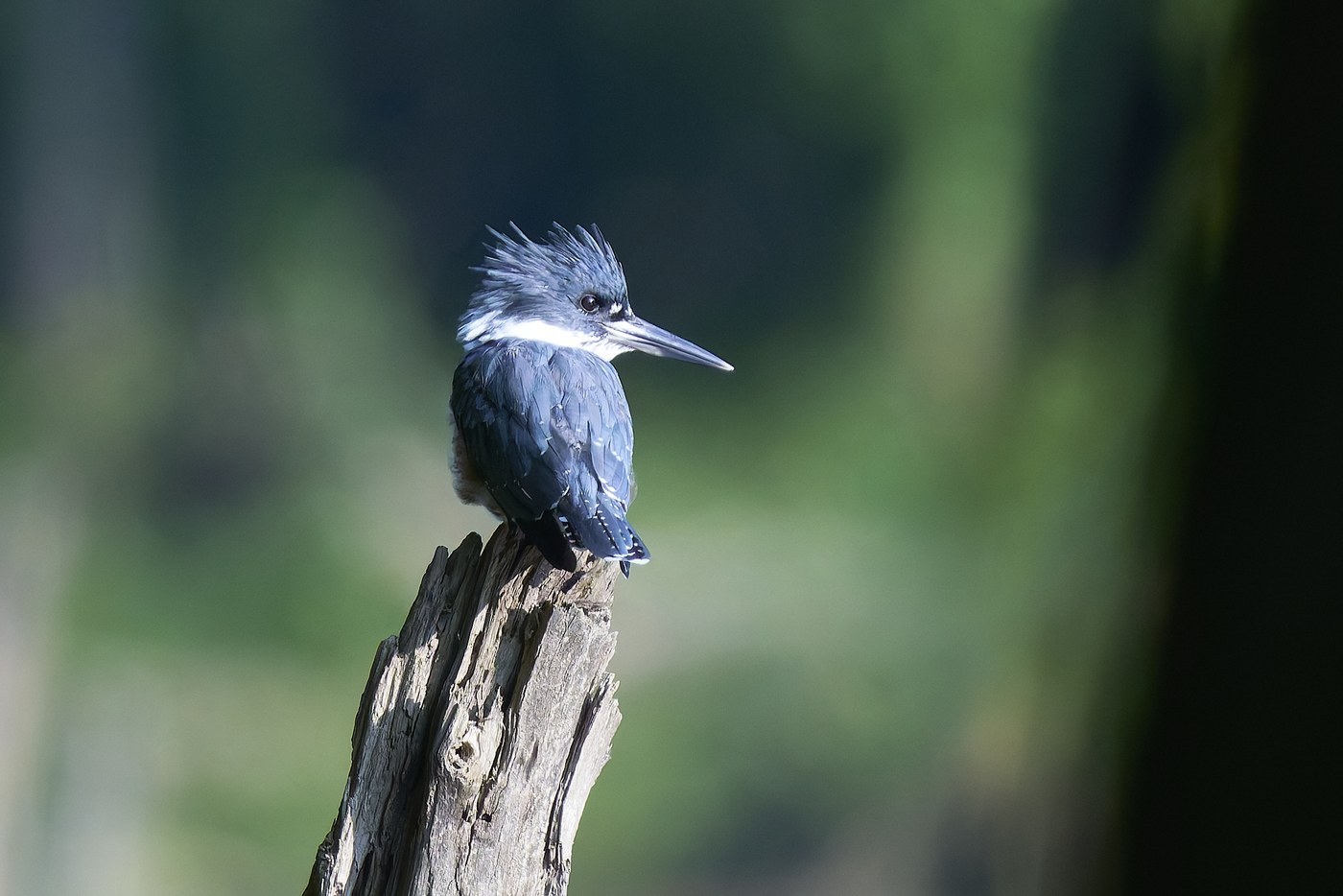
Belted Kingfisher
Megaceryle alcyon
A large, shaggy-crested, rattling-voiced kingfisher of North American waterways, in which the female is more colorful than the male.
- Size
- 28-35 cm (11-14 in) long, 48-58 cm wingspan
- Habitat
- rivers, lakes, ponds, and coastlines
- Type
- other
Spotted a bird like this?
Identify any bird from a photo, free.
Overview
The Belted Kingfisher is a stocky, large-headed bird with a shaggy blue-gray crest and a heavy, dagger-like bill, commonly seen perched on wires or branches overlooking water, or hovering before plunging headfirst after fish. Both sexes have a blue-gray back and a broad blue-gray breast band across an otherwise white underside, but the female is unusual among North American birds in being more colorful than the male, sporting an additional rufous band across the belly that the male lacks.
How to identify it
Key Field Marks
- Large head with a shaggy, ragged blue-gray crest
- Heavy, straight, dagger-shaped bill
- Blue-gray upperparts and a blue-gray breast band across white underparts
- Female shows an additional rufous (reddish-brown) band across the belly, absent in males — unusual reverse coloration
Similar Species
- Ringed Kingfisher is considerably larger with the entire underside washed rufous-chestnut, not just a band.
- Green Kingfisher is much smaller with dark green upperparts and white spotting, lacking the shaggy blue-gray crest.
Habitat & range
Habitat
Belted Kingfishers are found along a wide variety of waterways, including rivers, streams, lakes, ponds, marshes, and coastal estuaries, wherever there is clear water for spotting prey and suitable perches or banks nearby.
Range
They breed across nearly all of North America, from Alaska and Canada south through the United States.
Migration
Most populations in the northern part of the range migrate south in winter to areas where water remains unfrozen, while populations in milder regions may remain resident year-round.
Behavior & voice
Behavior
Belted Kingfishers are solitary and territorial, often seen perched prominently over water or hovering in place before diving to catch prey; their flight is strong and somewhat undulating.
Voice
The species gives a loud, harsh, rattling call, often uttered in flight, that is one of the most distinctive sounds along North American waterways.
Feeding
They hunt primarily by watching from a perch or hovering over water, then plunge-diving headfirst to catch small fish, crayfish, and other aquatic invertebrates in their bill.
Nesting
Unusually among North American birds, Belted Kingfishers excavate long horizontal burrows, sometimes over a meter deep, into earthen banks near water, where the female lays her eggs at the end of the tunnel.
Frequently asked questions
Why is the female Belted Kingfisher more colorful than the male?
This is an example of reverse sexual dichromatism; the female has an extra rufous band across her belly that the male lacks, making her the more colorful sex, which is unusual among North American birds.
Where do Belted Kingfishers nest?
They excavate long burrows into earthen banks near water, sometimes extending more than a meter into the soil, with a nesting chamber at the far end.
What does a Belted Kingfisher eat?
It feeds mainly on small fish, along with crayfish and other aquatic invertebrates, caught by diving headfirst from a perch or while hovering over water.
What does a Belted Kingfisher sound like?
It gives a loud, harsh, rattling call, often given while flying along a waterway, which is one of the most recognizable sounds near rivers and lakes.
Belted Kingfisher guides
In-depth guides for identifying, finding, and understanding Belted Kingfisher.
Other birds you may enjoy
Kiwi
35-55 cm (14-22 in) long; roughly chicken-sized
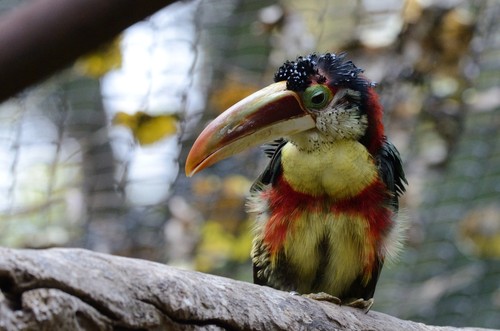
Curl-crested Aracari
41-46 cm (16-18 in) long, including a long bill and tail
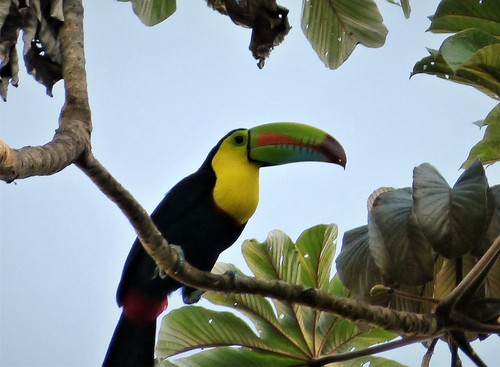
Keel-billed Toucan
42-55 cm (17-22 in) long including bill
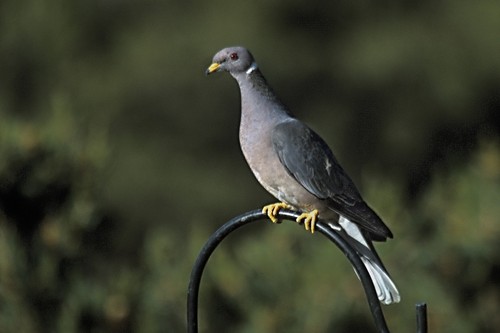
Band-tailed Pigeon
33-38 cm (13-15 in) long, wingspan about 66 cm (26 in)
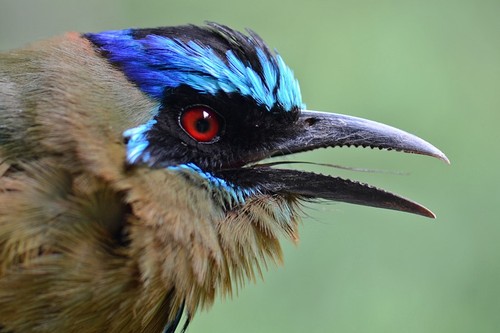
Blue-crowned Motmot
38-43 cm (15-17 in) long including tail
White-tipped Dove
27-30 cm (10.5-12 in) long, 38-43 cm wingspan
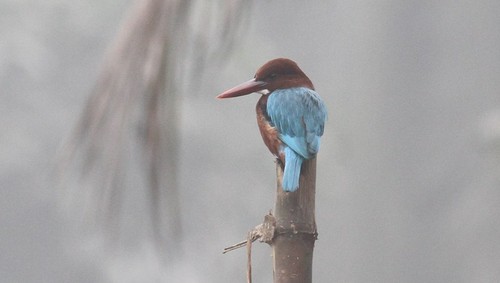
White-throated Kingfisher
27-28 cm (10.5-11 in) long
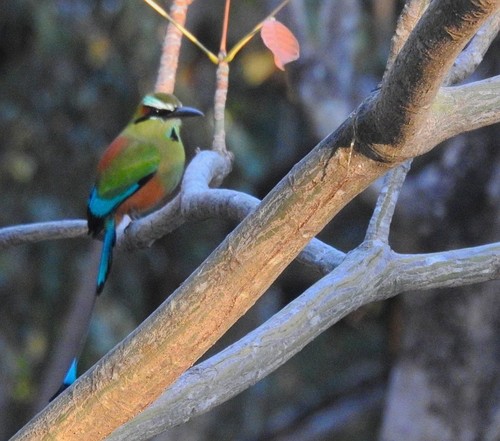
Turquoise-browed Motmot
34 cm (13 in) long including tail
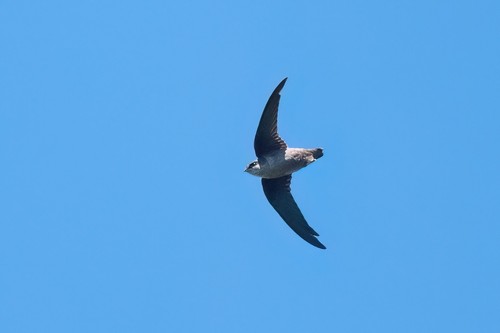
Vaux's Swift
10-12 cm (4-4.5 in) long, 27-30 cm wingspan
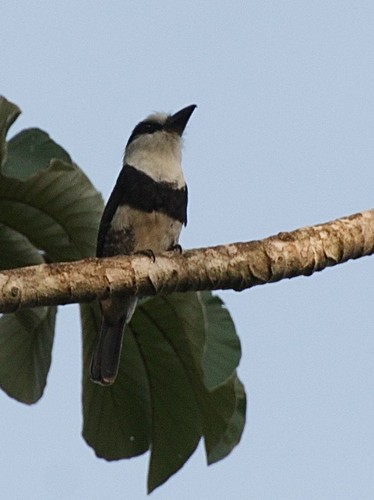
White-necked Puffbird
22-24 cm (8.5-9.5 in) long
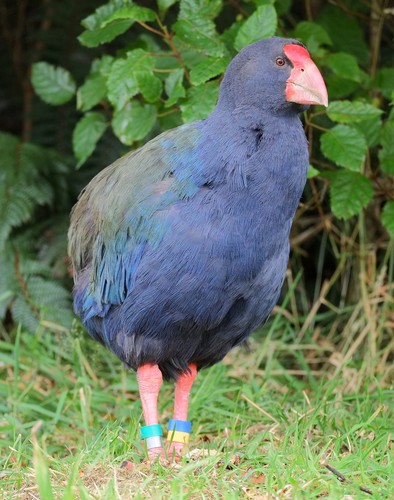
Takahe
50 cm (20 in) long, up to 3.5 kg; flightless
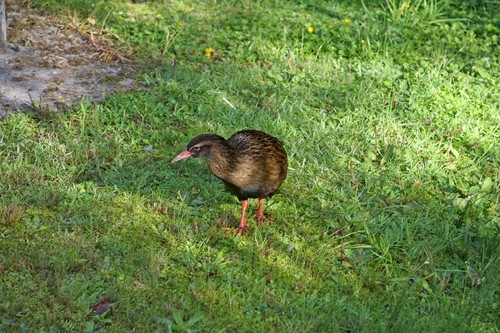
Weka
50-60 cm (20-24 in) long; flightless