
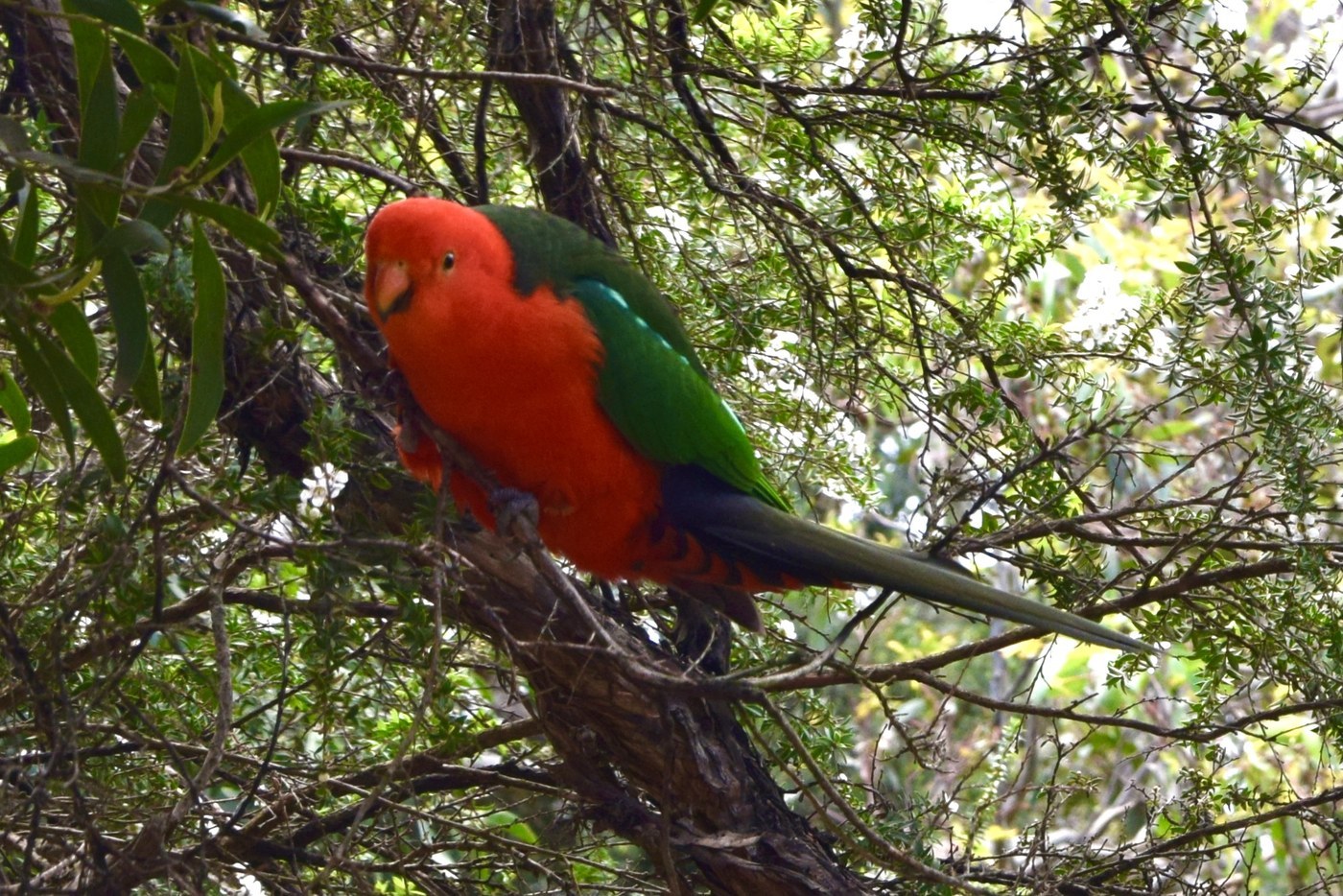
Australian King Parrot
Alisterus scapularis
A large, long-tailed parrot of eastern Australian forests, with males sporting a brilliant scarlet head and underparts against a green back.
- Size
- 40-43 cm (16-17 in) long, including a long tail
- Habitat
- rainforest, wet eucalypt forest, and forested gardens along the east coast of Australia
- Type
- parrot
Spotted a bird like this?
Identify any bird from a photo, free.
Overview
The Australian King Parrot is a large, elegant parrot with a notably long tail, found through the forests of eastern Australia. Males are strikingly bicolored, with an all-red head, neck, and underparts contrasting sharply against a green back, wings, and tail. Females are more subdued, with an entirely green head and breast, though they retain a red lower belly and undertail.
Both sexes have a distinctive pale blue-green rump patch and a slender, mostly dark bill (males show a red-orange upper mandible). Their unhurried, deliberate movements through the forest canopy and willingness to feed in the open make them a popular and readily observed species across their range.
How to identify it
Key field marks
- Large size with a long, broad tail
- Males: solid red head and underparts, green back and wings
- Females: green head and breast, red lower belly/undertail only
- Pale blue-green rump patch in both sexes
- Red-orange upper mandible in adult males
Similar species
There are no closely similar species within its range; the combination of size, long tail, and red/green plumage pattern is distinctive. Young males resemble females but gradually acquire the red head and neck with age.
Habitat & range
Habitat
Australian King Parrots favor rainforest, wet eucalypt forest, and densely vegetated gullies, but also visit adjoining farmland, orchards, and forested suburban gardens to feed.
Range
The species is found along the eastern coast and ranges of Australia, from far north Queensland through New South Wales to eastern Victoria.
Migration
Mostly sedentary, though some altitudinal movement occurs, with birds descending from higher forests to lower, warmer areas during winter.
Behavior & voice
Behavior
King Parrots are often seen in pairs or small family groups, moving with slow, deliberate hops along branches, and can become quite tame around picnic areas and gardens where food is available.
Voice
The flight call is a sharp, ringing "crassak-crassak," while a softer, more musical piping is used between perched birds.
Feeding
They feed on native and introduced seeds, fruits, nuts, and blossoms, foraging both in the canopy and occasionally on the ground, often holding food items in one foot.
Nesting and breeding
Nests are placed in deep, often very tall tree hollows, sometimes low inside a hollow trunk close to the ground. Clutches usually number three to six white eggs, incubated by the female alone for about three weeks, with chicks fledging roughly five weeks after hatching.
Frequently asked questions
How do you tell male and female King Parrots apart?
Males have an entirely red head and underparts, while females have a green head and breast with red restricted to the lower belly and undertail.
Where do Australian King Parrots live?
They inhabit rainforest and wet eucalypt forest along the east coast of Australia, from far north Queensland to eastern Victoria.
What do King Parrots eat?
Mainly seeds, fruits, nuts, and blossoms, foraged in trees and occasionally on the ground.
Are King Parrots easy to see?
Yes, they are often quite confiding, especially in forested picnic areas and gardens where they will approach for food.
Australian King Parrot guides
In-depth guides for identifying, finding, and understanding Australian King Parrot.
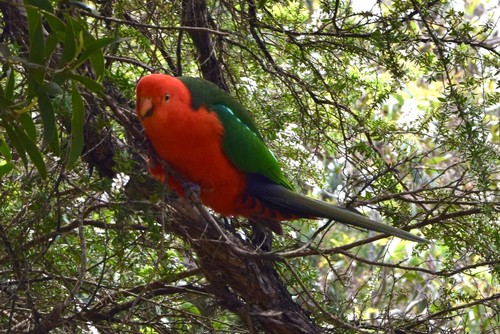
Other birds you may enjoy
Eclectus Parrot
35-42 cm (14-16.5 in) long
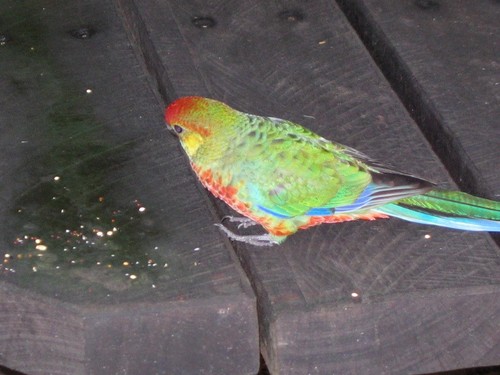
Western Rosella
25-30 cm (10-12 in) long
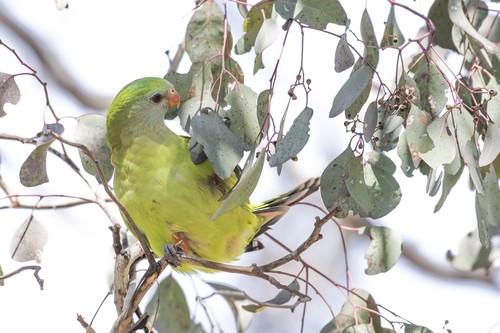
Superb Parrot
About 40 cm (16 in) long including a long tail
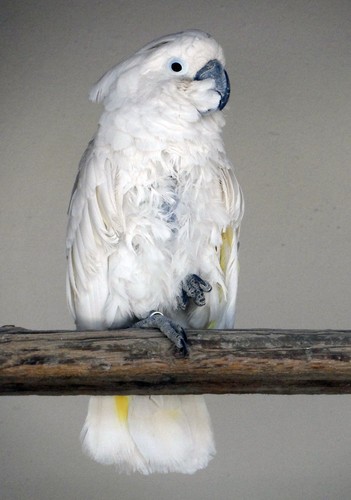
Umbrella Cockatoo
About 46 cm (18 in) long
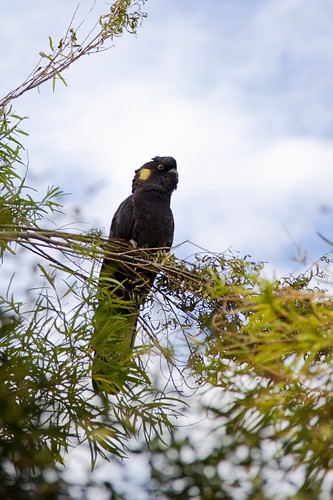
Yellow-tailed Black Cockatoo
55-65 cm long; wingspan up to about 130 cm
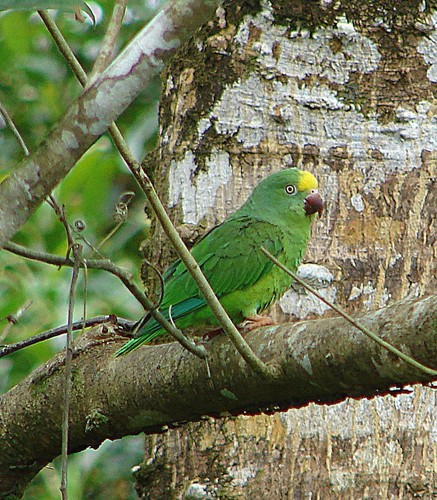
Yellow-crowned Amazon
About 35-38 cm (14-15 in) long
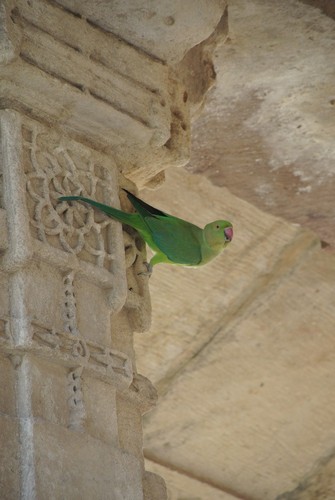
Rose-ringed Parakeet
40 cm (16 in) long including long tail
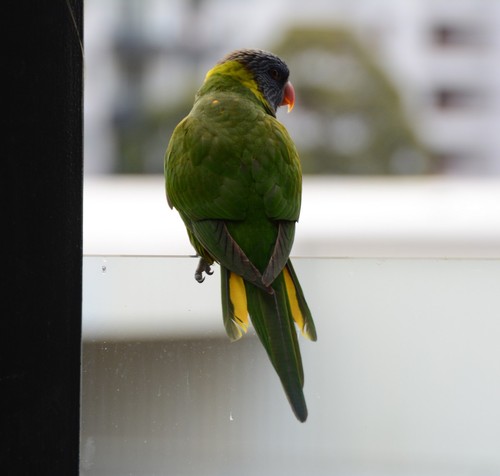
Rainbow Lorikeet
25-30 cm (10-12 in) long
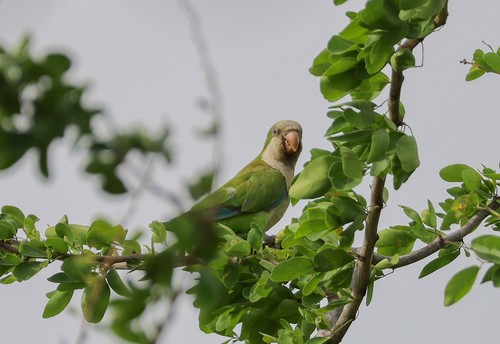
Quaker Parrot
28-31 cm (11-12 in) long
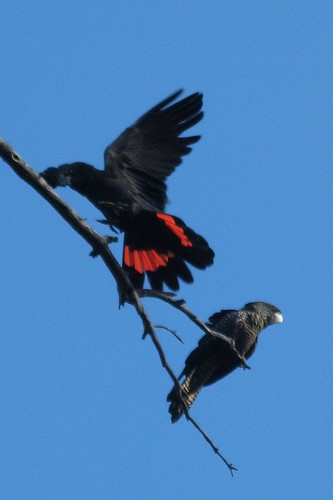
Red-tailed Black Cockatoo
55-65 cm long
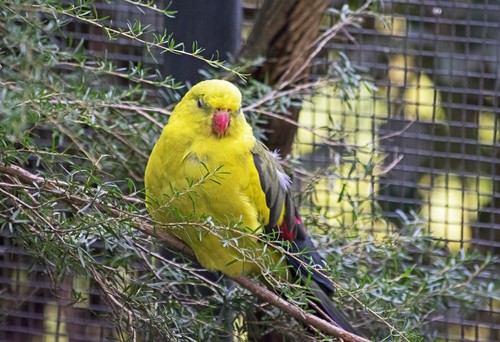
Regent Parrot
37-42 cm (15-17 in) long, including a long tail
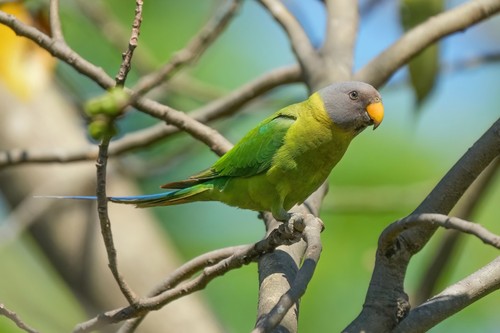
Plum-headed Parakeet
33 cm (13 in) long including tail