
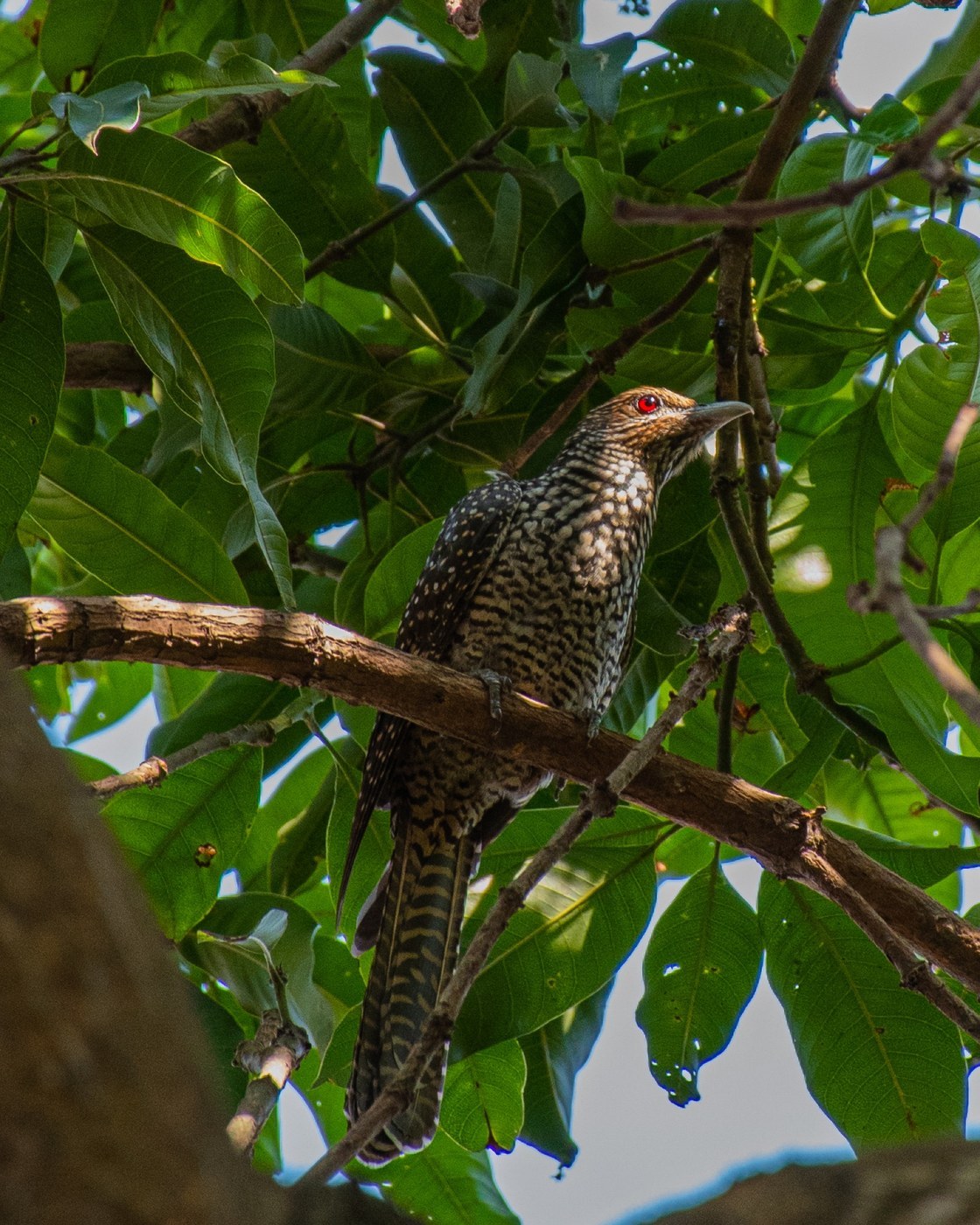
Asian Koel
Eudynamys scolopaceus
A large, red-eyed cuckoo whose loud, rising 'ko-el' call announces the arrival of spring and summer across South Asian towns.
- Size
- 39-46 cm (15-18 in) long
- Habitat
- wooded gardens, open forest, and urban areas with trees across South and Southeast Asia
- Type
- other
Spotted a bird like this?
Identify any bird from a photo, free.
Overview
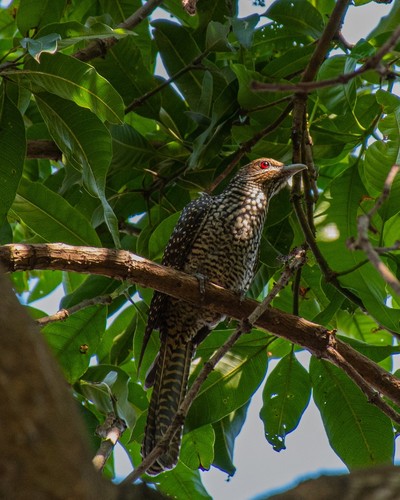
The Asian Koel is a large, long-tailed member of the cuckoo family, far better known by its loud, insistent voice than by sight, since it often stays hidden in dense foliage. The male is glossy blue-black overall with striking crimson-red eyes and a pale greenish-grey bill, while the female is dramatically different: dark brown above liberally spotted with white, and barred and streaked below, providing effective camouflage.
Like many cuckoos, the Asian Koel is a brood parasite, laying its eggs in the nests of crows, which then unwittingly raise the koel chicks, often at the expense of their own young. The male's persistent, rising "ko-el" call, repeated with increasing intensity, is one of the most recognizable sounds of the South Asian pre-monsoon season.
How to identify it
Key field marks
- Male: entirely glossy blue-black plumage, bright red eyes, pale bill
- Female: dark brown above with white spots, buff below with dark streaking and barring
- Long tail; slim, elongated cuckoo shape
- Usually detected by voice before being seen, staying within leafy canopy
Similar species
Male Asian Koels can superficially suggest a crow at a glance, but are slimmer, longer-tailed, and have red (not dark) eyes. The Greater Coucal is larger, has chestnut wings and a heavier build, and does not share the koel's parasitic breeding or loud repeated call.
Habitat & range
Asian Koels range across the Indian subcontinent, Sri Lanka, Bangladesh, and through Southeast Asia into southern China, Indonesia, and parts of Australia. They favor wooded gardens, open forest, groves, and urban areas with sufficient tree cover, often near crow populations that serve as their primary host species.
Some populations are resident while others show partial migratory movements, with numbers increasing in many areas during the breeding season.
Behavior & voice
Voice
The male's far-carrying, repeated "ko-EL, ko-EL" call rises in pitch and intensity and is a signature sound of the pre-monsoon and summer months across South Asia; females give a sharp, chattering "kik-kik-kik" call.
Feeding
Asian Koels feed largely on fruit and berries, especially figs, supplemented with insects and caterpillars, distinguishing their diet from the more insectivorous habits of many other cuckoos.
Nesting and breeding
The species is an obligate brood parasite, with females stealthily laying eggs in the nests of House Crows and Jungle Crows, sometimes after a pair of koels distracts the host crows. The koel chick often hatches and grows quickly, being raised entirely by the unwitting crow foster parents.
Frequently asked questions
Why does the Asian Koel not build its own nest?
It is a brood parasite, laying its eggs in the nests of crows, which then raise the koel chicks as their own.
Why do male and female Asian Koels look so different?
The male is glossy all-black with red eyes, while the female is brown and heavily spotted with white, an example of strong sexual dimorphism in the species.
What does the Asian Koel's call sound like?
A loud, repeated, rising 'ko-el' call from the male, often heard well before the bird is seen, especially in the pre-monsoon season.
What do Asian Koels eat?
Mainly fruit and berries, particularly figs, along with insects and caterpillars.
Asian Koel guides
In-depth guides for identifying, finding, and understanding Asian Koel.
Other birds you may enjoy
Kiwi
35-55 cm (14-22 in) long; roughly chicken-sized
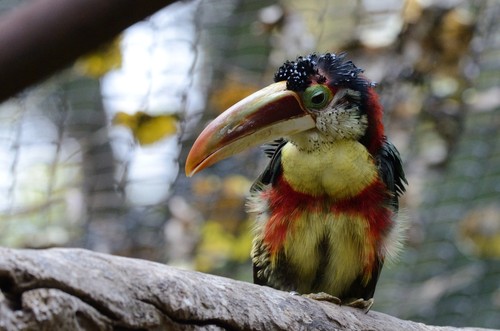
Curl-crested Aracari
41-46 cm (16-18 in) long, including a long bill and tail
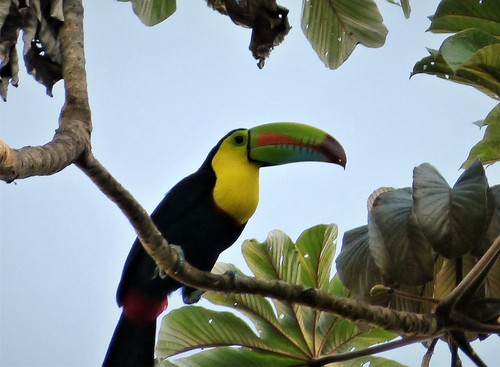
Keel-billed Toucan
42-55 cm (17-22 in) long including bill
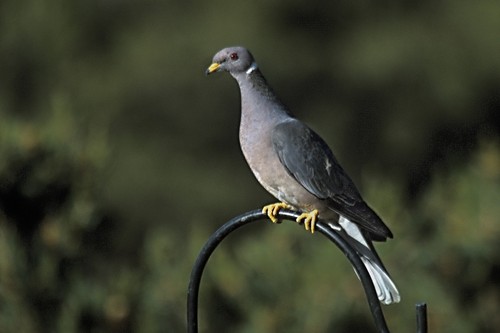
Band-tailed Pigeon
33-38 cm (13-15 in) long, wingspan about 66 cm (26 in)
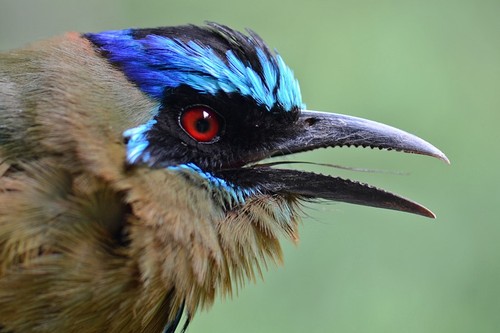
Blue-crowned Motmot
38-43 cm (15-17 in) long including tail
White-tipped Dove
27-30 cm (10.5-12 in) long, 38-43 cm wingspan
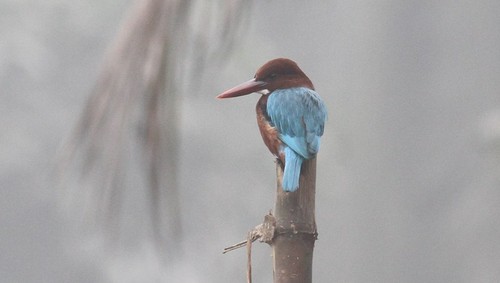
White-throated Kingfisher
27-28 cm (10.5-11 in) long
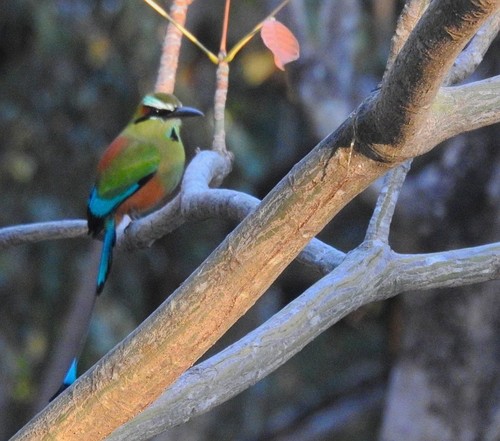
Turquoise-browed Motmot
34 cm (13 in) long including tail
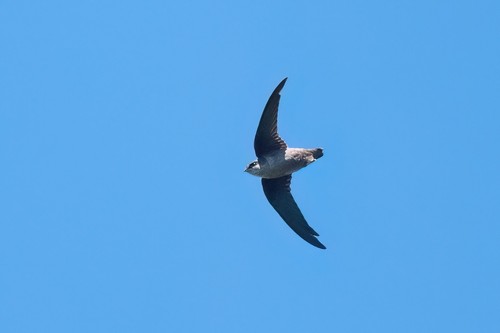
Vaux's Swift
10-12 cm (4-4.5 in) long, 27-30 cm wingspan
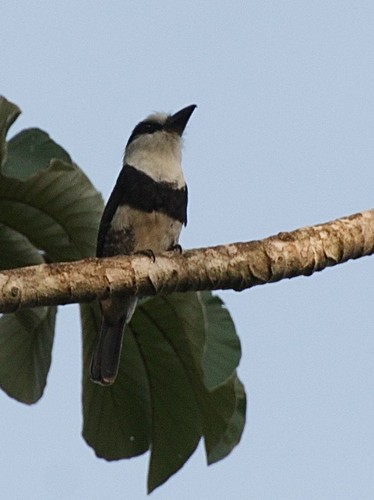
White-necked Puffbird
22-24 cm (8.5-9.5 in) long
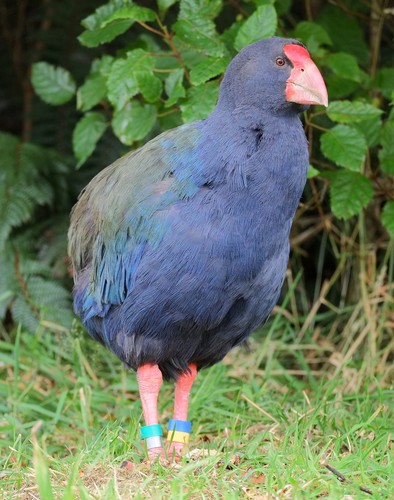
Takahe
50 cm (20 in) long, up to 3.5 kg; flightless
Weka
50-60 cm (20-24 in) long; flightless