
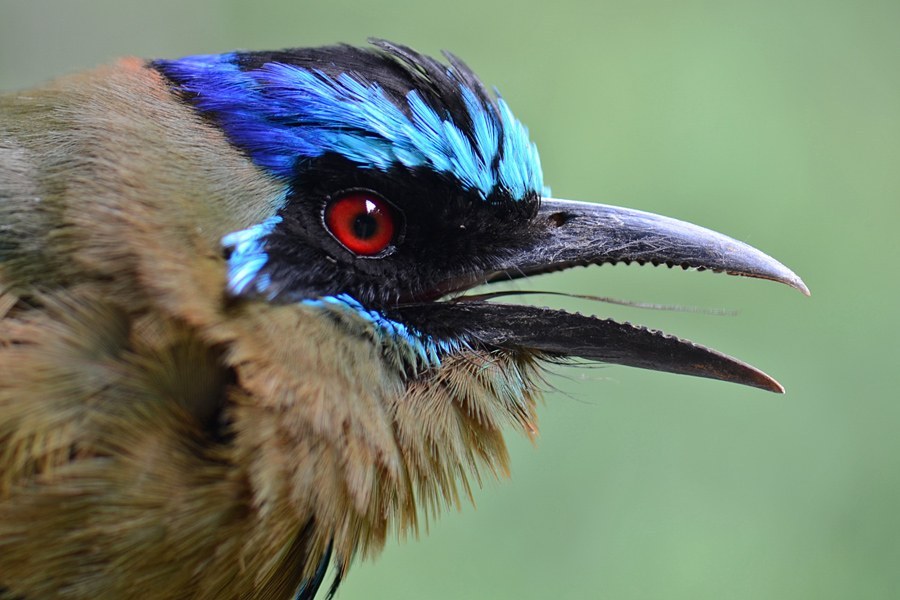
Amazonian Motmot
Momotus momota
A striking green forest bird with a blue-and-black crown and a long tail ending in bare-shafted rackets that it swings like a pendulum.
- Size
- 38-43 cm (15-17 in) long, including a long racket-tipped tail
- Habitat
- lowland humid forest and forest edge in the Amazon basin
- Type
- other
Spotted a bird like this?
Identify any bird from a photo, free.
Overview
The Amazonian Motmot is a handsome, medium-large forest bird recognized by its rich green plumage, a black mask through the eye bordered by blue, and a crown showing a blue band framed by black. The underparts often show a variable rufous or olive tone depending on the population, and the throat may show a small dark spot.
Its most famous feature is the long tail, whose two central feathers extend well beyond the rest and end in bare shafts tipped with distinctive racket-shaped webbing, a result of the bird itself preening away weakly attached barbules near the tip during feather growth and use.
Motmots are known for a curious pendulum-like tail-wagging behavior, swinging the tail slowly side to side while perched, a behavior whose function is debated but may serve as a signal to potential predators that they have been detected.
How to identify it
Key field marks
- Green overall plumage with a black facial mask bordered by blue
- Blue crown band framed by black
- Long tail with bare shafts ending in racket-shaped tips
- Distinctive side-to-side tail-swinging behavior while perched
Similar species
Other Momotus motmots (such as Whooping Motmot and Trinidad Motmot, now often split from this species) are very similar in plumage and were formerly considered the same species; range is the most reliable way to separate them, as the Amazonian Motmot occupies the Amazon basin specifically. Broad-billed Motmot has a notably shorter tail and a different bill shape.
Habitat & range
Habitat
The Amazonian Motmot inhabits the understory and mid-story of humid lowland forest and forest edge, generally staying within or near dense vegetation.
Range
It is found throughout much of the Amazon basin, including parts of Colombia, Venezuela, the Guianas, Ecuador, Peru, Bolivia, and Brazil.
Migration
It is a non-migratory, sedentary resident of its forest habitat.
Behavior & voice
Behavior
Amazonian Motmots are typically solitary or found in pairs, perching quietly in the understory and periodically swinging their long racket-tipped tail from side to side like a pendulum, a behavior thought to signal alertness to predators.
Voice
The call is a low, resonant, owl-like hooting note, often repeated and given mainly at dawn and dusk, carrying well through the forest understory.
Feeding
It feeds on a varied diet of insects, small vertebrates such as lizards, and fruit, typically hunting by watching quietly from a perch before sallying down to seize prey from the ground or foliage.
Nesting and breeding
Motmots nest in burrows, excavating a tunnel into an earthen bank or slope, where the female lays her eggs in an unlined chamber at the end of the tunnel; both parents typically help excavate the burrow and raise the young.
Frequently asked questions
Why does the Amazonian Motmot swing its tail?
It periodically swings its long, racket-tipped tail side to side like a pendulum while perched, a behavior thought to signal to predators that it has already been spotted.
How does the motmot's tail get its racket shape?
The bare shafts near the tail tip result from weakly attached barbules that break off with wear and preening, leaving the racket-shaped tip.
Where does the Amazonian Motmot live?
In humid lowland forest throughout the Amazon basin of South America.
What does the Amazonian Motmot eat?
Insects, small vertebrates like lizards, and fruit.
Where does the Amazonian Motmot nest?
It excavates a burrow into an earthen bank, laying eggs in an unlined chamber at the tunnel's end.
Amazonian Motmot guides
In-depth guides for identifying, finding, and understanding Amazonian Motmot.
Other birds you may enjoy
Kiwi
35-55 cm (14-22 in) long; roughly chicken-sized
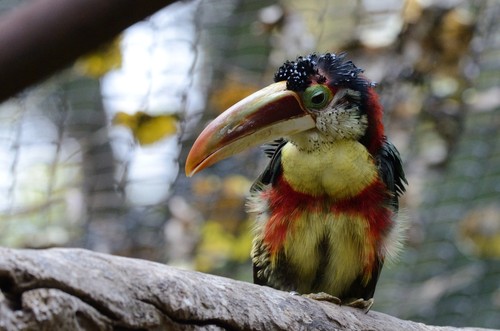
Curl-crested Aracari
41-46 cm (16-18 in) long, including a long bill and tail
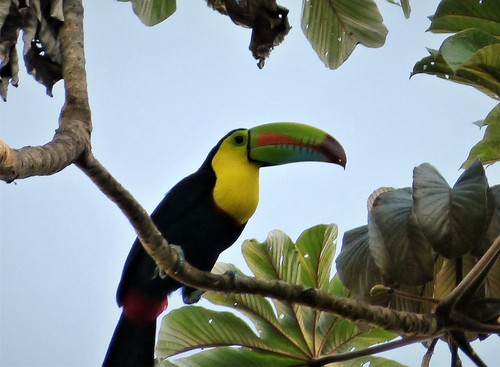
Keel-billed Toucan
42-55 cm (17-22 in) long including bill
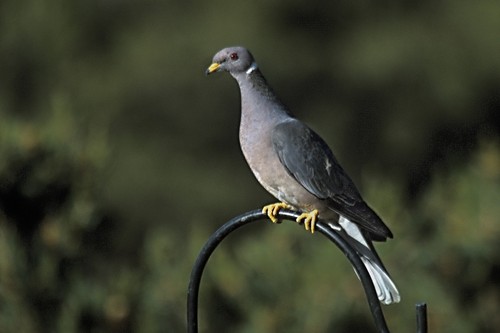
Band-tailed Pigeon
33-38 cm (13-15 in) long, wingspan about 66 cm (26 in)
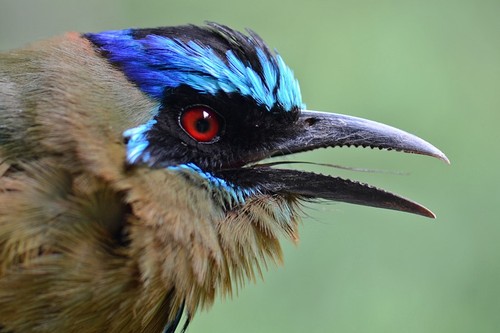
Blue-crowned Motmot
38-43 cm (15-17 in) long including tail
White-tipped Dove
27-30 cm (10.5-12 in) long, 38-43 cm wingspan
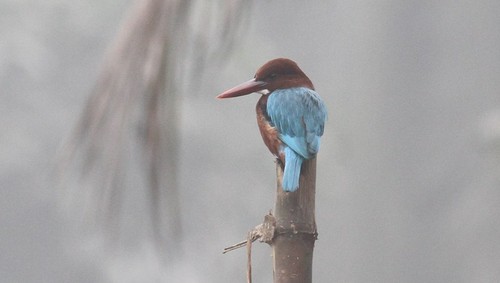
White-throated Kingfisher
27-28 cm (10.5-11 in) long
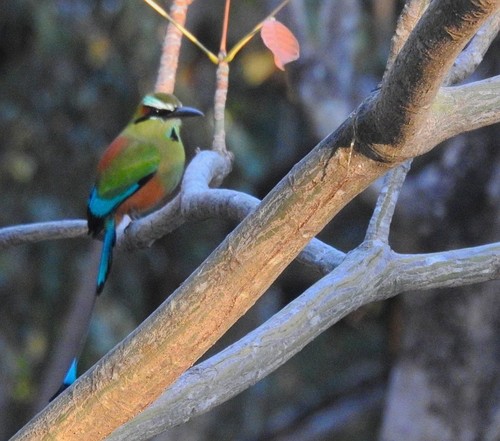
Turquoise-browed Motmot
34 cm (13 in) long including tail
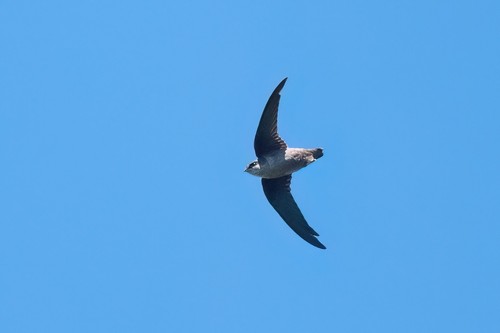
Vaux's Swift
10-12 cm (4-4.5 in) long, 27-30 cm wingspan
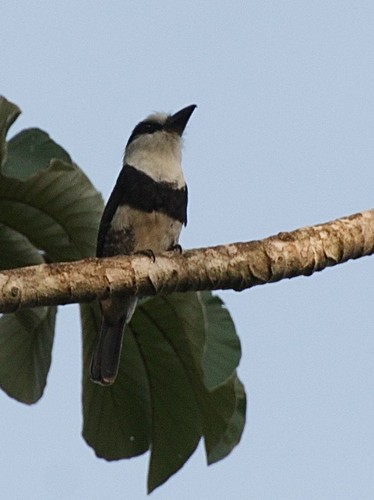
White-necked Puffbird
22-24 cm (8.5-9.5 in) long
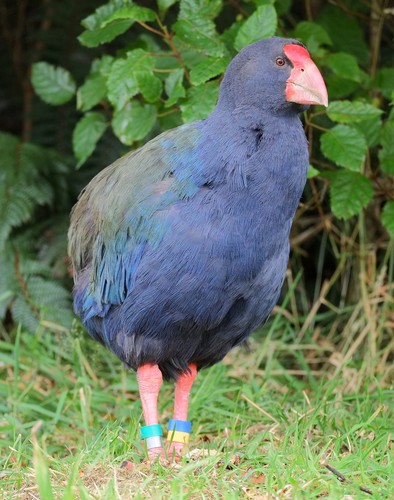
Takahe
50 cm (20 in) long, up to 3.5 kg; flightless
Weka
50-60 cm (20-24 in) long; flightless