
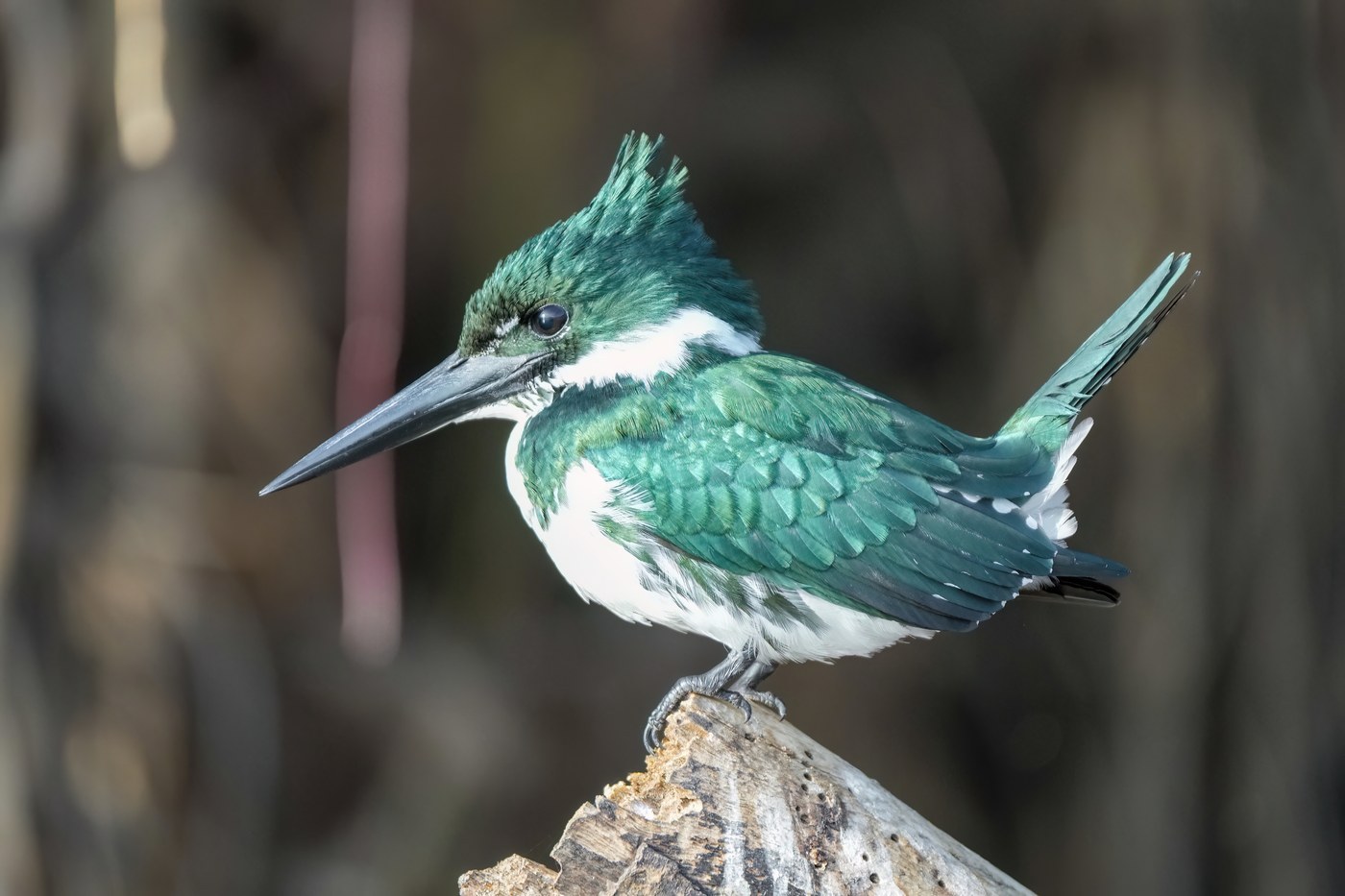
Amazon Kingfisher
Chloroceryle amazona
A large green-backed kingfisher of Central and South American waterways, with a shaggy crest and a chestnut breast band in males.
- Size
- 28-30 cm (11-12 in) long, about 40 cm wingspan
- Habitat
- rivers, streams, lagoons, and mangroves of Central and South America
- Type
- other
Spotted a bird like this?
Identify any bird from a photo, free.
Overview
The Amazon Kingfisher is the largest of the New World green kingfishers, a robust, long-billed bird of tropical American waterways with glossy dark green upperparts and a shaggy, often raised crest. Males show a broad chestnut breast band across an otherwise white underside, while females lack the chestnut band, instead showing a band of green spotting across the chest. The heavy, all-dark bill is proportionally large even for a kingfisher, well suited to handling sizable fish.
Found along a wide range of forested and semi-open waterways from Mexico to Argentina, the Amazon Kingfisher is a familiar sight perched on branches and snags overhanging rivers and streams throughout much of tropical Latin America.
How to identify it
Key field marks
- Large size for a green kingfisher, with a heavy, long bill
- Glossy dark green upperparts and shaggy crest
- Males show a broad chestnut breast band; females show a green-spotted chest band instead
- White underparts and throat
Similar species
- Green Kingfisher is noticeably smaller with a proportionally shorter bill and more white spotting on the wings.
- Green-and-rufous Kingfisher has rufous (not white) underparts overall, quite different in tone.
- Amazon Kingfisher's larger size and heavier bill are the best clues when separating it from smaller green kingfisher relatives sharing its range.
Habitat & range
Amazon Kingfishers range from Mexico through Central America and much of South America as far south as northern Argentina, inhabiting rivers, streams, lakes, lagoons, and mangrove-lined coasts, generally favoring larger, slower-moving waterways than some of its smaller relatives. They are found from lowland tropical forest to more open agricultural and semi-urban waterways within their range.
The species is largely non-migratory, remaining resident throughout its extensive range, though individuals may shift locally in response to water levels and seasonal changes in fish availability.
Behavior & voice
Behavior
Amazon Kingfishers hunt from low perches overhanging water, watching for movement below before diving to seize prey, and they are also capable of hovering briefly over open water in the manner of some Old World kingfishers.
Voice
A loud, harsh rattling call is given in flight, along with sharper single notes used in territorial and alarm contexts.
Feeding
Fish make up the majority of the diet, supplemented by aquatic insects and occasionally small crustaceans, typically captured in a swift dive from a perch a few meters above the water.
Nesting and breeding
Pairs excavate a long tunnel nest into an earthen riverbank, ending in a nesting chamber where eggs are laid on bare soil; both parents share incubation and chick-feeding duties over the nesting period.
Frequently asked questions
How do you identify an Amazon Kingfisher?
Look for a large green kingfisher with a shaggy crest, heavy bill, and, in males, a broad chestnut breast band across white underparts.
How is the Amazon Kingfisher different from the Green Kingfisher?
The Amazon Kingfisher is notably larger with a proportionally heavier bill and less white spotting on the wings than the smaller Green Kingfisher.
Where does the Amazon Kingfisher live?
Along rivers, lakes, and mangrove coasts from Mexico through Central America and much of South America to northern Argentina.
What does the Amazon Kingfisher eat?
Primarily fish, supplemented by aquatic insects, caught by diving from a perch overlooking water.
How can you tell male and female Amazon Kingfishers apart?
Males have a solid chestnut band across the breast, while females show a band of green spotting instead of solid chestnut.
Amazon Kingfisher guides
In-depth guides for identifying, finding, and understanding Amazon Kingfisher.
Other birds you may enjoy
Kiwi
35-55 cm (14-22 in) long; roughly chicken-sized
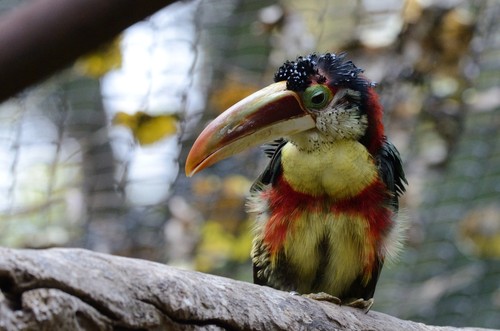
Curl-crested Aracari
41-46 cm (16-18 in) long, including a long bill and tail
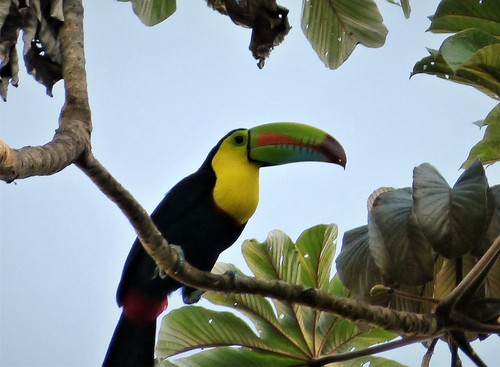
Keel-billed Toucan
42-55 cm (17-22 in) long including bill
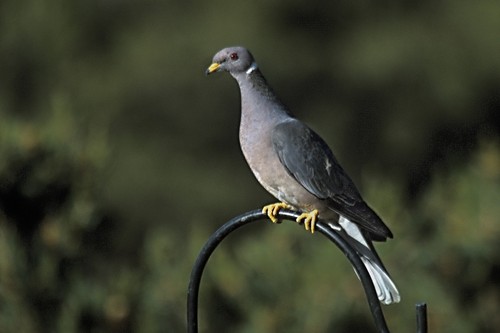
Band-tailed Pigeon
33-38 cm (13-15 in) long, wingspan about 66 cm (26 in)
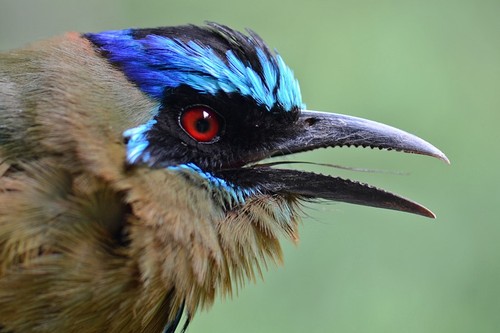
Blue-crowned Motmot
38-43 cm (15-17 in) long including tail
White-tipped Dove
27-30 cm (10.5-12 in) long, 38-43 cm wingspan
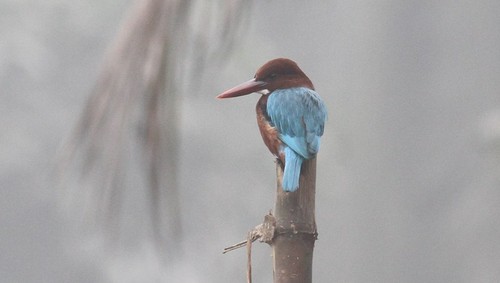
White-throated Kingfisher
27-28 cm (10.5-11 in) long
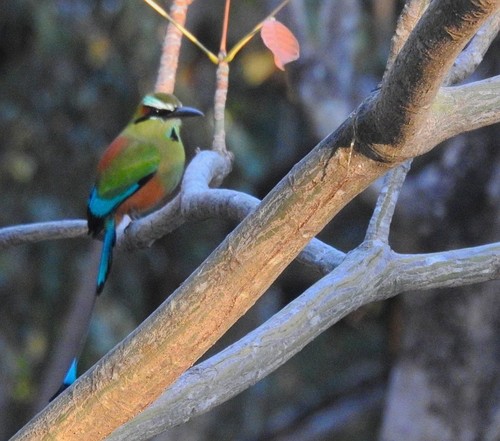
Turquoise-browed Motmot
34 cm (13 in) long including tail
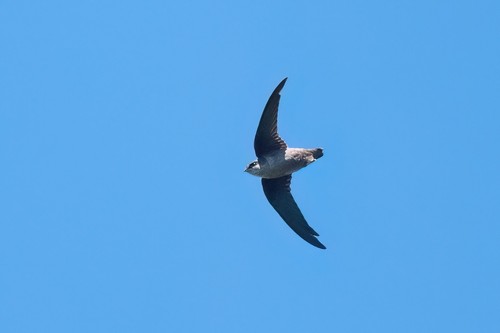
Vaux's Swift
10-12 cm (4-4.5 in) long, 27-30 cm wingspan
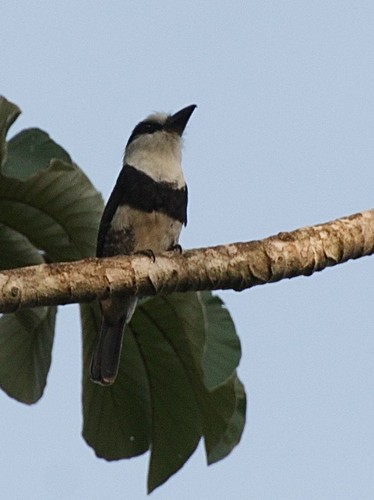
White-necked Puffbird
22-24 cm (8.5-9.5 in) long
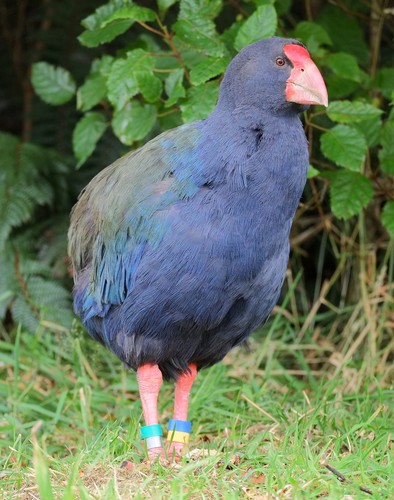
Takahe
50 cm (20 in) long, up to 3.5 kg; flightless
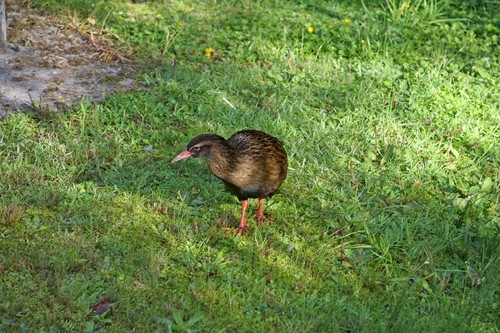
Weka
50-60 cm (20-24 in) long; flightless