
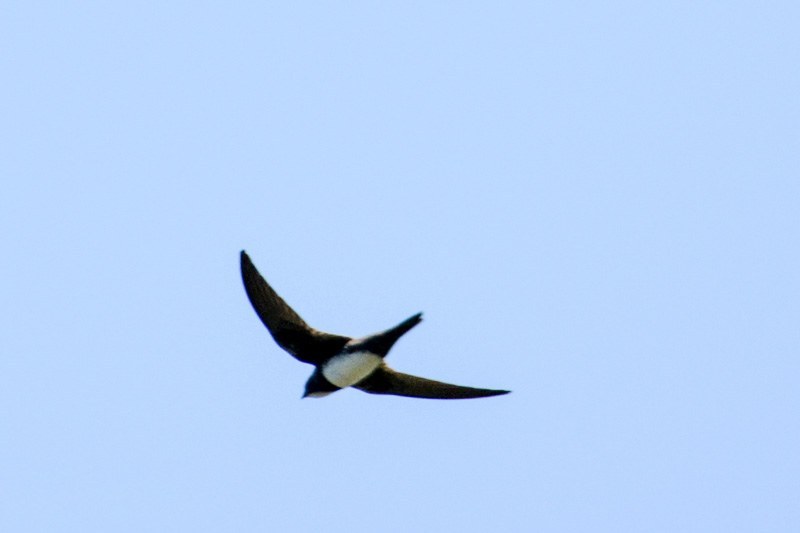
Alpine Swift
Tachymarptis melba
A large swift of mountain cliffs with a white belly and throat separated by a brown breast band, among the fastest fliers in level flight.
- Size
- 20-23 cm (8-9 in) long, 54-60 cm wingspan
- Habitat
- mountains, cliffs, and gorges, foraging over open country and towns
- Type
- other
Spotted a bird like this?
Identify any bird from a photo, free.
Overview
The Alpine Swift is a large, powerful swift, noticeably bigger than the Common Swift, with long, scythe-shaped wings built for speed and endurance. It is brown above and largely brown below, but shows a clean white belly and a white throat patch separated by a distinct brown breast band -- a pattern unique among Old World swifts.
It breeds colonially on cliffs and crags, often in mountainous terrain but also on tall buildings, and is renowned for extraordinarily fast, sustained flight.
How to identify it
Key field marks
- Large size with long, swept-back wings and a shallowly forked tail
- White throat and white belly separated by a brown breast band
- Brown upperparts and brown wings, appearing dark at a distance
- Much larger and paler-bellied than the all-dark Common Swift
Similar species
The Common Swift is smaller and uniformly sooty-dark without the white belly. Pallid Swift is similarly all-dark but slightly paler and lacks the white underparts pattern of the Alpine Swift.
Habitat & range
Range
Breeds from southern Europe and North Africa east through the Middle East and Central Asia to the Himalayas; a separate population resides in sub-Saharan Africa.
Habitat
Nests colonially on cliffs, gorges, and mountain crags, as well as tall buildings and towers in some cities; forages widely over open country, farmland, and towns at varying altitudes.
Migration
European and Asian populations are migratory, wintering in sub-Saharan Africa, while some populations elsewhere are resident.
Behavior & voice
Behavior
An exceptionally fast and agile flier, capable of sustained flight speeds among the highest recorded for a bird in level flight. Like other swifts it is almost entirely aerial, only landing to nest.
Voice
Gives a loud, trilling, descending scream, often uttered by groups chasing around nesting cliffs.
Feeding
Feeds exclusively on flying insects captured in the air, often foraging at high altitude and ranging widely from the colony.
Nesting and breeding
Nests colonially in cracks and ledges on cliffs or buildings, building a shallow nest of feathers and airborne material cemented with saliva. Lays 2-3 eggs, incubated by both parents.
Frequently asked questions
How can you distinguish an Alpine Swift from a Common Swift?
The Alpine Swift is considerably larger with a white belly and throat divided by a brown breast band, while the Common Swift is uniformly sooty-dark and smaller.
Where do Alpine Swifts nest?
They nest colonially on cliffs, gorges, and mountain crags, and also on tall buildings in some towns and cities.
How fast can Alpine Swifts fly?
They are among the fastest birds in level (non-diving) flight, capable of sustained high-speed flight for long distances.
What do Alpine Swifts eat?
They feed entirely on flying insects caught in the air, sometimes foraging at great heights far from their nesting cliffs.
Alpine Swift guides
In-depth guides for identifying, finding, and understanding Alpine Swift.
Other birds you may enjoy
Kiwi
35-55 cm (14-22 in) long; roughly chicken-sized
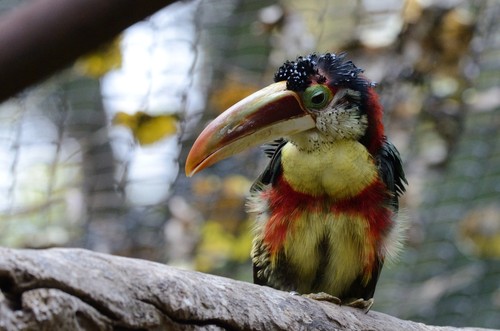
Curl-crested Aracari
41-46 cm (16-18 in) long, including a long bill and tail
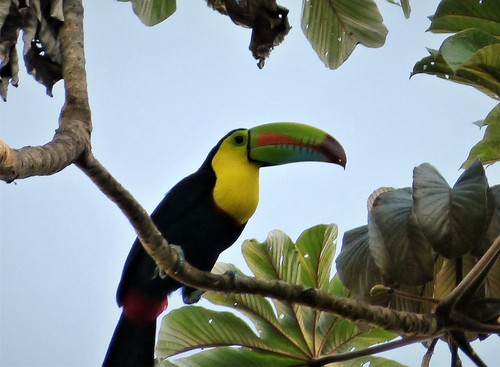
Keel-billed Toucan
42-55 cm (17-22 in) long including bill
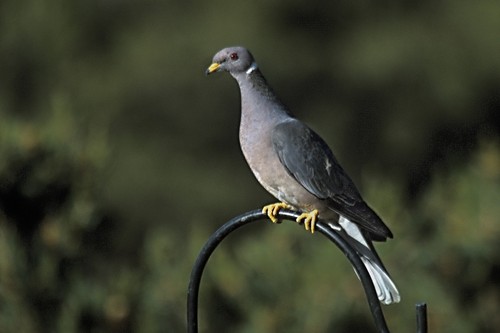
Band-tailed Pigeon
33-38 cm (13-15 in) long, wingspan about 66 cm (26 in)
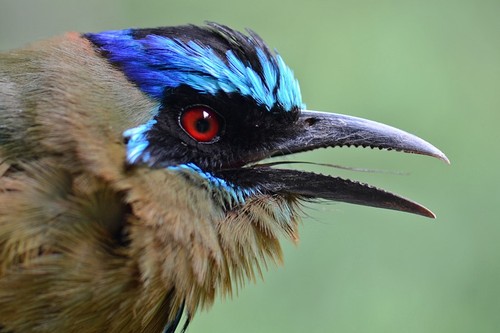
Blue-crowned Motmot
38-43 cm (15-17 in) long including tail
White-tipped Dove
27-30 cm (10.5-12 in) long, 38-43 cm wingspan

White-throated Kingfisher
27-28 cm (10.5-11 in) long
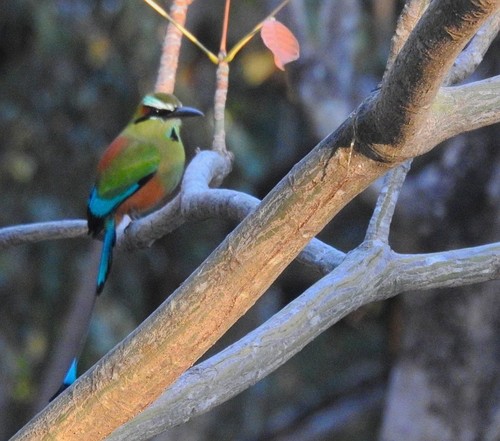
Turquoise-browed Motmot
34 cm (13 in) long including tail
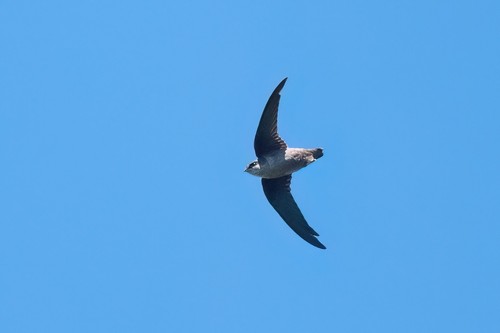
Vaux's Swift
10-12 cm (4-4.5 in) long, 27-30 cm wingspan
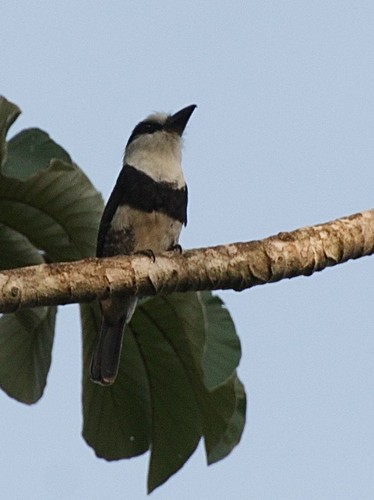
White-necked Puffbird
22-24 cm (8.5-9.5 in) long
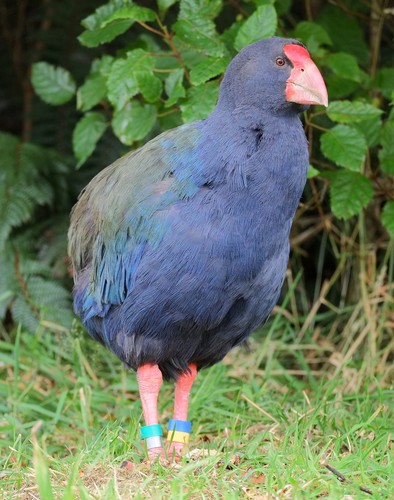
Takahe
50 cm (20 in) long, up to 3.5 kg; flightless
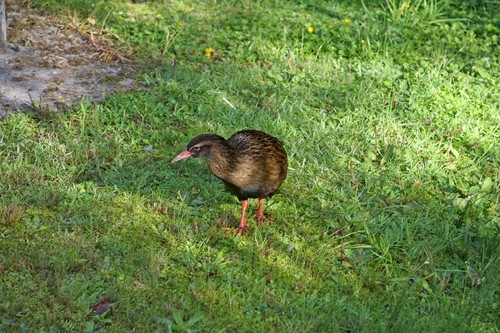
Weka
50-60 cm (20-24 in) long; flightless