
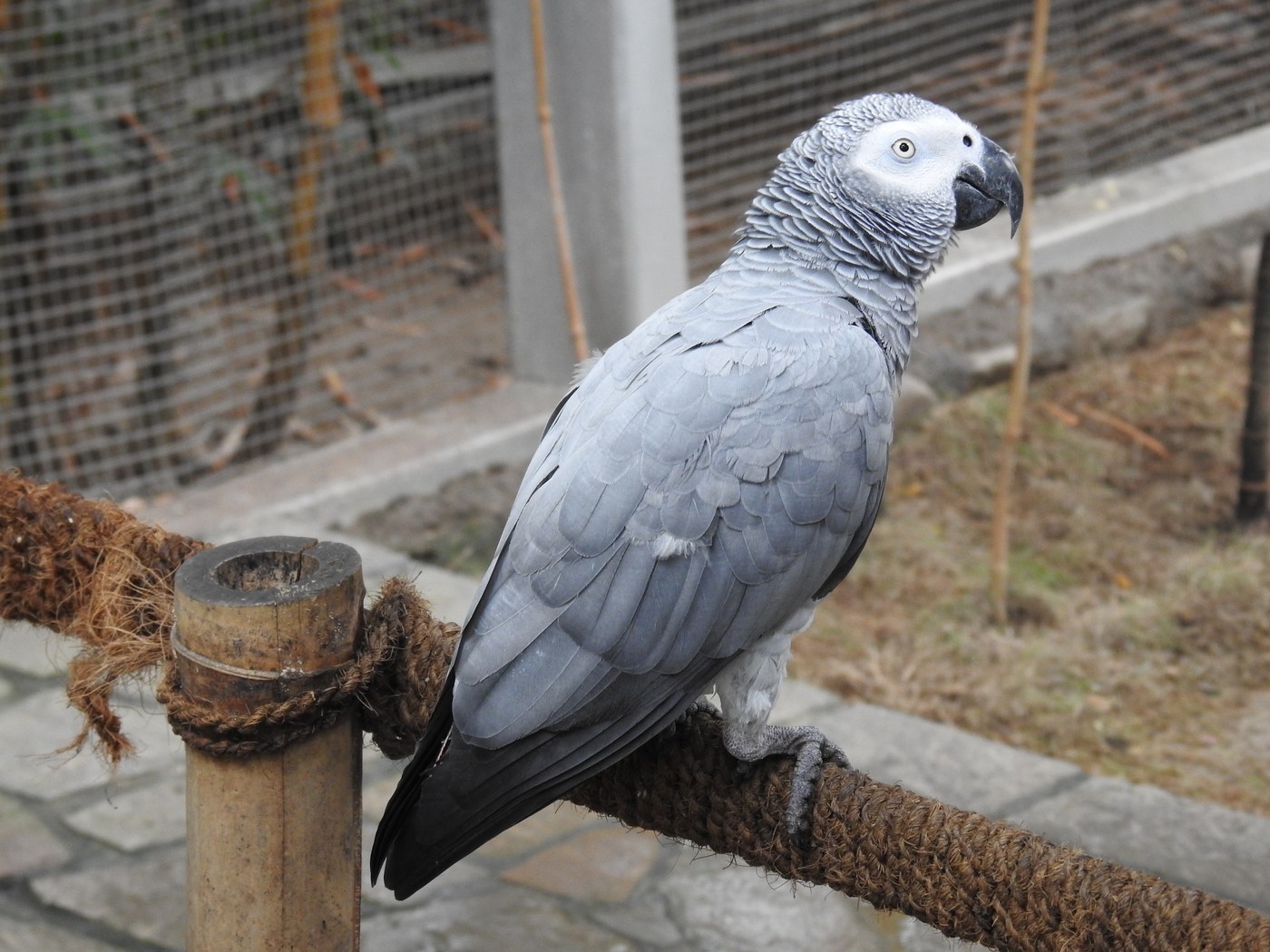
African Grey Parrot
Psittacus erithacus
A medium-sized, ash-grey parrot with a striking bright red tail, a white facial patch, and a reputation as one of the most cognitively advanced birds known.
- Size
- 33 cm (13 in) long
- Habitat
- lowland rainforest, forest edge, and clearings
- Type
- parrot
Spotted a bird like this?
Identify any bird from a photo, free.
Overview
The African Grey Parrot is a stocky, medium-sized parrot covered almost entirely in scalloped shades of ash-grey, with paler grey edging to the feathers of the head, neck, and underparts giving a subtly scaled texture. It has a bold white patch of bare skin surrounding pale yellow eyes, a heavy black bill, and a short, squared tail that is a vivid, contrasting bright red, unlike any other coloring on the bird.
The species is widely regarded, based on extensive scientific study, as one of the most intelligent birds known, with documented capacities for advanced problem-solving, vocal learning, and use of vocalizations in ways that suggest sophisticated cognitive abilities. In the wild, it lives in the dense forests of West and Central Africa, where it is now considerably less common than it once was.
How to identify it
Key field marks
- Overall ash-grey body with subtly scaled feather edging
- Bright red tail, contrasting sharply with the grey body
- Bare white skin patch around the eye
- Heavy black bill
Similar species
- Timneh Parrot (sometimes considered a subspecies) is smaller and darker grey with a maroon (not bright red) tail and a paler, horn-colored upper bill.
- No other African parrot combines an all-grey body with a fully red tail, making this species distinctive within its range.
Habitat & range
Habitat
Inhabits lowland primary and secondary rainforest, forest edge, clearings, and gallery forest along rivers.
Range
Found across West and Central Africa, from parts of the Ivory Coast and Ghana east through the Congo Basin to western Kenya and Uganda.
Migration
Generally resident, though flocks may make local seasonal movements in response to the availability of fruiting trees.
Behavior & voice
Behavior
Highly social, typically seen in pairs or flocks that gather at communal roosts, particularly in the evening, when large numbers may fly in together, calling loudly.
Voice
A variety of loud whistles, shrieks, and screeches, along with an exceptional capacity for mimicking other sounds, including the calls of other bird species.
Feeding
Forages mainly in the forest canopy for fruit, seeds, nuts, and some leafy vegetation, using its strong bill and feet to manipulate food.
Nesting
Nests in tree cavities, typically high in large forest trees; lays 3-5 white eggs.
Frequently asked questions
Why is the African Grey Parrot considered so intelligent?
Extensive scientific research has documented advanced problem-solving abilities, strong vocal learning skills, and sophisticated use of vocalizations, making it one of the most cognitively studied bird species.
How do you identify an African Grey Parrot?
Look for an overall ash-grey, subtly scaled body, a bare white skin patch around the eye, and a short, bright red tail that contrasts sharply with the grey plumage.
Where does the African Grey Parrot live in the wild?
In lowland rainforest, forest edge, and clearings across West and Central Africa, from the Ivory Coast region east through the Congo Basin.
Why is the African Grey Parrot's conservation status a concern?
Populations have declined sharply due to extensive capture for the wild bird trade and ongoing habitat loss, leading to its classification as Endangered.
How is the African Grey Parrot different from the Timneh Parrot?
The African Grey Parrot is larger with a brighter, more silvery grey plumage and a fully bright red tail, while the Timneh Parrot is smaller and darker with a maroon tail and a paler upper bill.
African Grey Parrot guides
In-depth guides for identifying, finding, and understanding African Grey Parrot.
Other birds you may enjoy
Eclectus Parrot
35-42 cm (14-16.5 in) long
Western Rosella
25-30 cm (10-12 in) long
Superb Parrot
About 40 cm (16 in) long including a long tail
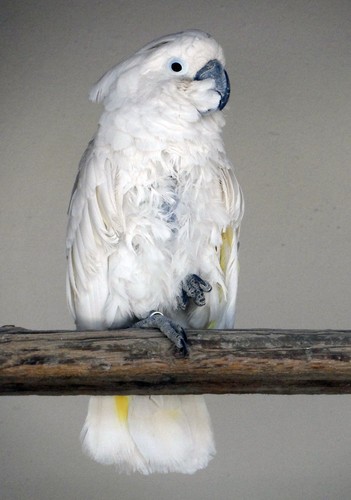
Umbrella Cockatoo
About 46 cm (18 in) long
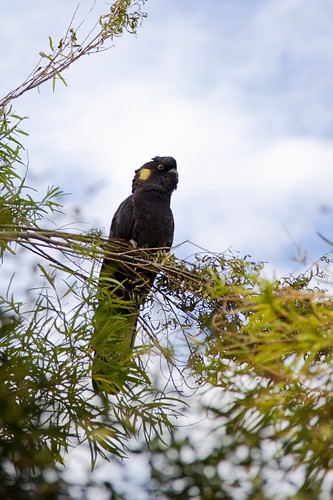
Yellow-tailed Black Cockatoo
55-65 cm long; wingspan up to about 130 cm
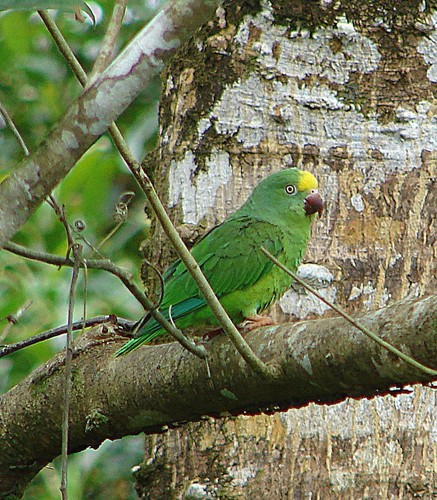
Yellow-crowned Amazon
About 35-38 cm (14-15 in) long
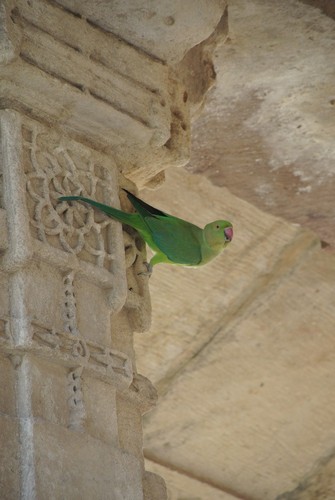
Rose-ringed Parakeet
40 cm (16 in) long including long tail
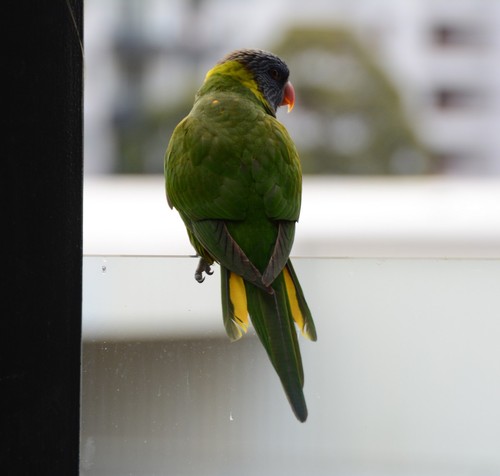
Rainbow Lorikeet
25-30 cm (10-12 in) long
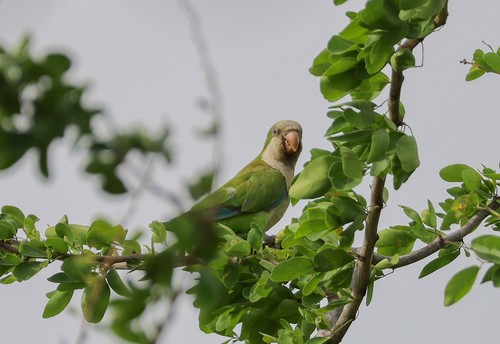
Quaker Parrot
28-31 cm (11-12 in) long
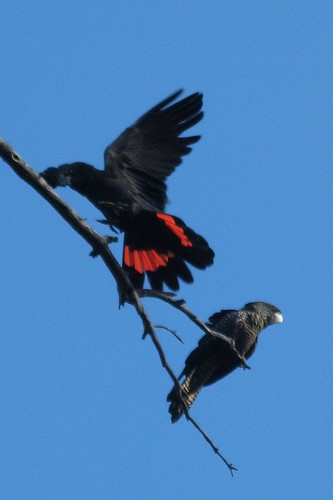
Red-tailed Black Cockatoo
55-65 cm long
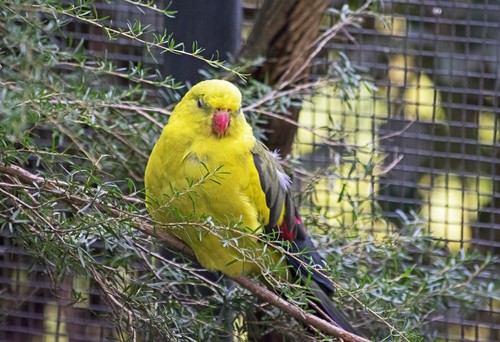
Regent Parrot
37-42 cm (15-17 in) long, including a long tail
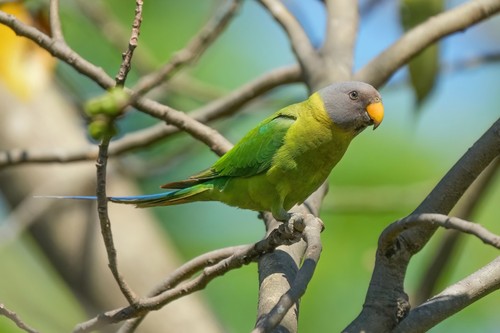
Plum-headed Parakeet
33 cm (13 in) long including tail