
African Grey Parrot Identification Guide
A stocky pale-grey rainforest parrot with a bright red tail and pale eye, best located by its loud whistles and screeches high in the forest canopy.
Read the full African Grey Parrot encyclopedia entry →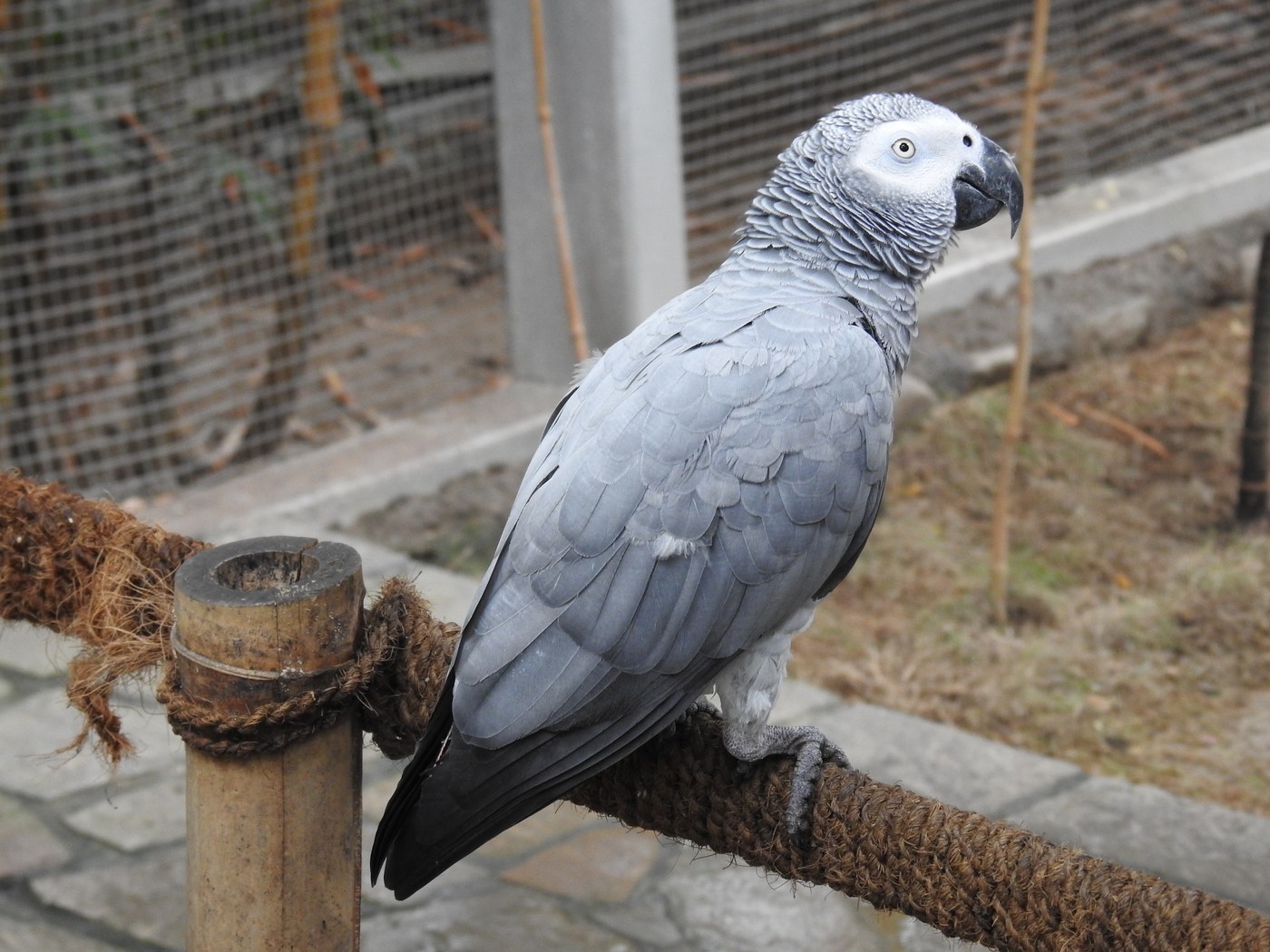
Key Field Marks
- Medium-large, stocky parrot, about 33 cm (13 in) long, with a short, square-cut tail
- Overall pale to medium grey plumage, with each body feather narrowly edged in a slightly paler tone giving a subtly scalloped look
- Bright red tail, conspicuous in flight and when perched
- Pale yellow iris in adults (dark in juveniles)
- Black bill; bare whitish skin around the eye
How to Separate It From Similar Species
- Timneh Parrot: darker, charcoal-grey plumage overall, a duller maroon (not bright red) tail, and a horn-colored (pale) patch on the upper mandible rather than an all-black bill; also smaller and restricted to the far western edge of the range, from Guinea-Bissau to Côte d'Ivoire/Ghana, versus the African Grey's broader central and eastern range.
- No other African parrot combines pale grey body plumage with a bright red tail, making adult African Grey Parrots essentially unmistakable within their range.
- Juveniles have duskier eyes and a somewhat duller tail but show the same basic grey-and-red pattern.
Where & When to See It
- Resident in lowland tropical rainforest, forest edge, clearings, and mangroves across West and Central Africa, from southeastern Côte d'Ivoire and Ghana east through the Congo Basin to western Kenya and Tanzania.
- Non-migratory, but performs regular daily flights between roosting and feeding areas, and gathers in large communal roosts, sometimes numbering in the hundreds to thousands.
- Best observed at dawn or dusk near known roost sites, or in flight high over the canopy giving flight calls.
Voice & Behavior Cues
- Highly vocal, with a varied repertoire of whistles, screeches, and harsh calls; flight calls include piercing, far-carrying whistled notes and shrieks.
- Renowned among parrots for exceptional vocal learning ability, often incorporating a wide range of sounds into its calls in the wild.
- Flies with fast, shallow, direct wingbeats, often in pairs or small flocks moving purposefully between forest patches.
- Feeds mainly on fruit, seeds, nuts, and oil palm fruit, foraging quietly and often inconspicuously high in the canopy despite its loud flight calls.
Frequently asked questions
How do you tell an African Grey Parrot from a Timneh Parrot?
African Grey Parrot is paler grey with a bright red tail and an all-black bill, while Timneh Parrot is darker charcoal-grey with a duller maroon tail and a pale patch on the upper bill; Timneh also occupies a smaller range in the far western part of West Africa.
What color are African Grey Parrot eyes?
Adults have pale yellow irises, while juveniles have dark eyes that lighten as they mature.
Where does the African Grey Parrot live in the wild?
In lowland rainforest, forest edges, and mangroves across West and Central Africa, from around Côte d'Ivoire east through the Congo Basin to western Kenya and Tanzania.
Why is the African Grey Parrot known for mimicry?
It has an exceptional capacity for vocal learning and incorporates a wide variety of sounds into its natural calls, a trait that makes its vocalizations highly variable in the wild.