
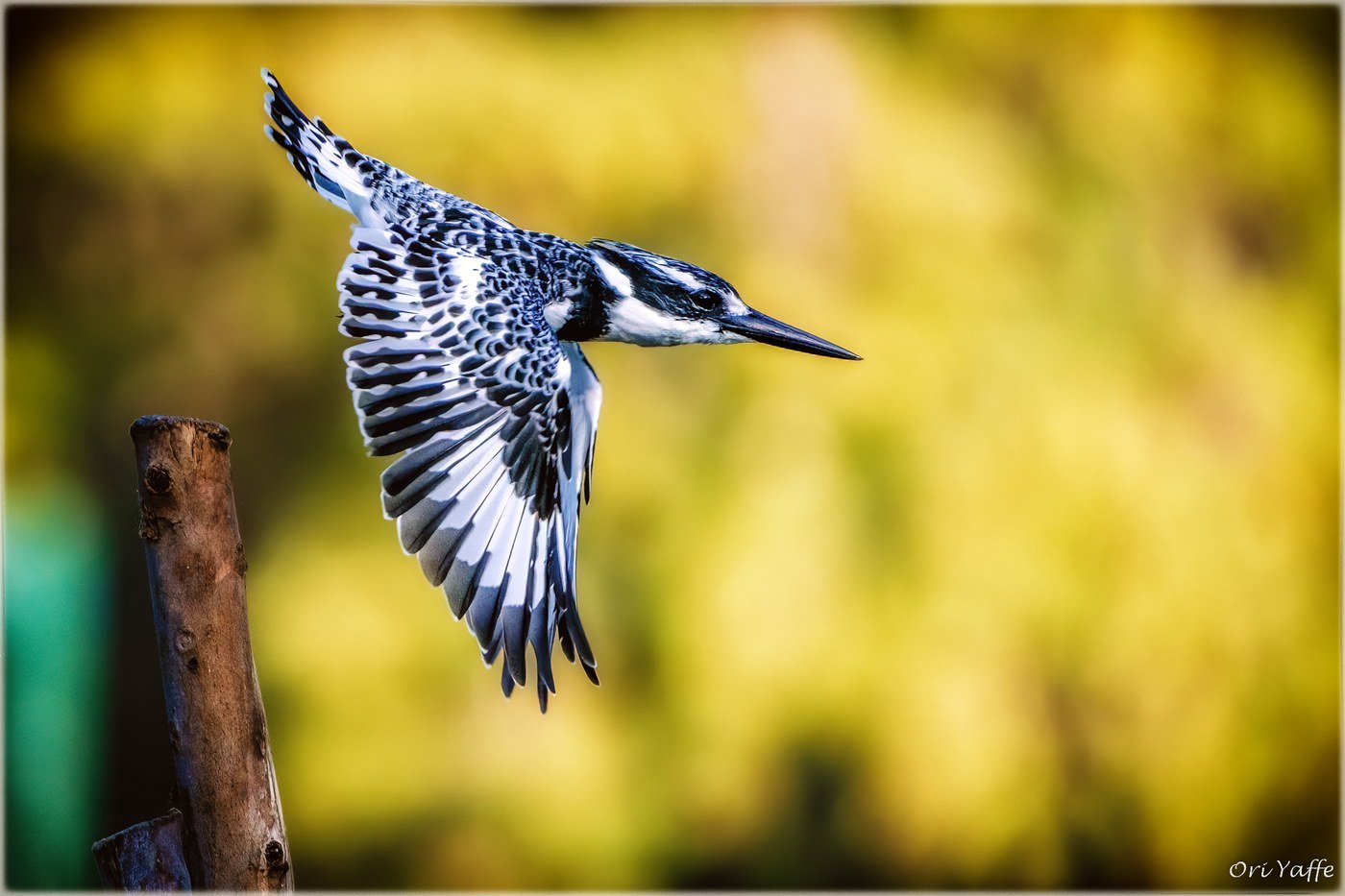
Pied Kingfisher
Ceryle rudis
A striking black-and-white kingfisher famed for hovering over water before plunge-diving for fish, common across Africa and Asia.
- Size
- 25-29 cm (10-11.5 in) long, about 45 cm wingspan
- Habitat
- lakes, rivers, estuaries, and coasts across Africa and Asia
- Type
- other
Spotted a bird like this?
Identify any bird from a photo, free.
Overview
The Pied Kingfisher is a bold, boldly patterned black-and-white bird, one of the very few kingfisher species without any blue or green in its plumage. Speckled black-and-white upperparts, a shaggy crest, and one or two black breast bands (a single band in females, a double band in males) give it a crisp, contrasty look that stands out sharply against water and sky alike. Its long, heavy black bill is a powerful fishing tool, well suited to its specialized hunting technique.
One of the most widespread and conspicuous kingfishers in the Old World, the Pied Kingfisher is famous for its distinctive hovering flight, hanging almost motionless over water on rapidly beating wings before plunging down after fish, a behavior that makes it one of the easiest kingfishers to observe and enjoy.
How to identify it
Key field marks
- Bold black-and-white speckled and barred plumage
- Shaggy crest on the head
- Black breast band(s): single in females, double in males
- Long, heavy black bill
Similar species
- Common Kingfisher shares some range in Asia but is much smaller with blue and orange plumage, easily separated by color alone.
- No other African or Asian kingfisher combines this size with an entirely black-and-white pattern, making the Pied Kingfisher essentially unmistakable within its range.
- Juveniles resemble adults but with browner tones in the black areas, transitioning to full contrast with maturity.
Habitat & range
Pied Kingfishers are found across a broad swath of sub-Saharan Africa, the Nile Valley, the Middle East, and southern Asia, inhabiting lakes, rivers, estuaries, and coastal lagoons, generally favoring open water with clear visibility for spotting fish. They tolerate both fresh and brackish water and can be found from small ponds to large lakes and slow rivers.
Most populations are resident, though some northern and inland populations may shift locally in response to water levels and food availability, particularly during dry seasons when suitable fishing habitat contracts.
Behavior & voice
Behavior
Unlike most kingfishers, which hunt from a perch, the Pied Kingfisher regularly hunts by hovering in place over open water, sometimes 10 meters or more above the surface, before folding its wings and plunging down to seize fish in its bill.
Voice
Sharp, chirping "chirruk" calls are given frequently in flight and while perched, often in pairs or small groups.
Feeding
Fish form virtually the entire diet, located from a hovering position or elevated perch and captured in a rapid, controlled dive, with prey typically stunned against a perch before being swallowed headfirst.
Nesting and breeding
Pairs, sometimes assisted by additional helper birds, excavate a long horizontal tunnel into a vertical earthen bank near water, ending in an unlined nesting chamber; several eggs are laid, and cooperative breeding with non-breeding helpers assisting the parents is relatively common in this species.
Frequently asked questions
Why is it called the Pied Kingfisher?
'Pied' refers to its bold black-and-white plumage pattern, unusual among kingfishers, most of which show blue or green coloring.
How do Pied Kingfishers catch fish?
They are known for hovering in place over open water before folding their wings and plunge-diving to seize fish, a technique less common among other kingfisher species.
Where does the Pied Kingfisher live?
Across sub-Saharan Africa, the Nile Valley, the Middle East, and southern Asia, wherever there is open fresh or brackish water for fishing.
How can you tell a male from a female Pied Kingfisher?
Males have two black bands across the breast, while females have a single, often broken, black breast band.
Do Pied Kingfishers nest cooperatively?
Yes, some pairs are assisted by non-breeding helper birds that aid in digging the nest tunnel and feeding the chicks, a form of cooperative breeding.
Pied Kingfisher guides
In-depth guides for identifying, finding, and understanding Pied Kingfisher.
Other birds you may enjoy
Kiwi
35-55 cm (14-22 in) long; roughly chicken-sized
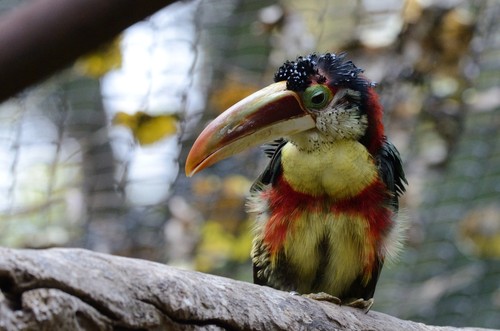
Curl-crested Aracari
41-46 cm (16-18 in) long, including a long bill and tail
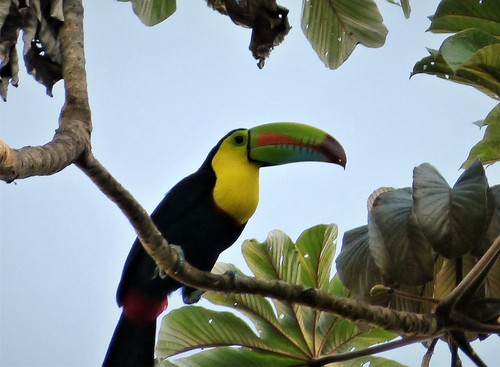
Keel-billed Toucan
42-55 cm (17-22 in) long including bill
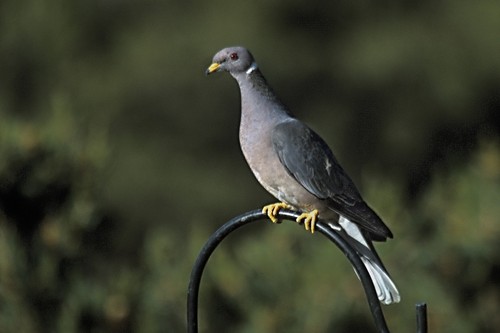
Band-tailed Pigeon
33-38 cm (13-15 in) long, wingspan about 66 cm (26 in)
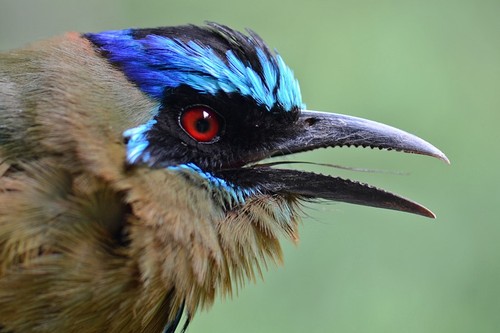
Blue-crowned Motmot
38-43 cm (15-17 in) long including tail
White-tipped Dove
27-30 cm (10.5-12 in) long, 38-43 cm wingspan
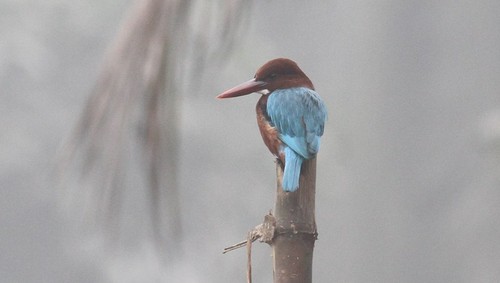
White-throated Kingfisher
27-28 cm (10.5-11 in) long
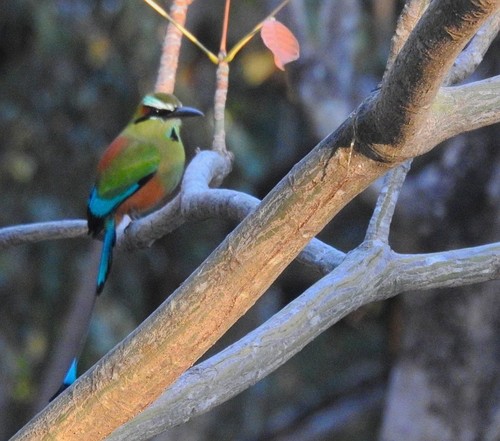
Turquoise-browed Motmot
34 cm (13 in) long including tail
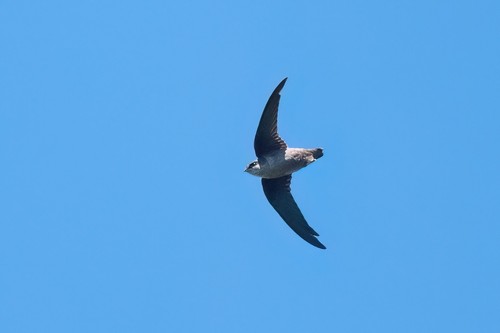
Vaux's Swift
10-12 cm (4-4.5 in) long, 27-30 cm wingspan
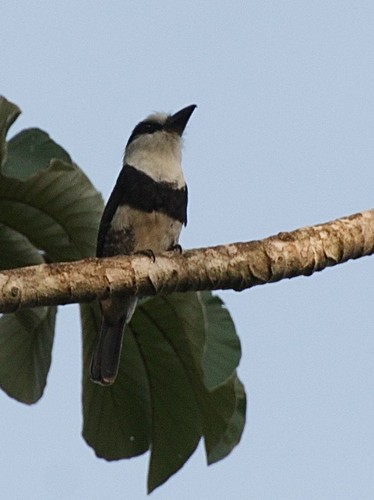
White-necked Puffbird
22-24 cm (8.5-9.5 in) long
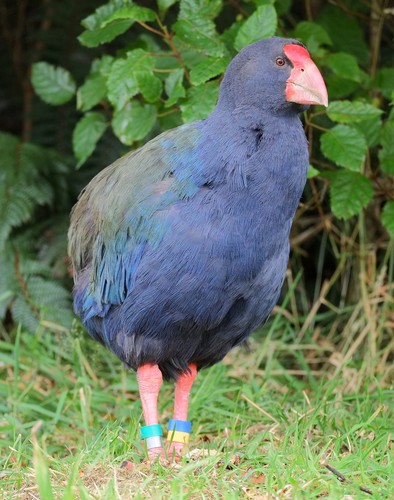
Takahe
50 cm (20 in) long, up to 3.5 kg; flightless
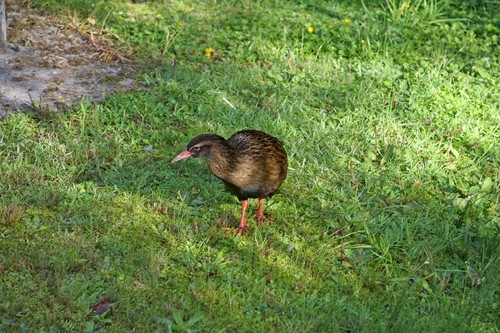
Weka
50-60 cm (20-24 in) long; flightless